Vintage Silk Kimono Preservation & Mold Remediation Guide 2026
Introduction to 2026 Kimono Conservation
As we navigate the shifting climate patterns of 2026, preserving vintage Asian textiles has become increasingly complex. For collectors and heritage families, the Japanese kimono represents a profound intersection of art, history, and meticulous craftsmanship. However, the organic nature of silk, combined with the delicate metallic threads of the obi sash, makes these garments highly susceptible to environmental degradation. According to the American Institute for Conservation's Textile Wiki, protein-based fibers like silk are particularly vulnerable to fluctuating humidity, which accelerates both mold growth and structural weakening. This comprehensive guide outlines the most current, non-destructive preservation and mold remediation techniques available in 2026 to ensure your heirloom kimonos survive for generations to come.
The Chemistry of Vintage Silk and Metallic Thread Tarnishing
Before attempting any restoration, it is crucial to understand the materials you are handling. Vintage silk is a continuous protein fiber composed primarily of fibroin. When exposed to high humidity and airborne pollutants, the amino acid chains can hydrolyze, leading to 'shattering'—a condition where the silk becomes brittle and tears under its own weight. Furthermore, the exquisite metallic threads (zari) woven into formal obi sashes often feature a core of mulberry paper or silk wrapped in ultra-thin strips of gold or silver leaf. In 2026, atmospheric sulfur compounds continue to pose a severe threat to these silver elements, causing irreversible black tarnishing. Therefore, preservation is not merely about cleaning; it is about creating a chemically inert microenvironment.
Step-by-Step Mold Remediation for Silk Garments
Mold is the most devastating adversary of vintage Asian garments. If you discover white or greenish powdery spots on your silk kimono, immediate but gentle action is required. Never use water, commercial bleach, or standard laundry detergents, as these will permanently alter the pH of the silk and cause dyes to bleed.
Dry Micro-Suction and Brushing
The first step in remediation is the physical removal of dormant mold spores. Lay the garment flat on a clean, acid-free surface. Using a museum-grade HEPA vacuum equipped with a micro-suction attachment, gently hover over the affected areas. Place a flexible fiberglass screen between the vacuum nozzle and the silk to prevent the delicate fabric from being pulled into the suction. Next, use a soft, natural-bristle conservation brush to gently sweep away remaining surface spores. Always brush in the direction of the weave to avoid snagging the fibers.
Enzymatic Spot Treatment for Organic Stains
If the mold has left organic staining, 2026 conservation standards recommend the use of highly diluted, pH-neutral enzymatic cleaners specifically formulated for protein fibers. Products like Orvus WA Paste, when diluted to a 0.5% solution with distilled water, can be applied using a cotton swab. Dab—never rub—the stain, allowing the enzymes to break down the organic residue. Immediately blot the area with a dry, absorbent microfiber cloth to draw out the moisture. For severe fungal penetration, the Victoria and Albert Museum's textile care guidelines strongly advise halting DIY treatments and consulting a professional conservator to prevent irreversible dye loss.
Archival Storage: Traditional Kiri-bako vs. Modern Alternatives
Proper storage is the cornerstone of Asian garment preservation. Historically, kimonos have been stored in kiri-bako (boxes made from Paulownia wood). Paulownia is prized for its natural ability to buffer humidity and its inherent resistance to insects. However, modern archival science offers alternative materials that may better suit specific environments in 2026.
| Storage Material | Pros | Cons | Best For |
|---|---|---|---|
| Paulownia Wood (Kiri-bako) | Natural humidity buffering, traditional aesthetic, pest-resistant | Expensive, heavy, requires periodic airing out | Heirloom kimonos, wedding uchikake, long-term family storage |
| Acid-Free Polypropylene Boxes | Chemically inert, lightweight, affordable, transparent | Does not buffer humidity, requires separate desiccants | Museum archives, large collections, budget-conscious collectors |
| Traditional Tatou (Paper Wraps) | Breathable, culturally authentic, prevents dust accumulation | Acidic if not specifically manufactured as archival-grade | Short-term storage, wrapping before placing in kiri-bako |
| Washed Cotton Storage Bags | Breathable, washable, protects from light | Offers no structural support, susceptible to mold if damp | Frequently worn garments, travel, temporary storage |
When using a kiri-bako, ensure the wood has been properly seasoned and is not emitting acidic off-gassing, which can occur in newly manufactured, unsealed boxes. Lining the box with washed, unbleached muslin or archival-grade polyethylene sheeting provides an excellent secondary barrier against wood acids.
The Art of Precision Folding (Hon-datami)
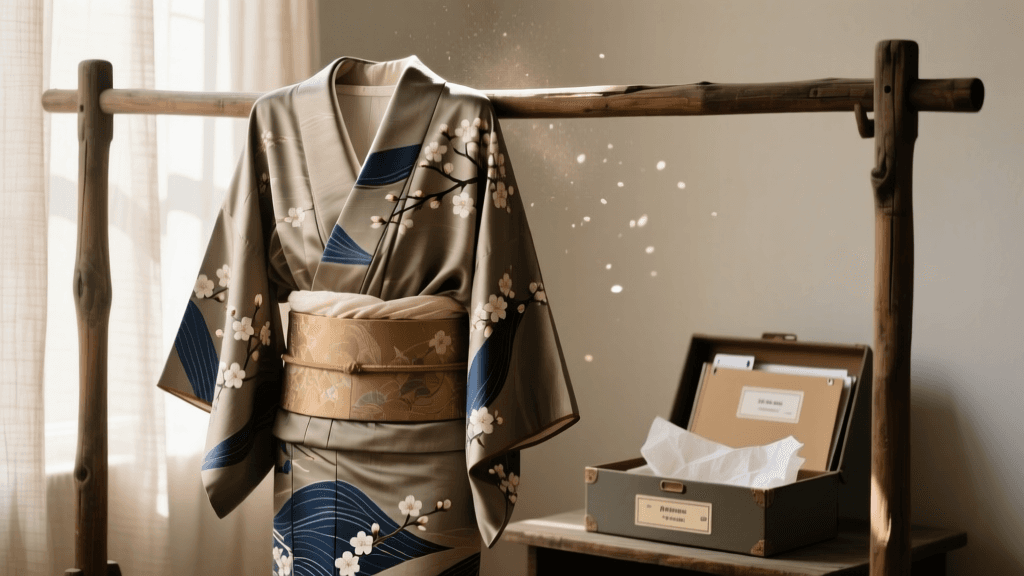
How you fold a kimono is just as critical as where you store it. The traditional folding method, known as hon-datami, is designed to align the seams and prevent stress on the fabric. However, sharp, permanent creases can lead to fiber breakage over time. To mitigate this in 2026, conservators recommend inserting rolled 'snakes' of acid-free, unbuffered tissue paper into the major folds. Unbuffered tissue is essential because the alkaline buffer (calcium carbonate) used in standard archival tissue can damage protein fibers like silk and wool. By placing tissue rolls along the sleeve folds and the center back seam, you create soft, rounded curves that eliminate hard creases and maintain the structural integrity of the garment.
Smart Climate Control for 2026
The Smithsonian Institution Archives emphasizes that stable environmental conditions are paramount for textile longevity. For silk kimonos, the ideal storage environment is a temperature of 65°F to 70°F (18°C to 21°C) with a relative humidity (RH) strictly maintained between 45% and 55%. Fluctuations are more damaging than a slightly sub-optimal but stable reading.
In 2026, integrating smart home technology into your preservation strategy is highly effective. Wi-Fi-enabled hygrometers, such as the latest Govee or SwitchBot models, can be placed directly inside your storage closets or even within the kiri-bako itself. These devices send real-time alerts to your smartphone if the humidity spikes above 60% (the threshold for rapid mold growth) or drops below 40% (which causes silk desiccation). Pair these sensors with a high-capacity dehumidifier equipped with a continuous drain hose to automate your climate control. Additionally, ensure your storage area is completely devoid of UV light, which rapidly degrades silk dyes and causes irreversible yellowing.
When to Consult a Professional Textile Conservator
While meticulous home care can prevent most issues, certain situations demand professional intervention. If your vintage kimono features shibori (intricate tie-dye pleating) that has begun to flatten, or if the shikon (gromwell root) purple dyes are actively crocking (rubbing off), do not attempt to clean or iron the garment. Similarly, restoring tarnished metallic kinkoma threads requires specialized chemical stabilizers that are not available to the general public. Seek out a conservator accredited by a recognized national heritage organization who specializes in Asian textiles. They can perform microscopic fiber analysis, execute custom dye stabilization, and construct bespoke, padded mounts for garments that are too fragile to be folded.
Conclusion
Preserving vintage silk kimonos and obis requires a harmonious blend of traditional wisdom and modern 2026 conservation science. By mastering non-destructive mold remediation, utilizing appropriate archival storage materials, and leveraging smart climate monitoring, you can protect these magnificent Asian garments from the ravages of time and environment. Treat your textile collection not just as clothing, but as living historical artifacts that deserve the highest standard of care.