Silk Kimono & Hanbok Preservation & Storage Guide 2026
The 2026 Standard for Asian Silk Garment Preservation
As the global appreciation for traditional Asian garments continues to surge in 2026, the collector and museum markets have placed unprecedented value on vintage silk kimonos from the Showa era and meticulously crafted mid-century hanboks. However, the inherent fragility of silk fibroin—the core protein structure of silk—means that improper care can lead to irreversible shattering, discoloration, and biological degradation. The 2026 consensus among textile conservators emphasizes a shift away from harsh chemical interventions and toward passive, micro-climate-controlled archival storage and bio-enzyme cleaning technologies.
Whether you are preserving a family heirloom or managing a private collection, understanding the intersection of traditional garment construction and modern conservation science is critical. This guide outlines the definitive 2026 protocols for storing, cleaning, and restoring silk kimonos and hanboks, ensuring these cultural artifacts survive for future generations.
The Science of Silk Fibroin Degradation
Silk is a natural protein fiber composed primarily of fibroin, bound together by sericin. Unlike cellulose-based fibers such as cotton or linen, protein fibers are highly sensitive to alkaline environments, excessive moisture, and ultraviolet radiation. In 2026, conservation science has further mapped the mechanics of hydrolysis in silk, a process where water molecules break the peptide bonds of the protein chain, leading to the dreaded "shattering" effect where the fabric crumbles under its own weight.
Furthermore, weighted silks—historically treated with metallic salts like tin chloride to increase drape and luster—are particularly prone to accelerated degradation. If you are caring for a late 19th or early 20th-century kimono, identifying weighted silk is the first step in determining its storage protocol. Modern archival standards dictate that weighted silks require even stricter humidity control than standard degummed silks to prevent the metallic salts from catalyzing oxidative decay.
Archival Storage: Folding vs. Rolling
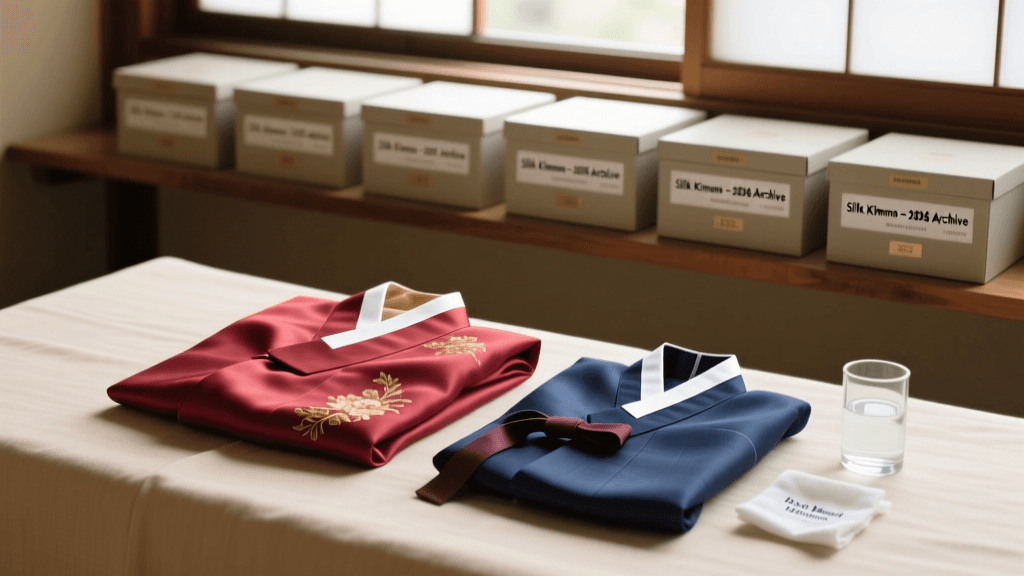
Traditionally, kimonos are folded using the tatou method, a specific geometric folding technique designed to align seams and minimize stress on the fabric. While culturally authentic, prolonged storage using the tatou method in 2026 is only recommended if the folds are heavily padded to prevent hard creases, which can cause the silk fibers to snap over time.
When to Roll Instead of Fold
For heavily embroidered hanbok skirts (chima) or kimonos with extensive metallic threadwork (kinran and ginran), rolling is the preferred 2026 museum standard. Rolling prevents the crushing of three-dimensional embroidery and eliminates fold lines entirely.
- Archival Tubes: Use acid-free, lignin-free honeycomb paper tubes. Never use standard cardboard, which off-gasses acidic vapors.
- Interleaving: Wrap the garment in washed, unbleached cotton muslin or unbuffered acid-free tissue before rolling to prevent abrasion.
- Orientation: Store rolled garments horizontally on archival shelving, elevated at least six inches off the floor to protect against minor flooding and dust accumulation.
The Buffered vs. Unbuffered Tissue Trap
One of the most common and destructive mistakes made by amateur collectors is using the wrong type of acid-free tissue paper. According to the Canadian Conservation Institute, the distinction between buffered and unbuffered materials is paramount when dealing with protein fibers.
Buffered acid-free tissue contains an alkaline reserve (usually calcium carbonate) designed to neutralize acids. While this is excellent for cotton and linen (cellulose), it is highly destructive to silk and wool (proteins), as alkaline environments degrade protein chains. Therefore, you must exclusively use unbuffered, neutral pH tissue for all kimono and hanbok storage.
| Storage Material | pH Level | Silk Safe? | 2026 Archival Recommendation |
|---|---|---|---|
| Standard Wood Pulp Tissue | 4.5 - 5.5 | No (Acidic) | Avoid completely; causes yellowing |
| Buffered Acid-Free Tissue | 8.0 - 8.5 | No (Alkaline) | Use only for cotton/cellulose textiles |
| Unbuffered Acid-Free Tissue | 7.0 (Neutral) | Yes | Lineco Unbuffered Archival Tissue |
| Washed Cotton Muslin | 7.0 (Neutral) | Yes | Undyed, boiled archival muslin |
| Polyester Film (Mylar) | N/A (Inert) | Yes | Archival Methods Melinex 516 |
Climate Control and Smart Monitoring
The Smithsonian Museum Conservation Institute emphasizes that stable environmental conditions are the cornerstone of textile preservation. Fluctuations in temperature and humidity cause silk fibers to expand and contract, leading to mechanical fatigue.
2026 Target Parameters
- Relative Humidity (RH): Maintain a strict 50% to 55% RH. Below 45%, silk becomes brittle; above 60%, the risk of mold (kabi) and insect infestation increases exponentially.
- Temperature: Keep storage areas between 65°F and 68°F (18°C - 20°C). Cooler temperatures slow the rate of chemical degradation.
- Light Exposure: Store garments in total darkness. If displayed, limit illumination to 50 lux using UV-filtered LED lighting, and rotate pieces every three months.
In 2026, the integration of IoT micro-climate sensors inside archival storage boxes has become an accessible standard for private collectors. These wireless data loggers alert your smartphone if the RH inside a specific storage chest deviates from the safe zone, allowing for immediate intervention using silica gel cassettes like Prosorb, which are pre-conditioned to maintain exactly 50% RH.
Stain Removal and Ozone Odor Treatment
When addressing stains on vintage silk, the 2026 conservation ethic prioritizes "do no harm." Aggressive spot treatments and traditional dry cleaning solvents like perchloroethylene can strip the natural luster of silk and cause dyes to bleed.
Bio-Enzyme Cleaners
For organic stains, conservators now utilize specialized bio-enzyme formulations designed specifically for protein fibers. These enzymes target the molecular structure of the stain without attacking the silk fibroin. However, testing on an inconspicuous area, such as the inside of a seam allowance, is mandatory before any application.
Ozone Chambers for Odor Elimination
Many vintage kimonos and hanboks suffer from kamaboko (a musty storage odor) or lingering scents of naphthalene mothballs from previous owners. Rather than masking these odors or using water-based washing, professional textile restorers in 2026 utilize controlled ozone chambers. Ozone gas safely oxidizes odor-causing molecules and kills dormant mold spores without wetting or stressing the fragile silk fibers. This process must only be performed by certified professionals, as improper ozone concentrations can weaken silk.
Non-Toxic Pest Management
Historically, collectors relied on naphthalene or paradichlorobenzene mothballs to protect garments from clothes moths and carpet beetles. Today, these chemicals are recognized as hazardous to human health and can actually react with metallic threads and certain dyes, causing permanent tarnishing and discoloration.
Modern integrated pest management (IPM) for Asian garments relies on non-toxic, proactive strategies:
- Pheromone Traps: Deploy Japanese clothes moth pheromone traps in the storage room to monitor and intercept breeding males before they can reproduce.
- Anoxic Treatment: If an active infestation is discovered, the garment is sealed in an oxygen-deprived environment (using argon or nitrogen gas) for 21 days. This safely eradicates all life stages of the pest without chemical residues.
- Natural Repellents: Use sustainably harvested Hinoki (Japanese cypress) wood blocks or dried lavender sachets, ensuring they are wrapped in muslin so they never make direct contact with the silk, which could cause oil transfer.
Consulting the Experts
While routine maintenance and proper storage can be managed at home, active restoration—such as reweaving shattered silk, stabilizing degraded metallic threads, or treating severe dye migration—requires the expertise of a trained textile conservator. The American Institute for Conservation (AIC) Textile Wiki serves as an excellent resource for understanding the complex chemistry of historical Asian dyes, such as indigo, safflower (benibana), and gromwell root (shikon).
By adhering to the 2026 standards of neutral pH storage, strict climate control, and non-toxic pest management, collectors and custodians can ensure that the rich textile heritage of Asia remains vibrant, intact, and structurally sound for centuries to come.