Silk Kimono & Hanbok Archival Storage & Mold Guide 2026
Preserving Heritage: The 2026 Standard for Asian Silk Garments
As we navigate the fluctuating climate patterns and increased urban humidity of 2026, the preservation of traditional Asian garments has never been more critical. Silk kimonos from Japan and intricately embroidered hanboks from Korea are not merely clothing; they are woven histories, representing centuries of artisanal mastery, cultural identity, and familial heritage. However, the protein-based structure of mulberry silk makes these garments highly susceptible to environmental degradation, particularly mold, fiber embrittlement, and dye migration.
Whether you are a collector of vintage Meiji-era kimonos, a custodian of your family’s ceremonial hanbok, or a modern enthusiast investing in contemporary silk pieces, proper archival storage is non-negotiable. This comprehensive guide outlines the latest 2026 protocols for folding, storing, and protecting your silk garments from the silent threats of humidity and biological decay.
The Science of Silk Degradation in 2026
Silk is a natural protein fiber composed primarily of fibroin, held together by sericin. Unlike plant-based fibers such as cotton or linen, silk is highly sensitive to both extreme dryness and excessive moisture. In 2026, with global indoor climate control systems frequently battling extreme external weather events, maintaining a stable microclimate within your storage environment is paramount.
When relative humidity (RH) exceeds 65%, the dormant spores of Aspergillus and Penicillium—the primary culprits behind textile mold—find the perfect breeding ground on organic sizing agents and natural dyes used in traditional garments. Conversely, if the RH drops below 40%, the silk fibers lose their natural moisture, leading to micro-fractures along the fold lines, a phenomenon conservators refer to as 'crease fatigue'.
Choosing the Right Archival Materials
The materials that physically touch and house your garments dictate their longevity. The 2026 archival standards emphasize a balance between traditional breathability and modern chemical stability.
1. Tatoushi vs. Acid-Free Tissue Paper
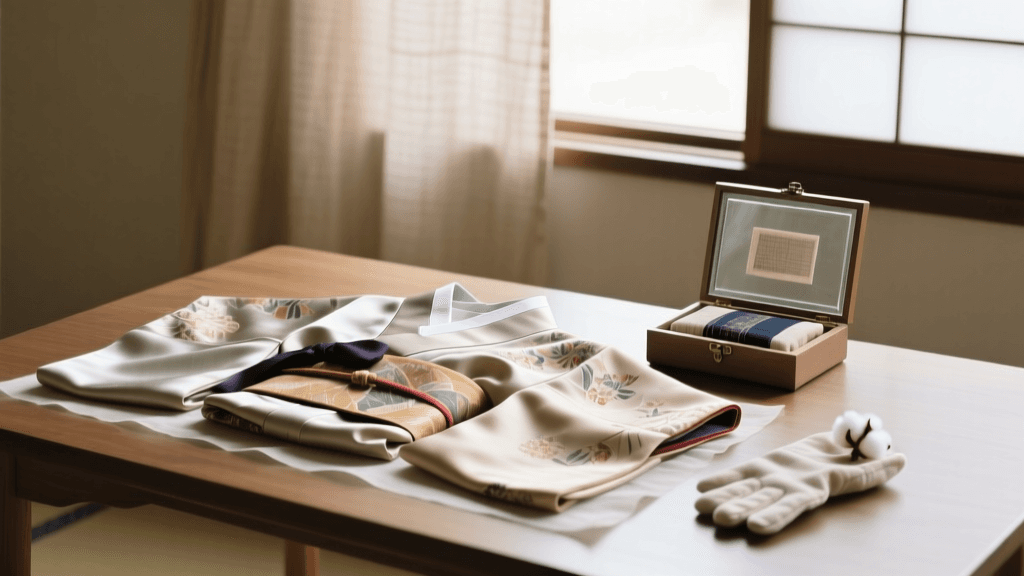
For kimono storage, traditional tatoushi (Japanese wrapping paper) remains the gold standard. Made from high-grade, unbleached gampi or kozo fibers, authentic tatoushi is naturally acid-free and highly breathable, allowing the silk to 'exhale' moisture. For hanboks, which often feature voluminous skirts (chima) and delicate embroidery, conservators recommend using unbuffered, acid-free tissue paper to stuff the folds and prevent hard creases.
Crucial 2026 Conservator Tip: Never use buffered acid-free tissue paper on silk. Buffered tissue contains an alkaline reserve (usually calcium carbonate) designed to neutralize acids in plant-based fibers, but this alkalinity will actively degrade protein-based fibers like silk and wool over time. Always specify unbuffered tissue for your Asian garments.
2. Kiri-Tansu vs. Archival Polypropylene (PP5)
Traditionally, kimonos are stored in kiri-tansu (chests made of Paulownia wood). Paulownia is naturally hygroscopic, meaning it absorbs ambient moisture during humid summers and releases it during dry winters, creating a passive microclimate. However, authentic kiri-tansu are expensive and require significant space. In 2026, the accepted modern alternative is the use of archival-grade Polypropylene (PP5) storage boxes. Unlike PVC or standard plastics that off-gas harmful plasticizers, PP5 is chemically inert. When using plastic bins, ensure they feature micro-venting or are opened bi-annually to prevent the trapping of stagnant, humid air.
The Art of Folding: Preventing Crease Fatigue
Improper folding is the leading cause of structural failure in silk garments. The goal of the folding protocol is to distribute the stress across different areas of the fabric each time the garment is stored.
- The Kimono Protocol (Tatami-fold): Follow the traditional hon-datami folding method. This specific geometric fold aligns the seams and ensures the garment rests flat without placing stress on the delicate yuzen dyed motifs or metallic thread embroidery.
- The Hanbok Protocol: Hanbok jackets (jeogori) should be folded with the sleeves crossed softly over the chest. The voluminous chima (skirt) should never be folded into tight squares. Instead, roll the skirt loosely around a core of unbuffered acid-free tissue paper to maintain the structural integrity of the pleats and prevent permanent crushing of the silk weave.
- Rotate the Folds: Every six months, unfold your garments and refold them along slightly different lines. This prevents the silk fibers from permanently breaking along a single, repeated stress point.
Climate Control: Temperature and Humidity Matrix
Maintaining the correct environment is the most effective way to prevent mold and fiber degradation. According to guidelines echoed by institutions like the Library of Congress, stability is just as important as the exact numbers. Fluctuations cause the fibers to expand and contract, accelerating mechanical wear.
| Garment Type | Ideal Temperature | Ideal Relative Humidity (RH) | Maximum Storage Time Before Airing |
|---|---|---|---|
| Silk Kimono (Vintage/Antique) | 65°F - 68°F (18°C - 20°C) | 45% - 50% | 4 Months |
| Silk Hanbok (Ceremonial) | 65°F - 68°F (18°C - 20°C) | 45% - 50% | 4 Months |
| Modern Silk Blends | 68°F - 72°F (20°C - 22°C) | 40% - 55% | 6 Months |
| Heavy Metallic Embroidery | 60°F - 65°F (15°C - 18°C) | 40% - 45% | 3 Months |
To maintain these levels in 2026, collectors are increasingly moving away from traditional chemical desiccants (which can over-dry the air if left unchecked) and adopting smart, rechargeable silica gel cassettes paired with digital hygrometers that send alerts to your smartphone when the microclimate inside a tansu or PP5 box drifts outside the safe zone.
Advanced Mold Prevention and 2026 Remediation Tech
Despite best efforts, mold (kabi) can occasionally strike, particularly in regions experiencing unprecedented seasonal humidity spikes. If you discover white, gray, or black spotting on your silk, immediate and careful action is required.
Step 1: Isolation and Dry Brushing
Immediately isolate the garment to prevent spore transfer to your other textiles. Take the garment outside or to a well-ventilated area with low humidity. Using a traditional hake brush (made of soft goat or horse hair) or a modern conservation-grade micro-aspirator, gently brush the mold spores off the surface of the silk. Never use water, vinegar, or commercial stain removers, as these will permanently set the biological stain and cause the natural dyes to bleed.
Step 2: Anoxic Treatment Chambers
One of the most significant advancements in home textile conservation available in 2026 is the miniaturization of anoxic (oxygen-free) treatment chambers. Originally reserved for museum laboratories, portable anoxic bags using nitrogen gas or oxygen scavengers are now accessible to private collectors. By placing the mold-affected garment in a sealed, oxygen-depleted environment for 21 to 28 days, you effectively suffocate any remaining mold spores and textile pests (like webbing clothes moths) without exposing the delicate silk to harsh chemicals or freezing temperatures, which can shatter frozen silk fibers.
When to Call a Professional Conservator
While home preservation and basic mold remediation are highly effective, certain situations require the intervention of a trained professional. If the mold has penetrated deep into the metallic threads, if the silk has begun to 'shatter' (a condition where the fabric disintegrates into dust upon touch due to historical metallic salt weighting), or if a valuable antique hanbok requires structural stabilization, do not attempt DIY repairs.
Consult directories provided by organizations such as the Smithsonian Museum Conservation Institute or the Textile Society of America to find certified textile conservators in your region who specialize in Asian heritage garments.
Conclusion
Preserving silk kimonos and hanboks in 2026 requires a harmonious blend of respecting traditional wisdom—like the use of Paulownia wood and precise folding techniques—and embracing modern archival science. By strictly controlling the microclimate, utilizing unbuffered acid-free materials, and staying vigilant against biological threats, you ensure that these magnificent garments will continue to tell their cultural stories for generations to come. Treat your textiles not just as garments, but as living [[loc]](https://www.loc.gov/preservation/care/textile.html).