Ainu Attush & Ryukyuan Bingata: Japan's Indigenous Textiles
Introduction to Japan's Indigenous Textile Heritage
When the world thinks of traditional Japanese clothing, the image of the silk kimono, the formal hakama, or the casual summer yukata almost universally comes to mind. However, the Japanese archipelago is home to a rich tapestry of indigenous and ethnic minority groups whose sartorial traditions are just as profound, historically significant, and visually stunning. Far from the mainland centers of Kyoto and Tokyo, the Ainu people of Hokkaido and the Ryukyuan people of Okinawa developed highly specialized textile arts shaped by their unique climates, spiritual beliefs, and historical trade networks. This comprehensive guide explores two of the most remarkable indigenous textile traditions of Japan: the sacred elm-bark cloth of the Ainu, known as attush, and the vibrant resist-dye art of the Ryukyu Kingdom, known as bingata.
Ainu Attush: The Sacred Elm-Bark Cloth
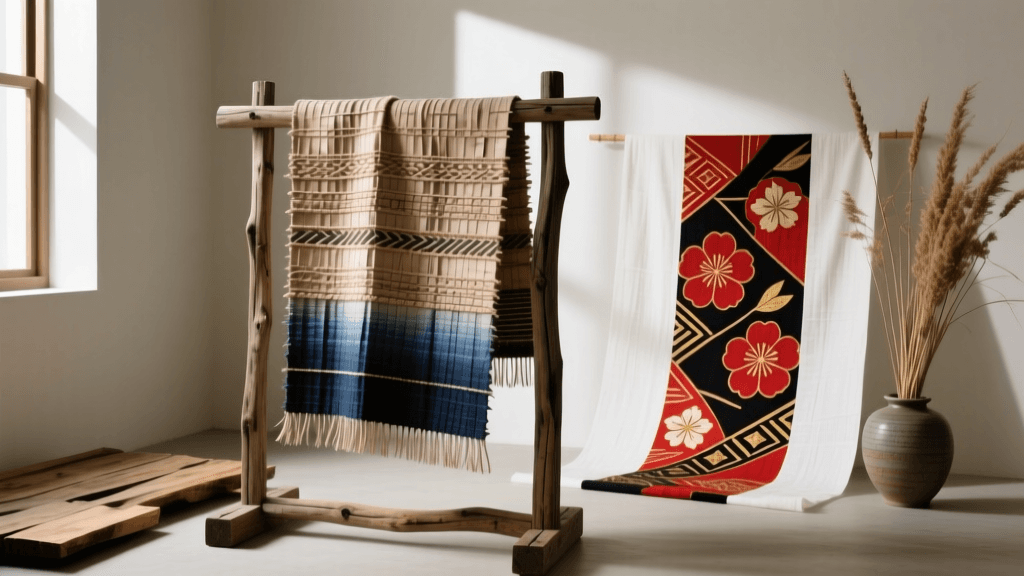
The Ainu, the indigenous people of Hokkaido, Sakhalin, and the Kuril Islands, possess a deeply animistic culture where every element of nature is imbued with kamuy (spirits or gods). Their traditional clothing reflects this profound reverence for the natural world. The most iconic and historically significant Ainu textile is attush, a durable, breathable fabric woven from the inner bark of the Manchurian elm tree (Ulmus davidiana var. japonica).
The Harvesting and Weaving Process
The creation of attush is a labor-intensive process that requires intimate knowledge of the forest and the changing seasons. Harvesting occurs during the early summer months, typically between June and July, when the sap is flowing and the bark can be easily peeled from the tree in long, continuous strips. According to cultural preservationists at the National Ainu Museum and Park (Upopoy), the bark is then dried, soaked in water, and carefully split by hand into fine threads measuring roughly 1 to 2 millimeters in thickness. These threads are woven on a traditional backstrap loom, known as an emush, resulting in a stiff, highly durable, and water-resistant fabric. The natural color of attush ranges from pale cream to a rich, earthy brown, depending on the specific tree and the drying process.
Cultural Significance and Embroidery Motifs
While attush itself is revered, it is the intricate embroidery applied to the garments that holds the deepest spiritual significance. Ainu women traditionally embroider the collars, cuffs, and hems of attush robes with complex, swirling geometric patterns. These motifs, such as the morew (thorn) and aiushi (water), are not merely decorative; they serve as spiritual barriers designed to prevent evil spirits from entering the body through the garment's openings. As noted by the Smithsonian Magazine, the resilience of these crafting traditions has been vital to the modern Ainu cultural renaissance, serving as a tangible link to their ancestral heritage.
Ryukyuan Bingata: The Vibrant Resist-Dye Art
Over 1,500 kilometers south of Hokkaido lies the subtropical prefecture of Okinawa, the heartland of the Ryukyuan people. The Ryukyu Kingdom (1429–1879) was a thriving maritime hub that traded extensively with China, Southeast Asia, and Japan. This cosmopolitan history birthed bingata, one of the most visually striking and technically complex resist-dyeing techniques in the world.
The Stencil and Dyeing Technique
Bingata is characterized by its bold, saturated colors and intricate, repeating patterns. The process begins with the carving of stencils (katagami) from mulberry paper treated with persimmon tannin. A single kimono can require dozens of precisely aligned stencils. Artisans apply a thick rice-paste resist through the stencils onto the fabric—traditionally silk, ramie, or banana fiber (bashofu). Once the resist dries, vibrant pigments are painted directly into the negative spaces using specialized brushes. Historically, these pigments were derived from local and imported materials: safflower for red, indigo for blue, turmeric and orpiment for yellow, and cochineal for crimson. After dyeing, the fabric is steamed, washed in river water to remove the resist, and dried in the subtropical sun.
Motifs and Social Hierarchy
During the Ryukyu Kingdom era, bingata was strictly regulated by sumptuary laws. The size of the motifs, the background color, and the complexity of the design indicated the wearer's social rank and age. For instance, large, sprawling motifs of peonies, dragons, and phoenixes on a bright yellow background were reserved exclusively for the royal family and high-ranking aristocrats. Commoners and younger individuals wore smaller motifs, such as hibiscus, swallows, and ocean waves, typically on white or indigo backgrounds. Today, these rules are relaxed, but the motifs remain deeply tied to Ryukyuan identity and the celebration of the islands' natural beauty. For a detailed look at the official recognition of this craft, the Kogei Japan official craft registry outlines the stringent requirements for authentic bingata certification.
Comparative Analysis: Attush vs. Bingata
Understanding the distinct characteristics of these two indigenous textiles is essential for collectors, historians, and cultural enthusiasts. The following table provides a structured comparison of Ainu attush and Ryukyuan bingata.
| Feature | Ainu Attush | Ryukyuan Bingata |
|---|---|---|
| Primary Fiber | Manchurian Elm inner bark | Silk, Ramie, Banana Fiber (Bashofu) |
| Climate Origin | Subarctic (Hokkaido) | Subtropical (Okinawa) |
| Primary Technique | Backstrap loom weaving & embroidery | Stencil resist-dyeing & hand-painting |
| Color Palette | Natural earth tones (cream, brown) with indigo/red embroidery | Vibrant pigments (yellow, crimson, indigo, green) |
| Core Motifs | Morew (thorn), Aiushi (water), geometric spirals | Peonies, dragons, hibiscus, ocean waves, swallows |
| Historical Wearers | All Ainu people (daily & ceremonial wear) | Ryukyuan royalty, aristocracy, and later commoners |
Practical Guide: Sourcing and Purchasing Authentic Pieces
For textile collectors, fashion historians, or those wishing to support indigenous artisans, acquiring authentic attush or bingata requires careful navigation. Mass-produced imitations are common in tourist areas, so knowing where to look, what to expect in terms of pricing, and how to care for these garments is crucial.
Sourcing Ainu Attush
- Where to Buy: The most reliable source for authentic, artisan-made Ainu crafts is the official gift shop at Upopoy (National Ainu Museum and Park) in Shiraoi, Hokkaido. Additionally, specialized indigenous craft cooperatives in Sapporo, such as the Ainu Craft Shop, offer verified pieces.
- Cost Expectations: Because harvesting and weaving elm bark is incredibly time-consuming, full attush garments are rare and usually commissioned for museums or private collectors, often exceeding $2,000 USD. However, accessible contemporary applications of attush weaving and traditional embroidery on cotton or wool bases are available. Expect to pay $30–$60 USD for embroidered coasters, $80–$150 USD for neckties or small pouches, and $300–$600 USD for modern ceremonial sashes.
- Care Instructions: Pure elm-bark attush should never be machine washed. Spot clean with a damp cloth and store in a cool, dry place away from direct sunlight to prevent the natural fibers from becoming brittle.
Sourcing Ryukyuan Bingata
- Where to Buy: To guarantee authenticity, purchase directly from recognized bingata studios in Naha or Shuri, Okinawa. Esteemed studios like Chinen Bingata and the Eiichi Shiroma Studio (both holding official prefectural designations) offer certified pieces. Look for the official Dento Sangyo (Traditional Craft Product) seal.
- Cost Expectations: Bingata pricing is dictated by the base fabric and the complexity of the stencil work. Small accessories like furoshiki (wrapping cloths) or coin purses range from $40 to $120 USD. A high-quality, hand-dyed silk Obi belt typically costs between $800 and $2,500 USD. A full, custom-tailored bingata kimono (requiring a standard tanmono bolt of silk, roughly 36 cm wide and 12 meters long) will cost anywhere from $4,000 to over $15,000 USD, with a lead time of 3 to 6 months.
- Care Instructions: Silk bingata garments must be professionally dry-cleaned by specialists familiar with natural dyes, as harsh chemicals can strip the vibrant pigments. Ramie and bashofu bingata can be gently hand-washed in cold water with a pH-neutral detergent, but should never be wrung out; instead, roll them in a towel to absorb moisture and dry in the shade.
Conclusion
The textile traditions of the Ainu and Ryukyuan peoples offer a profound counter-narrative to the mainstream history of Japanese fashion. Where the mainland kimono emphasizes the drape of silk and the subtlety of woven patterns, Ainu attush and Ryukyuan bingata celebrate the raw, spiritual connection to the earth and the explosive vibrancy of nature. By understanding the meticulous craftsmanship, historical context, and proper methods for acquiring these textiles, enthusiasts can help ensure that the threads of Japan's indigenous heritage continue to be woven into the future. Whether you are admiring the protective thorn motifs of an Ainu robe or the sun-drenched peonies of a Ryukyuan sash, you are witnessing the enduring spirit of Asia's most remarkable minority cultures.