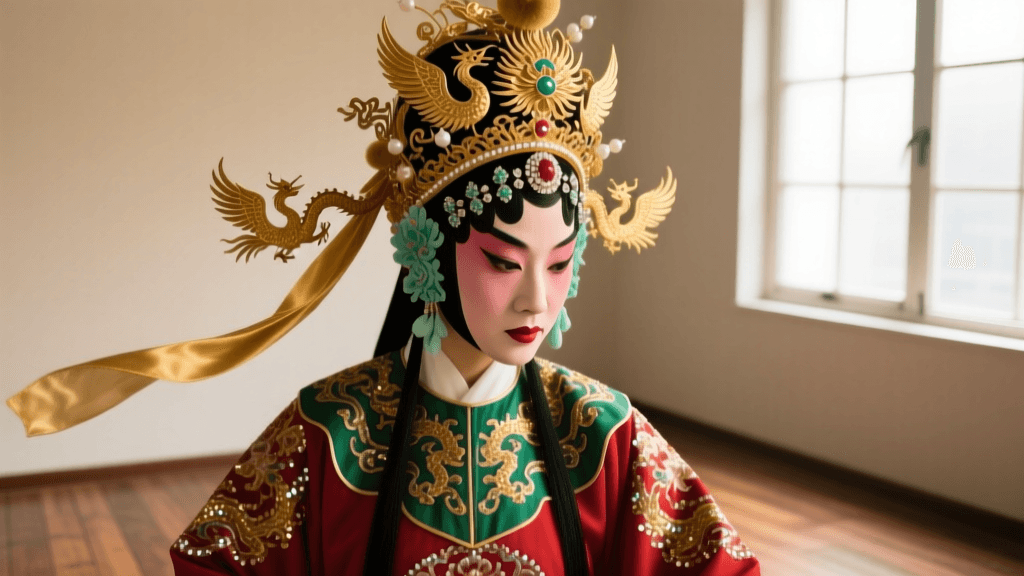
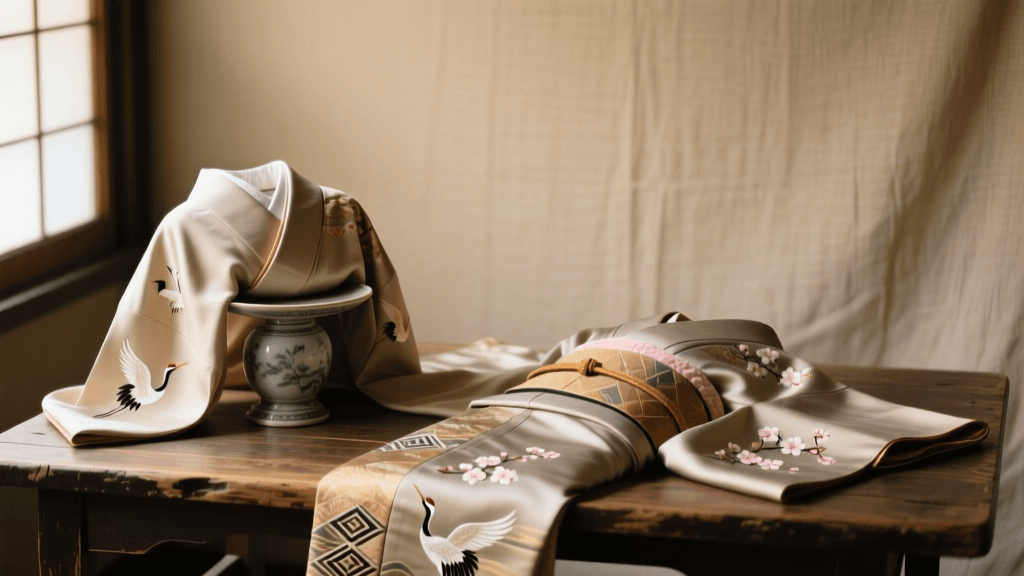
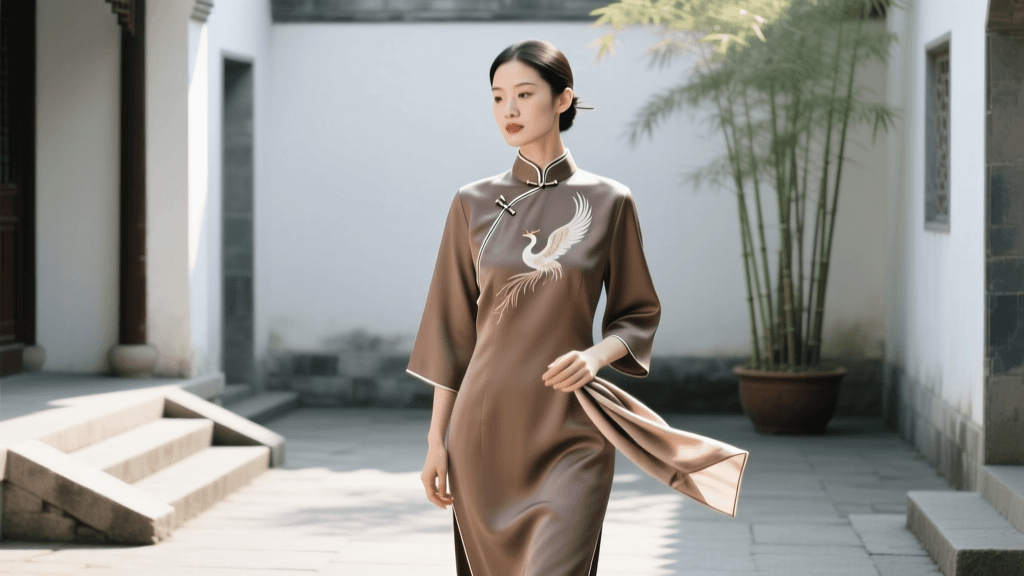
Evolution of the Dragon Robe: Ming vs Qing Court Fashion
Introduction to Imperial Court Fashion
In the grand tapestry of Asian traditions, few garments command the reverence, awe, and historical weight of the Chinese dragon robe. Far more than mere clothing, these textiles were wearable cosmology, meticulously engineered to project the emperor's mandate of heaven and the rigid hierarchy of the imperial court. The evolution of court fashion from the Han-led Ming Dynasty (1368–1644) to the Manchu-led Qing Dynasty (1644–1912) represents a fascinating shift in silhouette, symbolism, and sumptuary law. For modern collectors, historians, and enthusiasts of traditional Asian garments, understanding this dynasty evolution is essential. This guide explores the sartorial shifts between these two monumental eras and provides actionable advice for those looking to collect, commission, or study these masterpieces today.
The Ming Dynasty: Restrained Elegance and Han Restoration
When the Ming Dynasty overthrew the Mongol-led Yuan Dynasty, the imperial court made a concerted effort to eradicate foreign influences and restore traditional Han Chinese dress codes. The Ming court looked back to the Tang and Song dynasties for inspiration, favoring voluminous, flowing silhouettes that concealed the body's natural shape. The primary formal garment was the round-collared robe, often adorned with rank badges (buzi) for officials and elaborate dragon motifs for the imperial family.
Ming court fashion emphasized restrained elegance and masterful weaving techniques over heavy surface embroidery. The use of zhijin (woven gold) was highly prized. According to the Metropolitan Museum of Art's Heilbrunn Timeline of Art History, Ming textile workshops achieved unprecedented technical perfection, creating robes where the gold thread was integrated directly into the silk weave rather than applied on top. The colors were strictly codified, with bright yellow reserved exclusively for the emperor, while red, blue, and black were distributed among princes and high-ranking ministers. The sleeves were remarkably wide, often trailing past the hands, signifying a life of scholarly or administrative pursuit rather than manual labor.
The Qing Dynasty: Opulence, Codification, and Manchu Influence
The transition to the Qing Dynasty brought a radical transformation to court fashion. The Manchu rulers, originating from the equestrian cultures of the northeast, imposed their traditional riding garments upon the Han majority to assert dominance and maintain their distinct cultural identity. The flowing, wide-sleeved robes of the Ming were replaced by the chaofu (formal court robe) and the jifu (semi-formal or auspicious dragon robe).
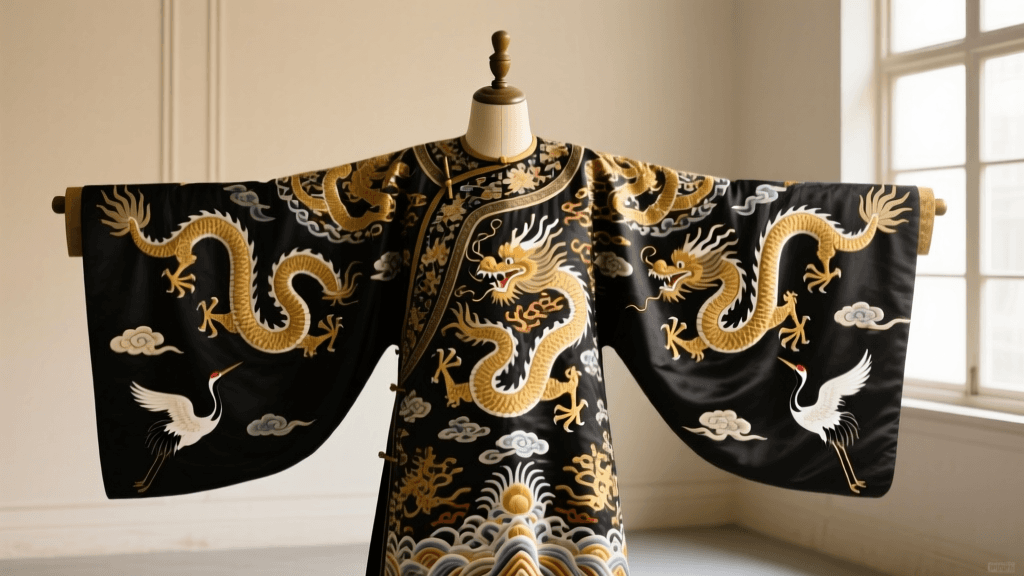
The Qing jifu, commonly known in the West as the 'dragon robe,' featured a distinctly different cut. It included a high mandarin collar, narrow sleeves ending in horse-hoof-shaped cuffs (matixiu), and four side slits (front, back, and two sides) to facilitate horseback riding. As detailed in the Met Museum's historical archives on the Qing era, the Qing court established the most exhaustive sumptuary laws in Chinese history. Every motif, color, and textile technique was strictly regulated by the Board of Rites. The surface of the robe became a canvas for dense, vibrant embroidery, utilizing silk floss, peacock feather yarns, and couched gold and silver threads. The iconic nine five-clawed dragons were positioned to align with the wearer's body, with one dragon on the chest, one on the back, one on each shoulder, and the remaining hidden in the overlapping flaps and hem.
Comparative Analysis: Ming vs. Qing Court Garments
To truly grasp the dynasty evolution of court fashion, one must examine the structural and symbolic differences side by side. The following data table outlines the core distinctions between Ming and Qing imperial robes.
| Feature | Ming Dynasty (1368–1644) | Qing Dynasty (1644–1912) |
|---|---|---|
| Primary Silhouette | Voluminous, A-line, floor-length | Straight, tailored, side-slitted |
| Collar Style | Round, collarless (often worn with a separate collar) | High, standing Mandarin collar |
| Sleeves | Extremely wide, trailing past hands | Narrow, fitted, with horse-hoof cuffs |
| Decoration Method | Woven patterns (zhijin), tapestry (kesi) | Dense surface embroidery, appliqué |
| Slits | Typically side slits only | Four slits (front, back, left, right) |
| Rank Identification | Mandarin squares (buzi) on outer surcoats | Mandarin squares, plus strict color/dragon claw counts |
This structural shift was not merely aesthetic; it was a profound political statement. The Victoria and Albert Museum's Asian Collections frequently highlights how the Qing's enforcement of Manchu tailoring served as a visual daily reminder of the new ruling class's authority, while simultaneously adopting Han cosmological symbols to legitimize their rule.
The Twelve Symbols of Imperial Authority
While dragons are the most famous motif, the highest echelon of Qing court fashion featured the Twelve Symbols of Imperial Authority, originally codified in ancient texts but formally integrated into the emperor's chaofu and jifu during the Qianlong reign. These symbols connected the emperor to the cosmos:
- The Sun, Moon, and Stars: Representing the heavens and the emperor's role as the Son of Heaven.
- Mountains: Symbolizing stability and the earth.
- Dragons: Embodying adaptability, power, and the emperor himself.
- Pheasants: Denoting literary refinement and courage.
- Water Weed and Grain: Representing purity and agricultural prosperity.
- Axes: Symbolizing the power of justice and decisive action.
Only the emperor could wear all twelve symbols. Crown princes and high-ranking lords were restricted to fewer symbols and, crucially, to four-clawed dragons (mang) rather than the imperial five-clawed dragon (long).
Practical Guide: Collecting and Commissioning Dragon Robes Today
For modern enthusiasts, acquiring a dragon robe—whether an antique artifact or a high-quality bespoke replica—requires careful planning, specific measurements, and an understanding of market costs. Here is actionable advice for navigating the collector's market.
Sizing, Measurements, and Fit
Antique Qing dynasty robes were cut for a very specific posture and body type, often featuring dropped shoulders and wide torsos. If you are commissioning a modern replica for wear or display, you must provide precise measurements to the atelier. Standard sizing (S, M, L) is entirely inadequate for court garments.
- Shoulder Seam to Cuff: Measure from the base of the neck, over the shoulder, down to the wrist bone. Qing replicas require an additional 5-7 cm to account for the folded-back horse-hoof cuff.
- Hem Circumference: A proper jifu should have a hem circumference of at least 280 cm to 320 cm (110 to 125 inches) to allow for the dramatic flare when walking.
- Front and Back Drop: Measure from the nape of the neck to the ankle bone. Traditional robes should graze the top of the foot, requiring a length of roughly 135 cm to 145 cm for an average adult male.
Cost Breakdown, Timing, and Authentication
The cost of acquiring a dragon robe varies wildly based on provenance, material, and craftsmanship. Use this pricing guide to set realistic expectations:
- Theatrical/Costume Grade ($150 - $400): Made from synthetic brocades and machine-embroidered polyester. Suitable for stage performances or casual cosplay, but lacks historical accuracy and breathability. Delivery time: 1-2 weeks.
- Museum-Grade Bespoke Replica ($2,500 - $6,000): Commissioned from specialized ateliers in Suzhou or Hangzhou. These utilize 100% mulberry silk, real metallic threads (or high-grade copper-alloy alternatives), and hand-embroidered motifs using traditional Suzhou embroidery (Suxiu) techniques. Timing: Expect a wait time of 4 to 8 months due to the intense manual labor required.
- Authentic Antique Jifu ($8,000 - $50,000+): Purchased via auction houses or specialized antique textile dealers. Authentication is critical. Look for signs of age, such as the oxidation of metallic threads (turning dark or black), the specific weave structure of the silk damask ground, and the presence of original Manchu linings (often plain blue or yellow silk). Beware of 'married' garments, where two damaged robes are cut and sewn together to create one seemingly intact piece.
Collector's Tip: When storing antique or high-end replica silk robes, never use wire hangers or fold them sharply along the embroidered motifs. The metallic threads will snap over time. Always store them flat in acid-free tissue paper within a climate-controlled, UV-protected environment.
Conclusion
The evolution of the dragon robe from the Ming to the Qing dynasty is a masterclass in how fashion serves as a vehicle for political power, cultural identity, and cosmic philosophy. While the Ming favored the quiet luxury of woven gold and flowing Han silhouettes, the Qing transformed the robe into a vibrant, heavily codified tapestry of Manchu tailoring and ancient symbolism. Today, whether you are studying the archives of the Victoria and Albert Museum or commissioning a bespoke replica for a cultural exhibition, understanding these intricate details ensures that the legacy of Asian court fashion is preserved with the accuracy and respect it demands.