Silk Kimono Fabrics: Chirimen, Habutai, and Tsumugi Guide
The Japanese kimono is globally celebrated for its striking silhouettes and intricate motifs, but the true soul of this garment lies in its foundation: the fabric. Traditional kimono craftsmanship begins not with the cut, but with the weaving and dyeing of the tanmono, a standard bolt of cloth. For collectors, enthusiasts, and those looking to invest in authentic Japanese attire, understanding the nuances of silk fabric types is essential.
In this comprehensive guide, we explore the Big Three of kimono silks: Chirimen, Habutai, and Tsumugi. We will break down their unique weaving techniques, provide a structured comparison, and offer actionable advice on measurements, costs, and maintenance.
The Big Three: Chirimen, Habutai, and Tsumugi
1. Tango Chirimen (Crepe Silk)
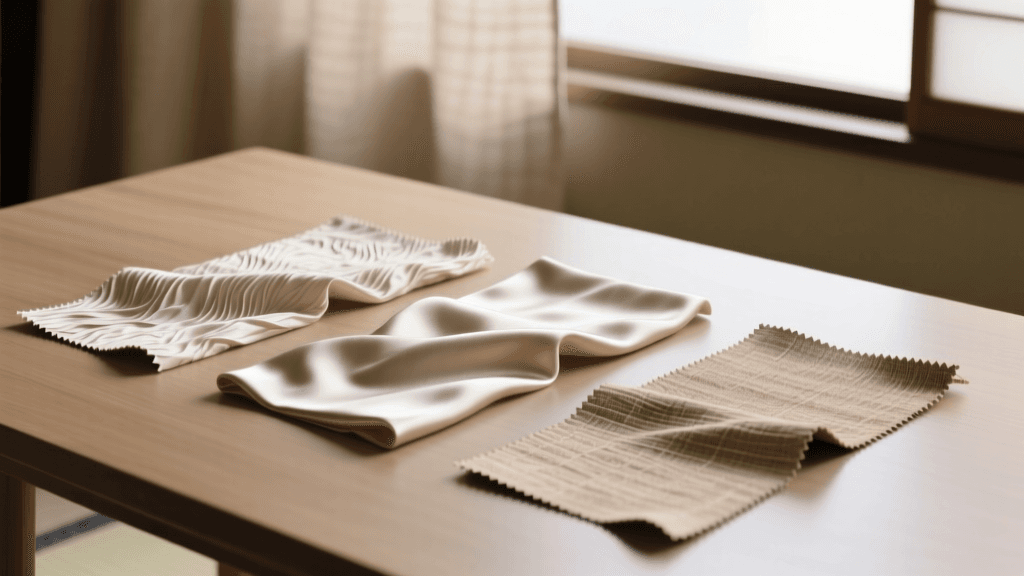
Originating from the Tango region in northern Kyoto, Chirimen is the undisputed king of formal kimono fabrics. The signature characteristic of Chirimen is its pebbled, crinkled texture known as shibo. This is achieved through a highly specialized weaving process where the weft threads are tightly twisted—alternating between left and right twists—before being woven. When the fabric is washed and the tension released, the threads shrink and create the signature bumpy surface.
This texture not only gives Chirimen a luxurious, heavy drape but also makes it highly resistant to wrinkling. It is the premier choice for formal garments like the kurotomesode (married women's formal kimono) and furisode (unmarried women's formal kimono). According to the Kyoto Tourism Official Guide, the Tango region produces the vast majority of Japan's white silk crepe, which is later sent to Kyoto City or Kanazawa for dyeing.
2. Habutai (Plain Weave Silk)
Habutai translates roughly to soft feather, perfectly describing its lightweight, smooth, and lustrous qualities. It is woven using a simple plain weave (one warp thread over one weft thread) with untwisted or very loosely twisted silk threads. The result is a flat, highly reflective fabric that glides beautifully against the skin.
Because it lacks the heavy drape and texture of Chirimen, Habutai is rarely used for outer formal kimono. Instead, it is the gold standard for nagajuban (under-kimono), haori linings, and lightweight summer garments. It is also frequently used as a base for hand-painted Yuzen designs due to its smooth, canvas-like surface.
3. Tsumugi (Pongee / Slub Silk)
Tsumugi represents the rustic, soulful side of Japanese silk. Historically, peasants were forbidden from wearing glossy, refined silk, so they spun silk floss and damaged cocoons into yarn by hand. This creates a fabric with a matte finish and a distinct slub (uneven, bumpy) texture.
Today, Tsumugi is a paradox: it retains the aesthetic of humble, rustic workwear but is often the most expensive and labor-intensive silk to produce. Famous varieties like Yuki Tsumugi and Oshima Tsumugi are designated as Important Intangible Cultural Properties by the Japanese government. As noted by the Ministry of Economy, Trade and Industry (METI), these traditional crafts require hundreds of manual steps, including the meticulous hand-tying of thousands of threads for kasuri (ikat) patterns before dyeing. The Victoria and Albert Museum highlights in their Kimono exhibition archives how Tsumugi evolved from Edo-period peasant wear to a highly coveted luxury status symbol among modern connoisseurs.
Fabric Comparison Chart
| Fabric Type | Texture & Weave | Formality Level | Avg. Cost (Tanmono) | Best Use Case |
|---|---|---|---|---|
| Chirimen | Heavy, pebbled crepe (twisted weft) | High (Formal/Semi-Formal) | $400 - $1,500+ | Furisode, Tomesode, Houmongi |
| Habutai | Smooth, lightweight, glossy (plain weave) | Low to Medium | $150 - $350 | Juban (underwear), Linings, Summer wear |
| Tsumugi | Matte, slubby, rustic (hand-spun pongee) | Casual / Everyday (High Prestige) | $1,500 - $10,000+ | Edo Komon, Kasuri, Daily luxury wear |
Actionable Buying Guide: Costs and Measurements
When purchasing authentic kimono fabric, you are buying a tanmono—a continuous bolt of cloth designed specifically to minimize waste during the cutting and sewing process.
Standard Measurements
- Width: A standard kimono bolt is remarkably narrow, typically measuring between 36 cm and 40 cm (approx. 14 to 15.5 inches) wide.
- Length: The bolt ranges from 11.5 to 12.5 meters (approx. 37 to 41 feet) long.
- Yield: One tanmono contains exactly enough fabric to create one standard kimono, including the main body panels, sleeves, and collar, with almost zero textile waste.
Pricing and Tailoring Budgets
If you are commissioning a custom kimono, factor in both the fabric and the shitate (tailoring) costs.
- Fabric Costs: Mass-produced Chinese silk Habutai can be found for under $100, but authentic Japanese Tango Chirimen starts around $400. Hand-woven Oshima Tsumugi easily exceeds $3,000 due to the months of labor required for the mud-dyeing and kasuri tying process.
- Tailoring (Shitate): Professional hand-sewing by a certified kimono tailor in Japan typically costs between $250 and $500. Machine sewing is cheaper ($100-$150) but is frowned upon for high-end silks as it compromises the garment's drape and ability to be unstitched for cleaning.
- Timing: Bespoke tailoring takes 4 to 8 weeks. If you require custom Yuzen dyeing on white Chirimen, expect the entire process to take 3 to 6 months.
Dyeing Techniques: Yuzen vs. Shibori
The base fabric is only half the story. The application of color defines the kimono's final artistic value.
Kyo Yuzen and Kaga Yuzen: This resist-dyeing technique uses a cone-shaped applicator to outline designs with rice paste (itome nori). The paste prevents dyes from bleeding, allowing for incredibly detailed, painterly motifs like cherry blossoms, cranes, and flowing water. Kyo Yuzen (Kyoto) favors bright, lavish colors and gold leaf, while Kaga Yuzen (Kanazawa) utilizes a strict five-color palette and realistic, nature-inspired shading.
Shibori: A manual tie-dye technique where fabric is bound, stitched, or clamped before dyeing. Kanoko shibori (fawn-spot tie-dye) on Chirimen is exceptionally labor-intensive; a single furisode can require millions of individual hand-tied knots, pushing the price of the garment well over $10,000.
Care, Maintenance, and Storage
Silk kimono fabrics require specialized care to preserve their structural integrity and vibrant dyes.
- Cleaning: Never wash a silk kimono at home. Take it to a specialist for maruarai (a full garment wash using specialized solvents) which costs roughly $80 to $150. For minor stains, spot cleaning (shimi-nuki) is preferred to preserve the fabric's natural oils.
- Airing Out: After wearing, hang the kimono in a shaded, well-ventilated area for 24 hours to allow sweat and moisture to evaporate before folding.
- Storage: Fold the kimono along its original seam lines. Wrap it in tatou (traditional acid-free paper) and store it in a tansu (paulownia wood chest). Paulownia wood naturally regulates humidity and repels insects, making it the ultimate storage solution for expensive Tsumugi and Chirimen silks.
Conclusion
Understanding the craftsmanship behind Chirimen, Habutai, and Tsumugi transforms the way you view and collect Japanese garments. Whether you are investing in the heavy, formal elegance of Tango Chirimen, the practical luxury of Habutai linings, or the profound, rustic heritage of hand-spun Tsumugi, you are participating in a centuries-old tradition of textile mastery. By paying attention to fabric types, measurements, and proper maintenance, you ensure these wearable works of art endure for generations to come.