Kimono In Pop Culture: Styling Traditional Japanese Fashion
The Cinematic and Musical Rise of Japanese Silhouettes
The intersection of traditional Japanese clothing and global pop culture is one of the most fascinating cross-pollinations in modern fashion history. From the neon-lit streets of Harajuku to the runways of Paris and the music videos of global hip-hop icons, garments like the kimono, haori, and noragi have transcended their historical roots. According to The Metropolitan Museum of Art's Heilbrunn Timeline of Art History, the T-shaped silhouette of the kimono has influenced Western garment construction for over a century, but it is in the last two decades that these pieces have become staples of global streetwear and media costuming.
In cinema, directors like Quentin Tarantino utilized the stark, dramatic lines of traditional Japanese garments in films like Kill Bill to convey honor, discipline, and lethal precision. In the music industry, artists such as Kendrick Lamar, A$AP Rocky, and Tyler, the Creator have frequently been photographed wearing vintage noragi and silk haori, pairing them with modern sneakers and denim. This fusion creates a striking visual contrast that respects the garment's heritage while embedding it firmly in contemporary urban aesthetics.
Core Garments Bridging Tradition and Streetwear
To successfully incorporate Japanese fashion into a modern wardrobe, one must understand the distinct garments that have crossed over into pop culture. Here are the three most prominent pieces seen in global media today:
1. The Haori (羽織)
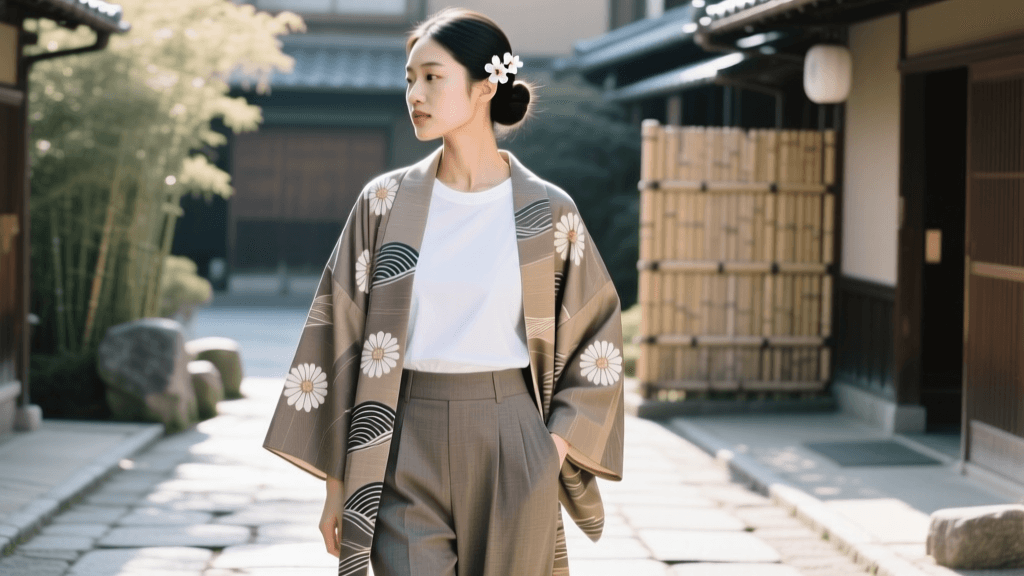
Originally worn over the kimono to provide warmth and denote social status, the haori is a hip- or thigh-length jacket with wide, flowing sleeves. Unlike the kimono, the haori is left open at the front, making it an ideal layering piece for modern streetwear. In anime and Japanese media, the haori is often used to signify a character's mastery or leadership (such as the iconic checkered haori in Demon Slayer).
2. The Noragi (野良着)
The noragi is a traditional farmer's jacket, characterized by its boxy fit, drop shoulders, and open front. Often crafted from heavy cotton and dyed with natural indigo (aizome), vintage noragi frequently feature sashiko (decorative reinforcement stitching) or boro (patchwork mending). Workwear enthusiasts and streetwear brands have heavily adopted the noragi for its rugged, utilitarian aesthetic.
3. The Sukajan (スカジャン)
While not a centuries-old garment, the sukajan (souvenir jacket) is deeply tied to Japanese post-WWII history and global pop culture. Originating in Yokosuka, these satin jackets feature elaborate silk embroidery of tigers, dragons, and cherry blossoms. They have become a symbol of rebellious youth culture in Japanese cinema and a highly sought-after collector's item in global vintage markets.
Actionable Styling Guide: Proportions and Layering
Styling traditional Japanese garments requires an understanding of proportion. Western fashion often emphasizes tailored, body-conforming silhouettes, whereas traditional Japanese clothing celebrates space, drape, and the void (ma) between the fabric and the body.
- Shoulder Drop and Sleeves: When buying a vintage noragi or haori, do not look for a 'fitted' shoulder seam. The seam should drop 2 to 4 inches down the upper arm. The sleeves are typically wide and boxy, ending around the mid-forearm or wrist.
- Length and Proportions: A standard vintage haori measures between 80cm and 95cm in length, falling at the mid-thigh. Pair this with slim or straight-leg trousers to balance the voluminous top half. Avoid overly baggy pants, which can make the outfit look like a costume rather than a curated ensemble.
- Footwear Pairings: To ground the outfit in modern streetwear, pair traditional jackets with chunky sneakers (like the New Balance 990 series) or split-toe boots (like Maison Margiela's Tabi boot or modern ninja-style sneakers). Avoid wearing traditional zori or geta sandals in casual streetwear contexts, as this can push the look into costume territory.
- The Haori Himo (Ties): Traditionally, haori are tied with a braided cord called a himo. In modern styling, you can leave the haori completely open for a relaxed, flowing silhouette, or use a minimalist leather cord to secure it slightly at the waist.
Sourcing and Cost: Vintage vs. Contemporary
When building a wardrobe inspired by Japanese pop culture, you must decide between authentic vintage pieces and modern designer reproductions. The Kyoto Costume Institute Digital Archives highlights the intricate textile techniques of the past, which are often impossible to replicate at modern fast-fashion price points.
| Garment Type | Source / Era | Average Cost (USD) | Styling Difficulty | Pop Culture Association |
|---|---|---|---|---|
| Vintage Silk Haori | 1970s-1990s Japan | $45 - $150 | Medium | Anime, High Fashion Runways |
| Vintage Cotton Noragi | Early-Mid 20th Century | $80 - $250 | Low | Hip-Hop, Workwear, Streetwear |
| Vintage Sukajan | 1960s-1980s | $300 - $1,200+ | High | Yakuza Cinema, Rockabilly |
| Modern Designer Noragi | Contemporary Brands | $250 - $800 | Low | Techwear, Modern Minimalism |
Pro-Tip for Sourcing: For authentic vintage pieces, utilize proxy buying services like Buyee or ZenMarket to access Yahoo! Auctions Japan. Search terms like '古着 野良着' (furugi noragi - vintage farmer jacket) or 'シルク 羽織' (silk haori) will yield vastly superior and cheaper results than Western vintage platforms.
Navigating Cultural Appreciation in Global Fashion
As Japanese fashion permeates global media, the line between cultural appreciation and appropriation is a vital consideration. The Victoria and Albert Museum's exhibition 'Kimono: Kyoto to Catwalk' explored how the garment has been continuously reinterpreted globally, emphasizing that respectful engagement is key.
'True appreciation involves understanding the history, craftsmanship, and cultural weight of a garment, rather than reducing it to a mere exotic aesthetic or costume.'
To wear these garments respectfully:
- Avoid 'Costuming': Do not mix traditional garments with stereotypical props (e.g., plastic katanas, geisha makeup) for casual streetwear or parties.
- Respect the Left-over-Right Rule: When wrapping any traditional Japanese garment (including noragi and yukata), always fold the left side over the right side. Folding right-over-left is strictly reserved for dressing the deceased in Japanese funeral rites.
- Support Authentic Artisans: Whenever possible, purchase from reputable vintage dealers or modern brands that collaborate directly with Japanese artisans, ensuring the preservation of techniques like sashiko and kasuri weaving.
Care and Maintenance for Traditional Textiles
Traditional Japanese garments require specific care to maintain their structural integrity and historical value. Vintage silk haori and indigo-dyed cotton noragi cannot be treated like modern cotton hoodies.
Cleaning Protocols
Never machine wash vintage silk or heavily embroidered garments. For silk haori, rely on professional dry cleaners who specialize in delicate, vintage textiles. For cotton noragi, spot clean with a damp cloth. If a full wash is necessary for raw cotton, hand wash in cold water with a pH-neutral detergent, but be aware that natural indigo (aizome) will bleed and fade, which is often considered part of the garment's evolving character.
Storage Solutions
Never hang heavy vintage haori or noragi on thin wire hangers; the weight of the fabric will distort the shoulder seams and cause permanent stretching. Instead, use wide, padded wooden hangers. For long-term storage, fold the garments along their natural seam lines and wrap them in acid-free tissue paper or unbleached cotton cloth (tatou). Store them in a cool, dry place, and air them out in the shade twice a year to prevent moisture buildup and musty odors.
Conclusion
The integration of traditional Japanese garments into global pop culture is a testament to the timelessness of their design. By understanding the historical context, mastering the unique proportions, and committing to respectful styling and care, you can seamlessly weave pieces like the haori and noragi into your modern wardrobe. Whether inspired by the cinematic drama of Tokyo's underworld or the lyrical flow of modern hip-hop, Japanese fashion offers a profound, sartorial bridge between the ancient and the avant-garde.