Edo Period Kosode: History, Obi Evolution, and Modern Sizing
The Evolution of the Kosode: From Heian Undergarment to Edo Masterpiece
When we think of traditional Japanese clothing, the modern kimono immediately comes to mind. However, the direct ancestor of the modern kimono is the kosode (literally 'small sleeve'), a garment that underwent a radical transformation between the Heian period (794–1185) and the Edo period (1603–1867). During the Heian era, the aristocracy favored the junihitoe, a breathtaking but immensely heavy twelve-layered robe ensemble. The kosode was originally worn merely as an undergarment beneath these lavish court layers. According to the Kyoto Costume Museum, as the samurai class rose to power and the lavish Heian court lifestyle gave way to more practical, martial-influenced societies, the kosode gradually emerged as the primary outer garment for both men and women.
By the time the Tokugawa shogunate established the Edo period, Japan entered an era of unprecedented peace, urbanization, and economic growth. The merchant class (chonin) amassed wealth, and fashion became a primary vehicle for social expression. The kosode evolved from a simple, unadorned silk under-robe into a canvas for extraordinary textile arts, setting the stage for the modern kimono we recognize today.
Historical Comparison: Heian Court Dress vs. Edo Commoner Fashion
To understand the magnitude of this fashion revolution, it is helpful to compare the dominant silhouettes and philosophies of these two distinct historical epochs. The shift from the Heian junihitoe to the Edo kosode represents a move from layered volume to surface-level artistry.
| Feature | Heian Period (Junihitoe) | Edo Period (Kosode) |
|---|---|---|
| Silhouette | Wide, voluminous, heavily layered (up to 12 robes) | Straight, T-shaped, single outer layer with under-robem |
| Sleeve Style | Osode (large, open sleeves) revealing layered colors | Kosode (small, sewn-up sleeves) acting as a canvas |
| Aesthetic Focus | Kasane no Irome (color combinations of layered hems) | Surface dyeing, embroidery, and woven brocade patterns |
| Primary Wearers | Imperial Court Aristocracy | Samurai, Merchants, Artisans, and Commoners |
| Mobility | Highly restricted; required assistance to move | Relatively mobile; secured with an obi sash |
The Genroku Era and the Birth of the Modern Obi
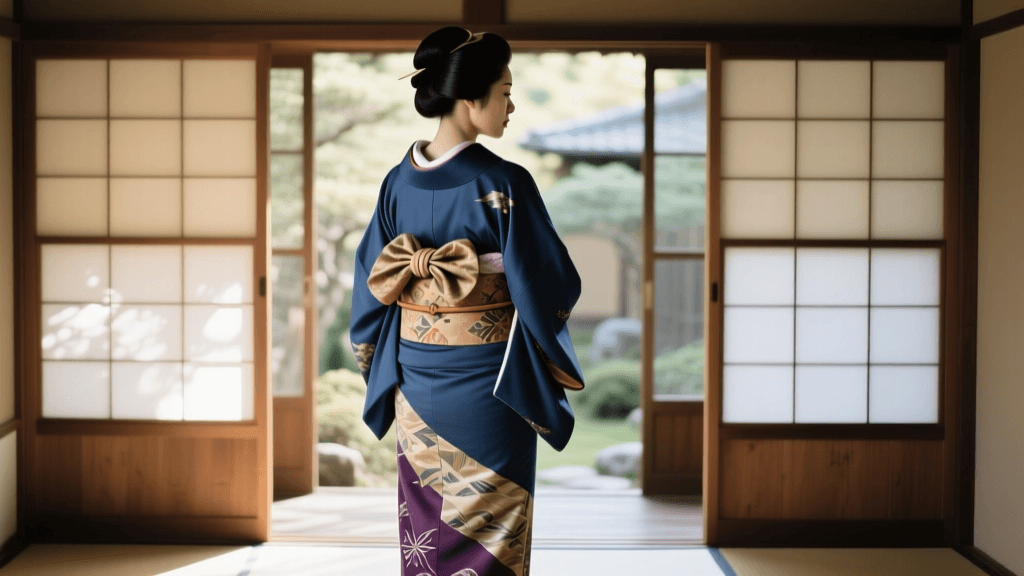
No discussion of Edo period fashion is complete without examining the evolution of the obi. In the early Edo period, the obi was a narrow, unobtrusive cord used simply to hold the kosode closed. However, during the Genroku era (1688–1704), a cultural boom led to dramatic changes in Japanese fashion. As textile techniques like Yuzen dyeing allowed for wider, more elaborate patterns on the kosode, the obi widened in response to balance the visual weight of the garment.
According to the Victoria and Albert Museum, the obi transformed from a hidden functional tie into a massive, decorative centerpiece. By the late 18th century, the obi had widened to nearly 30 centimeters (12 inches). This physical expansion necessitated a crucial shift in how the garment was worn: the obi knot moved from the front or side of the body to the back. Initially, unmarried women and courtesans tied their obi in the front, but as the sashes became too wide and cumbersome, tying them in the back became the standard for married women and eventually the universal norm, giving birth to the intricate musubi (knots) seen in modern kimono dressing.
Sumptuary Laws and the Aesthetic of 'Iki'
The Edo shogunate frequently enacted Ken'yakurei (sumptuary laws) to prevent the wealthy merchant class from dressing above their social station. Commoners were forbidden from wearing luxurious silks, bold tie-dyes, or expensive gold thread on the exterior of their garments. This suppression birthed the sophisticated aesthetic of iki (subdued, understated elegance). Merchants would commission kosode with plain, muted cotton or linen exteriors, but line the inner hems and collars with outrageously expensive, hand-painted Yuzen silk. This practice of hidden luxury allowed commoners to express their wealth and taste while technically obeying the law, a tradition that still influences the subtle lining choices in modern men's haori and kimono today.
Practical Guide: Sizing and Measuring for Vintage Kosode
For collectors, historical reenactors, and traditional garment enthusiasts, sourcing an authentic Edo or Meiji-era antique kosode is a thrilling pursuit. However, because these garments were made before the era of standardized Western sizing, understanding traditional Japanese measurements is critical. Unlike modern clothing, a kosode is constructed from straight bolts of fabric (tanmono), meaning the fit is highly adjustable, provided the base measurements align with your body.
When shopping for antique Japanese garments, you must focus on two primary metrics: Yuki (the center-back-to-wrist sleeve measurement) and Take (the total back length). The Smithsonian National Museum of Asian Art notes that historical garments often feature shorter sleeve depths and narrower shoulder spans compared to modern, post-WWII kimono, reflecting the generally smaller stature of the Edo-period population.
Sizing Chart for Antique Japanese Garments
Use the following chart to determine if a vintage kosode will fit your frame. Remember that the modern wearing style requires an ohashori (a tuck at the waist), meaning the garment must be significantly longer than your actual height.
| Measurement Term | Definition | Ideal Size (cm) | Ideal Size (inches) | Fit Notes for Modern Wearers |
|---|---|---|---|---|
| Take (Length) | Center back collar to hem | Height + 10cm to 15cm | Height + 4 to 6 inches | Required to create the ohashori waist fold. |
| Yuki (Sleeve) | Center back neck to wrist | 60cm to 66cm | 23.5 to 26 inches | Antique Edo kosode often run short (under 60cm). |
| Sode-aki (Sleeve Opening) | Width of the sleeve opening | 20cm to 23cm | 8 to 9 inches | Edo sleeves are squarer and smaller than modern kimono. |
| Mihaba (Body Width) | Half of the total hip/hip width | 32cm to 36cm | 12.5 to 14 inches | Ensure this is at least 5cm wider than your hip radius. |
Sourcing Authentic Edo-Style Garments Today: Timing and Costs
Acquiring a genuine Edo-period (1603–1867) or early Meiji-period (1868–1912) kosode requires knowing where to look and understanding the market value of antique silks. True Edo-period garments are incredibly rare and fragile, often preserved in museum archives. However, late Edo and Meiji-era kosode are widely available in the antique market and offer the exact same historical silhouette and construction techniques.
Where to Buy: Top Antique Markets
- Oedo Antique Market (Tokyo): Held on the 1st and 3rd Sunday of every month at the Tokyo International Forum. This is the premier destination for high-end antique textiles, including late-Edo uchikake (wedding kosode) and early Meiji everyday wear.
- Toji Temple Flea Market (Kyoto): Held on the 21st of every month. Known as Kobo-san, this market is excellent for finding fragmented antique silks, vintage obi, and more affordable Meiji-era kosode.
- Online Auctions (Yahoo! Auctions Japan): Search terms like Edo jidai kosode (江戸時代小袖) or Meiji jidai antique kimono (明治時代アンティーク着物). Utilizing a proxy buying service like Buyee or ZenMarket is necessary for international buyers.
Cost Breakdown and Investment Guide
The cost of historical Japanese garments varies wildly based on condition, textile technique, and provenance. Here is a practical pricing guide for buyers:
- Fragmented or Stained Edo/Meiji Kosode ($30 – $150 USD): Ideal for textile study, framing, or upcycling into modern fashion accessories. Often feature incredible hand-spun silk and natural indigo or safflower dyes.
- Wearable Late-Meiji / Taisho Roman Kosode ($200 – $800 USD): Garments from the 1890s to 1920s that bridge the gap between Edo traditions and modern aesthetics. Look for shibori (tie-dye) and early synthetic aniline dyes.
- Museum-Quality Edo Uchikake ($2,000 – $15,000+ USD): Heavy, padded outer kosode worn by high-ranking samurai wives or wealthy merchants. These feature extensive gold-leaf embroidery (kincha) and couched threads. They are too fragile to wear and should be displayed flat or on specialized mannequins.
Conclusion: The Enduring Legacy of the Kosode
The Edo period kosode is far more than a historical artifact; it is the foundational blueprint for all modern Japanese traditional dress. The ingenuity born from sumptuary laws, the artistic explosion of the Genroku era, and the structural evolution of the obi all converged to create a garment that balances strict geometric construction with limitless surface artistry. Whether you are studying the layered aesthetics of the Heian court, measuring yourself for a vintage Meiji-era reproduction, or simply admiring the hidden silk linings of a modern haori, the spirit of the Edo kosode remains vibrantly alive in the wardrobes of traditionalists and fashion historians worldwide.