Kimono Storage Preservation 2026: Archival Care Guide
The Science of Silk and the Imperative of Archival Storage
The kimono is more than a traditional Japanese garment; it is a masterpiece of textile engineering, cultural heritage, and artistic expression. However, the primary material used in formal kimono—silk—is a protein fiber composed of fibroin and sericin. This biological makeup makes it exceptionally vulnerable to environmental stressors, including fluctuating humidity, ultraviolet light, and pest infestations. As we navigate the climate realities of 2026, where unseasonal humidity spikes and temperature fluctuations are increasingly common, proper kimono storage preservation and collection management have transitioned from a niche hobbyist concern to an absolute necessity for collectors, museums, and families preserving heirlooms.
According to the Victoria and Albert Museum's textile conservation guidelines, protein fibers like silk require highly specific microclimates to prevent the hydrolysis of the fiber structure. When silk is exposed to high humidity, it can develop mold or suffer from permanent creasing. Conversely, excessively dry conditions can cause the fibers to become brittle and shatter along fold lines. This comprehensive 2026 guide details the exact methodologies, materials, and technologies required to archive silk kimono collections safely.
The Foundation: Paulownia Wood (Kiri) vs. Modern Alternatives
For centuries, the gold standard for kimono storage has been the kiri (paulownia wood) box, known in Japan as a tansu or kiribako. Paulownia is uniquely suited for textile preservation due to its hygroscopic properties. The wood naturally absorbs excess ambient moisture during humid seasons and releases it when the air is dry, creating a buffered microclimate. Furthermore, paulownia contains natural compounds that deter insects, and its high ignition point makes it historically fire-resistant.
In 2026, sustainably harvested Japanese paulownia boxes remain the premier choice for high-end collectors. A standard single-kimono storage box (measuring approximately 36cm x 36cm x 8cm) currently retails between $180 and $350 USD, depending on the craftsmanship and joinery techniques. However, modern archival science has also introduced high-grade polypropylene bins as a viable, cost-effective alternative for large collections, provided they are paired with specialized silica gel cassettes to mimic the humidity-buffering effect of wood.
2026 Storage Material Comparison
| Storage Material | Hygroscopic Properties | Archival Safety for Silk | 2026 Avg. Cost (USD) |
|---|---|---|---|
| Paulownia Wood (Kiri) | Excellent (Naturally Regulates Humidity) | High (Naturally pest-resistant, non-acidic) | $180 - $350 |
| Archival Polypropylene | None (Requires Conditioned Silica Cassettes) | High (Chemically inert, off-gasses zero VOCs) | $45 - $85 |
| Cedar Wood | Good | Low (Acidic natural oils can stain and degrade silk) | $90 - $150 |
| Standard Cardboard | Poor (Absorbs ambient moisture, warps) | Very Low (High acidity, lignin off-gassing) | $10 - $20 |
Wrapping Techniques: Tatamono and Tatogami
Never hang a silk kimono on a hanger for long-term storage. The weight of the garment will inevitably distort the shoulder seams and stretch the delicate weave. Instead, kimono must be folded using the traditional tatamono method. This specific folding technique aligns the seams and distributes the fabric's weight evenly, minimizing stress on any single point of the textile.
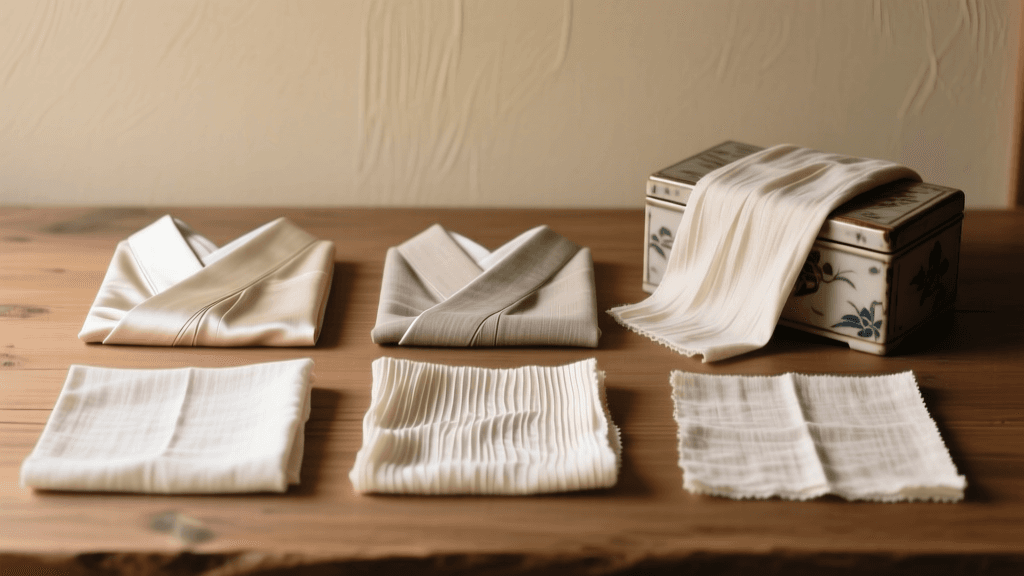
Once folded, the garment must be wrapped in tatogami. Historically, this was handmade washi paper. In 2026, museum conservators strongly recommend using unbuffered, acid-free archival tissue paper. It is critical to use unbuffered tissue; buffered tissues contain an alkaline reserve (usually calcium carbonate) designed to neutralize acids in plant-based fibers like cotton or linen. However, this alkaline reserve will actively damage protein fibers like silk and wool over time. A pack of 100 sheets of museum-grade unbuffered tissue costs approximately $25 to $35 USD in 2026, a small investment to prevent the yellowing and degradation of a multi-thousand-dollar garment.
Proper kimono preservation is not merely about storing fabric; it is about maintaining the structural memory of the garment while neutralizing the chemical threats of the surrounding environment.
Climate Control and Smart Monitoring in 2026
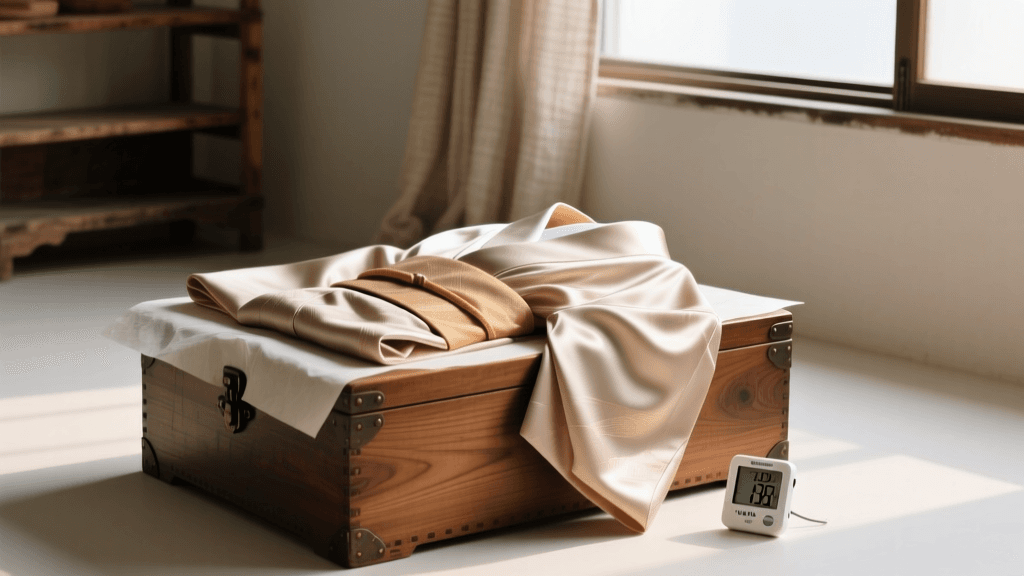
The ideal storage environment for silk kimono is a dark, well-ventilated space with a stable temperature of around 18°C (65°F) and a relative humidity (RH) of 45% to 55%. Achieving this in a standard residential home can be challenging. The National Park Service Museum Conservation handbook emphasizes that rapid fluctuations in humidity are often more damaging to textiles than a steady, slightly sub-optimal baseline, as the fibers repeatedly swell and contract, leading to mechanical fatigue.
To manage this, modern collectors in 2026 are integrating ultra-slim Bluetooth and Wi-Fi smart hygrometers directly inside their paulownia boxes and archival bins. Devices like the 2026 SwitchBot Sensor Pro or the Govee Archival Monitor are thin enough to slide between folded garments without creating pressure points. These sensors log temperature and RH data to a smartphone app, alerting the collector immediately if the microclimate inside the box breaches the safe 45-55% RH threshold. If humidity rises, collectors can introduce conditioned silica gel cassettes (such as Art-Sorb) to safely draw moisture out of the enclosed space.
Pest Management Without Toxicity
The webbing clothes moth and the carpet beetle are the natural predators of silk. Historically, collectors relied on naphthalene or paradichlorobenzene mothballs. Today, these chemicals are widely banned or heavily discouraged in the archival community. Not only are they highly toxic to humans and pets, but the volatile organic compounds (VOCs) they emit can react with moisture in the air to form acidic byproducts that literally burn silk fibers, leaving permanent brown stains and weakened patches.
In 2026, integrated pest management (IPM) for textile collections relies on prevention and non-toxic deterrents. Natural camphor (derived from the camphor tree) remains a culturally appropriate and safe alternative, provided it is placed in a breathable muslin bag and never allowed to directly touch the silk. Additionally, pheromone traps are highly effective for monitoring adult male moth activity in the storage room. If an active infestation is suspected, the safest 2026 protocol is anoxic treatment: sealing the affected kimono in an oxygen-deprived archival bag with an oxygen scavenger for 21 days, which safely eradicates eggs, larvae, and adults without the use of chemicals or freezing (which can cause moisture condensation and thermal shock to the fibers).
Digital Collection Management and NFC Tagging
Managing a large kimono collection requires meticulous cataloging. Unwrapping a kimono simply to identify its pattern or provenance exposes it to unnecessary light, handling oils, and environmental shifts. To solve this, forward-thinking collectors and archivists in 2026 are utilizing passive NFC (Near Field Communication) tags.
By attaching a flexible, acid-free NFC sticker to the outside of the tatogami wrapper or the paulownia box, collectors can link the physical garment to a digital database. Tapping a smartphone against the box instantly pulls up high-resolution photographs of the kimono, its condition report, acquisition date, and specific folding instructions. This seamless integration of traditional Japanese archiving methods with modern digital asset management ensures that the collection is preserved not just physically, but historically, for generations to come.
Conclusion
Preserving a kimono collection in 2026 requires a harmonious blend of ancestral wisdom and modern material science. By investing in paulownia wood or inert archival plastics, utilizing unbuffered acid-free tissues, and leveraging smart climate monitoring, collectors can halt the march of time. The kimono is a testament to the artistry of Asian textile traditions; treating its storage with the rigor of a museum conservator ensures these magnificent garments will continue to tell their stories for centuries.