Kimono vs Hanbok vs Cheongsam: 2026 Styling Guide
The Renaissance of East Asian Heritage Wear in 2026
The global fashion landscape in 2026 has fully embraced the concept of 'heritage fusion,' where traditional garments are no longer relegated to museum archives or strictly ceremonial occasions. Instead, the kimono, hanbok, and cheongsam have been reimagined for contemporary wardrobes, blending centuries-old construction techniques with modern sustainable textiles and everyday styling. For enthusiasts, collectors, and newcomers alike, understanding the distinct silhouettes, structural differences, and modern adaptations of these three iconic garments is essential.
Whether you are looking to invest in a bespoke piece for a wedding, seeking a 'daily wear' version for the office, or simply wanting to understand the rich cultural tapestry of East Asian dress, this comprehensive comparison will guide you through the nuances of Japan's kimono, Korea's hanbok, and China's cheongsam. We will explore how 2026's textile innovations and styling trends have breathed new life into these historic garments.
The Kimono: Japan’s T-Shaped Masterpiece
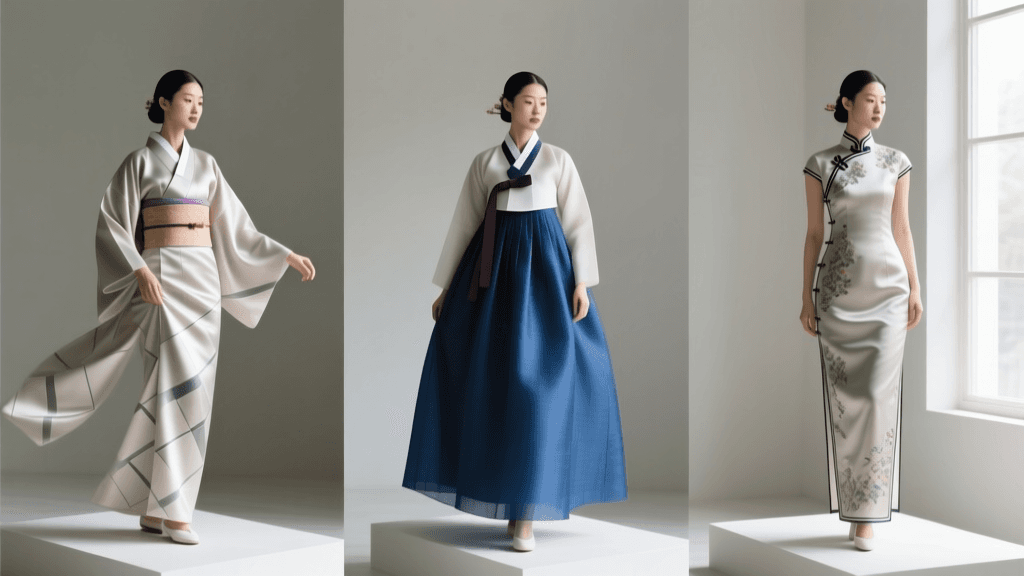
The kimono is arguably the most globally recognized traditional Asian garment. Historically constructed from a single bolt of fabric with minimal cutting, the kimono is defined by its T-shaped silhouette, straight seams, and the iconic obi (sash) that secures it at the waist. According to encyclopedic records on traditional Kimono construction, the garment's design philosophy prioritizes the preservation of fabric, allowing it to be entirely taken apart and re-woven or repurposed.
2026 Silhouette and Styling Trends
In 2026, the kimono silhouette has seen a shift toward relaxed, deconstructed styling. While formal silk kimonos remain strictly regulated by traditional rules, the casual 'yukata' and modern wool-blend kimonos are being styled with contemporary accessories. It is increasingly common to see kimonos paired with chunky platform loafers, minimalist leather belts replacing traditional obi for casual wear, and layered over modern turtlenecks during the autumn months.
Sustainable textiles are dominating the 2026 kimono market. Artisans in Kyoto and Tokyo are utilizing lab-grown peace silk and recycled cupro blends that mimic the drape of traditional habutai silk but offer machine-washable convenience. Prices for high-quality, modern casual kimonos from indie Japanese designers currently range from $250 to $600, making them accessible for everyday fashion enthusiasts.
The Hanbok: Korea’s Voluminous Elegance
The hanbok is characterized by its vibrant colors, simple lines, and striking volumetric contrast. The traditional women's hanbok consists of the 'jeogori' (a cropped, tailored jacket) and the 'chima' (a high-waisted, full, bell-shaped skirt). Men's hanbok features a jeogori paired with 'baji' (roomy, tie-waist trousers). The structural genius of the hanbok lies in its ability to conceal the body's natural shape while creating an elegant, flowing silhouette that moves beautifully with the wearer.
2026 Silhouette and Styling Trends
The 'Daily Hanbok' movement has matured significantly by 2026. Modern Korean designers have shortened the jeogori slightly and introduced lightweight, breathable fabrics like Tencel-linen blends and organic cotton voiles. The voluminous chima has been adapted into A-line midi skirts that fit seamlessly into a modern professional wardrobe. Pastel palettes and muted earth tones have replaced the historically stark primary colors, aligning with the 2026 global trend toward quiet luxury and understated elegance.
For those exploring Hanbok historical roots and their modern translations, the styling possibilities are vast. In 2026, fashion-forward individuals are pairing cropped, modern jeogori jackets with high-waisted denim or tailored wide-leg trousers, creating a striking juxtaposition of heritage and streetwear. The tie-waist baji pants have also become a staple in gender-neutral fashion, prized for their comfort and dramatic drape.
The Cheongsam: China’s Form-Fitting Icon
The cheongsam, also known as the qipao, stands in stark contrast to the voluminous hanbok and the straight-lined kimono. Originating in the 1920s as a modernized, form-fitting dress, the cheongsam is defined by its high mandarin collar, asymmetrical opening, and intricate 'pankou' (frog) closures. It is a garment that celebrates the natural contours of the body, requiring precise tailoring to achieve its signature sleek silhouette.
2026 Silhouette and Styling Trends
The 2026 cheongsam market is defined by 'stretch heritage.' Designers are incorporating elastane and spandex into traditional silk brocades and jacquards, allowing for a skin-tight fit that moves comfortably with the wearer. This innovation has solved the historical issue of restricted movement in vintage qipaos. Furthermore, deconstructed cheongsams—featuring cut-outs, detachable collars, and asymmetrical hemlines—are highly sought after for evening wear and high-fashion events.
As noted in studies of Cheongsam evolution, the garment has always been a reflection of modernity. Today, everyday versions made from breathable bamboo-silk blends are priced between $150 and $400. Stylists in 2026 recommend pairing a midi-length, short-sleeved cheongsam with minimalist strappy heels and structured micro-bags for a sophisticated daytime look, or layering a sleeveless qipao over a sheer, long-sleeved mesh top for evening occasions.
Comprehensive Garment Comparison Chart
To help you decide which garment best suits your wardrobe, lifestyle, and body type, refer to the structured comparison below:
| Feature | Kimono (Japan) | Hanbok (Korea) | Cheongsam (China) |
|---|---|---|---|
| Primary Silhouette | T-shaped, straight, tubular | Voluminous, bell-shaped, cropped top | Form-fitting, sleek, columnar |
| Fastenings | Obi sash, internal ties | Dongjeong (collar), tie ribbons | Pankou (frog) buttons, hidden zippers |
| 2026 Fabric Trend | Recycled cupro, peace silk | Tencel-linen, organic cotton voile | Stretch brocade, bamboo-silk blends |
| Best Occasion | Tea ceremonies, art events, lounging | Festivals, family gatherings, casual daily | Cocktail parties, formal dinners, weddings |
| Tailoring Required | Minimal (width/length adjustments) | Moderate (jeogori fit, chima waist) | High (requires precise body measurements) |
Sizing, Fit, and Accessibility in 2026
One of the most significant advancements in 2026 is the democratization of sizing for traditional garments. Historically, the kimono was folded to fit the wearer, the hanbok relied on adjustable ties, and the cheongsam required bespoke tailoring. Today, AI-driven body scanning apps allow global consumers to order custom-fitted cheongsams directly from ateliers in Shanghai and Hong Kong with millimeter precision.
For the kimono, modern brands have introduced standardized 'western sizing' (S, M, L) by adjusting the width of the back panel and the length of the sleeves, making it easier for non-Japanese buyers to achieve the correct 'ohashori' (the fold at the waist). Similarly, the daily hanbok market now features elasticized chima waists and adjustable jeogori ribbons, ensuring a comfortable fit across diverse body types without compromising the traditional aesthetic.
'The beauty of East Asian heritage wear in 2026 is that it no longer demands perfection from the wearer; the garments have been engineered to adapt to modern, dynamic lifestyles while honoring their ancestral roots.' — Dr. Aris Thorne, Textile Historian and Curator of Asian Fashion.
Care and Maintenance for Modern Textiles
Proper care is vital to preserving the integrity of these garments. While vintage silks still require specialized dry cleaning, the 2026 wave of heritage fusion textiles has made maintenance significantly easier.
- Kimono Care: Modern poly-blend and cupro kimonos can be hand-washed in cold water with a pH-neutral detergent. Always hang them on a wide, padded hanger to dry, and avoid direct sunlight to prevent the vibrant dyes from fading.
- Hanbok Care: Tencel and linen hanboks are prone to wrinkling. Steam them gently rather than using a direct iron, which can crush the natural fibers. Store the chima folded in a breathable cotton bag to maintain the structural integrity of the waistband.
- Cheongsam Care: Stretch brocades should be dry-cleaned to preserve the elastane fibers and the intricate pankou closures. If washing a bamboo-silk blend at home, use a mesh laundry bag on a delicate cycle and lay flat to dry to prevent the garment from stretching out of shape.
Final Thoughts: Choosing Your Heritage Garment
Selecting between a kimono, hanbok, and cheongsam ultimately comes down to your personal style, the occasion, and the silhouette you wish to project. If you prefer a relaxed, architectural, and layered look, the kimono offers unparalleled versatility and comfort. If you are drawn to romantic volume, movement, and a touch of whimsical elegance, the modern hanbok is an exceptional choice for both casual and festive settings.
Conversely, if your aesthetic leans toward sleek, sophisticated, and body-conscious tailoring, the cheongsam remains the undisputed icon of refined glamour. As we move through 2026, the boundaries between traditional and contemporary fashion continue to blur, inviting everyone to explore, respect, and integrate these magnificent Asian traditions into their personal style narratives.