Styling Silk Haori & Qipao Jackets: 2026 Urban Wardrobe Guide
The Renaissance of Asian Heritage Outerwear in 2026
The global fashion landscape of 2026 has decisively moved past fleeting micro-trends, settling firmly into an era defined by 'Heritage Minimalism.' Modern consumers and style aficionados are no longer satisfied with fast fashion; instead, they are curating capsule wardrobes that prioritize craftsmanship, cultural resonance, and sustainable longevity. At the forefront of this movement is the integration of traditional Asian garments into everyday Western and urban silhouettes. Specifically, the Japanese haori and the modern Chinese qipao (cheongsam) jacket have emerged as the ultimate transitional outerwear pieces for the contemporary urbanite.
Mixing traditional Asian pieces with modern wardrobes is not about wearing a costume; it is about honoring the architectural brilliance of these garments while grounding them in contemporary daily life. According to the Victoria and Albert Museum's comprehensive guide to Japanese dress, the structural elegance of traditional Asian outerwear was historically designed to accommodate layers while maintaining a fluid, unrestrictive silhouette. In 2026, this exact principle is being applied to modern layering, allowing these heritage pieces to serve as striking, sophisticated alternatives to the standard wool blazer or the ubiquitous trench coat.
Deconstructing the Pieces: Haori vs. Modern Qipao Jacket
Before integrating these pieces into a modern wardrobe, it is crucial to understand their distinct anatomies, fabric behaviors, and historical contexts. Both garments offer unique styling advantages, but they interact with the body in fundamentally different ways.
The Silk Haori: Structure and Drape
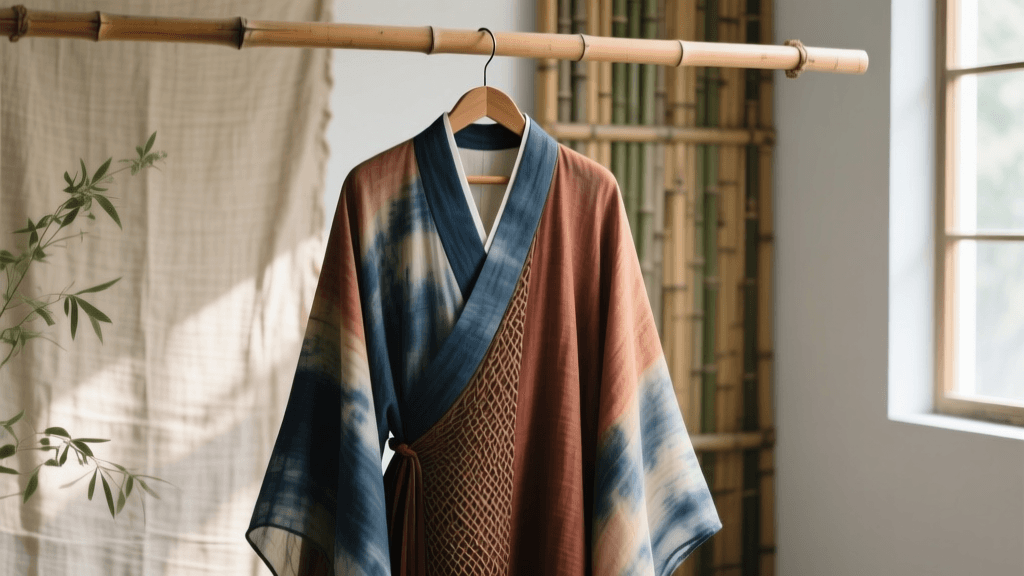
The haori is a traditional Japanese hip- or thigh-length jacket worn over a kimono. Unlike Western jackets, the haori features a T-shaped, straight-line construction with no overlapping lapels, no darts, and no tailored waist. It falls open at the front and is traditionally secured with a short, braided cord known as a haori himo. In 2026, contemporary interpretations often utilize 19mm to 30mm rinzu (silk damask) or heavy crepe de chine, providing a luxurious, liquid drape that moves beautifully with the wearer. The drop-shoulder seam and wide sleeves create a relaxed, boxy volume that perfectly contrasts with the tailored, structured clothing typical of modern urban capsules.
The Mandarin-Collar Qipao Jacket: Tailoring and Fit
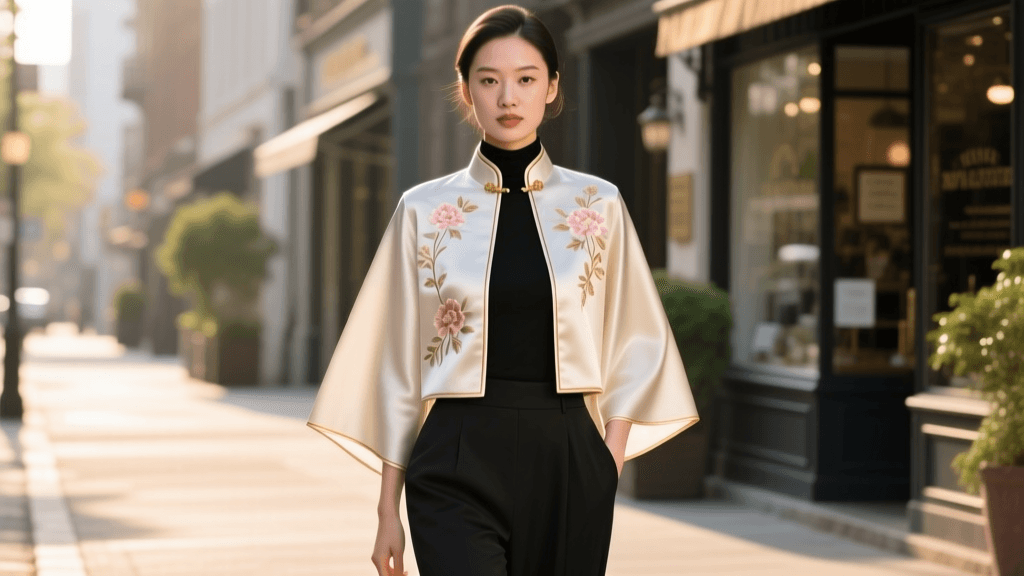
The modern qipao jacket (sometimes referred to in its more traditional, relaxed form as a tangzhuang or simply a Mandarin-collar jacket) is defined by its standing collar, asymmetric or central front closures, and intricate pankou (frog button) knotwork. While vintage 1930s qipao jackets were often tightly tailored to the body, the 2026 iteration favors a slightly relaxed, boxy cut that stops precisely at the hip bone. This modern proportion allows it to be layered over lightweight turtlenecks or silk camisoles without pulling at the delicate frog closures. The structural stiffness of the Mandarin collar provides an immediate frame for the face, offering a sharp, architectural focal point that elevates even the most basic underlying garments.
2026 Urban Capsule Integration: Practical Styling Formulas
Successfully mixing traditional Asian pieces with modern wardrobes requires a deliberate approach to proportion, texture, and color. Below are three actionable styling formulas tailored for the 2026 urban environment.
Formula 1: The Corporate Creative (Haori over Tailored Wool)
For the modern office or creative studio, replace your standard mid-weight blazer with a mid-thigh length silk haori. Choose a haori in a muted, tonal palette such as 2026's trending 'oxblood' or 'matcha green' featuring a subtle, tone-on-tone jacquard weave.
- The Base: A lightweight, ribbed merino wool mock-neck sweater in charcoal or ivory.
- The Bottom: High-waisted, wide-leg pleated wool trousers with a 32-inch inseam. The wide leg balances the voluminous sleeves of the haori.
- The Footwear: Square-toe leather loafers or minimalist leather sneakers.
- The Detail: Tie the haori himo loosely, or leave it completely open to allow the front panels to drape like an open duster coat, revealing the high waistline of the trousers.
Formula 2: Elevated Weekend Streetwear (Cropped Qipao Jacket)
The cropped Mandarin-collar jacket is the ultimate weekend layering piece, bridging the gap between streetwear edge and heritage elegance.
- The Base: A heavyweight (250 GSM) organic cotton t-shirt or a fitted silk camisole.
- The Bottom: Straight-leg, raw selvedge denim with a slight crop at the ankle.
- The Footwear: Chunky retro-runner sneakers or polished Chelsea boots.
- The Detail: The stiff Mandarin collar of the qipao jacket should sit flush against the neck. If wearing a t-shirt, ensure the neckline is a tight crew neck that sits just below the jacket's collar, preventing any visual clutter. Allow the intricate pankou knots to serve as the sole 'jewelry' of the outfit.
Mastering Proportions: The Rule of Thirds in Heritage Layering
When mixing voluminous traditional Asian garments with modern Western clothing, the 'Rule of Thirds' is your most valuable tool. Western tailoring often relies on a 50/50 visual split (e.g., a jacket ending at the waist, paired with trousers). Traditional Asian garments, however, thrive on asymmetrical and elongated visual ratios.
If you are wearing a longer haori that hits at the mid-thigh, you are creating a 1/3 to 2/3 ratio between your upper and lower body. To maintain this elegant proportion, avoid tucking in your base layer shirt, which would artificially create a 50/50 horizontal line across your torso. Instead, opt for untucked, fine-gauge knits or seamless silk shells that allow the eye to travel vertically. As noted by the Metropolitan Museum of Art's Heilbrunn Timeline of Art History, the uninterrupted vertical flow of silk textiles in Asian dress was historically designed to emphasize grace and continuous movement, a principle that remains vital when styling these pieces over modern separates.
Fabric Care and Maintenance for Mixed Wardrobes
Integrating heritage textiles into a daily rotation requires updated care protocols. The harsh chemical dry-cleaning solvents of the past decade have been largely phased out by 2026's industry standards in favor of eco-friendly alternatives that better preserve natural protein fibers like silk.
| Garment Type | Primary Fabric | 2026 Recommended Cleaning | Storage Protocol |
|---|---|---|---|
| Vintage/Antique Haori | Heavy Rinzu Silk / Brocade | Professional Liquid Silicone Cleaning (Avoid Perc) | Flat storage in acid-free tissue; never hang by the shoulders to prevent warp distortion. |
| Modern Qipao Jacket | Silk Crepe de Chine / Cupro Blend | Professional Wet Cleaning or gentle hand-wash with pH-neutral silk detergent. | Padded hangers to support the Mandarin collar structure; store in a breathable cotton garment bag. |
| Everyday Tangzhuang | Cotton-Linen Blends | Machine wash cold on delicate cycle; steam iron on low. | Standard hanging; ensure the frog closures are unbuttoned to maintain the elasticity of the knotwork. |
For long-term storage, the Kyoto Costume Institute emphasizes the importance of climate control and avoiding direct sunlight, which can rapidly degrade the amino acids in natural silk fibers, leading to irreversible shattering and color loss.
Sourcing Authentic and Sustainable Pieces
As the demand for authentic heritage garments surges in 2026, the market has seen a parallel rise in high-quality, ethically produced reproductions and meticulously sourced vintage pieces. When building your capsule wardrobe, prioritize vendors who provide transparency regarding their supply chains, particularly concerning the ethical harvesting of silk (such as Peace Silk or Ahimsa silk) and the fair compensation of artisans who hand-tie pankou closures.
Seeking out vintage haori from specialized online archivists or estate sales is not only a sustainable choice but also offers access to mid-century weaving techniques that are rarely replicated today. Conversely, when purchasing modern qipao jackets, look for contemporary Asian designers who are actively deconstructing and modernizing the cheongsam silhouette, utilizing deadstock fabrics and zero-waste pattern cutting to align with 2026's stringent environmental standards.
Conclusion
Mixing traditional Asian pieces with modern wardrobes is a profound exercise in sartorial diplomacy. By thoughtfully integrating the fluid drape of the silk haori and the architectural precision of the Mandarin-collar qipao jacket into your 2026 capsule, you do more than elevate your personal style. You participate in a living dialogue between centuries of Eastern textile mastery and the dynamic, minimalist demands of contemporary urban life. Approach these garments with respect for their proportions, care for their delicate fibers, and a bold vision for how heritage can seamlessly inhabit the modern world.