Styling Silk Haori Jackets for Modern Business Casual in 2026
The Evolution of the Haori in 2026 Workwear
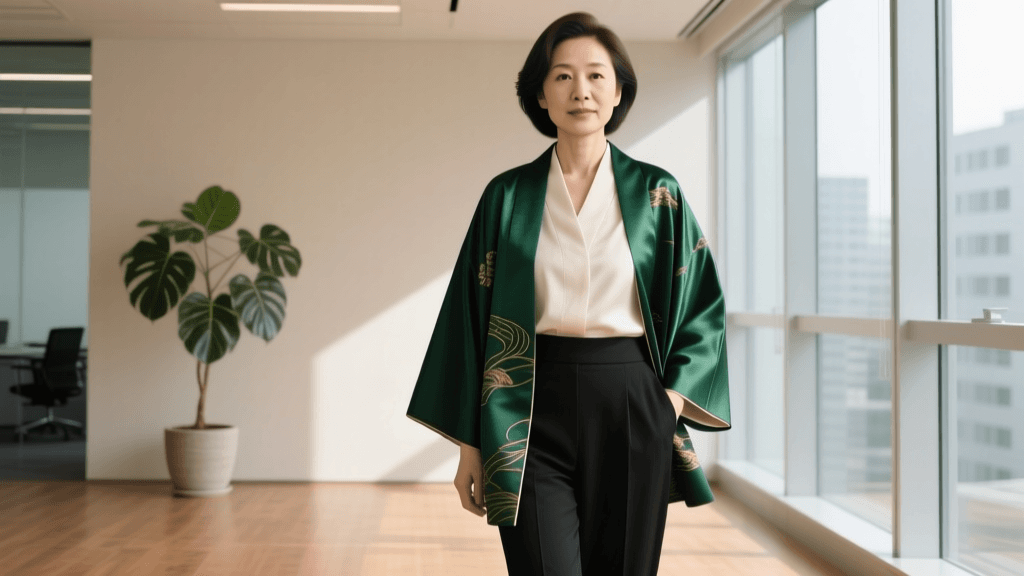
As we navigate the hybrid work environments of 2026, the rigid boundaries of corporate dress codes have permanently dissolved. The modern professional wardrobe prioritizes expressive layering, cultural appreciation, and sustainable sourcing over mass-produced, rigid tailoring. Enter the haori—a traditional Japanese hip- or thigh-length jacket worn over a kimono. Once strictly reserved for formal ceremonies or specific seasonal wear in Japan, the silk haori has emerged as a cornerstone of the global business casual wardrobe. Its unstructured shoulder, fluid drape, and rich textile history offer a sophisticated alternative to the standard Western blazer.
Mixing traditional Asian garments with contemporary Western silhouettes requires more than just throwing on an exotic piece; it demands an understanding of proportion, fabric weight, and cultural context. According to the Victoria and Albert Museum's exploration of the Kimono, the outer layers of Japanese dress have always been a canvas for personal expression and social signaling. In 2026, integrating a vintage or artisan-crafted haori into your office rotation is both a nod to heritage craftsmanship and a masterclass in modern sartorial elegance.
Decoding Haori Proportions and Measurements
Unlike Western jackets that rely on complex darting, canvassing, and padded shoulders to create a silhouette, the haori is cut in straight lines from a single bolt of fabric. This means the fit is inherently forgiving, but the proportions must be carefully selected to work over modern clothing like Oxford cloth button-downs and high-twist wool trousers.
Key Measurements to Consider
- Mitake (Back Length): For a modern business casual look, aim for a mitake between 80cm and 90cm (31 to 35 inches). This ensures the jacket hits around the mid-fly of your trousers, mimicking the length of a contemporary casual blazer. Anything longer risks looking like a bathrobe or a formal kimono outer layer.
- Yuki (Center-Back to Wrist Span): Traditional haori sleeves are designed to extend past the wrist, creating a draped effect. When wearing it over a modern dress shirt, look for a yuki measurement of 65cm to 75cm. This allows the shirt cuff to peek out slightly while maintaining the dramatic, relaxed drop of the haori sleeve.
- Sodeguchi (Sleeve Opening): The sleeve opening on a haori is intentionally large. In a modern context, this allows for excellent ventilation and accommodates the bulkier cuffs of French-cuff shirts or thick ribbed knitwear during the autumn months.
Fabric Selection for the Contemporary Office
The success of integrating a haori into a 2026 office environment hinges almost entirely on fabric selection. Loud, heavily embroidered crests or bright vermilion silks are best reserved for evening wear or creative industries. For the boardroom or the modern co-working space, subtle textures and matte finishes are paramount. The Metropolitan Museum of Art's guide to Japanese Textiles highlights the incredible diversity of silk weaving techniques developed over centuries, many of which perfectly align with modern minimalist aesthetics.
Haori Fabric Comparison Chart for Office Wear
| Fabric Type | Characteristics | Office Appropriateness (2026) | Best Modern Pairing |
|---|---|---|---|
| Tsumugi (Pongee) | Matte finish, slubbed texture, crisp drape, highly durable. | High (Excellent for daily wear) | Flannel trousers, merino wool turtlenecks. |
| Chirimen (Crepe) | Heavy, pebbled texture, excellent drape, prone to water spotting. | Medium-High (Best for cooler months) | High-twist wool trousers, crisp poplin shirts. |
| Edo Komon | Micro-patterns that appear solid from a distance, extremely formal. | High (Ideal for executive settings) | Tailored worsted wool suits, silk knit ties. |
| Ro / Sha (Gauze) | Sheer, lightweight, woven for summer humidity. | Medium (Requires careful layering) | Linen blend trousers, short-sleeve camp collars. |
| Rinzu (Satin Damask) | Glossy, reflective, features woven damask patterns. | Low (Too flashy for conservative offices) | Evening wear, creative industry events. |
Core Styling Formulas for 2026
To seamlessly blend Eastern heritage with Western tailoring, rely on these tested styling formulas that dominate the 2026 menswear and womenswear landscapes.
Formula 1: The Tsumugi Haori over High-Twist Wool
Tsumugi silk has a nubby, matte texture that closely resembles raw silk or fine linen. Pair a charcoal or navy Tsumugi haori with mid-grey high-twist wool trousers. The high-twist wool provides a sharp, structured vertical line that anchors the fluid, unstructured drape of the haori. Finish with suede loafers or minimalist leather derbies. This combination bridges the gap between a relaxed creative director and a polished executive.
Formula 2: The Edo Komon Haori with Crisp Poplin
Edo Komon is a dyeing technique where microscopic patterns are stenciled onto the silk. From a distance, the jacket appears to be a solid, conservative color, but up close, it reveals immense artisanal complexity. Wear this over a stark white, high-thread-count poplin shirt. Leave the shirt unbuttoned at the collar for a relaxed vibe, or add a subtle, untextured knit tie for formal meetings.
The 3 Golden Rules of Haori Integration
- Always Wear Left Over Right: In Japanese culture, wrapping the right side over the left is strictly reserved for dressing the deceased. Always ensure the left panel of your haori crosses over the right panel beneath it.
- Manage the Haori Himo (Front Tie): The haori is traditionally fastened with a braided silk cord called a himo. In a modern office setting, a thick, traditional white cord can look costumey. Opt for a dark, minimalist silk braid, or utilize the hidden inner ties to keep the jacket closed without the external cord, allowing the jacket to flow open like a modern duster.
- Respect the Inner Lining (Doura): Many vintage haori feature stunning, hand-painted inner linings. While it is tempting to roll up the sleeves to show off the lining, doing so in a conservative business environment can appear messy. Let the lining reveal itself naturally through movement.
Sourcing, Pricing, and Authentication in 2026
The market for traditional Japanese garments has evolved significantly. In 2026, sustainability is a primary driver for fashion consumers, making vintage haori an eco-friendly alternative to newly manufactured fast-fashion blazers.
- Vintage Markets (Recycle Shops & Tansu Chests): Authentic, mid-20th-century vintage haori can be sourced from specialized online exporters based in Kyoto and Osaka. Expect to pay between $45 and $150 USD for a piece in excellent condition. Look for terms like "mint" or "no blemishes," as silk is prone to age spots and seam tearing.
- Contemporary Artisans: For newly woven, bespoke haori crafted by living artisans in regions like Yuki or Oshima, prices reflect the intense labor involved. In 2026, a genuine, hand-woven Oshima Tsumugi haori starts at $800 USD and can exceed $3,000 USD for complex kasuri (ikat) patterns.
- Condition Check: When buying vintage, always inspect the mon (family crests) if present. Haori with five crests are strictly for weddings and funerals and are inappropriate for the office. Choose muji (crestless) haori or those with a single, subtle embroidered crest for versatile daily wear.
Alterations and Modern Tailoring
Western tailors are often unfamiliar with the straight-line construction of Japanese garments. If you need to shorten the sleeves or adjust the length, do not allow a standard tailor to cut the fabric. Traditional haori are woven to specific dimensions, and cutting them destroys the integrity of the pattern and the hem finish. Instead, seek out specialists in Asian textile conservation or use the traditional folding and tacking method to adjust the sleeve length internally, preserving the garment for future generations.
Cultural Respect and Historical Context
Wearing a haori in a Western context is a beautiful form of cross-cultural appreciation, provided it is done with knowledge and respect. The Metropolitan Museum of Art's Heilbrunn Timeline of Art History notes that the haori evolved from the practical outerwear of samurai and commoners during the Edo period into a highly regulated garment of status and aesthetics. By understanding the weight of the silk, the meaning of the patterns, and the proper way to wrap the garment, you elevate your outfit from mere "costume" to a profound appreciation of Asian textile history.
In the diverse, globalized offices of 2026, the silk haori stands as a testament to the idea that true style transcends borders. It offers a quiet, confident elegance that mass-produced corporate wear simply cannot replicate. Whether you are leading a board meeting or attending a gallery opening, a carefully chosen Tsumugi or Edo Komon haori ensures you are dressed with both historical reverence and cutting-edge modern sophistication.