How to Style Haori and Mandarin Jackets in 2026 Wardrobes
The Renaissance of Heritage Layering in 2026
The fashion landscape of 2026 is defined by a profound appreciation for modular layering and cross-cultural heritage. As global aesthetics shift away from fleeting micro-trends and toward enduring 'quiet luxury' with a narrative, traditional Asian garments have moved from ceremonial closets to the forefront of daily streetwear and smart-casual rotation. Mixing traditional Asian pieces with modern wardrobes is no longer about costume or novelty; it is about integrating centuries of textile mastery into contemporary silhouettes. Two garments, in particular, have dominated the 2026 sartorial climate: the Japanese silk haori and the Chinese mandarin-collar jacket (often drawing from Tangzhuang or Cheongsam tailoring). When styled correctly, these pieces offer unparalleled versatility, bridging the gap between high-end boardroom attire and avant-garde urban streetwear.
Deconstructing the Silk Haori for Streetwear
The Japanese haori, originally a hip- or thigh-length kimono-style jacket worn over a kosode, has been reimagined for the modern urbanite. According to The Metropolitan Museum of Art, the haori evolved significantly during the Edo period, transitioning from an exclusive garment of the samurai class to a widespread canvas for artistic expression and merchant-class wealth. In 2026, this historical canvas is being utilized as the ultimate statement layering piece. The traditional haori himo (the front tie) is frequently discarded in modern streetwear styling, allowing the jacket to drape open and create dynamic, flowing lines that mimic the movement of a duster coat.
Outfit Formula 1: The Urban Tech-Haori
To integrate a vintage or modern silk haori into a streetwear capsule, contrast is key. The delicate, ornate nature of traditional silk jacquard or yuzen-dyed patterns demands a grounding in utilitarian, matte fabrics. Start with a heavyweight, washed-black cotton graphic tee or a minimalist ribbed turtleneck. Layer the haori over the top, leaving it completely unfastened. For the lower half, opt for technical wide-leg cargo trousers in olive or charcoal, featuring adjustable drawstring hems. Footwear should lean into the avant-garde: chunky, geometric-soled leather boots or modern split-toe sneakers (tabi-inspired silhouettes) anchor the flowing silk, preventing the outfit from looking overly delicate. The juxtaposition of lustrous heritage silk against matte, rugged techwear is the defining hallmark of 2026 street style.
The Mandarin-Collar Jacket: Elevating Smart-Casual
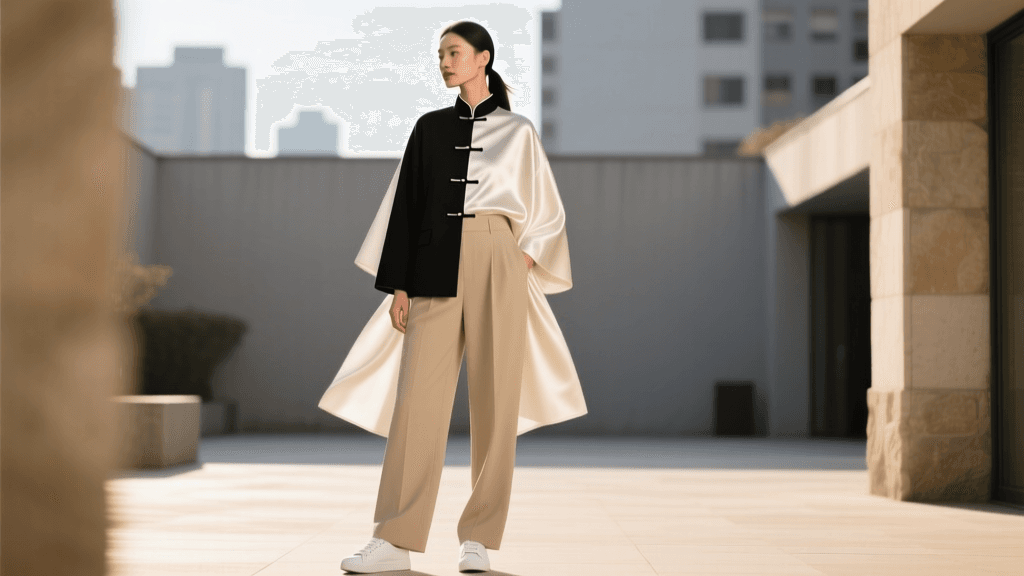
The mandarin collar—a short, unfolded stand-up collar originating from traditional Chinese garments—has become a staple in 2026 menswear and gender-neutral fashion. The Victoria and Albert Museum notes that the structural influence of Asian collar and sleeve constructions has historically disrupted Western tailoring, offering a more relaxed yet dignified shoulder line. Today, the modern mandarin-collar jacket, often crafted from sustainable peace silk, raw linen, or bio-washed cotton, serves as a sophisticated alternative to the traditional Western blazer.
Outfit Formula 2: The Boardroom Tangzhuang
For a smart-casual or creative-office environment, the mandarin-collar jacket offers a sharp, architectural silhouette without the stiffness of lapels. Choose a jacket with a subtle, tonal brocade pattern or a solid, deeply saturated hue like oxblood, midnight navy, or forest green. Pair this with high-waisted, pleated wool trousers that feature a slight taper. Instead of a traditional button-down shirt, wear a fine-gauge merino wool mock-neck sweater underneath the jacket. This maintains the clean, unbroken vertical line of the neck. Complete the look with minimalist leather loafers or sleek, laceless derby shoes. The absence of a tie and the sleek stand-collar project a modern, authoritative elegance that aligns perfectly with the relaxed yet refined dress codes of 2026.
Proportion, Silhouette, and the 2026 Drop-Shoulder
One of the most critical aspects of mixing heritage garments with modern clothing is understanding proportion. Traditional Asian garments often utilize a T-shaped, drop-shoulder construction that lacks the structured padding of Western tailoring. In 2026, embracing this relaxed shoulder line is essential. Do not attempt to tailor the shoulders of a haori or a traditional mandarin jacket to fit like a Western suit jacket; doing so destroys the garment's structural integrity and drape. Instead, lean into the oversized, fluid silhouette. If the jacket is voluminous, ensure your base layers are relatively fitted or distinctly cropped to maintain a defined waistline and prevent the outfit from overwhelming your frame.
Traditional vs. Modern Styling Matrix
To visualize how these garments have transitioned from their historical contexts into the 2026 capsule wardrobe, refer to the styling matrix below:
| Garment Type | Traditional Pairing | 2026 Modern Pairing | Footwear | Primary Occasion |
|---|---|---|---|---|
| Silk Haori (Long) | Kosode, Hakama, Zori sandals | Mock-neck sweater, wide-leg denim | Chunky leather boots | Evening Streetwear |
| Cropped Haori | Kimono, Obi belt | High-waisted tailored trousers, crop top | Minimalist loafers | Creative Office / Brunch |
| Mandarin Jacket (Brocade) | Matching trousers, silk sash | Pleated wool trousers, fine-gauge turtleneck | Laceless derby shoes | Smart-Casual / Boardroom |
| Linen Mandarin Shirt-Jacket | Traditional summer linens | Raw selvedge denim, heavyweight white tee | Canvas sneakers | Weekend Casual |
Color Theory: Anchoring Ornate Textiles
Asian heritage textiles are renowned for their intricate embroidery, gold-leaf applications, and vibrant natural dyes. When incorporating a heavily patterned haori or an embroidered mandarin jacket into a modern wardrobe, the golden rule of 2026 styling is 'one hero piece per outfit.' Treat the traditional garment as the focal point and build the rest of your capsule around neutral, anchoring tones. Charcoal, off-white, taupe, and deep navy act as negative space, allowing the complex motifs of the heritage piece to breathe. If you wish to mix patterns, do so by varying the scale: pair a micro-floral silk haori with a bold, wide-striped shirt, ensuring the color palettes share at least one common undertone.
Sustainable Care for Heritage Textiles
As the fashion industry in 2026 heavily prioritizes circularity and garment longevity, caring for traditional Asian textiles requires modern, eco-conscious methods. Traditional dry cleaning relies on harsh chemicals like perc, which can degrade delicate silk fibers and strip natural dyes over time. Instead, utilize modern ozone sanitization cabinets, which are now widely available for home use and professional eco-cleaners, to refresh silk haori and mandarin jackets without water or chemicals. For spot cleaning, use pH-neutral, enzyme-free detergents derived from plant-based surfactants. When storing these pieces, avoid wire hangers that distort the drop-shoulder silhouette; opt for padded, wide-shoulder wooden hangers and store them in breathable, unbleached cotton garment bags to protect against UV degradation and moisture.
Final Thoughts on Cultural Appreciation
Integrating traditional Asian garments into a modern wardrobe is a beautiful exercise in cultural appreciation, provided it is done with respect and understanding. In 2026, the most stylish individuals are those who take the time to understand the history, regional variations, and craftsmanship behind the pieces they wear. By supporting artisan cooperatives, investing in authentic vintage pieces, or purchasing from contemporary designers who ethically collaborate with traditional weavers, you ensure that these magnificent textile traditions continue to thrive. The haori and the mandarin-collar jacket are not merely trends; they are living, breathing artifacts of Asian heritage that, when styled with intention, elevate the modern wardrobe into a realm of timeless, global sophistication.