Styling Vintage Silk Haori Jackets With Modern Tailoring In 2026
The Renaissance of the Haori in 2026 Fashion
The intersection of heritage textiles and contemporary fashion has never been more vibrant than in 2026. As global wardrobes shift towards sustainable, investment-piece dressing, the Japanese haori has emerged as a definitive statement piece for those looking to blend cultural history with modern silhouettes. Originally designed as a protective surcoat worn over the kimono, the haori's relaxed, open-front structure makes it uniquely suited for modern layering. Unlike the highly structured and restrictive Western blazer, the haori offers a fluid, forgiving drape that aligns perfectly with the 2026 trend of relaxed, gender-fluid tailoring.
According to the Metropolitan Museum of Art's Asian Art Department, the structural integrity and artistic merit of traditional Japanese garments have long influenced global design aesthetics. Today, fashion enthusiasts are moving beyond treating the haori as mere costume or loungewear. Instead, they are integrating these vintage silk jackets into rigorous, high-end modern wardrobes, pairing them with sharp wool trousers, minimalist slip dresses, and contemporary streetwear staples. This guide will explore how to authentically and respectfully style vintage silk haori jackets within a modern 2026 context.
Understanding Proportions and Fabric Weights
Before integrating a haori into your daily rotation, it is crucial to understand the garment's anatomy and how its proportions interact with contemporary clothing. Traditional haori generally fall into three length categories: cropped (hip-grazing, around 75-85cm), standard (mid-thigh, around 90cm), and longline (knee-length or lower, 100cm+). In 2026, the fashion consensus favors playing with extreme proportions. A cropped haori pairs exceptionally well with high-waisted, wide-leg trousers, creating an elongated leg line that mimics the effect of a cropped bolero but with significantly more architectural volume.
Fabric weight is equally important. Vintage haori are typically crafted from either rinzu (a figured silk crepe with a matte finish and subtle damask patterns) or tsumugi (a slubbed, textured pongee silk). Rinzu silk is lighter, drapes more fluidly, and is ideal for corporate or evening wear where a sleek silhouette is desired. Tsumugi, on the other hand, has a stiffer, more structured hand-feel, making it perfect for casual streetwear as it holds its shape much like a modern chore coat or denim jacket. The Victoria and Albert Museum's Asian collections highlight how these intricate weaving techniques were historically used to denote status and seasonality, a depth of meaning that adds immense value to your modern outfit.
The Art of the Himo: Modernizing the Closure
Traditionally, a haori is secured at the front using a haori himo, a decorative braided silk cord. While beautiful, the himo can sometimes push an outfit into 'costume' territory if not styled carefully. In 2026, modern stylists are reimagining the closure. Many opt to remove the himo entirely, allowing the jacket to hang open for a relaxed, avant-garde drape. Alternatively, vintage collectors are replacing traditional cords with minimalist gold chain links, oversized matte-black lapel pins, or even subtle leather harness clips, bridging the gap between Edo-period tradition and contemporary industrial design.
Three Distinct Ways to Style a Silk Haori in 2026
Look 1: The Modern Corporate (Office Tailoring)
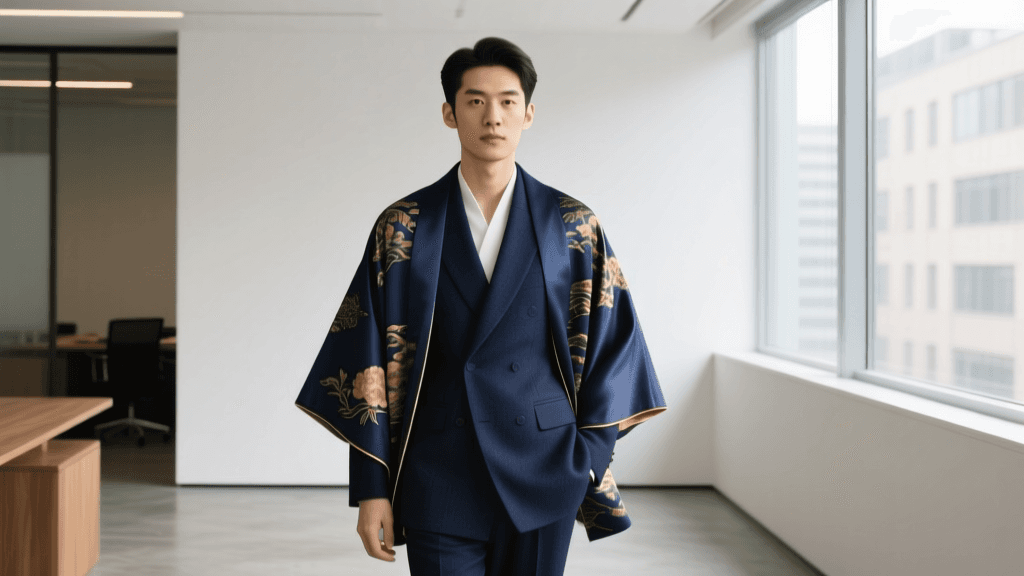
The modern office dress code in 2026 has fully embraced expressive, culturally rich layering. To style a haori for a corporate environment, select a cropped or standard-length jacket in a deep, muted tone such as charcoal, navy, or matcha green, preferably with a subtle rinzu damask pattern rather than loud, contrasting embroidery. Pair the haori with a high-neck, sleeveless silk blouse and tailored, wide-leg wool trousers. The key to making this look professional is ensuring the base garments are impeccably fitted and pressed. The haori acts as a replacement for the traditional suit jacket, offering movement and softness while maintaining an air of executive authority. Finish the look with pointed-toe leather loafers and structured geometric jewelry.
Look 2: Elevated Weekend Streetwear
Streetwear in 2026 is heavily focused on texture contrast and heritage workwear silhouettes. A longline tsumugi silk haori is the perfect outer layer for this aesthetic. Wear it over a heavyweight, boxy cotton t-shirt and raw, straight-leg denim. The stiffness of the tsumugi silk complements the ruggedness of the denim, creating a cohesive, utilitarian vibe. To ground the outfit, opt for chunky, retro-inspired sneakers or lug-sole boots. This look is particularly effective in transitional weather, as the silk provides a breathable but wind-resistant layer. Adding a modern crossbody bag in technical nylon provides a striking contrast to the organic vintage silk.
Look 3: Evening Minimalism
For evening events, the haori can be transformed into a piece of wearable art. Select a vintage haori featuring yuzen dyeing (a intricate, resist-dyeing technique often depicting nature motifs) or delicate metallic thread embroidery. The base outfit should be radically minimalist to let the jacket shine. A simple, bias-cut silk column dress in black or champagne serves as the perfect canvas. In 2026, a popular styling trick is to wear the haori off the shoulders, allowing it to drape like a cape, or belting it loosely at the waist with a thin, metallic chain belt to create a peplum effect. Pair with strappy silk heels and vintage jade drop earrings for a look that is both deeply rooted in history and fiercely modern.
2026 Haori Styling Matrix
| Scenario | Haori Silhouette | Base Wardrobe Pieces | Footwear & Accessories |
|---|---|---|---|
| Corporate Office | Cropped (75-85cm), Rinzu Silk | High-waisted wide-leg wool trousers, silk camisole | Pointed-toe leather loafers, minimalist gold cuffs |
| Weekend Streetwear | Longline (100cm+), Tsumugi Silk | Oversized heavyweight cotton tee, raw denim | Chunky retro sneakers, woven leather tote |
| Evening Minimalism | Standard (90cm), Yuzen-dyed | Column slip dress, tailored tuxedo blazer underneath | Strappy silk heels, vintage jade drop earrings |
Caring for Vintage Silk in a Modern Context
Integrating vintage garments into a high-rotation wardrobe requires a modern approach to textile care. The silk used in mid-20th-century haori is highly susceptible to UV degradation and moisture trapping. In 2026, the gold standard for cleaning vintage silk is ozone treatment or specialized, pH-neutral silk protein shampoos applied by conservators. Avoid traditional dry cleaning, as the harsh perchloroethylene chemicals can strip the silk of its natural sericin, leading to brittleness and color loss.
Storage is equally critical. Never store a vintage haori in plastic garment bags, which trap humidity and accelerate yellowing. Instead, wrap the jacket in acid-free, unbuffered tissue paper and store it flat in a breathable cotton canvas storage box. If you must hang it, use a wide, padded hanger to distribute the weight and prevent shoulder dimpling, and keep it in a dark, climate-controlled closet to preserve the integrity of the natural dyes.
Sourcing Authentic Haori in 2026
The market for authentic vintage Japanese garments has matured significantly. As noted in historical textile archives and collector communities, the provenance of a piece greatly affects its value. In 2026, standard vintage haori from the Showa era (1926-1989) typically range from $80 to $150, depending on condition and complexity of the dye work. Pristine, hand-painted pieces from the Taisho or early Showa periods can command upwards of $300 to $500.
For buyers seeking authenticity and quality, specialized online retailers based in Kyoto and Osaka, such as Ichiroya or Kimono Yamato, offer curated selections with detailed condition reports. When shopping, always scrutinize the lining (the hakkake), as this is where vintage silk often shows its first signs of wear or staining. A damaged lining can be replaced by a skilled tailor, but the outer shell must be pristine. By thoughtfully selecting, styling, and caring for these extraordinary garments, you not only elevate your personal style but also participate in the vital preservation of Asian textile heritage for future generations.