Styling Silk Haori Jackets With 2026 Streetwear Trends
The Renaissance of the Haori in 2026 Fashion
The intersection of heritage craftsmanship and contemporary fashion has never been more relevant than in 2026. As the global fashion landscape pivots decisively away from fast fashion micro-trends, consumers, stylists, and designers are turning to enduring, culturally rich garments to anchor their wardrobes. Among the most versatile and visually striking of these is the Japanese haori. Originally designed as a formal outer layer worn over the kimono, the haori has transcended its traditional boundaries to become a staple in modern streetwear, minimalist office attire, and avant-garde layering.
In 2026, the 'heritage streetwear' movement emphasizes the blending of artisanal, historically significant textiles with utilitarian, modern silhouettes. The haori, with its open front, lack of buttons, and dramatic T-shaped construction, offers a masterclass in effortless layering. According to the Metropolitan Museum of Art's Heilbrunn Timeline of Art History, the structural evolution of Japanese robes has always prioritized a harmonious relationship between the fabric and the human form, a philosophy that perfectly aligns with the relaxed, gender-fluid tailoring dominating 2026 runways and city streets.
Understanding Haori Proportions for Modern Layering
To successfully integrate a vintage or contemporary silk haori into a 2026 wardrobe, one must first understand its unique architectural proportions. Unlike Western jackets that rely on darts, shoulder pads, and tailored waistlines to create structure, the haori is constructed from straight bolts of fabric. This results in a drop-shoulder effect and wide, flowing sleeves that naturally mirror the oversized, boxy fits prevalent in current streetwear.
The Drop-Shoulder Advantage
The extended shoulder seam of the haori allows it to drape beautifully over modern foundational pieces like heavyweight cotton t-shirts, chunky knitwear, or structured hoodies. Because the garment is inherently unstructured, it adds volume and visual interest without restricting movement. When styling, the key is to balance the voluminous top half with the appropriate lower half, ensuring your silhouette remains intentional rather than overwhelming.
3 Foolproof Haori and Streetwear Combinations for 2026
Whether you are navigating the urban commute, attending an evening event, or exploring the city on the weekend, the haori is remarkably adaptable. Below are three highly specific styling formulas tailored for the 2026 fashion climate.
1. The Minimalist Commuter (Haori + Wide-Leg Trousers)
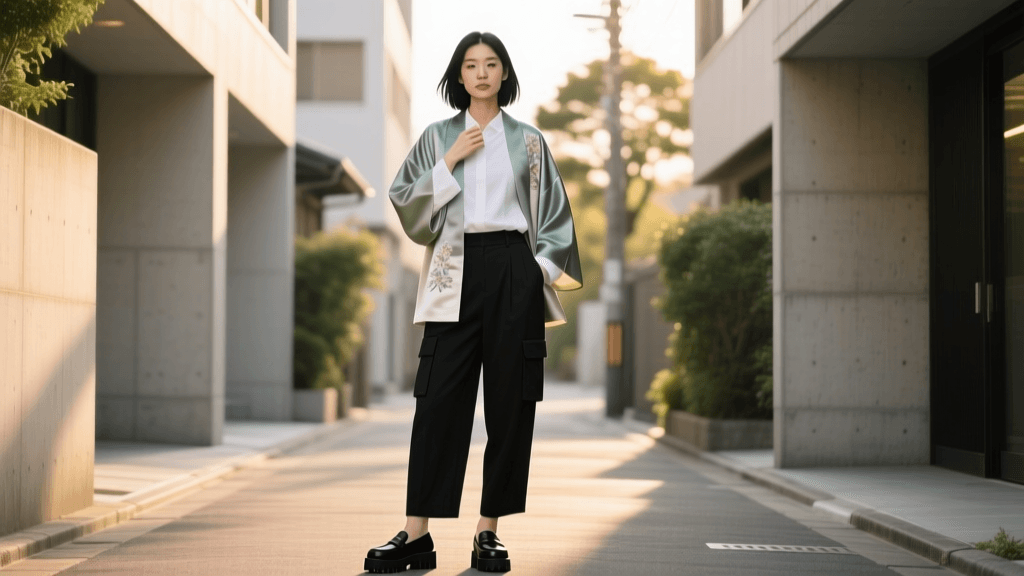
The 'quiet luxury' and minimalist trends of 2026 rely heavily on impeccable fabrics and fluid draping. For a sophisticated office or gallery-hopping look, pair a mid-thigh length haori (approximately 36 inches from the nape of the neck) with high-waisted, wide-leg pleated wool trousers.
- The Base: A fitted, ribbed mock-neck merino wool sweater in a neutral tone like charcoal, oat, or deep navy.
- The Haori: Choose a solid-colored tsumugi (slubbed silk) or a subtly patterned rinzu (silk damask) haori. The matte texture of tsumugi bridges the gap between traditional sheen and modern matte wool.
- The Footwear: Chunky leather derby shoes or minimalist, unbranded leather sneakers.
- Styling Trick: Use a modern, minimalist leather belt to cinch the high-waisted trousers, creating a defined waistline that contrasts beautifully with the flowing, open drape of the haori.
2. Elevated Streetwear (Haori + Oversized Graphic Tee + Cargo Pants)
Streetwear in 2026 has matured, moving away from loud logos toward technical fabrics and heritage accents. The haori acts as the perfect statement layer over utilitarian basics.
- The Base: A heavyweight, boxy-fit cotton t-shirt (250+ GSM) featuring subtle, faded vintage graphics or abstract typography.
- The Bottoms: Technical nylon cargo pants with articulated knees and adjustable hem drawcords. The matte, water-resistant finish of the nylon provides a striking textural contrast to the delicate silk of the jacket.
- The Haori: Opt for a hip-length haori (approx. 30 inches) featuring bold yuzen dyed motifs, such as cranes, waves, or botanical elements. The shorter length prevents the outfit from looking too bottom-heavy.
- The Footwear: Technical trail-running sneakers or futuristic, modular boots.
3. Evening Edge (Haori + Turtleneck + Tailored Denim)
For evening occasions where a full suit feels too rigid but a standard blazer feels too ordinary, the haori offers a refined, culturally rich alternative.
- The Base: A sleek, black silk-blend turtleneck that provides a dark, continuous canvas.
- The Bottoms: Dark-wash, straight-leg selvedge denim with a slight taper, or tailored black jeans with a clean hem.
- The Haori: A knee-length haori (approx. 42 inches) in deep jewel tones like plum, emerald, or midnight blue, preferably with intricate metallic thread embroidery (surihaku).
- The Footwear: Woven leather loafers or sleek Chelsea boots.
- Styling Trick: Allow the sleeves of the turtleneck to peek out just slightly from the wide haori sleeves, adding a modern layering detail that highlights the traditional garment's generous cut.
Haori Length vs. Modern Garment Pairing Guide
Selecting the correct length is paramount when mixing traditional Asian garments with modern Western clothing. The following table provides a structured guide for 2026 styling proportions.
| Haori Length | Ideal Modern Bottoms | Footwear Pairing (2026 Trends) | Best Occasion |
|---|---|---|---|
| Hip-Length (approx. 30') | Technical cargos, baggy denim | Chunky trail sneakers, modular boots | Casual Streetwear, Weekend |
| Mid-Thigh (approx. 36') | Wide-leg pleated trousers, midi skirts | Minimalist leather sneakers, derbies | Smart Casual, Office, Gallery |
| Knee-Length (approx. 42') | Tailored dark denim, linen palazzo pants | Woven leather sandals, Chelsea boots | Evening, Resort Wear, Dining |
Sourcing Authentic and Upcycled Haori in 2026
Sustainability remains the driving force behind fashion consumption in 2026. Rather than purchasing newly manufactured, mass-produced 'kimono-style' cardigans, the most discerning wardrobes are sourcing authentic, vintage silk haori. This not only supports the circular economy but also preserves the incredible artisanal techniques of Japanese weavers and dyers.
The Kyoto Costume Institute frequently highlights the profound influence of traditional Japanese dress on global fashion archives, noting that the preservation of these garments is vital for understanding the evolution of modern silhouette design. When sourcing vintage pieces, look for reputable dealers who specialize in Japanese textiles, or explore specialized online vintage archives that provide detailed measurements and condition reports.
Upcycling is also a major trend this year. Many contemporary designers and DIY enthusiasts are taking damaged or stained silk haori and repurposing them into modern bomber jackets, patchwork streetwear, or even reversible tote bags. However, wearing the intact, original garment as an outer layer remains the most respectful and visually impactful way to honor the textile.
Fabric Care and Maintenance for Daily Wear
Integrating delicate vintage silk into a daily 2026 wardrobe requires mindful maintenance. Most authentic haori are crafted from highly delicate silks that cannot withstand modern washing machines or harsh chemical dry cleaning.
- Steaming over Ironing: Never apply a hot iron directly to vintage silk, especially if it features metallic threads or raised embroidery. Use a high-quality garment steamer to gently release wrinkles and refresh the fibers.
- Airing Out: After wearing, hang the haori in a well-ventilated, shaded area for 24 hours to allow any moisture or odors to dissipate. Avoid direct sunlight, which will rapidly fade the intricate yuzen dyes.
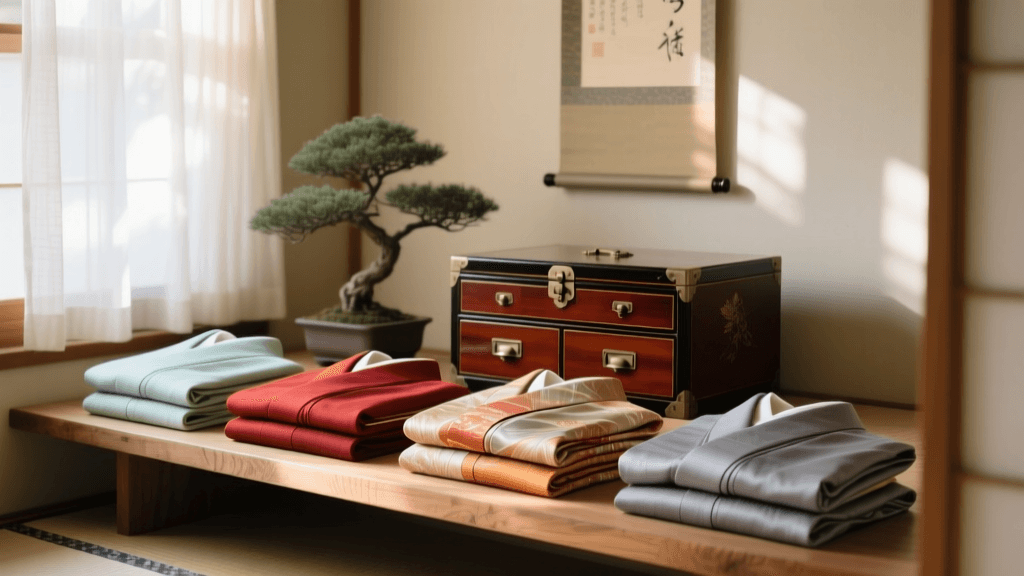
- Storage: During the off-season, do not hang the haori on wire or thin wooden hangers, as the weight of the silk can distort the shoulder seams. Instead, fold it carefully along its original seam lines, wrap it in acid-free tissue paper or unbleached cotton, and store it flat in a breathable cedar box.
The Cultural Significance of Wearing the Haori Today
As traditional garments cross borders and integrate into global streetwear, questions of cultural appreciation versus appropriation often arise. In 2026, the consensus among cultural historians and fashion ethicists is that wearing a haori as a respectful, integrated layering piece is a celebration of Japanese craftsmanship. The Victoria and Albert Museum's Japanese collections emphasize that textiles are a living history, meant to be interacted with and admired.
By educating yourself on the garment's origins, understanding the difference between a haori and a kimono, and caring for the silk with reverence, you participate in a global dialogue that honors Asian traditions. The haori is not merely a costume; it is a masterwork of textile engineering that offers a timeless, elegant solution to modern dressing.
Conclusion
Mixing traditional Asian pieces with modern wardrobes requires a balance of respect for history and an eye for contemporary proportion. The silk haori stands out in 2026 as the ultimate bridge between these two worlds. Whether draped over a minimalist turtleneck for an evening out or layered above technical streetwear for a day in the city, the haori proves that true style transcends time, geography, and fleeting trends. By embracing the generous silhouettes, rich textiles, and artisanal heritage of the haori, you elevate your personal style while keeping a vital piece of Asian cultural history alive in the modern urban landscape.