Ceremonial vs Everyday Hanbok: 2026 Fabric & Style Guide
The Evolution of Korean Traditional Dress in 2026
The landscape of Korean traditional clothing has undergone a remarkable transformation as we navigate through 2026. Once reserved strictly for major lunar holidays like Chuseok and Seollal, or pivotal life events such as weddings and first-birthday celebrations, the hanbok has bifurcated into two distinct sartorial paths. Today, enthusiasts and cultural preservationists alike recognize a clear divide between ceremonial hanbok and everyday hanbok. Understanding this dichotomy is essential for anyone looking to curate an authentic, functional, and culturally respectful wardrobe.
According to Britannica's comprehensive guide to Hanbok, the traditional attire is defined by its vibrant colors, simple lines, and lack of pockets, historically reflecting the social status and marital standing of the wearer. However, the modern iteration of this garment has evolved to meet the demands of contemporary life without sacrificing its foundational aesthetics. Whether you are preparing for a formal Pyebaek (traditional wedding ceremony) or seeking a breathable outfit for a weekend cafe visit in Seoul, knowing the structural and material differences between these two categories is your first step toward mastery.
Ceremonial Hanbok: The Architecture of Formality
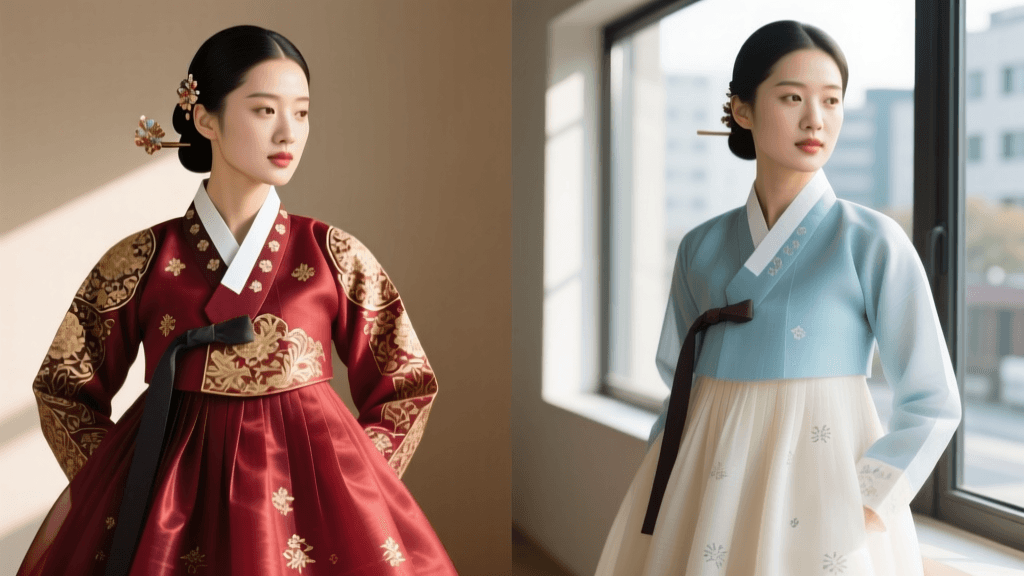
When discussing ceremonial hanbok, we are primarily looking at garments designed for rites of passage and high formality. The most prominent examples include the Pyebaek dress worn by brides, the Hwalot (bridal robe embroidered with peonies and butterflies), and the Wonsam (a formal court robe). These garments are engineering marvels of textile art, designed to project dignity, heritage, and familial respect.
Construction and Silhouette
The architecture of a ceremonial hanbok is rigid and voluminous. The chima (skirt) is heavily pleated and requires multiple layers of underskirts (sokchima) to achieve the iconic bell-like silhouette. The jeogori (jacket) is cut to sit precisely on the shoulders, featuring a stiff git (collar) that frames the face. A pristine white dongjeong (paper or stiff cotton collar liner) is inserted into the neckline to provide a sharp, clean contrast against the vivid silk of the jacket.
The goreum (chest ribbon) on a ceremonial hanbok is a defining feature. Typically measuring between 7 to 10 centimeters in width and extending well over 100 centimeters in length, the formal goreum must be tied into a precise, asymmetrical bow that drapes elegantly down the torso. This tying technique requires practice and is a hallmark of proper ceremonial etiquette.
Embellishments and Dyeing
Ceremonial garments frequently feature geumbak (gold leaf stamping) and intricate jisu (hand embroidery). Motifs are never random; they are deeply symbolic. Pairs of mandarin ducks signify marital fidelity, while peonies represent wealth and honor. Because of the heavy metallic threads and delicate gold leaf, ceremonial hanbok requires specialized handling and is almost never subjected to traditional washing methods.
Everyday Hanbok: The Saenghwal and Gaeryang Movement
In stark contrast to the rigid formality of ceremonial wear, the everyday hanbok—commonly referred to as Saenghwal Hanbok (living hanbok) or Gaeryang Hanbok (improved hanbok)—prioritizes mobility, ease of care, and seamless integration into a modern 2026 lifestyle. As highlighted by Korea.net's cultural reports, the push to make hanbok a viable daily fashion choice has led to a boom in innovative design houses that respect traditional silhouettes while radically updating the garment's mechanics.
Structural Modifications for Modern Life
The most immediate difference you will notice in an everyday hanbok is the fastening system. While the traditional long goreum is beautiful, it is impractical for office workers or students. Gaeryang hanbok often replaces the functional chest ribbon with hidden snap hooks, magnetic closures, or a short, decorative faux-knot that stays perfectly tied. The chima is frequently fitted with a discreet side zipper, eliminating the need for complex tying and adjusting around the waist.
Hemlines are another major point of divergence. While a ceremonial skirt grazes the floor to hide the feet entirely, an everyday chima typically falls at the mid-calf or ankle. This prevents tripping on subway stairs and allows the wearer to pair the outfit with modern footwear. The jeogori is also tailored with slightly deeper armholes and stretch-blend fabrics to accommodate reaching, typing, and driving.
The Shift to Breathable Textiles
Everyday hanbok embraces natural, breathable, and machine-washable textiles. Ramie (mosi), high-grade cotton, and modern Tencel blends dominate the 2026 market. These fabrics offer the beautiful drape required for the skirt's pleats but can withstand the rigors of a standard laundry cycle. Furthermore, everyday hanbok often features subtle, muted color palettes—think sage greens, dusty roses, and charcoal grays—moving away from the high-contrast primary colors of ceremonial wear to suit urban environments.
2026 Fabric, Cost, and Care Comparison Chart
To help you make informed purchasing decisions, we have compiled a comprehensive comparison of the two categories based on current 2026 market standards.
| Feature | Ceremonial Hanbok (Pyebaek/Formal) | Everyday Hanbok (Gaeryang/Saenghwal) |
|---|---|---|
| Primary Fabrics | Heavy Silk, Brocade, Myeongju (raw silk) | Cotton, Linen, Ramie, Tencel, Poly-blends |
| Closure System | Traditional long Goreum (hand-tied) | Hidden zippers, snap buttons, short faux-knots |
| Skirt Hemline | Floor-length (hides feet completely) | Mid-calf to ankle (allows modern footwear) |
| Maintenance | Professional dry-clean only; spot treat gold leaf | Machine washable (gentle cycle) or hand wash |
| Average Cost (USD) | $450 - $2,500+ | $80 - $250 |
| Best Use Cases | Weddings, Doljanchi, Chuseok, stage performances | Cafe visits, office wear, travel, casual festivals |
Sourcing and Budgeting for Your 2026 Wardrobe
Building a dual-purpose hanbok wardrobe requires knowing where to shop and how to allocate your budget. For ceremonial garments, bespoke tailoring is still the gold standard. In Seoul, the boutiques surrounding the Bukchon Hanok Village and the specialized tailors in the Dongdaemun textile markets offer custom fittings. A high-quality silk Pyebaek set in 2026 will generally start around $600, with heavily embroidered bridal Hwalot robes easily exceeding $2,000 due to the hundreds of hours of hand-stitching required.
For everyday Gaeryang hanbok, the market is incredibly accessible. Online platforms like Musinsa have dedicated traditional-modern fusion categories, featuring brands that release seasonal collections aligned with global fashion weeks. Brands such as Sonjjang Hanbok and The Korean House offer excellent entry-level everyday sets ranging from $90 to $150. When shopping online, always check the fabric composition; look for a blend of at least 40% natural fibers like cotton or linen to ensure breathability during the humid summer months.
Styling: Bridging the Gap Between Eras
The beauty of the 2026 hanbok movement lies in its styling versatility. How you accessorize dictates whether your garment reads as a historical costume or a contemporary fashion statement.
Ceremonial Styling
Formal wear demands traditional accompaniments. A bride wearing a Pyebaek dress will pair it with a Jokduri (a black silk coronet adorned with pearls and jade) and traditional Hwa (embroidered floral boots). The look is completed with a heavy, multi-tiered Norigae (a decorative pendant tied to the skirt's waistband) featuring amber, coral, or jade, which serves both as an ornament and a weighted anchor to keep the voluminous skirt in place.
Everyday Styling
Everyday hanbok thrives on juxtaposition. In 2026, it is entirely common and highly fashionable to pair a linen Gaeryang chima with a crisp, modern white button-down shirt instead of the traditional jeogori. When wearing the full traditional set, swap out the embroidered boots for minimalist white leather sneakers, loafers, or even ankle boots in the winter. Replace the heavy jade Norigae with a sleek, modern metal hairpin or a simple silk ribbon tied around a low bun. Tote bags and crossbody leather satchels are preferred over traditional pouches (jumeoni), as they offer the utility required for a day of navigating the city.
Final Thoughts on Curating Your Collection
As we move deeper into 2026, the hanbok remains a powerful symbol of Korean cultural identity, yet it is no longer confined to the past. By understanding the distinct purposes, fabrics, and construction methods of ceremonial versus everyday hanbok, you can build a wardrobe that honors tradition while embracing modernity. Whether you are investing in a bespoke silk masterpiece for your wedding or purchasing a breathable cotton set for a summer stroll, the hanbok offers a timeless elegance that adapts beautifully to the wearer's life. For further historical context and museum archives, the National Museum of Korea provides exceptional resources on the textile heritage that continues to inspire today's modern designers.