2026 Guide to Traditional Kimono Tailoring Workshops: Learn Wasai
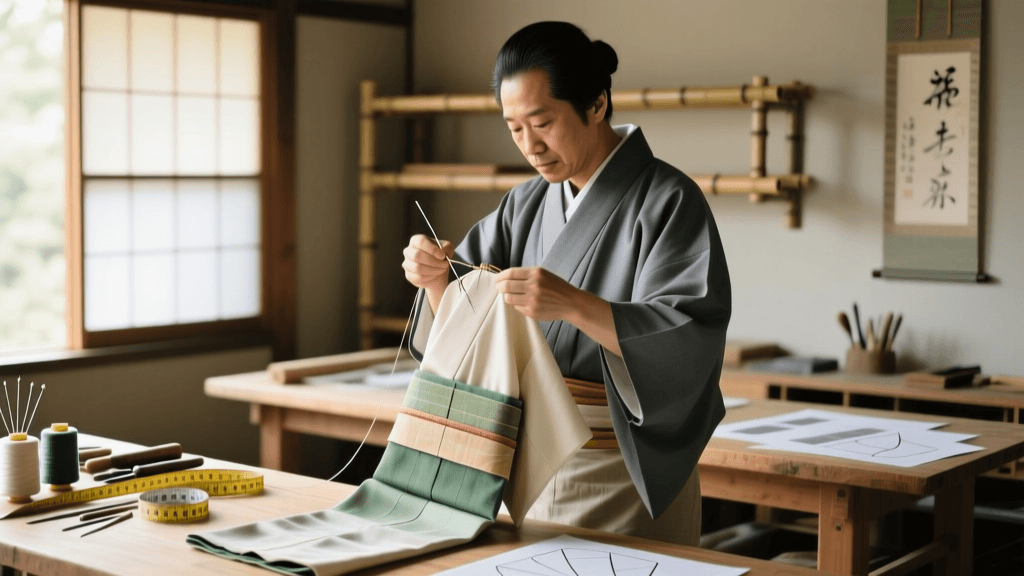
The Resurgence of Wasai in 2026
As the global fashion industry increasingly pivots toward sustainability and zero-waste design in 2026, the ancient Japanese art of Wasai (kimono tailoring) has experienced a massive renaissance. Unlike Western garment construction, which relies on complex curved patterns and generates significant fabric waste, Wasai utilizes a straight-line cutting system that honors the entire width of the textile bolt, known as a tanmono. For textile enthusiasts, fashion historians, and sustainable designers, attending a traditional Wasai workshop or seminar has become a highly sought-after educational experience.
According to the Metropolitan Museum of Art, the kimono's T-shaped, straight-seamed construction is not merely an aesthetic choice but a profound reflection of Japanese cultural values, prioritizing the preservation of the textile over the permanent shaping of the garment. Today, learning these techniques offers modern makers a masterclass in fabric conservation, modular design, and meticulous hand-sewing.
Understanding the Core Wasai Techniques
Before enrolling in a 2026 seminar, it is crucial to understand the foundational philosophies that differentiate Wasai from Western dressmaking. Instructors at top-tier cultural seminars focus heavily on three core pillars:
- Chokusen-dachi (Straight-Line Cutting): The kimono is constructed from rectangular panels. There are no darts, no curved armholes, and no shoulder slopes cut into the fabric. The fit is achieved entirely through the wrapping and tying of the obi (sash).
- Shitsuke (Basting): In Wasai, basting is not a temporary afterthought; it is the structural backbone of the sewing process. Students spend up to 40% of their workshop hours mastering long, even basting stitches that ensure the silk layers do not shift during the final sewing.
- Arai-hari (Disassembly for Cleaning): A true kimono is designed to be entirely taken apart, washed, stretched, and resewn. Seminars teach students how to sew seams that are durable enough for wear but accessible enough for future disassembly, a concept revolutionizing modern circular fashion.
Top Workshop Formats Available in 2026
The landscape of traditional garment education has evolved. In 2026, students can choose between immersive in-person seminars in Japan, local cultural center intensives, and high-definition hybrid masterclasses. Organizations like the Japan Foundation continue to sponsor global cultural exchange programs, making authentic instruction more accessible outside of Kyoto and Tokyo.
1. The Kyoto Immersion (In-Person, 7 Days)
Hosted in historic machiya (traditional wooden townhouses), these seminars are taught by certified Kimono Kitsuke and Wasai masters. Students work with vintage silk tanmono and learn the complete construction of a Yukata (casual summer kimono) or a lined Hitoe. The 2026 tuition for these immersive retreats averages $2,400 USD, which includes all materials, daily kaiseki lunches, and a final professional fitting.
2. Global Cultural Center Intensives (In-Person, Weekend)
Major cities with robust Japanese diasporas (such as Los Angeles, London, and São Paulo) host weekend seminars facilitated by visiting sensei. These 16-hour weekend intensives focus on constructing a Jinbei or a basic unlined kimono jacket (Haori). Tuition in 2026 typically ranges from $450 to $650 USD.
3. Virtual Wasai Masterclasses (Online, Self-Paced + Live Q&A)
For those unable to travel, hybrid platforms now ship physical tanmono cotton kits directly to students, paired with 4K multi-angle video modules and bi-weekly live Zoom critiques with Tokyo-based instructors. This format has exploded in popularity, costing around $295 USD for the complete 2026 curriculum.
2026 Workshop Comparison Chart
| Workshop Format | Duration | Average Cost (2026) | Materials Included | Best For |
|---|---|---|---|---|
| Kyoto/Tokyo Immersion | 7 Days (56 Hours) | $2,400 USD | Silk Tanmono, Tool Kit, Lodging | Advanced makers, fashion historians |
| Local Cultural Center | 2 Days (16 Hours) | $550 USD | Cotton Tanmono, Basic Thread | Intermediate sewists, local communities |
| Virtual Hybrid Kit | 8 Weeks (Self-Paced) | $295 USD | Cotton Kit, Digital Patterns | Beginners, global sustainable designers |
Essential Toolkit for the Modern Wasai Student
Walking into a 2026 Wasai seminar requires a specific set of traditional tools. While Western sewing kits rely on chalk and pins, Wasai demands tools that respect the delicate nature of silk and the precision of straight lines. Most high-end seminars provide these, but serious students often invest in their own:
- Hera (Bamboo Marker): A spatula-like bamboo tool used to crease fabric and mark seam allowances without leaving chemical residues or chalk dust on expensive silk.
- Shitsuke-ito (Basting Thread): Unlike Western basting thread, this is a softly twisted, slightly fuzzy silk or cotton thread that grips the fabric layers together, preventing the slippery silk from shifting.
- Yubinuki (Thimble): A traditional Japanese thimble worn as a ring around the middle finger, featuring a textured surface to push the needle through dense layers of silk and lining.
- Me-jakushi (Bamboo Ruler): Used specifically for measuring the standard shaku (traditional Japanese unit of measurement, roughly 30.3 cm), which is still the standard in authentic 2026 Wasai instruction.
What to Expect in a 3-Day Intensive Seminar
If you are attending a standard weekend seminar, the curriculum is rigorously paced to ensure you complete a garment by Sunday evening. Here is a typical itinerary:
Day 1: Preparation and Marking (Shirushi)
The first day is entirely dedicated to fabric preparation. You will learn how to unroll the tanmono (which is exactly 36-40 cm wide and 12 meters long) and align the selvedge. Using the hera and bamboo rulers, you will mark the panels for the body (migoro), sleeves (sode), and overlapping front panels (okumi). No cutting occurs until the instructor verifies your measurements, as a single error wastes the irreplaceable textile.
Day 2: Basting and Sleeve Attachment (Sode-tsuke)
Day two focuses on the structural basting. You will learn the hon-geshi (main seam) technique, where seam allowances are folded inward to enclose the raw edges, creating a perfectly clean finish on both the inside and outside of the garment. The most challenging task of the day is attaching the rectangular sleeve to the body, ensuring the underarm gusset allows for mobility despite the lack of curved tailoring.
Day 3: The Collar and Finishing (Eri-tsuke)
The final day is reserved for the collar (eri), which is considered the 'face' of the kimono. Attaching the collar requires precise tension control; if pulled too tight, the back of the neck will bunch; if too loose, the garment will slip forward. The seminar concludes with a lesson on how to properly fold and store the finished kimono, a ritualistic practice in itself.
Finding Authentic Seminars and Respecting the Craft
As the popularity of traditional Asian garments grows, so does the risk of cultural dilution. When searching for a workshop in 2026, it is vital to seek out programs taught by certified practitioners or endorsed by recognized cultural institutions. The Victoria and Albert Museum frequently highlights the deep cultural significance and historical evolution of the kimono, reminding us that these garments are not merely fashion items, but carriers of heritage, regional identity, and artisanal lineage.
Avoid 'fast-fashion' sewing retreats that promise a 'kimono-style robe' in three hours using Western pattern-drafting methods. True Wasai seminars will emphasize the history of the tanmono, the ethics of silk production, and the meditative patience required for hand-sewing. By investing time and resources into authentic workshops, students not only acquire a rare and sustainable design skill but also actively participate in the preservation of a centuries-old Intangible Cultural Heritage.
Conclusion
Learning Wasai in 2026 is an investment in the future of sustainable fashion. Whether you are deconstructing vintage silks in a Kyoto machiya or basting cotton panels via a live-streamed seminar from your home studio, the principles of traditional Japanese tailoring offer profound lessons in mindfulness, zero-waste design, and respect for materials. As you select your workshop, prioritize authentic instruction, gather your bamboo tools, and prepare to engage with one of the world's most elegant and enduring sartorial traditions.