The 2026 Guide to Buying Authentic Silk Hanbok Online
The 2026 Landscape of Authentic Hanbok E-Commerce
As we move through 2026, the global appreciation for Asian traditional garments has reached unprecedented heights. Driven by international cultural exchanges, historical media, and a growing demand for sustainable, artisan-made fashion, the hanbok—the traditional Korean dress—has become a highly sought-after wardrobe investment. However, this surge in popularity has also flooded global online marketplaces with mass-produced, polyester replicas that misrepresent the garment's rich heritage.
For serious collectors, cultural enthusiasts, and those seeking authentic ceremonial wear, navigating the digital marketplace requires a discerning eye. Buying a genuine, hand-tailored silk hanbok online in 2026 means bypassing fast-fashion algorithms and connecting directly with heritage boutiques, verified artisans, and specialized cross-border e-commerce platforms. This comprehensive guide will walk you through fabric authentication, marketplace navigation, and the precise sizing matrices required to commission a flawless custom-fit hanbok from Seoul to your doorstep.
Decoding Fabrics: Myeongju, Mosi, and the 2026 Authenticity Standards
The most critical step in online hanbok shopping is understanding traditional Korean textiles. In 2026, the market is dominated by two primary authentic fabrics for premium hanbok:
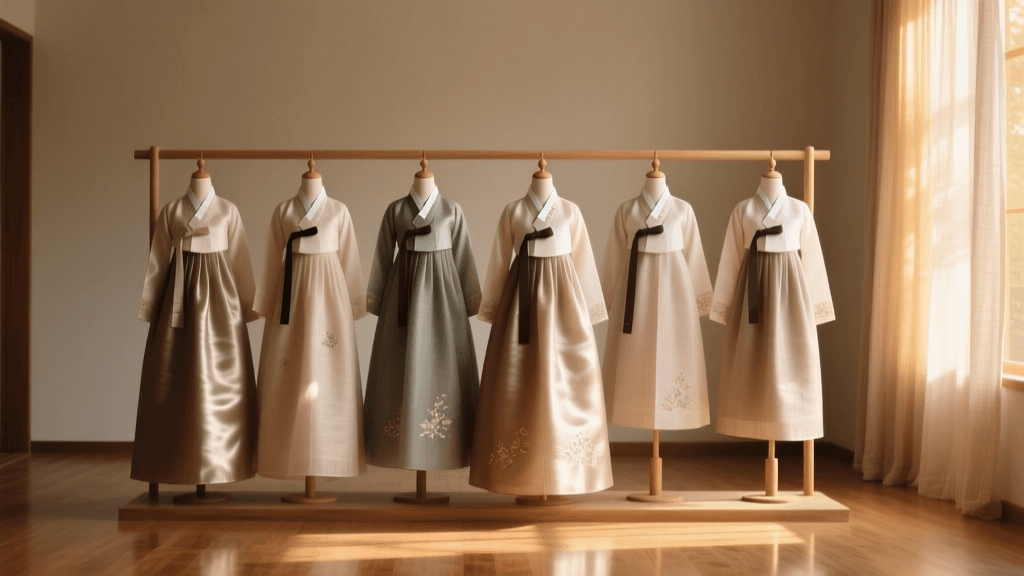
- Myeongju (명주): A traditional Korean silk woven from naturally spun silkworm threads. Unlike the high-gloss, slippery silks often used in Western evening wear, Myeongju has a subtle, elegant luster and a slightly textured, breathable hand-feel. It is the gold standard for wedding, ceremonial, and formal winter/spring hanbok.
- Mosi (모시): A finely woven ramie fabric that is incredibly lightweight, breathable, and crisp. Authentic Mosi is meticulously woven by master artisans and is the premier choice for high-end summer hanbok. According to the Cultural Heritage Administration of Korea, traditional Hansan Mosi weaving is a protected intangible cultural heritage, meaning genuine Mosi commands a premium price and comes with specific artisan certifications.
Red Flags in 2026 Listings: Beware of listings using terms like "satin polyester," "ice silk" (a synthetic blend), or "chiffon" without specifying the fiber content. Authentic sellers will explicitly state "100% Natural Myeongju Silk" or provide the Korean Hangul characters for the fabric alongside English translations.
Navigating Online Marketplaces for Heritage Boutiques
Finding authentic hanbok requires knowing where to look. General marketplaces like Amazon or AliExpress are virtually devoid of genuine, heritage-grade hanbok. Instead, buyers in 2026 should focus on the following channels:
1. Direct-from-Seoul Heritage Brands
Established houses such as Sonjjang Hanbok and Lee Young Hee (or their contemporary licensed successors) operate global-facing e-commerce portals. These sites offer made-to-order services where garments are cut and sewn in South Korea using traditional flat-pattern techniques before being shipped internationally via DHL Global Forwarding's specialized textile logistics.
2. Verified Artisan Platforms
Platforms like Etsy have introduced stringent "Cultural Heritage" verification badges in late 2025, which carry over into 2026. When searching, filter for sellers located in Seoul or Jeonju (Korea's hanbok capital) who provide video proof of their cutting process and display certifications from the Korea Craft and Design Foundation.
3. Specialized K-Fashion Aggregators
Niche luxury aggregators focusing exclusively on East Asian traditional wear have emerged as the safest middlemen. They handle the complex international customs duties associated with importing raw silk and provide English-speaking concierges to help translate your exact measurements to the Korean tailoring team.
The 2026 Custom Sizing Matrix
Unlike Western clothing, traditional hanbok does not rely on standard S/M/L sizing or standard bust/waist/hip ratios. The silhouette is constructed around the chest (for the jeogori or jacket) and the high waist (for the chima or skirt). When ordering online, you must provide precise measurements. Below is the essential sizing matrix to use when filling out custom order forms in 2026.
| Garment Component | Measurement Point | How to Measure (Actionable Advice) | 2026 Tailoring Tolerance |
|---|---|---|---|
| Jeogori (Jacket) | Chest / Bust | Measure around the fullest part of the chest. Add 2-3 inches for traditional ease and layering over modern undergarments. | +2.5 cm (1 inch) |
| Jeogori (Jacket) | Sleeve Length (Pae) | Measure from the base of the neck, over the shoulder, down to the wrist bone. Traditional sleeves should cover the hands slightly. | +1.0 cm (0.4 inches) |
| Jeogori (Jacket) | Back Width | Measure straight across the back from the edge of one shoulder bone to the other. | +1.5 cm (0.6 inches) |
| Chima (Skirt) | High Waist | Measure exactly 2 inches above the navel. The Chima sits on the ribcage, not the natural waist or hips. | +2.0 cm (0.8 inches) |
| Chima (Skirt) | Total Length | Measure from the high-waist point down to the ankle bone. Traditional chima should barely graze the floor when wearing standard shoes. | +3.0 cm (1.2 inches) |
| Baji (Trousers) | Thigh & Inseam | Measure the widest part of the thigh and the inseam. Baji are intentionally voluminous; do not tailor for a slim fit. | +4.0 cm (1.5 inches) |
Pro Tip: Always provide your height and weight alongside these measurements. A skilled Korean tailor will use your height-to-weight ratio to adjust the git (collar) angle and the dongjeong (white collar trim) width to ensure the garment flatters your specific posture.
Pricing Expectations and Import Logistics
Investing in an authentic hanbok is a significant financial commitment. In 2026, the global supply chain for premium raw silk has stabilized, but the cost of master artisan labor in South Korea continues to reflect its heritage status. Here is what you should expect to pay for a genuine, custom-tailored set:
- Everyday Gaeryang Hanbok (Cotton/Blend): $120 - $250 USD
- Formal Myeongju Silk Hanbok (Standard): $450 - $850 USD
- Ceremonial/Wedding Hanbok with Gold Leaf (Geumbak): $1,200 - $3,500+ USD
- International Shipping & Insurance: $45 - $90 USD (via DHL/FedEx priority textile shipping)
Customs and Duties: When importing silk garments into the US, UK, or EU, be prepared to pay textile import duties ranging from 8% to 15% of the declared value. Reputable 2026 e-commerce platforms will calculate and collect these DDP (Delivered Duty Paid) at checkout, preventing your garment from being held hostage at customs.
Preservation and Care for Your Investment
Once your authentic silk hanbok arrives, proper care is essential to maintain the integrity of the natural fibers and the structural folds. According to textile preservation guidelines referenced by The Metropolitan Museum of Art, traditional Asian garments require specific environmental controls to prevent degradation.
Storage Best Practices
Never hang a traditional silk chima or jeogori on Western wire or velvet hangers, as this will distort the shoulder seams and ruin the natural drape of the silk. Instead, fold the garments along their original tailor creases and store them flat in a breathable cotton drawer.
For the ultimate traditional storage method, wrap your folded hanbok in a bojagi—a traditional Korean wrapping cloth. Bojagi not only protect the silk from dust and light exposure but also allow the natural fibers to breathe, preventing the buildup of moisture that can lead to mildew.
Cleaning Protocols
Authentic Myeongju silk and Mosi ramie must never be washed in water. Water will cause the natural silk threads to shrink unevenly and will destroy the stiff, crisp texture of the ramie. Always take your hanbok to a dry cleaner who specializes in heritage textiles or bridal wear, and explicitly inform them of the garment's traditional construction so they avoid using heavy industrial presses that can flatten the delicate geumbak (gold leaf) appliqués.
Final Thoughts on 2026 Hanbok Shopping
Purchasing an authentic hanbok online in 2026 is a rewarding journey that connects you directly with centuries of Korean artistry. By prioritizing heritage fabrics like Myeongju and Mosi, utilizing precise traditional sizing matrices, and purchasing only from verified cultural boutiques, you ensure that your garment is not just a piece of clothing, but a wearable piece of living history. Take your time, measure carefully, and embrace the meticulous craftsmanship that defines true Asian traditional garment making.