Shiromuku vs Iro-Uchikake: Japanese Wedding Kimono Guide
The Timeless Elegance of Japanese Bridal Fashion
When envisioning a traditional Japanese wedding, the striking imagery of a bride adorned in exquisite silk immediately comes to mind. Unlike Western bridal fashion, which predominantly revolves around the white wedding gown, Japanese bridal wear offers a profound, multi-layered sartorial journey. For brides choosing to honor their heritage or embrace the rich culture of Japan, understanding the nuances of ceremonial wedding kimonos is essential. The two most prominent garments in a traditional Shinto wedding are the shiromuku and the iro-uchikake. Each piece is a masterclass in textile artistry, carrying centuries of symbolism, regional craftsmanship, and strict sartorial rules.
Choosing between these magnificent garments—or deciding to wear both during different phases of the wedding day—requires careful consideration of budget, venue, and personal style. According to the Victoria and Albert Museum, the kimono is not merely a garment but a canvas of cultural expression, with bridal wear representing the absolute pinnacle of Japanese weaving and dyeing techniques such as Nishijin-ori brocade and Kyo-Yuzen resist dyeing.
The Shiromuku: A Symbol of Purity and Rebirth
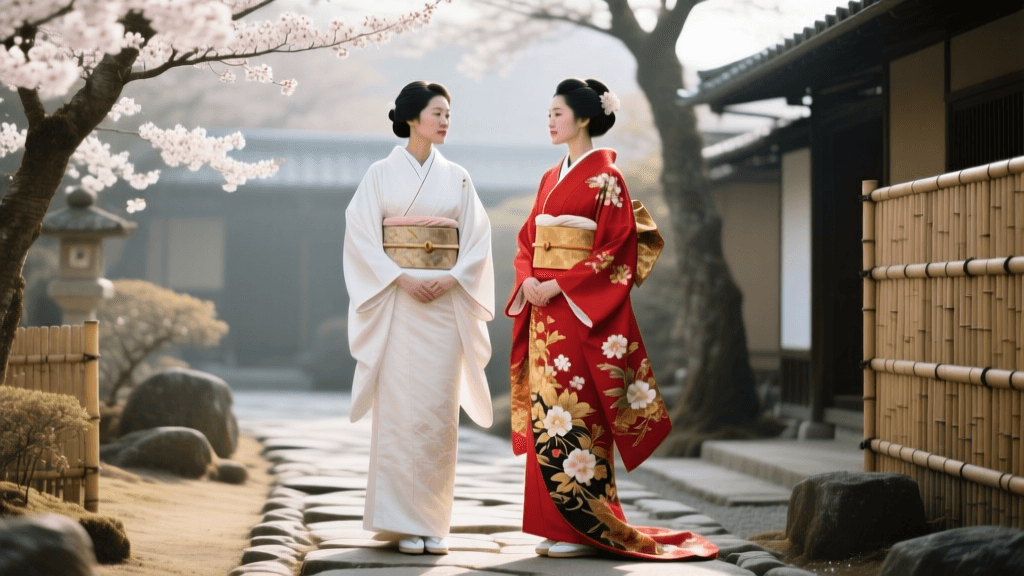
The shiromuku (literally "pure white") is the most formal and traditional bridal kimono, worn exclusively during the Shinto wedding ceremony. Originating in the samurai class during the Edo period, this entirely white ensemble symbolizes the bride's purity and her willingness to be "dyed" in the colors of her groom's family. It is a breathtaking sight, often weighing up to 20 kilograms (44 lbs) due to the multiple layers of heavy silk.
Key Components of the Shiromuku
- Uchikake: The heavily padded outer robe featuring woven motifs of cranes, pine trees, or bamboo, all symbols of longevity and fidelity.
- Kakeshita: The inner kimono, also white, which provides the foundational layers.
- Wataboshi: A white silk hood worn over the head, functioning similarly to a Western veil by shielding the bride's face from onlookers until the ceremony concludes.
- Tsunokakushi: An alternative white headpiece that translates to "horn-hiding," symbolizing the bride's resolve to hide any "horns" of jealousy or ego, embracing her new role with grace.
The Iro-Uchikake: A Celebration of Color and Art
While the shiromuku is reserved for the solemnity of the shrine ceremony, the iro-uchikake (colored outer robe) is the star of the wedding reception (hiroen) or the post-ceremony photo sessions. Emerging from the aristocratic courts of the Heian period and popularized by wealthy merchants in the Edo period, the iro-uchikake is a vibrant explosion of color. Popular base colors include crimson red, deep gold, royal purple, and black.
The motifs on an iro-uchikake are heavily symbolic and meticulously hand-painted or embroidered. You will frequently see the goshoguruma (Heian-era ox carts), blooming peonies, and the auspicious tsuru (crane). Because it is worn during the reception, the bride's face is fully visible, allowing for elaborate, colorful kanzashi (hair ornaments) to complement the vibrant silk. Brides often perform an iro-naoshi (color change) mid-reception, transitioning from a white shiromuku to a colorful iro-uchikake to signal the shift from sacred ritual to joyous celebration.
Comparison Chart: Shiromuku vs. Iro-Uchikake
| Feature | Shiromuku | Iro-Uchikake |
|---|---|---|
| Primary Usage | Shinto Shrine Ceremony | Wedding Reception / Photos |
| Color Palette | Exclusively White | Red, Gold, Purple, Black, Multi |
| Headpiece | Wataboshi or Tsunokakushi | Elaborate Kanzashi (Hairpins) |
| Vibe | Solemn, Sacred, Pure | Joyous, Opulent, Celebratory |
| Average Rental Cost | ¥150,000 - ¥300,000 | ¥200,000 - ¥450,000 |
Practical Guide: Planning, Sizing, and Costs
Navigating the procurement of a Japanese wedding kimono requires a strategic timeline and an understanding of traditional sizing. Unlike Western gowns, kimonos are generally not tailored from scratch to the individual's exact measurements. Instead, they are crafted to a standard height (usually around 158 cm to 162 cm) and adjusted using a technique called ohashori (folding the excess fabric at the waist).
Sizing and Measurements
If you are significantly taller than 165 cm or require plus-size accommodations, you must seek out specialized bridal salons in Tokyo or Kyoto that maintain custom-sized inventory. The Kyoto City Tourism Association notes that traditional textile artisans require months to alter or weave custom panels for non-standard sizes, which drastically impacts both cost and lead time. Standard measurements required by salons include height, hip circumference, bust, and arm span (yuki).
Timeline for Booking and Fittings
- 12–18 Months Prior: Begin researching bridal salons (yumemise). High-end antique or designer kimonos (like those by Yumi Katsura or Hanae Mori) book out over a year in advance.
- 9–12 Months Prior: Attend your first kimono fitting. Select your primary shiromuku and iro-uchikake. Secure your booking with a deposit (typically 20% to 30% of the total package).
- 6 Months Prior: Choose your accessories. Select the color of your kakeshita (inner robe) collars and your obi (sash).
- 2–3 Months Prior: Hair and makeup trial. Bring photos of your chosen kimonos so the stylist can match the kanzashi (hair ornaments) to the garment's color palette.
- 1 Month Prior: Final sizing check. Weight fluctuations can affect the ohashori fold, so a final measurement ensures a flawless silhouette.
Understanding the Costs
Renting is the most practical route for 95% of brides in Japan. A comprehensive rental package (which includes the kimono, undergarments, obi, accessories, and the services of a professional dresser on the wedding day) typically ranges from ¥300,000 to ¥800,000 ($2,000 to $5,500 USD). Purchasing a brand-new, hand-woven shiromuku from a prestigious Nishijin weaver can easily exceed ¥2,000,000 ($13,500 USD) and is usually reserved for families treating the garment as a multi-generational heirloom.
Regional Textile Variations: Kaga Yuzen vs. Nishijin-ori
When selecting your iro-uchikake, you will encounter distinct regional textile styles, each with its own aesthetic and price point. Kaga Yuzen, originating from the Ishikawa Prefecture, is famous for its realistic, nature-inspired motifs and a distinct color palette known as the "Kaga Gosai" (five colors: indigo, mustard, deep green, aubergine, and ancient purple). Kaga Yuzen pieces often feature "mushikui" (insect-eaten) leaf designs, representing a wabi-sabi appreciation for the transient beauty of nature.
Conversely, Nishijin-ori from Kyoto is a luxurious brocade weaving technique where the patterns are woven directly into the silk using gold and silver threads, rather than dyed. A Nishijin-ori uchikake is incredibly heavy, highly structured, and reflects light magnificently, making it a popular choice for grand, dimly lit reception halls. According to the Japan National Tourism Organization, preserving these regional weaving and dyeing techniques is a matter of national pride, with master artisans designated as Living National Treasures.
Essential Accessories for the Japanese Bride
The kimono is only half the equation; the accessories complete the ceremonial armor. According to The Metropolitan Museum of Art, the accoutrements of Japanese dress carry as much semiotic weight as the textiles themselves.
- Kanzashi: Ornate hairpins made of tortoiseshell, silk, or precious metals. For a shiromuku, brides often wear a matching white silk flower set.
- Zori and Tabi: Traditional white straw sandals (zori) worn with split-toe white socks (tabi).
- Sensu / Suehiro: A ceremonial folding fan tucked into the obi. It symbolizes a happy future that opens up and widens over time.
- Hakoseko: A decorative, embroidered case originally used to hold a small mirror, now worn purely as a chest ornament tucked into the front collar.
- Kaiken: A small ceremonial dagger tucked into the obi, a historical remnant from the samurai era symbolizing the bride's ability to protect her virtue and her new family.
The Dressing Process: Kitsuke
Putting on a wedding kimono is an arduous, highly technical process known as kitsuke. It takes a licensed professional dresser (kitsuke-shi) anywhere from two to three hours to complete. The process involves wrapping the bride in multiple layers of padding to create a perfect, cylindrical silhouette (as traditional Japanese beauty ideals eschew the accentuation of curves). The heavy maru obi (the most formal, double-woven sash) is tied in an elaborate bunko or fukura-suzume knot at the back. Because the dressing is so restrictive, brides are advised to eat a light, easily digestible meal beforehand and avoid drinking excessive liquids, as using the restroom in a fully dressed shiromuku is nearly impossible without the assistance of three or four attendants.
"The Japanese bridal kimono is an architectural marvel of silk. It transforms the bride into a living embodiment of cultural continuity, demanding both physical endurance and profound respect for the artisans who spent hundreds of hours weaving her ceremonial armor." — Curatorial Notes on Japanese Textiles, Victoria and Albert Museum.
Conclusion: Honoring Tradition on Your Special Day
Whether you choose the blinding purity of the shiromuku or the vibrant storytelling of the iro-uchikake, wearing a traditional Japanese wedding kimono is an immersive cultural experience. It requires meticulous planning, a respectful understanding of its historical roots, and a willingness to embrace the physical demands of traditional formalwear. By carefully mapping out your timeline, budgeting for high-quality rentals, and collaborating with experienced bridal salons, you ensure that your wedding attire will be as flawless and enduring as the centuries-old traditions it represents.