DIY Ming Dynasty Mamianqun: Sewing Patterns and Fabric Guide
The Resurgence of the Mamianqun in Modern Hanfu
The Hanfu movement has sparked a global renaissance in traditional Chinese clothing, with the Mamianqun (horse-face skirt) emerging as one of the most iconic and versatile garments. Originating in the Song Dynasty and reaching its zenith during the Ming Dynasty, the Mamianqun is celebrated for its elegant drape, structural pleats, and striking flat panels. According to the Metropolitan Museum of Art's Heilbrunn Timeline of Art History, the Ming era was a period of immense cultural refinement, where textile production and sartorial regulations reached new heights of sophistication. Today, modern seamstresses and Hanfu enthusiasts are recreating these historical masterpieces at home, blending traditional pattern drafting with contemporary sewing techniques.
This comprehensive DIY guide will walk you through the intricate process of sewing your own Ming Dynasty Mamianqun, from selecting the perfect modern fabrics to mastering the mathematics of traditional pleating.
Anatomy of the Horse-Face Skirt
Before cutting into your fabric, it is crucial to understand the unique architecture of the Mamianqun. Unlike Western gathered skirts, the Mamianqun is a wrap skirt constructed from two identical rectangular panels of fabric that overlap. The structure consists of three main elements:
- Skirt Doors (Ma Mian): The flat, unpleated panels at the front and back. These are often heavily embroidered or woven with auspicious motifs.
- Pleated Sides: The sections on either side of the skirt doors that feature deep, structured knife pleats or box pleats, allowing for ease of movement.
- Waistband (Yao Tou): A wide, sturdy band, traditionally made of white or contrasting cotton/linen, which anchors the heavy skirt and provides structural support.
Essential Tools for Hanfu Sewing
Creating a historically accurate and structurally sound Mamianqun requires precision. Gather the following tools before beginning:
- Sewing machine with a heavy-duty needle (if using brocade)
- Steam iron and a wooden tailor's clapper (essential for pressing sharp pleats)
- Pattern weights and rotary cutter
- Tailor's chalk or water-soluble fabric markers
- Measuring tape and a clear quilting ruler (at least 18 inches long)
- Pleating board or a custom-made cardboard pleating template
Fabric Selection: Bridging History and Modernity
Historically, Ming Dynasty skirts were crafted from luxurious silks, satins, and intricate brocades. The UNESCO Intangible Cultural Heritage registry highlights the profound legacy of Chinese sericulture and silk craftsmanship, which produced textiles of unparalleled beauty. However, pure silk brocade can be prohibitively expensive and difficult to maintain for daily wear. Modern DIY practitioners often turn to high-quality synthetic or blended alternatives that mimic the weight, drape, and sheen of historical textiles without the delicate care requirements.
Fabric Comparison Chart for Mamianqun
| Fabric Type | Drape & Structure | Pros | Cons | Est. Cost (per yard) |
|---|---|---|---|---|
| Polyester Jacquard / Brocade | Stiff, holds pleats exceptionally well | Affordable, durable, machine washable, historical look | Can be unbreathable in summer, prone to snagging | $8 - $15 |
| Cotton-Linen Blend | Medium drape, matte finish | Breathable, easy to sew, great for daily casual wear | Lacks the historical 'sheen', wrinkles easily | $10 - $18 |
| Viscose / Rayon Twill | Fluid, heavy drape | Beautiful movement, breathable, soft against skin | Slippery to cut, pleats require intense steaming to hold | $12 - $20 |
| Pure Silk Brocade | Luxurious, structured yet fluid | Historically accurate, premium feel, heirloom quality | Expensive, requires dry cleaning, difficult to sew | $45 - $100+ |
Pro Tip: For your first Mamianqun, a mid-weight polyester jacquard is highly recommended. It holds sharp pleats beautifully with a standard steam iron and forgives beginner sewing mistakes.
Measurements and Pattern Mathematics
The Mamianqun is drafted using flat geometry rather than complex curved patterns. You will need two main measurements: your natural waist circumference and your desired skirt length (typically from the waist to the ankle bone).
Calculating Fabric Width
A standard Ming Dynasty skirt requires significant fabric width to accommodate the deep pleats and the overlapping wrap structure. If you are using modern fabric bolts (usually 150 cm or 60 inches wide), you will need approximately 3 to 4 meters of fabric, depending on your waist size and desired pleat volume.
The formula for the total width of one skirt panel is:
Panel Width = (Skirt Door Width) + (Number of Pleats × Pleat Depth) + Hem Allowances
For a standard modern adaptation:
- Skirt Door (Ma Mian): 20 cm to 25 cm wide (front and back).
- Pleat Depth: 3 cm to 5 cm per knife pleat.
- Number of Pleats: Typically 6 to 10 pleats per side, per panel.
The Waistband
Cut a waistband piece from sturdy cotton or linen. The length should be your waist measurement plus 40 cm for overlap and tie extensions. The width should be 12 cm (which folds down to a finished width of 6 cm). Historically, the waistband was often white or a contrasting color to the skirt body, as noted in texts detailing the sartorial customs of the era, which you can explore further via the World History Encyclopedia's overview of Ming society.
Step-by-Step Sewing Instructions
Step 1: Cutting and Hemming
Cut your two main skirt panels to the calculated width and your desired length plus 5 cm for the bottom hem. Finish the raw side edges of both panels with a serger or a zigzag stitch to prevent fraying. Fold the bottom edge up by 1 cm, press, then fold up again by 4 cm to create a deep, weighted hem. Stitch in place. A deep hem adds weight to the bottom of the skirt, helping the pleats hang straight and preventing the skirt from flipping up in the wind.
Step 2: Marking and Forming the Pleats
Lay your fabric flat on a large table. Using tailor's chalk and a clear ruler, mark the center of the skirt door. Measure outward from the center to mark the fold lines and placement lines for your knife pleats.
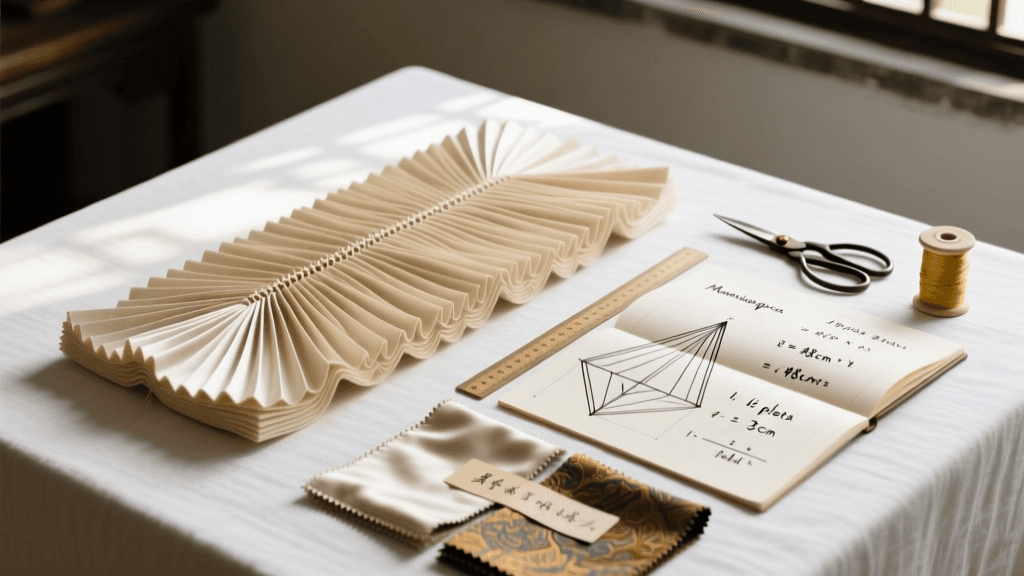
The Pleating Rule: All knife pleats on a Mamianqun must face away from the center skirt door, folding toward the side seams. This creates the distinctive 'horse-face' silhouette when the skirt is wrapped.
Use a pleating board or carefully fold the fabric along your chalk lines, pinning every 5 cm down the length of the pleat. Once pinned, use a steam iron and a wooden clapper to press the pleats sharply. The clapper traps the steam in the fabric fibers, setting the crease permanently.
Step 3: Basting and Attaching the Waistband
Once the pleats are pressed, baste the top edge of both panels with a long machine stitch to secure the pleats in place. Take your prepared waistband strip and fold it in half lengthwise, pressing it flat. Unfold it, and align the raw edge of the waistband with the raw top edge of your pleated skirt panels (right sides together). Pin carefully, ensuring the pleats do not shift. Sew along the crease line. Fold the waistband over the raw edge to the inside of the skirt and slip-stitch or edge-stitch it down to enclose the seam allowance.
Step 4: Adding the Ties
Cut four long ties (approx. 150 cm long and 3 cm wide) from your waistband fabric or a coordinating silk. Fold and sew the ties, turning them right side out. Attach two ties to the left side of the waistband and two to the right. The Mamianqun is wrapped around the body, with the inner ties securing the under-layer and the outer ties wrapping around to tie at the front or side, holding the overlapping skirt doors flat against the body.
Finishing Touches and Garment Care
To complete your Mamianqun, you may choose to add decorative trim (piping) along the edges of the skirt doors, a common practice in late Ming fashion to protect the edges and add visual contrast.
When it comes to care, always respect the fabric you have chosen. Polyester jacquards can usually be hand-washed in cool water with a mild detergent and hung to dry. Never wring the skirt, as this will destroy the carefully pressed pleats. If the pleats begin to relax over time, simply re-pin them while the fabric is damp and apply steam. Store your Mamianqun hanging by the waistband in a breathable garment bag to maintain its structural integrity.
Conclusion
Sewing a Ming Dynasty Mamianqun is more than just a crafting project; it is an exercise in historical preservation and geometric design. By understanding the architectural brilliance of the overlapping panels and selecting fabrics that honor the textile legacy of ancient China, you can create a garment that is both historically resonant and beautifully wearable in the modern world. Whether you pair it with a traditional Ao (jacket) or a modern blouse, your handmade Mamianqun will stand as a testament to the enduring elegance of Asian traditions.