Kimono Milestones 2026: Shichi-Go-San & Coming Of Age Guide
The Sartorial Diary of Japanese Life Stages
In Japan, the passage of time is not merely marked by birthdays, but by profound sartorial transitions. The traditional kimono serves as a visual diary of a person’s life, with specific garments, motifs, and styling rules strictly tied to age, marital status, and life milestones. As we navigate 2026, the intersection of ancient tradition and modern practicality has reshaped how families approach these celebrations. From the adorable toddlers of Shichi-Go-San to the vibrant young adults of Coming of Age Day, understanding these milestones is essential for anyone looking to participate in or appreciate Japanese cultural heritage.
This comprehensive 2026 guide explores the specific kimono requirements for Japan's most significant age milestones, complete with current market pricing, styling trends, and practical planning advice.
Shichi-Go-San: The Childhood Milestones (Ages 3, 5, and 7)
Held annually on November 15th, Shichi-Go-San (Seven-Five-Three) is a rite of passage celebrating the growth and health of young children. According to cultural archives maintained by the Agency for Cultural Affairs, the festival originated in the Heian period among court nobles before spreading to the samurai and commoner classes during the Edo period. Today, it remains one of the busiest seasons for Japanese kimono rental shops and photographers.
Age 3: Himitoki and the Hifu Vest
At age three, both boys and girls traditionally celebrate, though modern iterations focus heavily on girls. Three-year-old girls wear a special kimono called himitoki. Unlike adult kimono, the himitoki does not use a stiff, woven obi sash. Instead, it is secured with soft, attached cords to ensure the child's comfort. Over the kimono, girls wear a hifu—a padded, sleeveless silk vest that adds a layer of warmth and visual softness. In 2026, pastel shades like sage green and dusty rose are trending, moving away from the hyper-saturated pinks of the early 2010s.
Age 5: The First Hakama for Boys
Five-year-old boys celebrate by wearing their first hakama (pleated, wide-leg trousers) over a standard kimono. This is often paired with a haori (half-coat) adorned with the family’s mon (crest). The hakama symbolizes the boy's first step into the masculine sphere of traditional samurai attire. Modern parents in 2026 often opt for lightweight, washable silk-blend hakama sets, which retail for around ¥15,000 to ¥25,000, offering durability for active five-year-olds.
Age 7: Obi-oki and the Transition to Womanhood
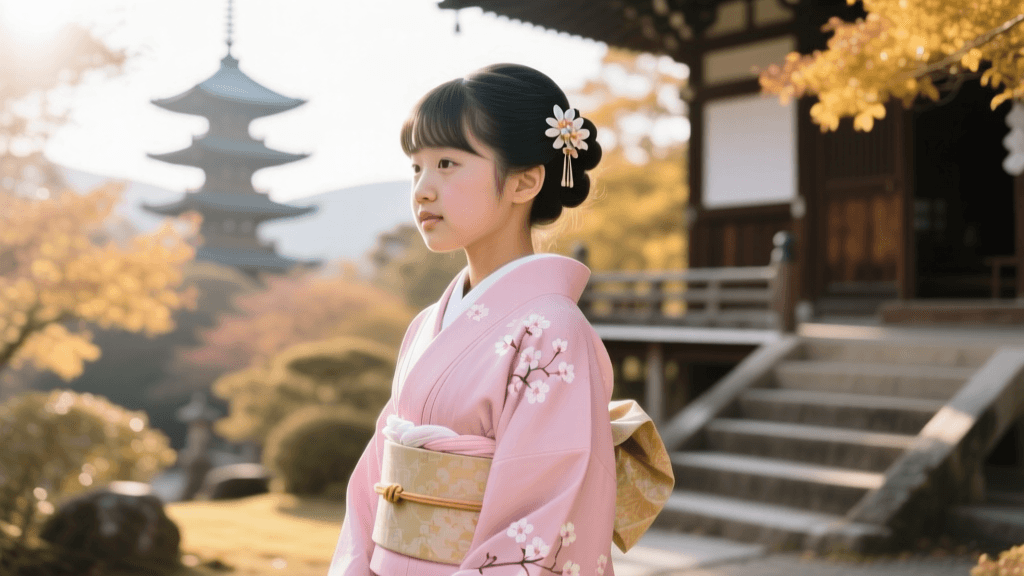
The seven-year-old milestone is exclusively for girls and is known as obi-oki (laying the obi). At this age, girls transition from the soft cords of the himitoki to wearing a real, structured obi sash, mirroring adult women. The kimono features vibrant, auspicious motifs such as cranes, pine trees, and peonies, created using the intricate yuzen dyeing technique. The styling is completed with shigoki obi (a decorative silk scarf tied at the waist) and elaborate kanzashi hair ornaments.
Seijin no Hi and the Age 20 Milestone
Held on the second Monday of January, Coming of Age Day (Seijin no Hi) celebrates those who have reached the age of majority. A critical nuance for 2026 is the legal landscape: while Japan lowered the legal age of adulthood to 18 in April 2022, the vast majority of municipalities continue to hold the official ceremonies and kimono traditions for 20-year-olds (now frequently rebranded as Hatachi no Tsudoi, or 'Gathering of 20-Year-Olds'). This practical adjustment ensures that 18-year-olds are not distracted from crucial high school and university entrance examinations.
Furisode: The Ultimate Young Woman's Garment
The undisputed star of the 20-year-old milestone is the furisode, a formal kimono characterized by its long, swinging sleeves. As highlighted by the Japan National Tourism Organization, the furisode is the most formal attire an unmarried woman can wear, signaling her eligibility for marriage and her entry into adult society.
- Ofurisode (Large): Sleeves measuring approximately 114 cm. Highly formal, often worn for weddings or major stage performances.
- Chufurisode (Medium): Sleeves measuring around 100 cm. This is the most popular choice for 2026 Coming of Age ceremonies, offering a balance of dramatic elegance and physical mobility.
- Kofurisode (Small): Sleeves measuring about 85 cm. Less common for Seijin no Hi, but occasionally chosen for a more subdued, vintage aesthetic.
2026 Trend Alert: The 'Taisho Roman' revival is dominating 2026 furisode trends. Young women are seeking out vintage-inspired geometric patterns, deep jewel tones (like emerald and sapphire), and bold, contrasting obi sashes, moving away from the heavily embroidered, all-white bridal-adjacent styles of the previous decade.
Men's Attire: Montsuki Hakama
While many young men opt for Western suits, those embracing tradition wear a montsuki hakama. This consists of a black kimono bearing five family crests, paired with a striped silk hakama (typically in shades of grey, navy, or silver) and a black haori jacket. In 2026, custom-tailored hakama rentals for men have surged by 18%, driven by a renewed interest in traditional menswear aesthetics.
2026 Cost and Planning Comparison Table
Navigating the financial and logistical aspects of kimono milestones requires foresight. Below is a comparative breakdown of average costs and timelines for 2026.
| Milestone | Garment Type | 2026 Avg. Rental Cost (JPY) | 2026 Avg. Purchase Cost (JPY) | Booking Lead Time |
|---|---|---|---|---|
| Shichi-Go-San (Age 3) | Himitoki & Hifu | ¥10,000 - ¥15,000 | ¥30,000 - ¥50,000 | 3-4 Months |
| Shichi-Go-San (Age 5) | Hakama Set | ¥12,000 - ¥18,000 | ¥40,000 - ¥70,000 | 3-4 Months |
| Shichi-Go-San (Age 7) | Kosode & Obi | ¥15,000 - ¥25,000 | ¥80,000 - ¥150,000 | 4-5 Months |
| Seijin no Hi (Age 20) | Chufurisode Full Set | ¥60,000 - ¥120,000 | ¥300,000 - ¥800,000+ | 12-18 Months |
| Seijin no Hi (Age 20) | Men's Montsuki Hakama | ¥15,000 - ¥25,000 | ¥100,000 - ¥250,000 | 6-8 Months |
Note: Rental packages in 2026 almost universally include the kimono, obi, undergarments (juban), footwear (zori), and the services of a professional dresser (kitsuke-shi) on the day of the event.
Later Life Milestones: Kanreki and Beyond
The kimono's role as a life-stage marker does not end in young adulthood. Japanese culture places immense respect on longevity, with specific colors assigned to later milestones.
- Kanreki (Age 60): Marking the completion of the 60-year zodiac cycle, individuals celebrate their 60th birthday by wearing a red chanchanko (padded vest) and zukin (hood). The red symbolizes rebirth and a return to infancy.
- Koki (Age 70) & Kiju (Age 77): Often celebrated with deep purple garments, a color historically associated with nobility and high rank.
- Beiju (Age 88): Known as the 'rice age' (as the kanji for 88 resembles the character for rice), this milestone is celebrated with gold or yellow garments, symbolizing abundance and a bountiful life.
Practical Tips for 2026 Rentals and Purchases
'The kimono is not merely clothing; it is an embrace of the season, the occasion, and the exact moment in time the wearer occupies.'
If you are planning a kimono milestone event in 2026, early action is paramount. For Coming of Age Day, the most popular furisode designs and prime morning dressing slots (which allow for better photography lighting and less fatigue) are often booked out a full year in advance.
Furthermore, the 2026 market has seen a boom in AI-assisted virtual try-on applications provided by major Kyoto and Tokyo rental chains. These tools allow young adults to upload their photos and visualize how different furisode color palettes and obi combinations will look, significantly reducing the time spent in physical fitting rooms. When budgeting, always account for the kitsuke (dressing) and hair-set fees if they are not explicitly bundled in your rental package, as these can add an additional ¥10,000 to ¥15,000 to your final invoice.
Conclusion
From the soft cords of a toddler's himitoki to the sweeping, 114-centimeter sleeves of a young adult's furisode, the kimono remains a vibrant, living testament to the Japanese life cycle. While the legal definitions of adulthood and the logistical realities of modern life continue to evolve, the emotional resonance of wrapping oneself in silk to mark a new chapter remains unchanged. By understanding the nuances of these milestones, participants in 2026 can honor the past while stepping confidently into their future.