Japanese Traditional Garments: Complete 2026 Styling & Buying Guide
The Renaissance of Wafuku in 2026
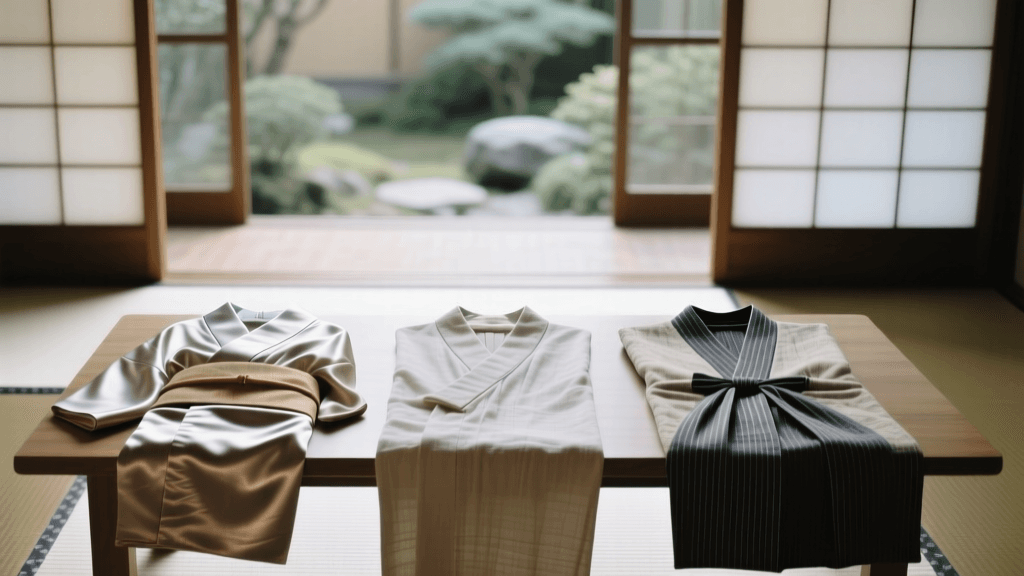
As we navigate the global fashion landscape of 2026, the appreciation for Japanese traditional garments—collectively known as 'wafuku'—has evolved from niche historical interest to a sophisticated integration into modern wardrobes. Driven by a growing emphasis on sustainable, slow fashion and artisanal craftsmanship, collectors and style enthusiasts are increasingly investing in authentic Japanese textiles. Whether you are looking to acquire a formal silk kimono for a ceremonial event, a breathable cotton yukata for summer festivals, or a versatile haori jacket to elevate contemporary streetwear, understanding the construction, fabric types, and proper styling of these garments is essential. This comprehensive guide breaks down the core categories of Japanese traditional dress, offering actionable buying advice, sizing metrics, and care instructions tailored for the 2026 market.
Understanding the Kimono: Silk, Structure, and Formality
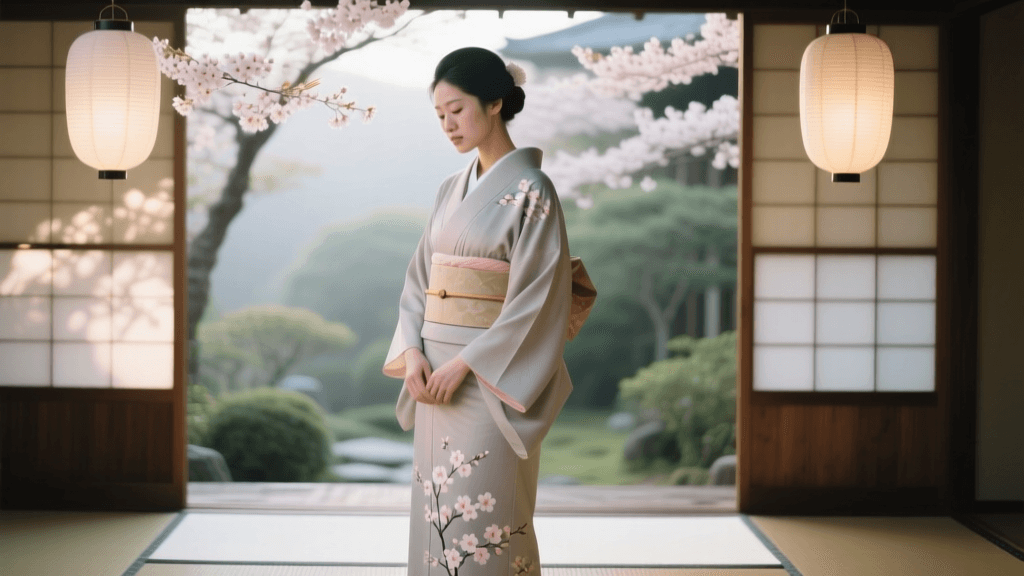
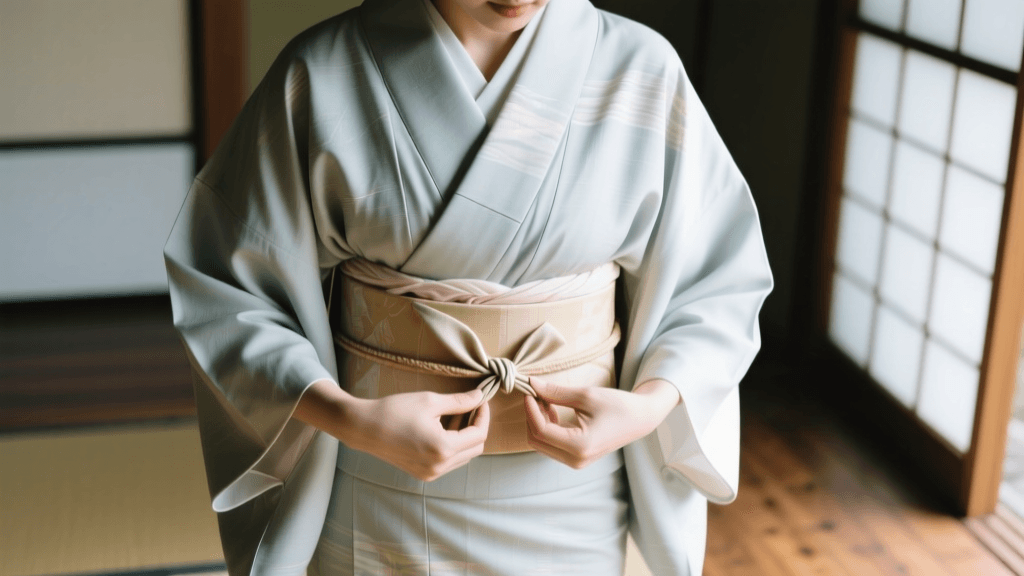
The kimono is the most iconic of all Japanese garments, characterized by its T-shaped, straight-lined structure and intricate obis (sashes). In 2026, the market is distinctly divided between formal ceremonial wear and everyday vintage pieces. The formality of a kimono is dictated by its fabric, pattern placement, and the number of family crests ('kamon') it bears.
Key Kimono Types
- Kurotomesode: The most formal kimono for married women, featuring a black base with patterns only below the waist and five family crests.
- Furisode: Worn by unmarried women, recognized by its dramatically long, swinging sleeves (often 100cm to 110cm in drop length) and vibrant, all-over patterns.
- Komon: An informal, everyday kimono featuring a repeating pattern across the entire garment. This is the most common entry point for vintage collectors in 2026.
- Tsumugi: Woven from spun silk noil, offering a textured, matte finish. Though made of silk, it is considered casual or semi-formal due to its rustic origins.
When shopping for silk kimonos in 2026, buyers should pay close attention to the weave. 'Chirimen' (crepe silk) offers a beautiful drape and resists wrinkling, while 'Rinzu' (damask silk) provides a luxurious, subtle sheen ideal for formal occasions. A brand-new, artisan-crafted silk Furisode from a Kyoto atelier currently ranges from $4,500 to $9,000 USD, while vintage Showa-era Komon can be acquired from curated online marketplaces for $150 to $400 USD.
Yukata: The Breathable Cotton Staple
When the humid Japanese summer arrives, the heavy silk of the kimono is swapped for the 'yukata'. Originally worn as a bathrobe by the aristocracy, the yukata is now the standard attire for summer fireworks festivals ('hanabi') and bon odori dances. Unlike the kimono, which requires a complex array of undergarments ('juban') and accessories, the yukata is worn directly over basic underlayers, making it highly accessible for beginners.
In 2026, contemporary yukata designs have expanded beyond traditional indigo and white cotton. We are seeing a surge in 'Neo-Wafuku' styling, where yukata fabrics feature modern geometric prints, muted earth tones, and even blended cotton-linen textiles for enhanced breathability. When purchasing a yukata, ensure the fabric is 100% cotton or a high-quality cotton-linen blend. Synthetic polyesters, while cheap and wrinkle-resistant, trap heat and defeat the purpose of the garment's summer utility. Expect to pay between $60 and $150 USD for a high-quality, modern cotton yukata set, which typically includes the garment, a simple 'hanhaba' (half-width) obi, and a decorative obi belt cord ('obijime').
Hakama and Haori: Layering and Silhouette
For those looking to incorporate traditional Japanese silhouettes into a modern 2026 wardrobe without committing to a full kimono ensemble, the hakama and haori are indispensable.
The Hakama
The hakama is a pleated, skirt-like garment worn over a kimono. While historically associated with samurai and male nobility, it is now widely worn by women during university graduation ceremonies and by practitioners of martial arts like kendo and aikido. A formal women's hakama is typically made of heavy silk or high-grade polyester, featuring five or seven deep pleats that create a striking, structured A-line silhouette. In 2026, styling a hakama with a contrasting, modern lace-up boot instead of traditional 'zori' sandals has become a popular editorial trend.
The Haori
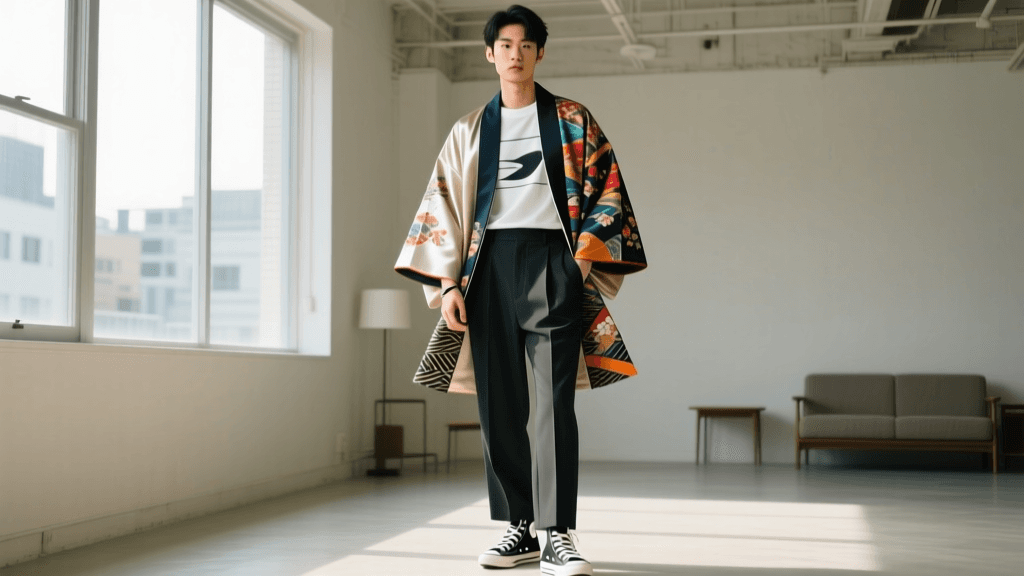
The haori is a hip- or thigh-length jacket worn open over a kimono. Because it does not require an obi to hold it closed (it is secured by a small braided cord called a 'haori himo'), the haori is the most adaptable traditional garment for Western clothing. In 2026, it is incredibly common to see vintage silk haori styled over plain t-shirts, tailored trousers, or even denim. The contrasting inner lining ('haori ura') of vintage pieces often features hand-painted landscapes or bold graphic designs, offering a striking pop of color when the jacket is in motion.
2026 Garment Comparison and Market Guide
To help you navigate your purchasing decisions, refer to the comparison table below detailing the primary characteristics and current 2026 market expectations for each garment type.
| Garment Type | Primary Fabric | Formality Level | 2026 Avg. Price (USD) | Best Season |
|---|---|---|---|---|
| Furisode | Heavy Silk (Rinzu) | Very Formal | $4,500 - $9,000 | Winter / Spring |
| Komon | Crepe Silk (Chirimen) | Casual / Everyday | $150 - $400 (Vintage) | Year-round |
| Yukata | Cotton / Cotton-Linen | Informal / Summer | $60 - $150 | Summer |
| Hakama | Silk / Heavy Synthetics | Ceremonial / Martial | $200 - $800 | Spring / Winter |
| Haori | Silk / Wool / Linen | Semi-Formal to Casual | $80 - $300 (Vintage) | Year-round |
Sizing, Tailoring, and the Tanmono System
One of the most challenging aspects for international buyers in 2026 is understanding Japanese sizing. Traditional kimonos are not cut to individual body measurements from large sheets of fabric. Instead, they are constructed from a single bolt of fabric called a 'tanmono'. A standard tanmono is approximately 36 to 40 centimeters wide and 11 to 12 meters long. Because the fabric is cut in straight lines and folded rather than tailored to curves, the width of the kimono is strictly limited by the width of the bolt.
How to Measure for a Kimono
When buying online, you must compare your body measurements to the garment's specific dimensions. The three critical measurements are:
- Shoulder to Hem (Length): Ideally, the kimono should reach your ankle bone. For a standard height of 165cm (5'5'), look for a length of 155cm to 160cm. The excess fabric is folded and tied at the waist with a 'koshihimo' (tying cord).
- Wingspan (Yuki): Measured from the center of the back of the neck, across the shoulder, and down to the wrist. A standard wingspan is around 62cm to 66cm. If the sleeves are too short, it will look visibly ill-fitted.
- Hip Width: Because the fabric panels are straight, the kimono must wrap comfortably around your hips. Measure your hips and ensure the garment's total width (front and back panels combined) allows for at least a 20cm overlap at the front.
If you purchase a vintage piece that does not fit, remember that traditional kimonos are sewn with a running stitch. This means they can be completely unspooled, washed, and re-sewn to fit a new wearer—a process known as 'arai-hari'. However, this specialized service is rare outside of Japan and can cost upwards of $300 USD in 2026.
Care, Maintenance, and Archival Storage
Preserving these garments requires specific environmental controls. Silk kimonos should never be washed at home. In 2026, professional 'maru-arai' (a specialized Japanese dry cleaning technique that cleans the entire garment without dismantling it) is available through select international heritage textile services. Expect to pay around $120 to $180 USD per garment.
For storage, never use plastic bags or wire hangers. Plastic traps moisture, leading to irreversible mold spots, while wire hangers will distort the shoulder seams. Instead, fold the garment along its original seam lines and wrap it in acid-free 'tatou' paper. Store the wrapped garments flat in a wooden drawer or a breathable cotton storage box. To protect against pests, use natural camphor or cedar blocks, ensuring they do not touch the silk directly, as the oils can cause staining.
Authoritative Resources and Further Reading
For those looking to deepen their understanding of Japanese textile history, construction techniques, and the cultural significance of wafuku, the following institutional archives offer unparalleled, meticulously curated research:
- Explore the evolution of the garment through The Metropolitan Museum of Art's Heilbrunn Timeline of Art History, which provides an exceptional overview of the kimono's structural and aesthetic development from the Edo period to the modern era.
- The Victoria and Albert Museum's Asian Collections offers extensive visual archives and curatorial essays detailing the intricate dyeing techniques, such as yuzen and shibori, that define high-end Japanese silk textiles.
- For a broader look at Japanese material culture and the artisans who maintain these traditions today, The Smithsonian National Museum of Asian Art provides vital context on how historical garments influence contemporary Japanese design and global fashion.
By understanding the rich history, precise construction, and modern styling potential of these garments, you can confidently build a collection that honors Japanese heritage while remaining relevant and striking in 2026.