Authentic Banarasi Sarees Online 2026: GI-Tag Buyer Guide
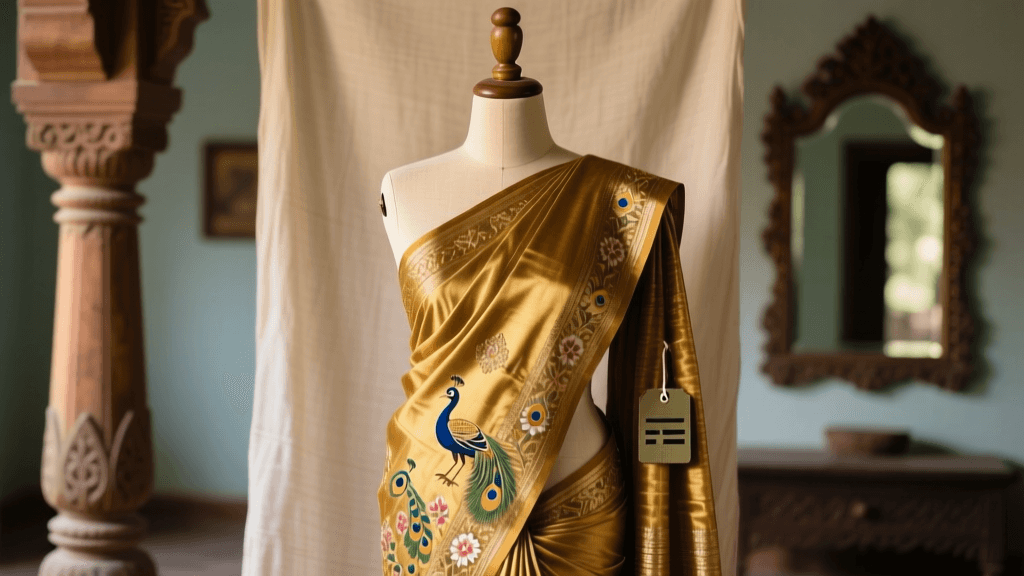
The 2026 Landscape of Digital Handloom Shopping
The global appreciation for South Asian traditional garments has surged, making the Banarasi saree one of the most sought-after textiles in the world. However, as e-commerce platforms expand their reach in 2026, so does the sophistication of counterfeit manufacturing. AI-generated product imagery and deceptive listings have made it increasingly difficult for untrained buyers to distinguish between a heritage handloom masterpiece and a mass-produced power-loom replica. For the modern consumer, purchasing a Banarasi saree online requires more than just an eye for color; it demands a strict understanding of textile certifications, weaving techniques, and digital provenance.
This comprehensive guide will equip you with the knowledge to navigate online marketplaces confidently, ensuring that the garment you invest in is a genuine piece of Indian cultural heritage, straight from the looms of Varanasi.
Decoding the GI Tag and Silk Mark Certifications
What is a Geographical Indication (GI)?
A Geographical Indication (GI) tag is a legal certification that guarantees a product possesses specific qualities, reputation, or characteristics essentially attributable to its geographical origin. According to the World Intellectual Property Organization (WIPO), GI tags protect traditional knowledge and prevent unauthorized commercial exploitation. The 'Banaras Brocades and Sarees' GI tag ensures that the textile was woven within the designated districts of Varanasi, Azamgarh, Jaunpur, Bhadohi, Mirzapur, and Chandauli using traditional techniques.
When shopping online in 2026, reputable sellers will display a scannable QR code linked to the Indian government's GI registry. This digital ledger tracks the saree from the weaver's cooperative to the final retail point, providing an immutable record of authenticity.
The Silk Mark Guarantee
While the GI tag protects the origin and technique, the Silk Mark certifies the raw material. Administered by the Silk Mark Organisation of India, this label guarantees that the base fabric is 100% pure natural silk, free from synthetic blends like polyester or artificial viscose. Always look for the holographic Silk Mark label in the product images and verify the unique serial number on the official Silk Mark portal before finalizing your purchase.
Handloom vs. Powerloom: A Buyer’s Comparison Chart
Power-loom factories in other parts of the country frequently produce synthetic copies of Banarasi designs, flooding online marketplaces with underpriced alternatives. Understanding the physical and economic differences is crucial for online buyers who cannot touch the fabric before purchasing.
| Feature | Authentic Handloom Banarasi | Powerloom Counterfeit |
|---|---|---|
| Production Time | 15 days to 6+ months | 2 to 8 hours |
| Average Price (2026) | ₹15,000 to ₹2,50,000+ | ₹1,500 to ₹4,500 |
| Reverse Side of Fabric | Clean; threads are tightly interlocked and trimmed | Messy; floating threads and loose loops |
| Zari (Metallic Thread) | Real silver/gold or high-grade tested metallic yarn | Plastic-coated synthetic polyester |
| Motif Precision | Slight, beautiful human irregularities | Mathematically perfect, rigid, and flat |
| Drape and Weight | Heavy, structured, holds pleats elegantly | Lightweight, slippery, lacks structural body |
The Six Classic Weaves of Banaras
When filtering your search on specialized handloom marketplaces, you will encounter specific weaving terminology. Familiarizing yourself with these six classic categories will help you find the exact aesthetic you desire:
- Jangla: Characterized by wild, sprawling vegetation motifs and intricate 'Jangla' vines. These are heavily brocaded and often chosen for bridal wear due to their opulent weight.
- Tanchoi: Woven with a satin base and multi-colored extra weft threads. The patterns are usually dense, featuring paisleys or floral trails without any floating threads on the back.
- Vaskat (Katan): Made from pure twisted silk (Katan) in both the warp and weft. These sarees are known for their durability, rich texture, and traditional buti (small motif) patterns.
- Butidar: Features a high density of small, intricate motifs (butis) woven with gold and silver zari, creating a 'Ganga-Jamuna' effect where the gold and silver threads contrast beautifully.
- Tissue: Woven with silk in the warp and zari in the weft, giving the entire saree a shimmering, metallic, and translucent appearance. Highly prized for evening wear and weddings.
- Cutwork: A more affordable handloom technique where the extra weft threads are cut manually after weaving, leaving a slightly textured reverse side but mimicking the look of heavy brocade on the front.
Navigating Online Marketplaces and Weaver Cooperatives
In 2026, the safest way to purchase authentic Banarasi sarees online is to bypass generalized e-commerce giants and focus on dedicated handloom platforms and government-backed networks. The Indian Ministry of Textiles has heavily promoted the integration of artisan cooperatives into the Open Network for Digital Commerce (ONDC), allowing buyers to purchase directly from weaver clusters in Varanasi without middleman markups.
Trusted Platform Categories:
- Direct-to-Weaver Heritage Brands: Platforms like Tilfi and HolyWeavers have established exclusive contracts with master weavers. In 2026, these platforms utilize NFC (Near Field Communication) tags woven into the saree's pallu, which, when scanned with a smartphone, reveal the weaver's name, village, and the exact number of hours spent on the loom.
- Government Emporiums Online: State-run emporiums (such as Gurjari or the UP Handloom portal) offer guaranteed authenticity, though their online user interfaces and inventory refresh rates may lag behind private curators.
- Curated Boutique Marketplaces: Sites that specialize exclusively in Indian heritage textiles often provide high-resolution macro photography, allowing you to zoom in on the zari work and inspect the reverse side of the fabric before buying.
Sizing, Tailoring, and Pre-Draping Preparations
Unlike western garments, a saree is an unstitched drape, but online shopping still requires attention to measurements and supplementary pieces.
The Blouse Piece
Most authentic Banarasi sarees come with an attached 'running blouse' piece (usually 0.8 to 1 meter long) woven seamlessly at the end of the saree. However, some modern curations offer 'contrast blouse' bundles. When ordering online, always check the product description to confirm whether the blouse piece is attached, separate, or entirely missing (requiring you to source a complementary silk fabric).
Length Variations
Standard Banarasi sarees are woven in two primary lengths:
- 5.5 Meters: The modern standard, ideal for contemporary draping styles and pairing with standard readymade blouses.
- 6.3 Meters: The traditional length, preferred by orthodox drapers and those who require extra fabric for intricate pleating or modesty pallus.
Fall Stitching and Pico Edging
Upon receiving your saree, the raw edges must be secured. Many premium online retailers in 2026 offer complimentary 'Pico' (overlock stitching) and 'Fall' (a heavy cotton strip sewn to the inner bottom hem) services before shipping. If this service is not provided, you must take the saree to a local tailor immediately to prevent the delicate silk threads from fraying.
Preserving Your Investment: Zari Care and Storage
A genuine handloom Banarasi saree is an heirloom investment. The metallic zari threads are highly susceptible to oxidation, moisture, and chemical reactions. Proper storage is non-negotiable.
- Avoid Plastic: Never store your silk saree in plastic bags or vacuum-sealed covers. Plastic traps moisture and accelerates the blackening of the silver zari.
- Use Mulmul or Muslin: Wrap the saree in unbleached, pure cotton mulmul cloth. This allows the protein-based silk fibers to breathe while protecting them from dust and light.
- Refolding Schedule: Every three to four months, remove the saree from storage and refold it along different lines. Leaving a heavy Banarasi folded in the same position for a year will cause the silk fibers to snap along the crease lines.
- Natural Pest Control: Avoid naphthalene balls or synthetic mothballs, as their harsh chemicals can melt or discolor the zari. Instead, use natural cedar wood blocks, dried neem leaves, or whole cloves placed in small muslin pouches within your wardrobe.
- Cleaning: Never wash a heavy Banarasi saree at home. Rely exclusively on professional dry cleaners who specialize in heritage Indian textiles, and always point out the zari work so they use appropriate, non-abrasive solvents.
Conclusion
Shopping for a Banarasi saree online in 2026 is a rewarding experience that connects you directly with centuries-old artisanal traditions, provided you approach the marketplace with vigilance. By demanding GI and Silk Mark certifications, understanding the physical hallmarks of handloom weaving, and utilizing trusted, transparent digital platforms, you can confidently build a collection of authentic South Asian heritage garments that will last for generations.