Shichi-Go-San Kimono Guide: Traditions, Costs, and Sizing
The Cultural Significance of Shichi-Go-San
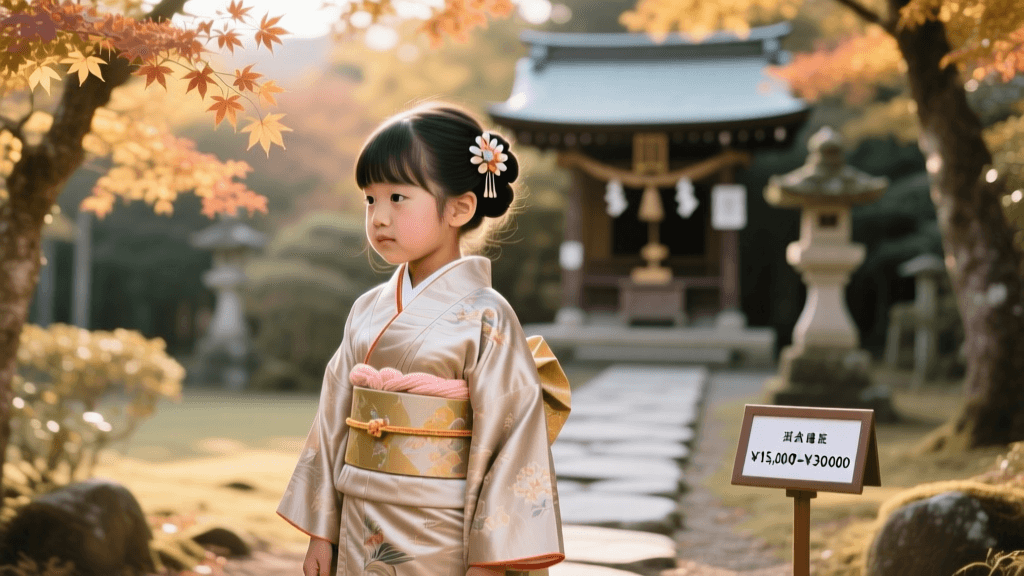
The Shichi-Go-San (Seven-Five-Three) festival is one of Japan's most endearing and visually stunning traditions, celebrating the growth and well-being of young children. Held annually on November 15th, families dress their children in exquisite traditional garments and visit Shinto shrines to pray for health, longevity, and protection from evil spirits. According to cultural overviews provided by Japan Guide, the festival's roots trace back to the Heian period (794-1185), when court nobles celebrated their children's transition into childhood. During the Edo period, the practice spread to the samurai class and eventually to commoners, solidifying the specific ages of three, five, and seven as critical milestones in a child's early life.
For parents and cultural enthusiasts alike, understanding the garments associated with Shichi-Go-San offers a fascinating window into Japanese textile heritage, child-rearing customs, and the meticulous art of kitsuke (kimono dressing). This guide explores the specific traditions, sizing mechanics, and practical costs associated with children's kimono, culminating in the ultimate coming-of-age transition.
The Milestones: Ages 3, 5, and 7
Each age celebrated during Shichi-Go-San corresponds to a specific historical rite of passage, marked by distinct changes in the child's attire.
Age 3: Kamioki (Hair-Growing)
Historically, children had their heads shaved until the age of three. The Kamioki ceremony marked the first time boys and girls were allowed to grow their hair. Today, three-year-old girls typically wear a vibrant, small-scale kimono paired with a hifu—a padded, sleeveless silk vest worn over the obi. The hifu is uniquely associated with young girls and provides a cute, forgiving silhouette that does not require the complex, tight obi-tying techniques used for older wearers. Three-year-old boys may also wear a hifu over a simple kimono, though many modern families opt for miniature hakama sets.
Age 5: Hakamagi (First Hakama)
At age five, boys celebrate Hakamagi, the ceremony of wearing a hakama (pleated trousers) for the first time. The traditional ensemble consists of a montsuki (a formal kimono bearing the family crest), a striped Sendai-hira silk hakama, and a matching haori (half-coat). The boy will also carry a traditional fan (sensu) and wear zori sandals with white tabi socks. This outfit symbolizes the boy's first step into the formal, public sphere of male society.
Age 7: Obitoki (First Obi)
For seven-year-old girls, Obitoki marks the transition from wearing simple cord-tied garments to tying a formal, adult-style obi sash. The girl wears a full-length, adult-proportioned kimono (often featuring auspicious motifs like cranes, pine trees, or treasure carts) but with the shoulders and waist deeply tucked to fit her smaller frame. Because the obi is tied in a formal style (such as the fukura-suzume or sparrow knot), the ensemble is heavily accessorized with shigoki (a decorative silk sash tied at the waist to hide excess fabric), obi-jime (decorative cords), and obi-age (silk scarves).
Sizing, Fitting, and the Art of Kitsuke
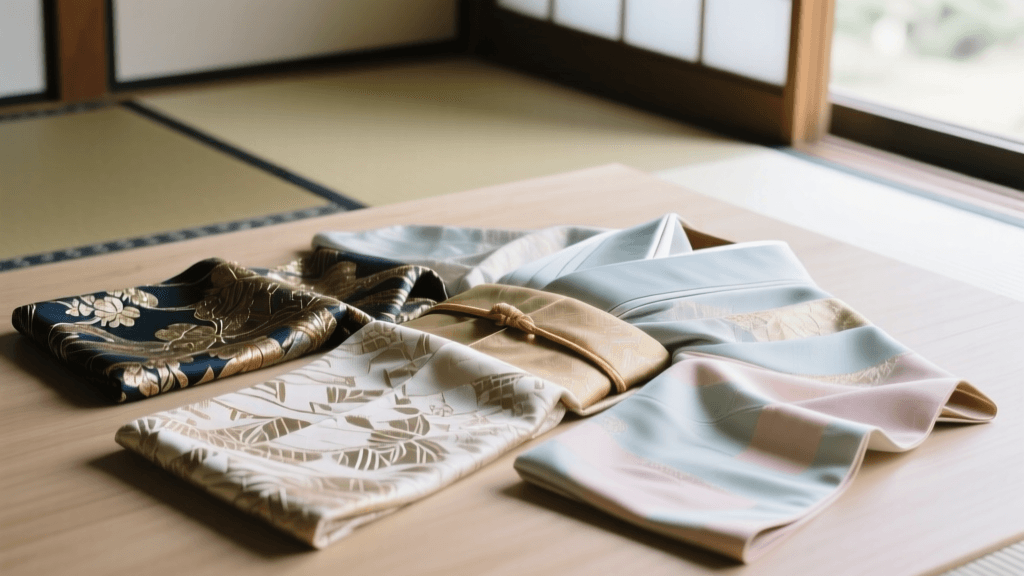
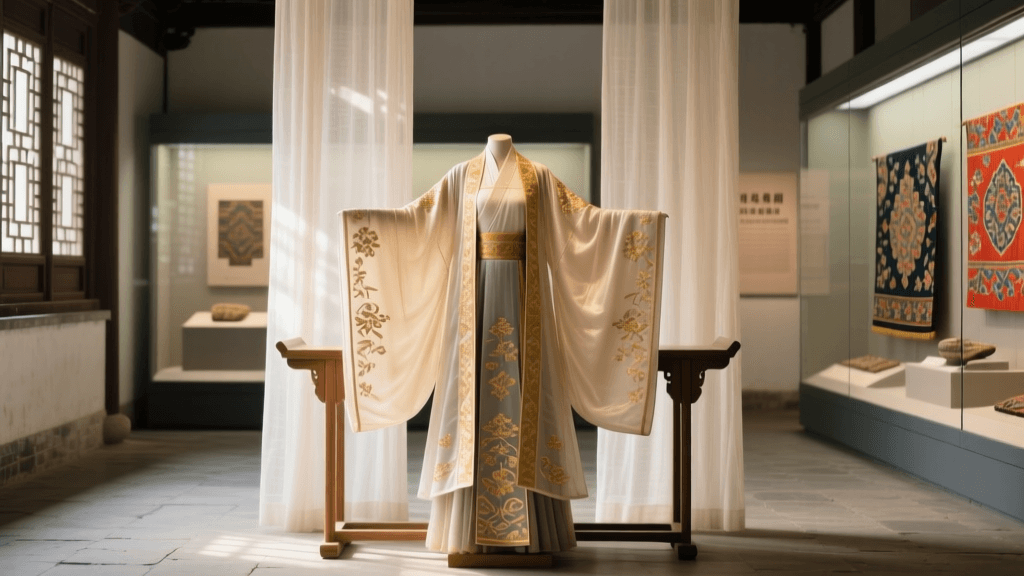
Unlike Western clothing, children's kimonos are not manufactured in rigid, age-specific sizes. Instead, they are made from standard bolts of fabric and tailored to the child's body through a series of strategic folds and tucks, secured by koshi-himo (tying cords). The evolution of these garments and their structural adaptability reflects broader shifts in Japanese textile history, as documented by The Metropolitan Museum of Art.
Essential Undergarments for Children
- Hadajuban: A thin cotton under-layer worn directly against the skin to absorb sweat and protect the outer silk.
- Nagajuban or Kimono Slip: For children, a one-piece cotton slip is often preferred over a two-piece nagajuban to reduce bulk and make dressing easier.
- Susoyoke: A half-slip worn by older girls (age 7) to ensure the kimono hem drapes correctly and prevents tangling when walking.
When dressing a seven-year-old, the shigoki sash is an absolute necessity. Because the kimono is folded up at the waist to match the child's height, the excess fabric is bundled and hidden beneath the bright red or pink shigoki, which adds a pop of color and prevents the heavy hem from dragging on the ground.
Cost Guide: Buying vs. Renting Children's Kimono
Acquiring a children's kimono can be a significant investment. Because children outgrow the garments rapidly and the Shichi-Go-San festival only occurs once per milestone, the vast majority of modern Japanese families choose to rent rather than buy. Renting also provides access to professional kitsuke (dressing) and hair styling, which are notoriously difficult for beginners to execute at home.
| Age / Milestone | Garment Type | Key Accessories | Avg. Rental Cost (JPY) | Avg. Purchase Cost (JPY) |
|---|---|---|---|---|
| Age 3 (Girls) | Small Kimono + Hifu | Zori, Hana kanzashi (floral pins) | ¥5,000 - ¥10,000 | ¥20,000 - ¥40,000 |
| Age 5 (Boys) | Montsuki + Hakama + Haori | Sensu (fan), Kenjushi (sword ornament) | ¥7,000 - ¥12,000 | ¥30,000 - ¥60,000 |
| Age 7 (Girls) | Full-length Kimono | Shigoki, Obi-jime, Kanzashi, Zori | ¥10,000 - ¥20,000 | ¥50,000 - ¥150,000+ |
Note: Rental prices above are for the garments only. Full studio packages, which include professional dressing, hair styling, makeup, and commemorative photography, typically range from ¥25,000 to ¥80,000+ depending on the prestige of the studio and the number of photo prints ordered.
Actionable Timeline for Parents
If you are planning a Shichi-Go-San celebration in Japan, timing is everything. The festival peaks in November, and the best studios and shrines book up months in advance.
- May - July (6 Months Out): Book your photography studio and rental package. Many families opt for maedori (pre-shoots) during the summer to avoid the exhausting rush of doing photos and shrine visits on the exact same day in November.
- September (2 Months Out): Finalize your shrine visit. While you can visit any local shrine, famous locations like Meiji Jingu in Tokyo or Kanda Myojin require early reservations for official prayer ceremonies (gokito).
- October (1 Month Out): Attend your pre-shoot if scheduled. Ensure the studio has your child's exact current height and shoe size to prepare the correct kimono length and zori sandals.
- November 15th (or nearest weekend): The main event. Bring a change of comfortable Western clothes for the child to change into immediately after the shrine visit, as formal kimono and tight obi can be physically taxing for young children to wear for more than a few hours.
The preservation of these intricate dressing techniques and the continuation of family rites like Shichi-Go-San are considered vital components of Japan's intangible cultural heritage, actively supported and documented by institutions such as the Agency for Cultural Affairs, Government of Japan.
The Final Transition: Seijin no Hi (Coming of Age)
The journey of traditional Japanese children's wear culminates decades later at Seijin no Hi (Coming of Age Day), held on the second Monday of January. While the legal age of adulthood in Japan was lowered to 18 in 2022, most municipalities and families still celebrate the traditional garment milestones at age 20, honoring the historical continuity of the custom.
For young women, this is the time to wear the furisode, a highly formal kimono characterized by dramatically long, swinging sleeves that can measure up to 114 centimeters in length. The furisode is exclusively worn by unmarried women and represents the pinnacle of a young woman's wardrobe, often costing upwards of ¥300,000 to ¥1,000,000 if purchased new, though rentals remain popular (¥50,000 - ¥100,000). For young men, the traditional choice is a formal black montsuki hakama ensemble, though modern tailored Western suits have become equally common.
Conclusion
From the padded hifu of a three-year-old to the sweeping furisode of a twenty-year-old, traditional Japanese garments serve as wearable markers of time, growth, and familial devotion. The Shichi-Go-San festival is not merely a photo opportunity; it is a profound cultural ritual that weaves children into the long, unbroken tapestry of Japanese history. Whether you are a parent navigating the rental markets of Tokyo or a textile enthusiast studying the structural ingenuity of children's kitsuke, the garments of Japan's coming-of-age traditions offer endless layers of beauty and meaning.