Mastering Kimono Fabrics: Silk Weaves, Costs, and Seasonal Guide
The Art of Japanese Silk: An Introduction to Kimono Textiles
The kimono is far more than a simple garment; it is a wearable canvas that reflects centuries of Japanese aesthetic philosophy, regional craftsmanship, and meticulous textile engineering. When collectors, enthusiasts, or first-time buyers approach the world of traditional Japanese clothing, the sheer variety of fabrics, weaves, and dyeing techniques can be overwhelming. Understanding kimono craftsmanship requires a deep dive into the specific silk fabrics that define the garment's drape, formality, and seasonal appropriateness.
According to the Victoria and Albert Museum's comprehensive guide to the Kimono, the evolution of Japanese silk textiles was heavily influenced by trade along the Silk Road, yet Japanese artisans quickly developed indigenous techniques that remain unparalleled in their complexity. Today, selecting the right kimono fabric involves navigating a matrix of weaving traditions, dyeing methods, and strict seasonal rules known as koromogae.
The Big Three: Nishijin-ori, Yuzen, and Tsumugi
To build a foundational knowledge of kimono fabrics, one must understand the three most prominent textile traditions in Japan. Each represents a different approach to silk manipulation, ranging from complex loom weaving to hand-painted resist dyeing.
1. Nishijin-ori (Brocade Weaving)
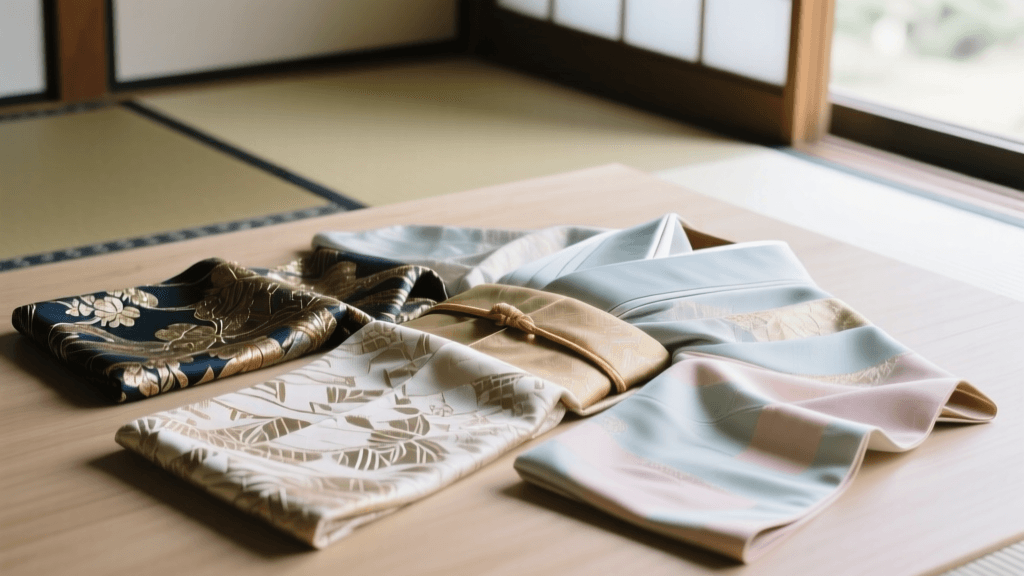
Originating in the Nishijin district of Kyoto, Nishijin-ori is the pinnacle of Japanese woven textiles. Unlike dyed fabrics where patterns are applied to finished cloth, Nishijin-ori utilizes pre-dyed silk threads woven together on complex Jacquard looms to create intricate, multi-colored patterns. Artisans frequently incorporate kinran (gold leaf threads) and ginran (silver leaf threads) to produce a luxurious, three-dimensional brocade effect.
Actionable Insight: Nishijin-ori is highly formal and structurally stiff. It is most commonly used for obi (sashes) and formal furisode or tomesode kimono. Expect to pay between $3,000 and $15,000+ for a custom Nishijin-ori kimono, with elaborate maru-obi (fully patterned sashes) costing upwards of $20,000.
2. Yuzen (Resist Dyeing)
While Nishijin relies on the loom, Yuzen relies on the brush. Yuzen is a resist-dyeing technique where a rice-paste glue (itome-nori) is applied to silk to outline designs, preventing dyes from bleeding into adjacent areas. This allows for incredibly detailed, painterly motifs that mimic traditional Japanese watercolor paintings.
- Kyo-Yuzen (Kyoto): Known for soft pastel colors, elegant courtly motifs, and heavy use of gold leaf application.
- Kaga-Yuzen (Kanazawa): Characterized by bold, realistic nature motifs, deep rich colors, and the intentional inclusion of mushikui (insect-bitten leaf) designs to reflect the beauty of impermanence.
Actionable Insight: Yuzen kimono are the standard for high-formal events like weddings and tea ceremonies. Commissioning a hand-painted Kyo-Yuzen kimono takes 3 to 6 months and typically costs between $4,000 and $12,000.
3. Tsumugi (Pongee Silk)
Historically, Tsumugi was woven from nozomi-ito—the broken or waste silk threads left over from premium silk reeling. Because the short fibers had to be hand-spun, the resulting yarn featured irregular slubs, giving the fabric a rustic, nubby texture. Despite its humble origins, Tsumugi is now highly prized for its understated elegance and durability. The most famous variant, Yuki-tsumugi, is so culturally significant that it is recognized by UNESCO as an Intangible Cultural Heritage.
Actionable Insight: Tsumugi is considered informal or semi-formal (komon or tsukesage level). It is perfect for daily wear, theater visits, and casual dining. Prices range from $1,500 to $8,000, with vintage Oshima-tsumugi (mud-dyed) being highly sought after by collectors.
Seasonal Fabric Guide: When to Wear What
Japanese fashion is intrinsically tied to the seasons. Wearing a heavy winter brocade in July is considered a major faux pas. The concept of koromogae (seasonal wardrobe change) dictates not just the motifs on the kimono, but the physical weave of the fabric itself. Below is a practical guide to seasonal silk fabrics.
| Season | Months | Primary Fabric Types | Weave Characteristics | Formality & Use |
|---|---|---|---|---|
| Spring | March - May | Chirimen, Rinzu | Crepe (matte, textured), Satin Damask (glossy, soft) | Versatile; used for both formal and semi-formal wear. |
| Summer | June - August | Ro, Sha, Koma-chirimen | Leno weave (open gaps), Gauze (sheer, lightweight) | Informal to semi-formal; designed for breathability and cooling. |
| Autumn | September - November | Chirimen, Tsumugi | Heavy Crepe, Slubbed Pongee (matte, tactile) | Semi-formal to informal; provides slight warmth and rich texture. |
| Winter | December - February | Heavy Chirimen, Brocade, Velvet | Thick Crepe, Dense Jacquard, Yuzen-dyed Velvet | Highly formal; provides insulation and a luxurious, heavy drape. |
Practical Guide: Commissioning and Buying Kimono Fabrics
Whether you are purchasing a vintage piece in Tokyo's Jimbocho district or commissioning a bespoke garment from a Kyoto atelier, understanding the metrics of kimono construction is vital.
The Tanmono System
Unlike Western tailoring, which cuts fabric from wide bolts, kimono are constructed from a single bolt of fabric called a tanmono. A standard tanmono measures approximately 36 to 38 centimeters (14-15 inches) in width and 12 meters (13 yards) in length. This exact amount is required to make one adult kimono. Because the fabric is cut in straight, rectangular panels and sewn with straight seams, a kimono can be entirely disassembled back into its original tanmono shape for cleaning or resizing.
Essential Measurements for Custom Orders
If you are commissioning a kimono, the artisan will require specific measurements to ensure the correct drape and sleeve length:
- Mitake (Back Length): Measured from the base of the neck to the ankle. Typically ranges from 100 cm to 120 cm depending on the wearer's height.
- Yuki (Sleeve-to-Center-Back): Measured from the center back of the neck, over the shoulder, and down to the wrist. Standard lengths are between 60 cm and 70 cm.
- Gore (Front Panel Width): Usually fixed around 24 cm to 26 cm, but can be adjusted slightly for broader body types.
Timeline and Cost Breakdown
For those investing in custom Japanese silk textiles, patience and budget are key. According to the Japan National Tourism Organization's directory of traditional crafts, authentic artisan work cannot be rushed.
- Hand-woven Tsumugi: 4 to 8 months. Cost: $2,500 - $6,000.
- Hand-painted Yuzen: 3 to 6 months. Cost: $4,000 - $12,000.
- Complex Nishijin-ori Obi: 6 to 12 months (requires loom programming and thread preparation). Cost: $5,000 - $20,000+.
Care and Maintenance of Silk Kimono
Proper maintenance preserves both the financial value and the structural integrity of silk garments. Because kimono are constructed from straight panels, they are uniquely suited for traditional Japanese cleaning methods.
Maruarai vs. Shiminuki
Maruarai (Full Wash): This is the traditional method of cleaning a kimono. The garment is completely unstitched into its original tanmono panels, washed in water (or specialized solvents), stretched on wooden frames to dry and realign the fibers, and then meticulously re-sewn by hand. This process removes deep-set oils and restores the silk's natural luster. Expect to pay between $200 and $400 for this service, and allow 4 to 6 weeks for completion.
Shiminuki (Spot Cleaning): For minor stains on the collar, cuffs, or hem, spot cleaning is sufficient. A specialist uses chemical solvents and steam to lift stains without dismantling the garment. This costs between $50 and $150 and is recommended after every 3 to 4 wearings.
Storage Best Practices
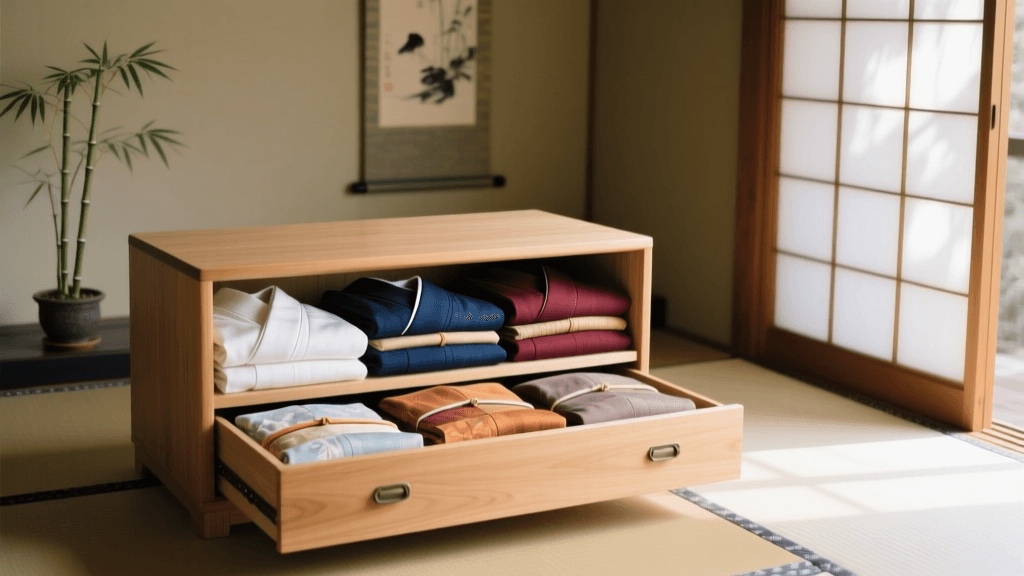
Never store a silk kimono on a Western hanger; the weight of the wet or heavy silk will distort the shoulder seams. Instead, fold the kimono along its natural seam lines. Wrap it in tatoushi (specialized acid-free Japanese paper) and store it in a wooden drawer made of kiri (paulownia wood). Paulownia wood naturally regulates humidity and repels insects, which is crucial for preventing silk degradation and mold in humid climates.
Authenticating Vintage Silk
When shopping for vintage kimono, distinguishing genuine silk from synthetic blends (like polyester chirimen) is a critical skill.
- The Visual Test: Genuine Tsumugi will have irregular slubs (thick and thin spots in the yarn). If the slubs look perfectly uniform, it is likely a synthetic imitation.
- The Touch Test: Real silk chirimen has a distinct, slightly dry, pebbled texture that warms to the touch. Polyester remains cool and feels artificially slick.
- The Burn Test: If you can extract a single loose thread from an inner seam, burn it. Real silk smells like burning human hair and leaves a crushable, dark ash. Polyester smells like sweet plastic and forms a hard, uncrushable bead.
Conclusion
The craftsmanship behind kimono fabrics represents a harmonious blend of rigorous engineering and profound artistic expression. Whether you are drawn to the structural opulence of Nishijin-ori brocade, the painterly elegance of Yuzen dyeing, or the rustic charm of Tsumugi pongee, understanding these textiles transforms the way you experience Japanese traditional clothing. By respecting the seasonal rules, investing in proper care, and understanding the metrics of the tanmono system, you can confidently navigate the world of kimono acquisition and preservation, ensuring these masterpieces of Asian textile heritage endure for generations to come.