Shichi-Go-San and Coming-of-Age Kimono Traditions
The Lifecycle of Japanese Ceremonial Dress
The lifecycle of Japanese traditional clothing is deeply intertwined with the passage of time, marking a person's growth from early childhood to full adulthood. Two of the most significant milestones in this sartorial journey are Shichi-Go-San (the Seven-Five-Three Festival) and Seijin no Hi (Coming-of-Age Day). These events are not merely photo opportunities; they are profound cultural rituals where the garments themselves serve as visual prayers for health, longevity, and societal integration. For parents navigating these traditions, or young adults preparing for their debut into society, understanding the nuances of children's kimono and coming-of-age attire is essential.
According to Japan Guide's comprehensive overview of Shichi-Go-San, the festival is historically held annually on November 15th, though modern celebrations often span the entire month of November to accommodate family schedules and shrine availability. Similarly, Coming-of-Age Day marks the transition into adulthood, a milestone that carries immense weight in Japanese society and requires meticulous preparation regarding attire, etiquette, and budgeting.
Shichi-Go-San: Celebrating Childhood Milestones
Originating in the Heian period and solidified among the samurai class during the Edo period, Shichi-Go-San celebrates the survival and growth of children at the ages of three, five, and seven. Historically, infant mortality was high, and reaching these ages was considered a blessing worthy of shrine visits and new garments.
Age Three (San-san): The Hifu and First Hairpins
At age three, both boys and girls traditionally participate, though today it is predominantly celebrated by girls. The defining garment for a three-year-old girl is the hifu, a padded, sleeveless silk vest worn over a standard kimono. Because toddlers lack the waist definition required to tie a traditional obi (sash), the hifu elegantly conceals the simple ties of the kimono underneath. This age also marks the first time a girl's hair is styled with traditional kanzashi (ornamental hairpins), often featuring seasonal motifs like chrysanthemums or sakura.
Age Five (Go-go): The First Hakama
At age five, boys take center stage. This milestone marks the first time a boy wears a hakama (pleated trousers) and a haori (half-coat). The attire is formal and striking, typically featuring dark, rich colors like navy, black, or deep green, adorned with the family's kamon (crest). The boy will also carry a traditional fan (ogi) and wear zori sandals with white tabi socks. The hakama symbolizes the boy's first step into the responsibilities of manhood within his community.
Age Seven (Nana-nana): Tying the First Obi
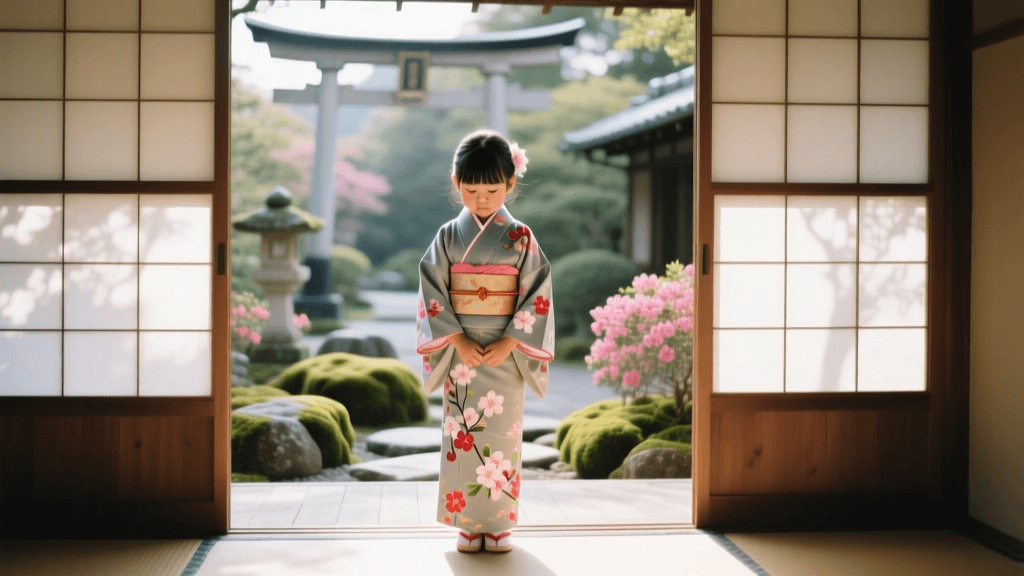
At age seven, girls transition from the simple hifu to a full, formal kimono ensemble complete with a real obi. This is a significant rite of passage, symbolizing a girl's transition toward womanhood. The kimono is often a vibrant homon or furisode-style garment with long, swinging sleeves. Because a seven-year-old's body is still developing, a special decorative cord called a shigoki obi is tied below the main obi to manage the excess fabric, and a obi-jime (braided cord) is used to secure the sash. According to expert guides on Japanese kimono dressing, the motifs on a seven-year-old's kimono are highly auspicious, featuring pine, bamboo, and plum blossoms to ensure a resilient and prosperous future.
Seijin no Hi: The Ultimate Coming-of-Age Transition
Held on the second Monday of January, Seijin no Hi celebrates those who have reached the age of maturity. As noted in Japan Guide's guide to Coming of Age Day, this national holiday is marked by municipal ceremonies and shrine visits, where young adults showcase their formal wear. Despite Japan lowering the legal age of adulthood to 18 in April 2022, the vast majority of municipalities and citizens continue to celebrate the traditional garment-wearing ceremonies at age 20, as this aligns with university life and the historical drinking and smoking age.
Furisode for Young Women
The undisputed centerpiece of Seijin no Hi is the furisode, a formal kimono characterized by its dramatically long, swinging sleeves. Furisode are classified by sleeve length: ofurisode (over 114cm), chufurisode (medium, around 100cm), and kofurisode (short, around 85cm). The long sleeves historically served to ward off evil spirits and signal a woman's unmarried status. Renting a furisode is a major undertaking, often involving full salon packages that include professional dressing, hair styling, and makeup.
Montsuki Hakama for Young Men
While many young men opt for modern Western suits today, traditionalists choose the montsuki hakama—a black silk kimono bearing five family crests, paired with a stiff, striped silk hakama. This ensemble projects dignity, respect for ancestry, and a solemn acknowledgment of adult responsibilities.
Practical Guide: Renting, Buying, and Budgeting
Navigating the financial and logistical aspects of these ceremonies requires advance planning. Most families opt for rental packages due to the rapid growth of children and the high cost of silk garments. Below is a comparative breakdown of what to expect.
| Milestone | Primary Garment | Key Accessories | Avg. Rental Cost (JPY) | Avg. Purchase Cost (JPY) |
|---|---|---|---|---|
| Age 3 (Girls) | Kimono + Hifu Vest | Kanzashi hairpins, Zori, Tabi | ¥10,000 - ¥25,000 | ¥30,000 - ¥60,000 |
| Age 5 (Boys) | Haori + Hakama | Family Crest Haori, Ogi fan, Zori | ¥15,000 - ¥30,000 | ¥40,000 - ¥80,000 |
| Age 7 (Girls) | Furisode-style Kimono | Obi, Shigoki, Obi-jime, Zori | ¥25,000 - ¥50,000 | ¥80,000 - ¥200,000+ |
| Age 20 (Women) | Full Furisode | Furisode Obi, Obi-age, Obi-jime, Shawl | ¥50,000 - ¥150,000 | ¥300,000 - ¥1,000,000+ |
| Age 20 (Men) | Montsuki Hakama | Haori Himo, Zori, Tabi, Fan | ¥15,000 - ¥35,000 | ¥100,000 - ¥300,000 |
Actionable Advice for Parents and Young Adults
Whether you are dressing a toddler or preparing for your own coming-of-age ceremony, the following practical steps will ensure a smooth experience:
- Book 6 to 8 Months in Advance: For Shichi-Go-San (November) and Seijin no Hi (January), premium rental salons and shrine photography slots fill up by early spring. Secure your preferred kimono patterns and salon times early to avoid settling for leftover inventory.
- Understand the 'Age' Tuck System: Children's kimono are rarely custom-tailored from scratch. Instead, they are purchased or rented in standard lengths and adjusted using hidden tucks called age at the shoulders and waist. When renting, provide the child's exact height, chest circumference, and hip measurements to the salon to ensure proper adjustment.
- Polyester vs. Silk for Toddlers: While silk is the traditional standard, many modern parents opt for high-quality polyester kimono for three-year-olds. Toddlers are prone to spills, drool, and unpredictable weather. Modern polyester is stain-resistant, machine-washable, and visually indistinguishable from silk in photographs, making it a highly practical choice.
- Footwear Sizing: Zori sandals and tabi socks must fit precisely. A zori that is too large will cause a child to trip, while one that is too small will cause blisters. Most rental packages include adjustable velcro-tabi or stretch-tabi for children, which are far more comfortable than traditional stiff cotton tabi.
- Prepare for the Cold: Both November and January in Japan can be biting cold. For young women wearing furisode, a white or black faux-fur stole is standard and provides necessary warmth. For children, consider purchasing kairo (adhesive heat patches) to stick to the inside of their juban (undergarment) at the lower back and stomach to maintain core body temperature during outdoor shrine rituals.
Conclusion
The journey from the padded hifu of a three-year-old to the sweeping furisode sleeves of a twenty-year-old represents a beautiful continuum of Japanese cultural heritage. These garments are more than mere fabric; they are wearable blessings, woven with the hopes of parents and the enduring legacy of artisan craftsmanship. By understanding the history, requirements, and practical logistics of Shichi-Go-San and Seijin no Hi, families can fully embrace these monumental milestones with confidence and reverence.