Identifying Japanese Shibori, Yuzen, Kasuri Textiles
The Art of Japanese Resist Dyeing: An Overview
For centuries, Japanese artisans have elevated the craft of textile dyeing into a profound expression of culture, nature, and meticulous technical skill. For vintage kimono collectors and enthusiasts of Asian traditional garments, understanding the nuances of Japanese dyeing techniques is essential. The market is flooded with mass-produced, printed imitations that mimic traditional craftsmanship. To build an authentic collection, one must learn to distinguish genuine handcrafted textiles from modern factory prints. This guide focuses on three of the most revered and historically significant Japanese dyeing and weaving methods: Shibori, Yuzen, and Kasuri. By mastering the visual and tactile hallmarks of these techniques, collectors can confidently authenticate vintage pieces, understand their regional origins, and properly preserve them for future generations.
Identifying Shibori: The Beauty of Bound Resist
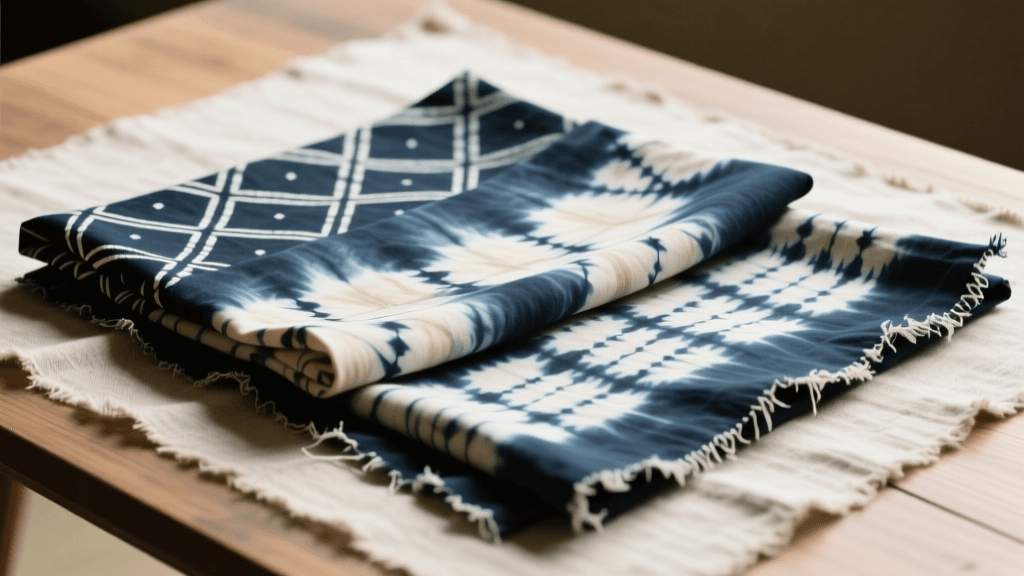
Shibori is a manual resist-dyeing technique that involves shaping, folding, stitching, or binding fabric before submerging it in dye. According to Encyclopædia Britannica's comprehensive guide on Shibori, the term derives from the Japanese verb root 'shiboru', meaning to wring, squeeze, or press. The result is a dynamic interplay of dyed and undyed areas, characterized by organic, fluid patterns that cannot be perfectly replicated by machines.
Key Variations and Authentication Tips
There are numerous shibori techniques, but collectors most frequently encounter Kanoko (fawn-spot), Miura (looped binding), Kumo (spiderweb), and Itajime (shape-resist using carved wooden blocks). The most critical actionable step for authenticating shibori is tactile examination. Genuine shibori possesses a three-dimensional puckering or texture known as shibo. When you run your fingers across authentic kanoko shibori, you will feel the tiny, distinct bumps where the fabric was tightly bound with thread. Conversely, printed imitation shibori will feel completely flat and smooth. Furthermore, examine the reverse side of the fabric. In true shibori, the dye penetrates deeply, and the undyed resist areas will show a crisp, physical indentation. In printed fakes, the reverse side often shows a faint, blurry mirror image of the pattern without any physical texture.
Collectors should also look for regional hallmarks. The Arimatsu-Narumi region in Aichi Prefecture is historically famous for its intricate shibori. Vintage Arimatsu shibori haori (short jackets) typically range from $120 to $350 on the secondary market, depending on the complexity of the binding and the condition of the silk.
Decoding Yuzen: Paste-Resist Masterpieces
Yuzen is a highly sophisticated paste-resist dyeing technique that allows for the creation of intricate, multi-colored, and pictorial designs on silk. Invented in the late 17th century by Miyazaki Yuzensai, this technique revolutionized Japanese fashion by allowing artisans to paint directly onto fabric with the precision of a canvas artist. A thick rice-bran paste (itome-nori) is applied to outline the design, preventing adjacent colors from bleeding into one another during the dyeing process.
Kyo-Yuzen vs. Kaga-Yuzen: Regional Distinctions
When evaluating vintage Yuzen kimono, it is vital to distinguish between the two primary regional styles: Kyo-Yuzen (from Kyoto) and Kaga-Yuzen (from Kanazawa). Kyo-Yuzen is known for its vibrant, stylized, and often lavish designs, frequently incorporating gold leaf (kinpaku) and embroidery. Kaga-Yuzen, however, is celebrated for its realistic, nature-inspired motifs and its strict adherence to the Kaga Gosai—a specific palette of five muted colors: indigo, mustard, ochre, olive green, and purplish-red. Kaga-Yuzen also features a unique technique called soto-bokashi (outside shading), where colors fade from dark at the edges to light in the center of a petal or leaf.
Actionable Authentication: Finding the Itome
To authenticate a Yuzen textile, look closely at the borders where two different colors meet. You should be able to spot the itome—a microscopic, undyed white line where the rice paste was applied and later washed away. If the colors blend seamlessly without this crisp, tiny white boundary, the garment is likely a modern digital print or stencil-dyed using a different method. Authentic, hand-painted vintage Yuzen kimono are highly sought after, with high-quality Kaga-Yuzen pieces frequently commanding prices between $500 and $2,500 at specialized auctions.
Understanding Kasuri: The Woven Illusion
While Shibori and Yuzen are dyeing techniques applied to woven cloth, Kasuri (the Japanese term for Ikat) involves dyeing the threads before they are woven. Bundles of yarn are tightly bound at specific intervals to resist the dye, creating a pattern that only emerges once the threads are aligned on the loom. Britannica's expert overview of Kasuri weaving notes that the word 'kasuri' literally translates to 'blurred' or 'fuzzy', referring to the characteristic soft, feathered edges of the resulting patterns where the dyed and undyed sections of the thread slightly misalign during weaving.
Warp, Weft, and Double Kasuri
Collectors should categorize kasuri into three types: Tate-gasuri (warp kasuri, where only the vertical threads are dyed), Yoko-gasuri (weft kasuri, where only the horizontal threads are dyed), and Ome-gasuri (double kasuri, where both are dyed). Double kasuri is the most complex and valuable, requiring mathematical precision to align the patterns on the loom. The most famous cotton kasuri is Kurume Kasuri from Fukuoka, known for its deep indigo hues and geometric or pictorial motifs, while Oshima Tsumugi from Amami Oshima represents the pinnacle of silk kasuri, featuring incredibly fine, mud-dyed threads.
Authentication Tip: Examining the Fringe
The most foolproof way to authenticate kasuri is to examine the fringe or the raw edges of the textile. Because the pattern is dyed into the core of the thread before weaving, the color will be visible inside the twisted fringe. If you untwist a single thread from the fringe and find that the core is white while the outside is dyed, you are looking at a piece of fabric that was printed or piece-dyed after weaving, not true kasuri. Vintage Kurume kasuri kimono are relatively affordable, often found between $150 and $400, making them an excellent entry point for collectors of woven textiles.
Comparison Chart: Shibori vs. Yuzen vs. Kasuri
| Feature | Shibori | Yuzen | Kasuri |
|---|---|---|---|
| Primary Technique | Bound, stitched, or folded resist dyeing | Rice-paste resist hand-painting | Pre-dyed threads (Ikat weaving) |
| Visual Hallmark | Organic, fluid, geometric patterns | Intricate, multi-colored pictorial scenes | Blurred, feathered edges on geometric or floral motifs |
| Tactile Texture | 3D puckering (shibo) | Smooth, flat silk surface | Slight slub or textured weave depending on yarn |
| Authentication Key | Feel for physical indentations on the reverse side | Look for the microscopic white itome outline | Check the fringe to ensure the thread core is dyed |
| Average Vintage Cost | $120 - $350 (Haori/Kimono) | $300 - $2,500+ (Formal Kimono) | $150 - $600 (Cotton/Silk Kimono) |
Practical Care, Storage, and Sourcing
Acquiring authentic vintage textiles is only the first step; preserving them requires strict adherence to traditional Japanese storage methodologies. According to guidelines echoed by institutions like The Victoria and Albert Museum's Asian textile collections, improper storage is the leading cause of deterioration in vintage silk and cotton.
Folding and Storage Measurements
Never hang a vintage kimono or haori on standard western hangers. The weight of the garment will stress the shoulder seams, and the exposure to light and dust will degrade the fibers. Instead, garments must be folded using the traditional hon-datami method. When folded correctly, the garment should form a neat rectangle measuring exactly 13.5 inches (approx. 34 cm) in width. Store these folded garments in a shallow drawer or an acid-free archival box. Wrap each piece in tatou (traditional Japanese paper) or unbuffered, acid-free tissue paper. Avoid using cedar wood chests (tansu) unless they are lined, as the natural oils and acids in cedar can cause yellowing and staining on delicate silk over time.
Climate Control and Airing Out
Textiles require a stable environment. Maintain a storage temperature of around 65°F (18°C) and a relative humidity level between 45% and 55%. To prevent mold and musty odors, you must air out your collection. Choose a dry, overcast day in the autumn or spring—avoid high-humidity summer days. Unfold the garments and lay them flat on a clean cotton sheet in a shaded, well-ventilated room for 2 to 4 hours. Never expose vintage silk to direct sunlight, as UV rays will rapidly bleach and shatter the fibers.
Professional Cleaning Costs
If you acquire a vintage piece with stains or odors, do not attempt to wash it at home. Traditional Japanese garments are constructed with water-soluble silk threads and specialized dyes that will bleed or warp upon contact with modern detergents. Seek out a professional cleaner who specializes in arai-hari (a traditional method where the garment is completely taken apart, washed as flat bolts of fabric, stretched on wooden boards to dry, and re-sewn). In the US and Europe, professional arai-hari services typically cost between $150 and $300 per garment, while specialized spot-cleaning (shimi-nuki) ranges from $50 to $120. Though expensive, this investment is crucial for preserving the structural integrity and historical value of your collection.
Conclusion
Mastering the identification of Shibori, Yuzen, and Kasuri transforms the act of collecting from a simple hobby into a profound engagement with Japanese material culture. By relying on tactile authentication, examining structural hallmarks like the itome and the kasuri fringe, and committing to rigorous, traditional storage methods, collectors ensure that these masterpieces of Asian textile heritage survive to inspire future generations.