Shichi-Go-San Children's Kimono Guide: Costs & Styles
Introduction to the Shichi-Go-San Festival
Shichi-Go-San, which translates literally to "Seven-Five-Three," is one of the most cherished and visually stunning coming-of-age traditions in Japan. Celebrated annually on November 15th, this festival honors the growth, health, and longevity of young children at the specific ages of three, five, and seven. According to the Japan National Tourism Organization, this tradition dates back to the Heian period (794–1185) among court nobles before spreading to the samurai and merchant classes during the Edo period. Today, it remains a vital family milestone, marked by shrine visits, professional photography, and the wearing of exquisite children's kimono.
For parents and cultural enthusiasts alike, understanding the intricate layering systems, historical significance, and practical logistics of children's kimono is essential. Unlike adult formalwear, children's traditional garments feature unique structural adjustments, specific ceremonial accessories, and distinct styling rules based on the child's exact age and gender. This comprehensive guide explores the sartorial traditions of Shichi-Go-San, offering actionable advice on rentals, purchases, and preparation timelines.
The Cultural Significance of Ages Three, Five, and Seven
Historically, childhood mortality rates were high, and reaching specific milestones was considered a cause for profound celebration and divine gratitude. The ages of three, five, and seven were chosen because they align with auspicious odd numbers in traditional Japanese numerology, heavily influenced by Taoist beliefs.
- Age Three (Kamisogi - Hair Placing): Celebrated by both boys and girls, this milestone marks the time when children were historically allowed to grow out their hair, transitioning from the shaved heads of infancy.
- Age Five (Hakamagi - Wearing the Hakama): Celebrated exclusively by boys, this ceremony signifies a child's first time wearing a hakama (pleated trousers), symbolizing their formal entry into the community and society.
- Age Seven (Obitoki - Untying the Cords): Celebrated exclusively by girls, this milestone marks the transition from wearing simple cord-tied infant garments to wearing a proper, structured adult-style obi (sash), symbolizing a step toward womanhood.
Children's Kimono Styles and Layering Systems
The garments worn during Shichi-Go-San are not merely scaled-down adult kimono; they are specially designed with unique layering systems to accommodate the proportions and comfort of young children.
Age Three: The Hifu and Hakamagi
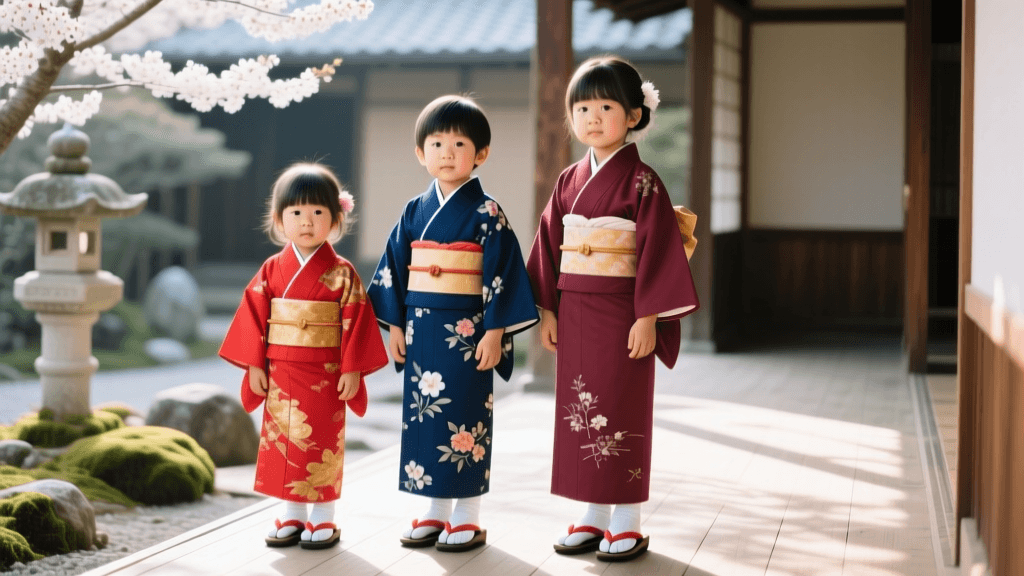
For three-year-old girls, the focal point of the outfit is the hifu, a padded, sleeveless silk vest worn over a standard kimono. Because tying a formal obi is uncomfortable and physically difficult for a toddler, the hifu elegantly conceals the simple cords used to secure the kimono underneath. The outfit is typically completed with zori (straw sandals) and a small decorative purse. Three-year-old boys traditionally wear a hakamagi ensemble, consisting of a kimono, a pleated hakama, and a matching haori (jacket), though many modern families opt for Western suits for boys at this young age.
Age Five: The Formal Boy's Hakama
A five-year-old boy's ensemble is a formal masterpiece. He wears a montsuki (a kimono bearing the family crest), paired with a stiff, high-quality silk hakama, often featuring the sendai-hira weave. Over the kimono, he wears a matching haori jacket, also bearing the family crests. The ensemble is accessorized with white tabi socks, zori sandals, and a traditional folding fan (sensu) tucked into the hakama's waistband. A protective amulet (omamori) is often attached to the haori cord.
Age Seven: The Girl's Obitoki
The seven-year-old girl's kimono represents the most complex children's ensemble. As documented by the Victoria and Albert Museum in their extensive archives on Japanese textile history, the transition to a structured obi is a major cultural marker. A seven-year-old girl wears a full-length silk kimono (often with vibrant, auspicious motifs like cranes, pine trees, or treasure ships) tied with a real fukuro obi. Because the child's waist is narrow, the obi is tied in a specific style called shigoki, which incorporates a decorative silk sash tied below the main obi to prevent it from slipping and to add a pop of contrasting color. The outfit is heavily accessorized with elaborate kanzashi (hair ornaments) and a small hakoseko (decorative mirror case) tucked into the obi front.
Practical Guide: Renting vs. Purchasing
One of the most common dilemmas for parents is whether to rent or purchase a Shichi-Go-San kimono. Given that children outgrow these garments rapidly and the festival occurs only once per age milestone, renting has become the industry standard. However, purchasing offers heirloom value. Below is a comparative breakdown of costs and considerations.
| Item / Service | Rental (Approx. Cost in JPY) | Purchase (Approx. Cost in JPY) | Best For |
|---|---|---|---|
| Age 3 Girl (Hifu Set) | ¥10,000 - ¥25,000 | ¥30,000 - ¥60,000 | Convenience, quick dressing, modern synthetic fabrics. |
| Age 5 Boy (Hakama Set) | ¥15,000 - ¥30,000 | ¥50,000 - ¥120,000+ | Families wanting authentic silk and family crests (mon). |
| Age 7 Girl (Full Silk Set) | ¥20,000 - ¥45,000 | ¥80,000 - ¥250,000+ | Heirloom creation, professional photoshoots, traditionalists. |
| Full Package (Studio Photo + Rental + Dressing) | ¥40,000 - ¥80,000 | N/A | Parents seeking a stress-free, all-inclusive experience. |
Actionable Advice: If renting, book a "Full Package" (pac-kage) at a specialized photography studio (like Studio Mario or local Kyoto boutiques). These packages typically include the kimono rental, professional hair and makeup, studio photography, and shrine transportation. If purchasing, look for "washable silk" or high-grade polyester blends for three-year-olds, as toddlers are prone to spills. For seven-year-olds, invest in pure silk if you intend to pass the garment down to future generations.
The Art of Adjustment: Kata-age and Koshi-age
Children's kimono are constructed with a brilliant, built-in tailoring system that allows a single garment to fit a child for several years. This is achieved through age (tucks). The Agency for Cultural Affairs in Japan emphasizes the preservation of these traditional tailoring techniques as vital intangible cultural assets.
- Kata-age (Shoulder Tucks): Fabric is folded and sewn at the shoulders to shorten the sleeve length and raise the neckline. This ensures the heavy silk sleeves do not drag on the ground or restrict the child's arm movements.
- Koshi-age (Waist Tucks): Excess fabric is folded and stitched at the waistline to adjust the overall length of the kimono, ensuring the hem falls perfectly at the child's ankles.
When renting, the shop will pre-adjust these tucks based on the exact measurements you provide during the booking phase. When buying, a professional kitsuke (kimono dresser) or tailor will sew these tucks. Never cut the excess fabric; as the child grows, the tucks can be let out.
Preparation Timeline for Parents
Preparing for Shichi-Go-San requires careful planning, especially in major cities like Tokyo, Kyoto, and Osaka where studio slots fill up months in advance.
- Spring (March - May): Research and book your photography studio or kimono rental shop. If you plan to use a family heirloom kimono, take it out of storage, air it out, and take it to a professional cleaner for inspection and pressing.
- Summer (June - August): Finalize your shrine visit plans. While November 15th is the official date, most families visit shrines on weekends in October and November to avoid weekday school absences and massive crowds.
- Early Autumn (September): Attend the fitting appointment at the rental shop. Provide exact height, chest, and waist measurements. Select hair accessories and zori sandals.
- Festival Season (October - November): The day of the event. Arrive at the studio early in the morning, as dressing a seven-year-old in a formal obi can take up to 45 minutes. Keep snacks (that won't stain) and a straw for drinking water on hand to preserve the child's makeup.
Shrine Etiquette and the Chitose-ame Tradition
The culmination of Shichi-Go-San is the shrine visit. Families typically visit a local Shinto shrine to offer prayers for the child's continued health. Upon arrival, purify your hands at the chozuya (water pavilion) before approaching the main hall. It is customary to make an offering (saisen) and bow twice, clap twice, and bow once.
Following the prayers, parents purchase Chitose-ame ("thousand-year candy") from the shrine or nearby vendors. This long, thin, red-and-white candy is a symbol of longevity and is packaged in a decorative paper bag featuring motifs of turtles and cranes—creatures that, according to Japanese folklore, live for thousands of years. The candy is meant to be shared with family and neighbors, spreading the blessing of the child's healthy growth to the wider community.
Whether you are navigating the bustling streets of Kyoto in a rented silk hifu or carefully adjusting the hakama pleats for your son's first shrine visit, Shichi-Go-San offers a profound connection to Japan's sartorial heritage. By understanding the intricate details of these children's garments, families can fully appreciate the artistry, history, and cultural weight woven into every thread of this beautiful tradition.