Edo Period Kosode and Obi: History and Modern Buying Guide
The Shift from Heian Layers to Edo Elegance
When discussing traditional Japanese clothing, the modern kimono often dominates the cultural imagination. However, the garment we recognize today as the kimono is actually a direct descendant of the kosode (small sleeve), a piece of clothing that underwent a radical transformation from an undergarment to the pinnacle of outerwear fashion. To truly understand the anatomy, craftsmanship, and styling of historical Japanese dress, one must look closely at the transition from the Heian period to the Edo period, and understand how modern collectors and enthusiasts can source, size, and wear these historical garments today.
During the Heian period (794–1185), the aristocracy favored the junihitoe, a breathtakingly heavy and complex twelve-layer robe system. Fashion was dictated by the subtle, poetic color combinations visible at the sleeve hems and collar edges. However, as political power shifted to the samurai class during the Kamakura and Muromachi periods, practicality became paramount. The cumbersome layers were shed, and the kosode—originally worn as a silk undergarment with small sleeve openings—emerged as the primary outer garment for both men and women.
The Edo Period (1603–1867): The Golden Age of the Kosode
The Edo period marked an era of unprecedented peace, urbanization, and economic growth under the Tokugawa shogunate. The rise of the wealthy merchant class (chonin) fundamentally shifted the fashion landscape. Because the shogunate enforced strict sumptuary laws that forbade commoners from wearing overtly luxurious fabrics or flashy colors in public, the merchant class developed a sophisticated aesthetic known as iki—an understated, subtle elegance.
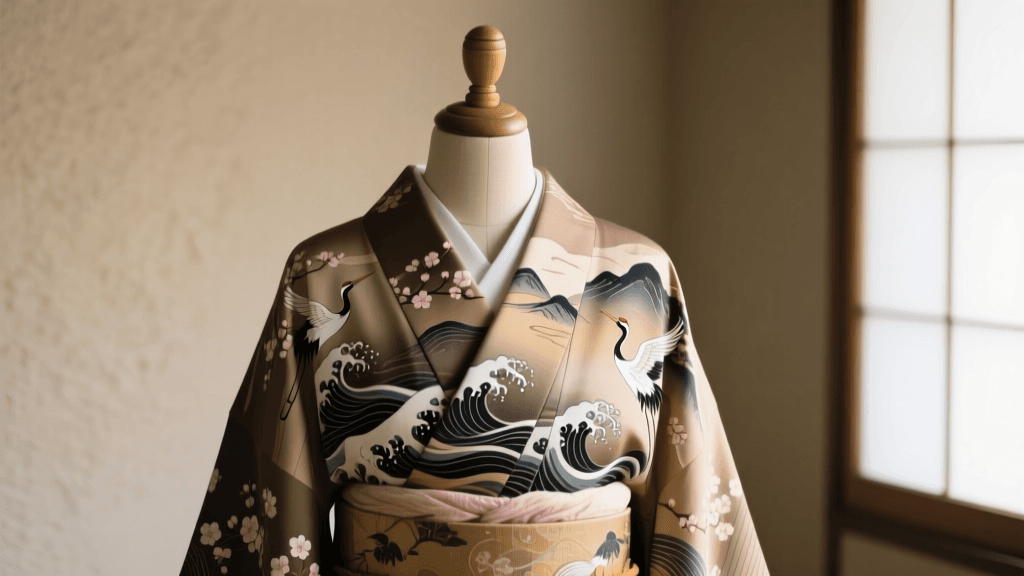
This cultural pressure cooker led to incredible innovations in textile design. The invention of Yuzen-zome (paste-resist dyeing) by Miyazaki Yuzensai in the late 17th century allowed artisans to paint highly detailed, pictorial designs directly onto silk, much like a canvas. According to the Victoria and Albert Museum, this technique revolutionized the kosode, allowing for sweeping landscapes, intricate flora, and literary motifs to flow seamlessly across the garment's seams, unrestricted by the weaving process.
The Evolution of the Obi: From Cord to Canvas
Perhaps no element of Japanese fashion evolved as dramatically during the Edo period as the obi. In the Muromachi period, the obi was merely a narrow, functional cord or thin sash used to keep the kosode closed. As the kosode's surface became a canvas for elaborate Yuzen dyeing, the obi widened and shifted from the front to the back to avoid obscuring the artwork.
By the late Edo period, the obi had become a massive, decorative structural element. The maru obi—a fully brocaded, heavy silk sash measuring up to 68 centimeters in width before folding—became the standard for formal wear. Tying these massive sashes required the invention of the obi-jime (decorative cord) and obi-age (silk scarf) to secure the complex knots, which eventually became highly visible status symbols in their own right. The geisha and kabuki actors of the pleasure quarters were the primary trendsetters, popularizing the dramatic taiko musubi (drum knot) that remains the standard for formal kimono dressing today.
Historical Garment Comparison Chart
Understanding the structural differences between historical eras is crucial for collectors and historical reenactors. The table below outlines the evolution of the primary garments across three major Japanese fashion epochs.
| Era | Primary Garment | Sleeve Style | Obi Width | Key Characteristic |
|---|---|---|---|---|
| Heian (794-1185) | Junihitoe | Large, open, unsewn | N/A (Silk cords) | 12-layer color combinations |
| Muromachi (1336-1573) | Uchikake / Kosode | Small opening, moderate drop | 5 - 10 cm | Worn open over layers; heavy brocade |
| Edo (1603-1867) | Kosode | Small opening, varying drop | 15 - 35 cm | Yuzen dyeing; wide decorative obi |
Actionable Guide: Buying and Sizing Antique Kosode
For modern enthusiasts looking to purchase authentic vintage or antique kosode (often categorized broadly as vintage kimono from the Meiji, Taisho, or early Showa eras that retain Edo construction techniques), understanding historical sizing is paramount. Antique garments were tailored for a vastly different demographic; the average height of a Japanese woman in the Edo and Meiji periods was roughly 145 to 150 centimeters.
Essential Measurements for the Modern Wearer
When browsing online auctions or antique markets, ignore modern sizing labels (S, M, L) and rely strictly on flat measurements:
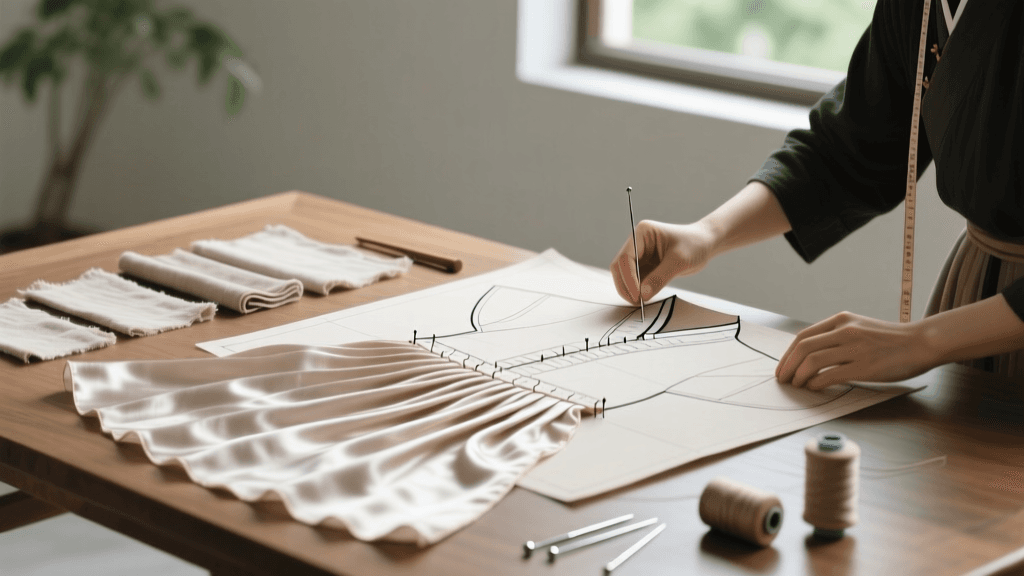
- Yuki (Shoulder to Wrist): Measure from the nape of your neck, over the shoulder, down to your wrist bone. Modern kimono typically feature a Yuki of 65–70 cm. Antique kosode often measure only 58–62 cm. If the Yuki is too short, the garment will pull uncomfortably at the shoulders and restrict arm movement.
- Take (Total Length): Measure from the nape of your neck down to your ankle bone. To achieve the traditional ohashori (the waist fold that allows the hem to sit perfectly at the ankle), the garment's Take must be at least 15 to 20 cm longer than your actual height. Many antique kosode are only 145–150 cm long, making them suitable only as inner layers (nagajuban) or display pieces for modern, taller wearers.
- Migoro (Body Width): The width of the main front and back panels. Antiques are remarkably narrow, often around 30 cm per panel (60 cm total front circumference). Modern wearers may find they cannot fully wrap the front panels over their hips, necessitating the use of a modesty panel or wearing the garment open as a haori (jacket).
Where, When, and How Much: Sourcing Authentic Pieces
Acquiring historical textiles requires knowing the right markets and the fair market value for varying conditions. The Japan National Tourism Organization frequently highlights traditional flea markets as the best venues for cultural immersion and antique shopping. For serious collectors, timing your visit to Kyoto's temple markets is essential.
- Timing: Visit the Kobo-san flea market at Toji Temple on the 21st of every month, or the Tenjin-san market at Kitano Tenmangu on the 25th. Arrive before 7:00 AM to access the best textile dealers before the tourist crowds arrive.
- Costs & Condition Guide:
- Study Pieces ($30 - $80 USD): Edo or Meiji period fragments, heavily stained silks, or garments with shattered hems. Ideal for framing, textile study, or repurposing into zabuton (floor cushions).
- Wearable Vintage ($150 - $400 USD): Taisho or early Showa era kosode (1910s-1930s) that echo Edo aesthetics. Look for intact silk, vibrant Yuzen dyeing, and minimal underarm staining.
- Museum-Quality Edo Antiques ($1,500 - $5,000+ USD): Pristine, pre-1868 garments featuring rare techniques like surihaku (gold leaf imprint) or shibori (intricate tie-dye). These should be purchased from certified antique dealers in Kyoto's Shinmonzen-dori district, complete with provenance documentation.
Caring for Historical Silk Textiles
Owning a piece of Edo or Meiji fashion history comes with strict preservation responsibilities. Historical silk is highly susceptible to light damage, moisture, and the acids in modern wood or cardboard. Never store an antique kosode in plastic bins, as trapped moisture will rapidly encourage black mold and silk shattering.
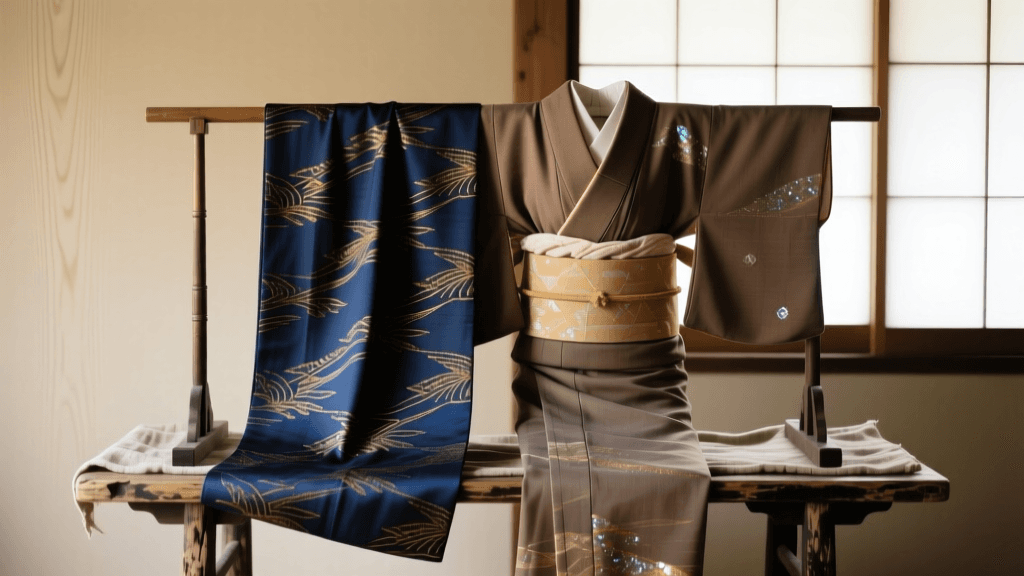
Instead, wrap the garment in acid-free, unbleached cotton muslin or traditional tatou-shi (Japanese archival paper). Store the wrapped garment in a breathable tansu (wooden chest) made of paulownia wood (kiri), which naturally regulates humidity and repels insects. Air the garment out in a shaded, well-ventilated room twice a year—traditionally during the dry autumn days of October—to prevent permanent fold lines and fiber degradation.
Conclusion
The journey of the kosode from a humble samurai undergarment to the breathtaking, canvas-like centerpiece of Edo period fashion is a testament to Japanese ingenuity and aesthetic philosophy. Whether you are studying the subtle elegance of iki, marveling at the structural engineering of a heavy maru obi, or carefully measuring a vintage piece at a Kyoto flea market, engaging with these historical garments offers a profound, tactile connection to the artisans and trendsetters of Japan's dynastic past. By understanding the precise measurements, historical context, and preservation techniques required, modern collectors can ensure these masterpieces of Asian tradition survive for generations to come.