A Collector's Guide to Shibori, Yuzen, and Kasuri Textiles
The Allure of Japanese Resist and Ikat Dyeing
For textile collectors and enthusiasts of traditional Asian garments, Japanese dyeing techniques represent the pinnacle of artisanal craftsmanship. The intersection of meticulous handwork, natural dyes, and profound cultural symbolism makes vintage Japanese textiles highly sought after in the global antique market. According to the Metropolitan Museum of Art's Heilbrunn Timeline of Art History, Japanese textiles from the 18th and 19th centuries showcase a remarkable evolution in dyeing techniques, transitioning from simple woven patterns to complex resist-dyed masterpieces (MET Heilbrunn Timeline).
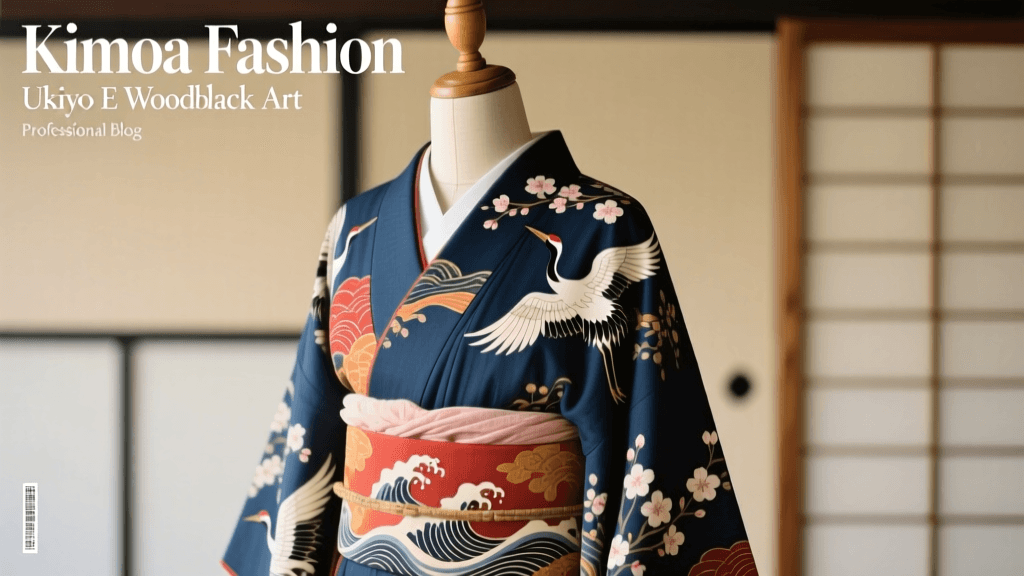
The kimono and obi served as the primary canvases for these arts, where the garment's structure dictated the placement of intricate motifs (MET Kimono History). For the modern collector, distinguishing between the 'Big Three' of Japanese textile arts—Shibori, Yuzen, and Kasuri—is essential for authenticating pieces, determining fair market value, and applying the correct archival care. This guide provides actionable insights into identifying, sourcing, and preserving these magnificent textiles.
Identifying the Big Three: Shibori, Yuzen, and Kasuri
Shibori: The Art of Shaped Resist
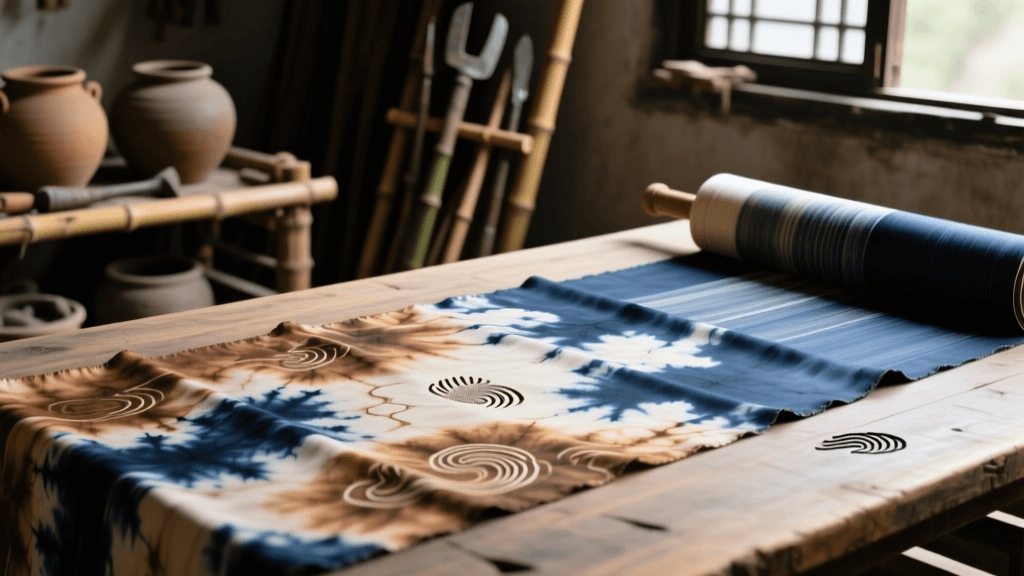
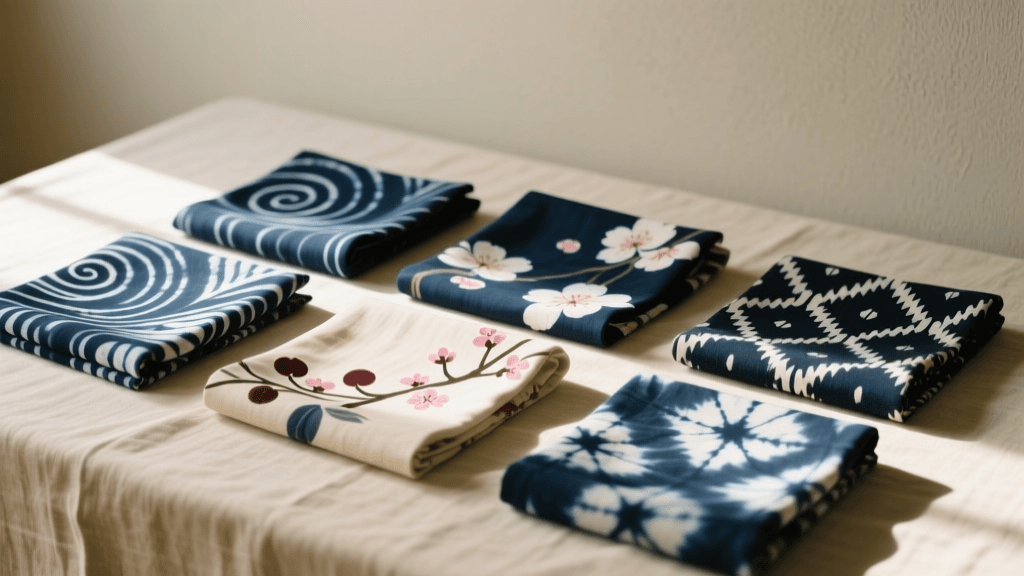
Shibori is a shaped-resist dyeing technique that relies on folding, twisting, binding, or compressing fabric before submerging it in a dye vat, traditionally natural indigo. The physical manipulation of the cloth creates organic, three-dimensional patterns. When examining a vintage Shibori textile, collectors should look for a distinct puckering or textured feel on the fabric's surface, a hallmark of the resist process.
There are numerous Shibori methods, but three are most prevalent in vintage kimono:
- Kanoko Shibori: Resembling fawn spots, this technique involves pinching and binding tiny tufts of fabric. High-quality vintage kanoko shibori feels almost like crepe silk due to the thousands of tiny bound resist points.
- Nui Shibori: Stitch-resist shibori uses running stitches to gather the fabric tightly before dyeing. Look for precise, geometric or flowing linear patterns with slightly blurred edges.
- Kumo Shibori: Spiderweb shibori is created by pleating and binding the fabric radially, resulting in intricate, web-like circular motifs.
To authenticate Shibori, examine the reverse side of the silk. The dye penetration is usually excellent, but the physical texture of the binding will be visible. True vintage Shibori will never have a perfectly flat surface; the memory of the resist remains in the silk fibers.
Yuzen: Precision and Pictorial Elegance
Yuzen is a paste-resist dyeing technique that allows for highly detailed, multi-colored, pictorial designs. Originating in the late 17th century, it revolutionized Japanese fashion by freeing artisans from the geometric constraints of weaving and tie-dyeing. The hallmark of Yuzen is the itome—a hair-thin white line that outlines the design motifs.
This white line is created by applying a waterproof rice paste (itome-nori) through a metal-tipped cone, acting as a dam to prevent adjacent colors from bleeding into one another. When inspecting a Yuzen kimono, use a magnifying loupe to trace the outlines of the floral or scenic motifs. If you see a crisp, un-dyed white line separating vibrant color fields, you are looking at authentic hand-painted Yuzen.
Collectors should also note the regional variations. Kyo-Yuzen (from Kyoto) is known for its opulent, vibrant colors and liberal use of gold leaf and embroidery. Kaga-Yuzen (from Kanazawa) favors a more subdued, naturalistic palette of five specific colors (navy, crimson, ochre, grass green, and deep purple) and frequently features realistic botanical motifs with intentional 'insect-eaten' leaf details.
Kasuri: The Charm of Blurred Ikat
Unlike Shibori and Yuzen, which dye the woven cloth, Kasuri is the Japanese iteration of Ikat. In this technique, the individual yarns are tightly bound and resist-dyed before they are woven together on a loom. The weaver must then painstakingly align the dyed segments of the warp and weft threads to form a pattern.
The defining visual characteristic of Kasuri is its blurred, fuzzy edges. In fact, the word 'kasuri' translates roughly to 'blurred' or 'frayed.' Because human hands and mechanical looms cannot achieve pixel-perfect alignment of thousands of pre-dyed threads, a soft, organic bleed occurs at the edges of the motifs. This 'flaw' is precisely what gives Kasuri its rustic charm and confirms its authenticity.
Collectors will encounter three main types of Kasuri:
- Tate-Kasuri: Only the warp (vertical) threads are dyed.
- Yoko-Kasuri: Only the weft (horizontal) threads are dyed.
- Tate-Yoko-Kasuri (Double Ikat): Both warp and weft are dyed, creating highly complex, crisp, yet softly blurred pictorial or geometric patterns. This is the most difficult and valuable form of Kasuri.
Comparison Chart: Shibori vs. Yuzen vs. Kasuri
| Feature | Shibori | Yuzen | Kasuri |
|---|---|---|---|
| Resist Stage | Post-weaving (cloth is bound) | Post-weaving (paste applied to cloth) | Pre-weaving (yarns are bound) |
| Visual Hallmark | 3D puckering, organic bleeds | Crisp itome (white outline) lines | Fuzzy, blurred edges on motifs |
| Design Style | Geometric, repeating, textured | Pictorial, highly detailed, flowing | Geometric, folk-art, rustic motifs |
| Reverse Side | Shows physical binding texture | Smooth, dye penetrates fully | Shows individual dyed yarn crosses |
| Primary Fabric | Silk, Hemp, Cotton | Silk (primarily) | Cotton, Hemp, Silk, Ramie |
Practical Advice for Collectors: Sourcing and Authenticity
When sourcing vintage Japanese textiles, whether at the Oedo Antique Market in Tokyo, the Toji Temple flea market in Kyoto, or through international auction houses, physical inspection is paramount. The preservation of these techniques is so vital to cultural heritage that traditional craftsmanship is recognized globally as a key domain of intangible cultural heritage (UNESCO Intangible Cultural Heritage). Therefore, protecting yourself from modern, mass-produced imitations is crucial.
Beware of 'Yuzen-washi' or printed silks designed to mimic hand-dyed textiles. Modern digital printing can replicate the itome white lines of Yuzen. To spot a fake, examine the reverse side of the fabric. In authentic Yuzen, the dye penetrates the silk deeply, and the colors will be visible, albeit slightly muted, on the back. In printed imitations, the reverse side will be stark white or show only a faint shadow of the design. Similarly, printed Kasuri will lack the tactile variation of individually dyed yarns and will show perfect, un-blurred pixelation under a loupe.
Archival Care and Storage for Vintage Dye Textiles
Vintage Japanese textiles, particularly those from the Taisho (1912-1926) and early Showa (1926-1989) eras, require meticulous care to prevent fiber degradation and dye fugitivity. Silk is a protein fiber that is highly susceptible to light, moisture, and physical stress.
1. Cleaning and Handling
Never attempt to wash vintage Shibori or Yuzen silk at home. Water can cause the rice paste residues in Yuzen to reactivate, leading to water spots, and can permanently flatten the prized 3D texture of Shibori. Always rely on a specialist textile conservator or a dry cleaner who explicitly understands traditional Japanese garments. When handling, ensure your hands are clean and free of lotions, or wear white cotton archival gloves to prevent transferring oils to the silk.
2. The Art of Tatou Wrapping
Store your textiles using tatou, the traditional Japanese method of wrapping garments in acid-free paper. Never store vintage silk in plastic bins or polyethylene bags, as silk needs to breathe and plastic traps off-gassed acids and moisture, leading to yellowing and mold. Wrap the garment in unbuffered, acid-free tissue paper, folding it along its original seam lines to respect the structural integrity of the kimono.
3. Environmental Controls
The ideal storage environment for vintage dyed textiles is a dark, climate-controlled space. Maintain a relative humidity (RH) between 45% and 55%. Humidity above 60% invites mold and foxing (brown age spots), while humidity below 40% makes the silk brittle. Keep the temperature stable at around 65°F to 70°F (18°C - 21°C). Absolute darkness is required when the items are in storage, as both natural indigo (Shibori/Kasuri) and synthetic Meiji-era dyes (Yuzen) will fade rapidly under UV exposure.
4. The Six-Month Refolding Rule
The most common cause of irreversible damage to vintage kimono is 'shattering' along the fold lines. When silk remains folded in the same position for years, the fibers weaken and eventually snap. To prevent this, you must unroll and refold your textile collection every six months. Shift the fold lines by at least an inch each time, and stuff the new folds with rolls of acid-free tissue paper to create soft curves rather than hard, sharp creases.
Conclusion
Collecting Shibori, Yuzen, and Kasuri textiles is more than an aesthetic pursuit; it is an act of cultural preservation. By understanding the distinct physical hallmarks of each dyeing method, utilizing a magnifying loupe to verify authenticity, and adhering to strict archival storage protocols, collectors can ensure that these masterpieces of Asian tradition survive for future generations to study and admire.