Shibori, Yuzen, and Kasuri: A Guide to Japanese Dyeing
The Holy Trinity of Japanese Textile Arts
When exploring the rich tapestry of Asian traditions, few elements are as visually striking and technically complex as traditional Japanese dyeing techniques. For collectors, fashion enthusiasts, and cultural historians, understanding the nuances of Shibori, Yuzen, and Kasuri is essential. These three methods represent the pinnacle of Japanese textile artistry, each requiring years of apprenticeship to master. According to the Metropolitan Museum of Art's Heilbrunn Timeline of Art History, Japanese textiles have long been a primary medium for artistic expression, reflecting both the social status of the wearer and the regional specialties of the artisans. This comprehensive guide will help you identify, appreciate, and care for these magnificent textiles, whether you are acquiring vintage pieces or organizing a traditional wardrobe.
Shibori: The Sculptural Art of Resist Dyeing
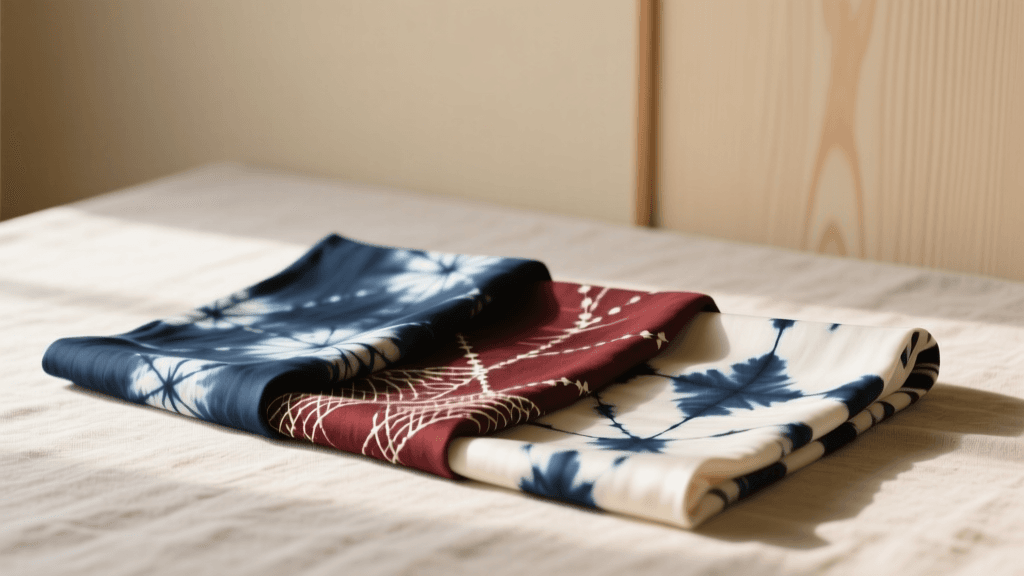
Shibori is often mistakenly referred to simply as "Japanese tie-dye," but this translation fails to capture the immense technical breadth of the craft. The word "shibori" comes from the Japanese verb shiboru, meaning to wring, squeeze, or press. It is a shaped-resist dyeing technique where the fabric is manipulated before being submerged in a dye vat, traditionally indigo (ai). The bound or compressed areas resist the dye, creating intricate, organic patterns.
The Six Major Shibori Techniques
- Kanoko Shibori: The closest to Western tie-dye, involving binding small pinches of fabric with thread to create dotted patterns.
- Miura Shibori: A looped binding technique that is faster to execute and creates a flowing, water-like texture.
- Kumo Shibori: Fabric is pleated and bound tightly to produce a spider-web-like radial pattern.
- Nui Shibori: Stitched resist, where running stitches are pulled tight and secured, allowing for highly detailed, pictorial designs.
- Itajime Shibori: A shape-resist method where fabric is folded and clamped between two pieces of wood or acrylic.
- Arashi Shibori: Pole-wrapping shibori, where fabric is wrapped diagonally around a cylinder, bound, and compressed, creating diagonal rain-like streaks.
Identifying and Authenticating Shibori
To distinguish hand-crafted Shibori from machine-printed imitations, examine the fabric closely. True Shibori possesses a three-dimensional quality; the fabric will retain a subtle "memory" of the binding, feeling slightly textured or puckered even after decades of wear. Furthermore, the dye penetration in hand-dipped Shibori is usually uneven, with beautiful gradients of blue fading into white, whereas printed fabrics will have flat, uniform colors.
Yuzen: Painting with Paste and Pigment
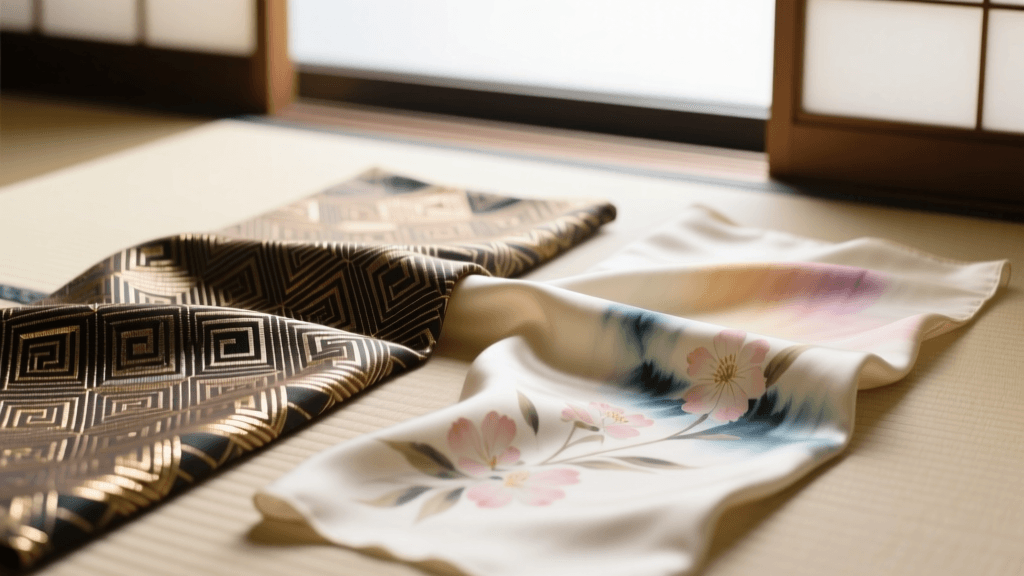
If Shibori is sculptural, Yuzen is the ultimate canvas. Developed in the late 17th century by Miyazaki Yuzensai, this technique revolutionized Japanese fashion by allowing for freehand, multi-colored pictorial designs on silk. Yuzen relies on a thick rice-paste resist (itome-nori) applied through brass stencils or drawn freehand with a specialized conical applicator. Once the paste dries (which can take 24 to 48 hours depending on humidity), artisans paint vibrant pigments within the outlined areas.
Kyo-Yuzen vs. Kaga-Yuzen
When collecting Yuzen garments, you will primarily encounter two regional styles. Kyo-Yuzen (from Kyoto) is known for its elegant, stylized motifs, extensive use of gold leaf (surihaku), and embroidery. It often features auspicious symbols like cranes, pine trees, and flowing water. In contrast, Kaga-Yuzen (from Kanazawa) is characterized by a more realistic, botanical aesthetic. Kaga artisans utilize a specific five-color palette (kaga gosai) and frequently employ a technique called mushi-kui, where leaves are depicted with insect bites and fading edges to reflect the beauty of imperfection. The Victoria and Albert Museum's Asian Collections frequently highlights Yuzen kimono as masterpieces of the Edo period, noting how the technique allowed merchants to bypass sumptuary laws by hiding lavish designs on the inner linings of otherwise subdued garments.
Identifying True Yuzen
The hallmark of authentic Yuzen is the thin, crisp white line that borders the colored motifs. This is the area where the rice paste was applied and later washed away, protecting the pristine white silk beneath. If the white lines are blurry, printed on, or lack the slight raised texture of residual paste, the garment is likely a modern digital print or a lesser stencil-dyed (kata-yuzen) piece.
Kasuri: The Geometry of Pre-Dyed Threads
While Shibori and Yuzen involve dyeing woven fabric, Kasuri (the Japanese term for Ikat) involves dyeing the threads before they are woven. Bundles of cotton, hemp, or ramie threads are tightly bound with hemp string to resist the indigo dye. When these pre-dyed threads are set on a loom, the artisan must align them with millimeter precision to form geometric or pictorial patterns. The word "kasuri" translates roughly to "blurred," referring to the characteristic fuzzy edges of the resulting motifs.
Regional Masters of Kasuri
- Kurume Kasuri (Fukuoka): Famous for its complex pictorial patterns (e-gasuri) and deep, rich indigo hues. It is highly prized for its durability and was historically used for everyday workwear and martial arts uniforms.
- Iyo Kasuri (Ehime): Known for its high production volume and beautiful geometric patterns, often featuring subtle gradients achieved by varying the tension of the binding thread.
- Bingo Kasuri (Hiroshima): Characterized by its use of natural plant dyes beyond indigo, including persimmon and mud, resulting in earthy, rustic tones.
Because of the immense labor required to tie and align the threads, authentic hand-woven Kasuri is increasingly rare. In recognition of its cultural importance, traditional craftsmanship techniques like Kasuri have been closely monitored and preserved by organizations recognized by UNESCO's Intangible Cultural Heritage frameworks, ensuring that the knowledge of natural fermentation indigo vats (sukumo) is passed down to the next generation.
Comparative Guide: Shibori, Yuzen, and Kasuri
Use the following table to quickly reference the distinct characteristics of these three dyeing methods when evaluating vintage textiles or planning a purchase.
| Feature | Shibori | Yuzen | Kasuri |
|---|---|---|---|
| Resist Method | Binding, clamping, or stitching fabric | Rice-paste applied to woven fabric | Binding individual threads before weaving |
| Primary Fabric | Silk, Cotton, Hemp | Silk (primarily) | Cotton, Ramie, Hemp |
| Visual Hallmark | 3D puckering, organic gradients | Crisp white outlines, multi-color pictorials | Fuzzy/blurred edges, reversible pattern |
| Formality Level | Medium to High (depending on silk quality) | Very High (Formal wear, weddings) | Low to Medium (Everyday, casual, workwear) |
| Vintage Price Range | $50 - $400 (Haori/Kimono) | $300 - $2,500+ (Formal Kimono) | $40 - $150 (Yukata/Tanzen) |
Practical Care and Wardrobe Organization
Proper care is vital to preserving the integrity of these natural dyes and delicate fibers. Indigo, used heavily in Shibori and Kasuri, is a living dye that can rub off (croking) if not properly set. Yuzen silk is highly susceptible to water spotting, which can permanently warp the silk fibers and cause the paste-resist lines to bleed.
Care Instructions by Technique
- Shibori Silk: Never wring or twist Shibori silk, as this will permanently flatten the sculptural 3D textures. Hand wash in cold water with a pH-neutral silk detergent, roll in a towel to press out moisture, and dry flat in the shade.
- Yuzen Silk: Dry clean only. When organizing your wardrobe, store Yuzen kimono flat in tatoushi (traditional acid-free paper wrappers) inside a wooden drawer. Avoid wire hangers, which will distort the shoulder seams and stretch the delicate silk.
- Kasuri Cotton: Kasuri is designed for daily wear and can withstand gentle machine washing on a cold, delicate cycle. However, to maintain the crispness of the woven geometry, iron on a medium setting while the fabric is still slightly damp.
DIY Upcycling and Modern Integration
Not every vintage piece survives in pristine condition. Stains, fraying hems, and sun damage are common. Rather than discarding damaged garments, the modern Asian traditions community embraces upcycling. A stained Yuzen kimono can be carefully deconstructed; the pristine upper panels can be stretched over wooden frames to create stunning, museum-quality wall art. The lower panels, often featuring intricate hem designs (suso-moyo), can be tailored into luxurious cushion covers or table runners.
Similarly, faded Kurume Kasuri cotton, which has softened beautifully over decades of wear, makes exceptional material for modern apparel. Upcyclers frequently sew Kasuri scraps into patchwork jackets, tote bags, or even upholstery for dining chairs, blending historical durability with contemporary interior design. When upcycling, always pre-wash the vintage cotton in cold water with a color-catcher sheet to ensure any residual indigo does not bleed onto adjacent modern fabrics.
Collecting Vintage and Antique Pieces
Entering the world of vintage Japanese textiles requires a keen eye and an understanding of market terminology. When browsing online communities or antique markets, look for terms like boro (heavily patched and repaired Kasuri workwear, highly valued by wabi-sabi enthusiasts) and uchikake (heavily padded, unbelted outer garments featuring lavish Yuzen and Shibori combinations, worn for weddings). Always request high-resolution macro photos of the fabric's reverse side. In true Kasuri, the pattern will be visible on both sides of the cloth; in printed imitations, the back will be stark white. By understanding the profound technical skill required to create Shibori, Yuzen, and Kasuri, collectors not only preserve beautiful garments but also safeguard the intangible cultural heritage of Japan's master dyers.