Best Cheongsam Tailoring Workshops in Asia: 2026 Guide
The Renaissance of the Qipao in 2026
The cheongsam, also widely known as the qipao, is experiencing a profound renaissance in 2026. No longer relegated to ceremonial wear or vintage nostalgia, this iconic garment has been reclaimed by a new generation of designers, tailors, and cultural enthusiasts who view it as a pinnacle of sustainable, bespoke fashion. For those looking to master the intricate art of traditional Asian garment making, attending an immersive tailoring workshop is the ultimate educational investment. Learning to draft, cut, and sew a cheongsam requires an understanding of specialized flat-pattern drafting, bias binding, and the delicate handling of luxury silks.
As of 2026, Shanghai and Singapore have emerged as the two premier global hubs for cheongsam education. Shanghai remains the historical and spiritual home of the Haipai (Shanghai-style) qipao, offering deeply traditional, heritage-focused seminars. Meanwhile, Singapore has become a melting pot of modern bespoke tailoring, blending traditional Chinese techniques with Southeast Asian Peranakan influences and contemporary 3D draping methods. According to the Victoria and Albert Museum's Asian textile archives, the structural evolution of the qipao represents one of the most significant intersections of Eastern tailoring and Western silhouette adaptation in the 20th century, a legacy that modern workshops are actively preserving and innovating upon today.
Top In-Person Workshops in Shanghai: The Heritage Approach
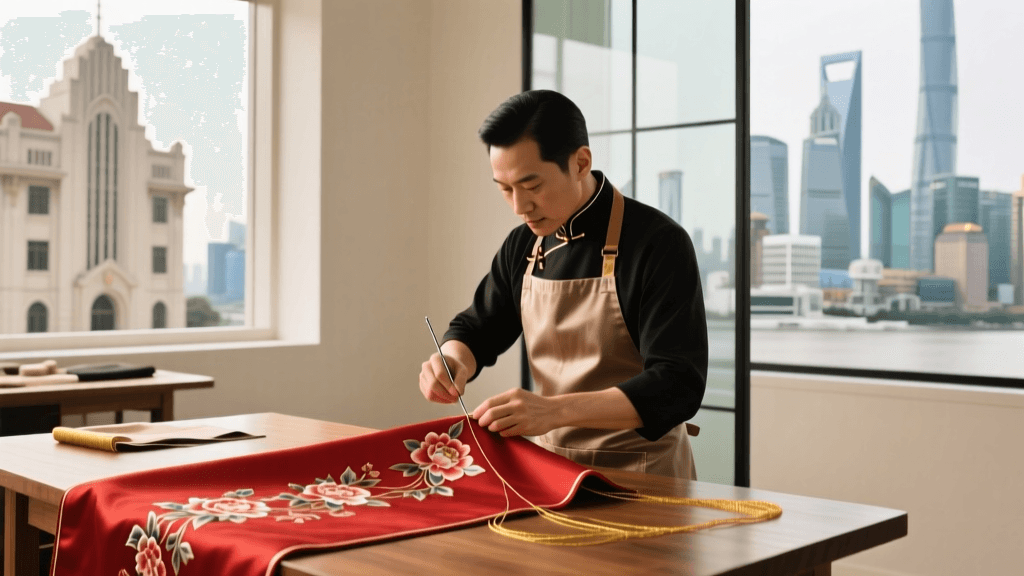
Shanghai is the undisputed epicenter of traditional qipao making. The workshops here focus heavily on the Haipai tradition, which emphasizes the iconic high collar, the diagonal dajin (front opening), and the meticulous hand-finishing that defined the golden era of 1930s Shanghai fashion.
Shanghai Qipao Association Masterclasses
For the 2026 cohort, the Shanghai Qipao Association offers a highly sought-after two-week intensive masterclass. This seminar is designed for intermediate sewists who already understand basic garment construction but want to specialize in traditional Chinese flat-pattern drafting. Unlike Western tailoring, which relies heavily on darts to create a 3D shape from 2D fabric, traditional qipao drafting uses strategic ironing (guihu) and precise bias cutting to mold the fabric to the body.
- Duration: 14 days (8 hours per day)
- 2026 Tuition: 8,500 RMB (approx. $1,180 USD)
- Focus: Traditional flat-pattern drafting, Xiangyunsha (mud silk) handling, and historical pankou (frog button) knotting.
- Language: Mandarin with live English translation available for international students.
Hai派 Heritage Tailoring Seminar
Located in the historic French Concession, this boutique seminar focuses on the intersection of heritage techniques and modern wearability. Instructors here teach students how to adapt the traditional, somewhat restrictive qipao silhouette for the modern, active lifestyle without losing the garment's structural integrity. Students learn to work with contemporary silk brocades and integrate hidden stretch panels, a major trend in 2026 bespoke qipao design.
Premier Seminars in Singapore: Modern Bespoke and Fusion
Singapore offers a distinctly different educational experience. The city-state's workshops are heavily influenced by its multicultural heritage, particularly the Peranakan (Straits Chinese) culture, which favors vibrant colors, intricate beadwork, and lighter, more breathable fabrics suited for a tropical climate.
Asian Civilisations Museum (ACM) Textile Seminars
The Asian Civilisations Museum in Singapore frequently hosts specialized textile and garment-making seminars in collaboration with master tailors. In 2026, their flagship workshop series focuses on the 'Peranakan Qipao,' teaching students how to integrate traditional Nyonya beadwork and batik silk panels into the classic cheongsam structure. This seminar is less about mass production and more about the slow-fashion, artisanal approach to garment creation.
- Duration: 4 weekend sessions (32 hours total)
- 2026 Tuition: 1,800 SGD (approx. $1,350 USD)
- Focus: Batik silk manipulation, Peranakan beadwork integration, and tropical-weight qipao construction.
- Language: English.
Laichan Bespoke Intensive
For those interested in high-end, red-carpet-ready evening wear, the Laichan Bespoke Intensive is the premier choice in Singapore. This seminar bridges the gap between traditional Asian garment making and haute couture. Students learn advanced 3D draping techniques directly on the mannequin, allowing for a more sculpted, modern fit that appeals to contemporary luxury markets. The 2026 curriculum places a heavy emphasis on working with delicate French lace overlays and structured silk organza underlinings.
Comparative Analysis: Shanghai vs. Singapore Workshops
Choosing the right workshop depends entirely on your design philosophy, budget, and the specific techniques you wish to acquire. Below is a detailed comparison of the 2026 workshop landscapes in both cities.
| Feature | Shanghai Workshops (e.g., Qipao Assoc.) | Singapore Workshops (e.g., ACM, Laichan) |
|---|---|---|
| Primary Focus | Heritage, traditional flat-drafting, historical accuracy | Modern bespoke, 3D draping, multicultural fusion |
| Average 2026 Cost | 8,500 RMB ($1,180 USD) | 2,200 SGD ($1,650 USD) |
| Typical Duration | 2 to 3 weeks (Full-time intensive) | 3 to 5 days (Short masterclasses or weekend cohorts) |
| Fabric Emphasis | Heavy brocades, Xiangyunsha (mud silk), traditional satins | Batik silks, French lace, lightweight tropical organzas |
| Language of Instruction | Primarily Mandarin (translation services available) | English |
Core Techniques Taught in 2026 Masterclasses
Regardless of whether you study in Shanghai or Singapore, any reputable cheongsam tailoring seminar in 2026 will require you to master three foundational techniques that define the garment's authenticity.
1. The Art of Pankou (Frog Buttons)
The pankou is not merely a fastener; it is the jewelry of the qipao. Workshops dedicate entire days to the creation of these intricate knots. Students learn to prepare the bias tubing by stuffing it with cotton yarn to give it a 3D, rope-like structure. Masterclasses teach over twenty distinct knot variations, from the simple 'plum blossom' to the highly complex 'butterfly' and 'phoenix' designs, which require precise steaming and hand-stitching to maintain their shape over time.
2. Guibu (Traditional Ironing and Shaping)
In Western tailoring, the iron is used to press seams flat. In traditional qipao making, the iron is a sculpting tool. Guibu involves using heavy, traditional irons (often weighing over 3 kilograms) combined with steam and specialized wooden tailoring hams to shrink and stretch the fabric fibers. This technique allows the tailor to create the curve of the bust and the hips without using a single dart, preserving the unbroken, flowing lines of the silk brocade. Understanding the thermal properties of different silks, a topic heavily researched in UNESCO's Intangible Cultural Heritage registries regarding Chinese sericulture, is critical here to avoid scorching the delicate fibers.
3. Bias Binding and the Rolled Edge
The edges of a traditional cheongsam are finished with incredibly narrow, hand-rolled bias binding. In 2026 workshops, students are taught to cut silk bias strips at a precise 45-degree angle, fold them to a width of just 2 millimeters, and blind-stitch them to the garment's edge. This technique, known as the 'wire edge,' requires immense patience and fine motor skills, ensuring the collar and hem remain crisp and structured without the use of modern, stiff fusible interfacings that can ruin the drape of luxury silk.
Essential Tools for the Aspiring Qipao Maker
If you are enrolling in a 2026 seminar, you will be expected to bring or purchase a specific set of tools. While the workshops provide the heavy machinery and specialized pressing hams, students must invest in their personal hand-tools:
- Japanese or Chinese Dressmaking Shears: Carbon steel shears (typically 10-inch or 12-inch) are mandatory for cutting slippery silk brocades without fraying the edges. Brands like Shozaburo or high-end Shanghai-made carbon shears are recommended.
- Silk Weights: Because traditional qipao drafting avoids pinning delicate silks to prevent micro-tears, a set of brass or lead pattern weights is essential for holding the paper patterns in place during cutting.
- Specialized Thimbles: Traditional Chinese tailors often use a specialized leather or metal palm-thimble rather than the standard Western finger-thimble, allowing for greater force when pulling heavy silk thread through multiple layers of brocade and batting.
- Wooden Clapper: Used immediately after steaming a seam to pound the fibers flat, trapping the moisture and heat to set the guihu shaping permanently.
Virtual and Hybrid Alternatives for 2026
For international students unable to travel to Asia, 2026 has seen a massive improvement in hybrid learning models. Several master tailors in Shanghai now offer 'Virtual Bespoke Mentorships.' In these programs, students receive a comprehensive kit of pre-measured muslins, specialized interfacings, and silk samples via international courier. Weekly seminars are conducted via high-definition video link, where instructors use multi-angle cameras to demonstrate the micro-movements required for pankou knotting and bias rolling. While virtual students miss out on the tactile experience of the heavy irons and the immersive cultural environment, the hybrid model provides a highly accessible entry point into the world of traditional Asian garment making.
Conclusion
Mastering the cheongsam is a journey into the heart of Asian textile history and structural engineering. Whether you choose the heritage-drenched studios of Shanghai to learn the ancient art of dartless flat-pattern drafting, or the modern, fusion-forward ateliers of Singapore to explore contemporary bespoke techniques, the skills you acquire will fundamentally change your approach to garment construction. As the demand for sustainable, culturally rich, and meticulously crafted clothing continues to surge in 2026, investing in a traditional qipao tailoring workshop is not just an educational endeavor; it is an act of cultural preservation and a commitment to the highest echelons of the sartorial arts.