Best 2026 Shanghai Cheongsam Tailoring Masterclasses
The Renaissance of Bespoke Qipao in 2026
The art of the cheongsam, also widely known as the qipao, has experienced a massive global resurgence. As of 2026, Shanghai remains the undisputed epicenter for traditional garment education, blending historical techniques with modern ergonomic tailoring. For international students, fashion designers, and textile enthusiasts, attending a masterclass in this vibrant metropolis offers an unparalleled opportunity to understand the architectural brilliance of Asian traditional dress. According to the Victoria and Albert Museum's comprehensive guide to the Cheongsam, the garment's unique one-piece construction and intricate bias-cutting techniques represent a pinnacle of sartorial engineering that cannot be fully grasped through books alone.
In 2026, the demand for authentic, hand-finished "Haipai" (Shanghai-style) qipaos has driven a new wave of educational seminars. These workshops are no longer just for local apprentices; they are meticulously structured for global participants, offering English translation, modern sizing adaptations, and deep dives into intangible cultural heritage techniques. Whether you are looking to master the 36-point measurement system or learn the delicate art of wire-inserted pankou (frog buttons), Shanghai’s 2026 cohort of masterclasses provides the ultimate immersive experience.
Top 3 Shanghai Cheongsam Masterclasses for 2026
Selecting the right seminar depends on your current skill level, time commitment, and specific areas of interest. Below, we review the top three accredited workshops operating in Shanghai for the 2026 academic and tourist seasons.
1. The Hongxiang Heritage Atelier (Advanced Intensive)
Located in the historic French Concession, the Hongxiang Heritage Atelier offers a rigorous 21-day intensive program. This masterclass is designed for experienced sewists and professional tailors who want to master the seamless shoulder construction and invisible hemming techniques unique to high-end Haipai qipaos. Students work directly under third-generation master tailors, drafting patterns from scratch using traditional carbon paper and bamboo rulers. The 2026 tuition is approximately $3,200 USD, which includes all premium 19mm silk charmeuse materials and specialized tools.
2. Shanghai Qipao Association Intensive (Intermediate)
For those with a solid foundation in garment construction but new to traditional Asian dress, the Shanghai Qipao Association offers a 10-day intermediate seminar. This course focuses heavily on the structural elements of the cheongsam, including the iconic stand collar (Mandarin collar) and the precise placement of the side slits. The curriculum also includes a two-day field trip to local silk weaving facilities in neighboring Suzhou to understand textile behavior. Priced at $1,850 USD for the 2026 spring and autumn cohorts, this program provides an excellent balance of theory and hands-on stitching.
3. Suzhou Creek Silk & Stitch Seminar (Beginner/Enthusiast)
Ideal for hobbyists and fashion historians, this 5-day workshop situated near the revitalized Suzhou Creek arts district focuses on the decorative and finishing elements of the qipao. While you will not draft a full garment from scratch, you will learn to construct the bodice block, master the bias-cut binding edges, and spend extensive time on pankou knotting. The 2026 fee is $950 USD, making it the most accessible entry point into traditional Chinese tailoring.
Masterclass Curriculum: Core Techniques
Regardless of the workshop you choose, a legitimate 2026 Shanghai masterclass will cover several non-negotiable pillars of qipao construction. The Metropolitan Museum of Art's Asian Art collection frequently highlights these exact historical techniques in their textile conservation notes, proving their enduring importance.
The 36-Point Measurement System
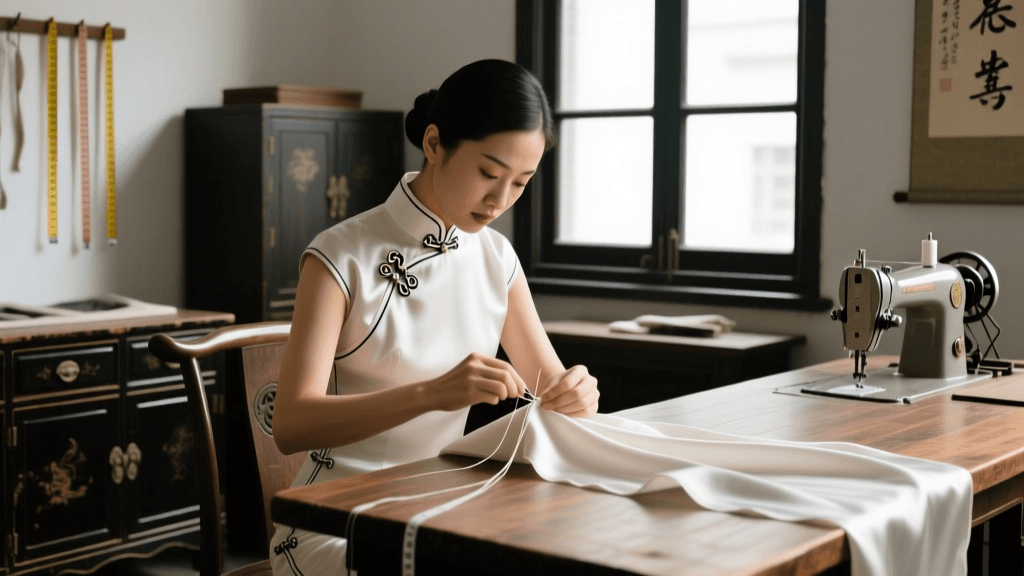
Unlike Western tailoring, which often relies on standard block patterns, traditional Shanghai tailoring utilizes a highly specific 36-point measurement system. This accounts for the natural asymmetry of the human body, the slope of the shoulders, and the precise curvature of the spine. Students learn to take these measurements using a soft fiberglass tape, ensuring the qipao fits like a second skin without restricting movement.
Stand Collar Engineering
The Mandarin collar is the defining feature of the cheongsam. In these seminars, you will learn how to draft the collar pattern to match the exact circumference and tilt of the wearer's neck. Master tailors teach the "iron-work" technique—using heavy, traditional cast-irons and steam to shrink and mold the collar fabric so it stands perfectly upright without the need for stiff, uncomfortable modern interfacing.
The Art of Pankou (Frog Buttons)
Pankou are not merely fasteners; they are intricate pieces of wearable art. Workshops dedicate entire days to rolling 4mm silk cords, stitching them with invisible slip stitches, and shaping them into complex floral or geometric motifs. Advanced students learn to insert fine copper wire into the silk cords to create rigid, sculptural knots that maintain their shape over decades of wear.
2026 Workshop Comparison Chart
| Workshop Name | Duration | 2026 Tuition (USD) | Skill Level | Primary Focus |
|---|---|---|---|---|
| Hongxiang Heritage Atelier | 21 Days | $3,200 | Advanced | Seamless shoulders, full bespoke drafting |
| Shanghai Qipao Association | 10 Days | $1,850 | Intermediate | Collar engineering, structural fitting |
| Suzhou Creek Silk & Stitch | 5 Days | $950 | Beginner | Pankou knotting, bias binding, basics |
Essential Tools and Material Sourcing in 2026
While most masterclasses provide a basic starter kit, serious students are encouraged to source their own specialized tools. Shanghai offers some of the best textile markets in the world, but knowing where to go in 2026 is crucial.
- The South Bund Soft Spinning Material Market: Located on Lujiabang Road, this multi-story market is the premier destination for silk. When buying fabric for a qipao, look for 16mm to 19mm crepe de chine or heavy silk brocade. Always negotiate, and ensure you purchase at least 3.5 meters for a standard knee-length cheongsam with long sleeves.
- Specialized Shears: Visit the specialized tailoring supply shops on Nanchang Road to purchase Kai 7250 10-inch dressmaker shears. These are the industry standard for cutting slippery silk on the bias without fraying the edges.
- Threads and Needles: For hand-rolled hems and invisible stitching, stock up on Gutermann 100% silk thread and John James fine beading needles (size 10 or 12), which are now widely available in Shanghai's premium haberdashery districts.
Practical Advice for International Students
Attending a seminar in China requires careful logistical planning. As of 2026, international participants enrolling in workshops longer than 14 days must apply for an M-Visa (Business/Trade) or an F-Visa (Cultural Exchange), depending on the specific accreditation of the atelier. The UNESCO Intangible Cultural Heritage frameworks have heavily influenced how these cultural exchange visas are processed, making it easier for students of traditional crafts to gain entry, provided you have an official invitation letter from the workshop.
"The secret to the qipao is not in the sewing machine; it is in the iron and the hand. The fabric must be coaxed, not forced, into the shape of the body." — Master Tailor Chen, Hongxiang Heritage Atelier.
Finally, while many 2026 masterclasses offer English-speaking assistants, downloading a robust offline translation app and learning basic Mandarin tailoring terminology (such as chi cun for measurements and pan kou for frog buttons) will vastly improve your rapport with the master artisans. Book your spot at least six months in advance, as the 2026 spring cohorts are already seeing unprecedented waitlists from global fashion conservators and bespoke tailors.