Best Hanbok Making Workshops in Seoul: 2026 Masterclass Guide
The Renaissance of Handcrafted Hanbok in 2026
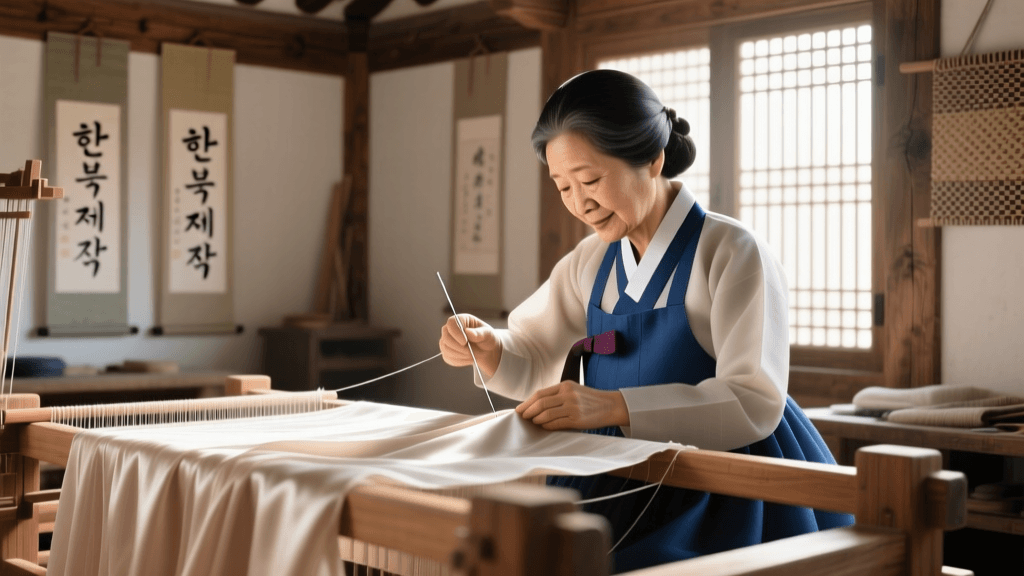
In the current 2026 landscape of sustainable and slow fashion, the desire to move beyond simply renting traditional garments has sparked a global renaissance in hands-on garment making. Nowhere is this more evident than in Seoul, South Korea, where traditional Hanbok making workshops have evolved from niche cultural demonstrations into comprehensive, multi-day masterclasses. For textile enthusiasts, fashion students, and cultural preservationists, learning to construct a Hanbok from scratch offers a profound connection to Korean heritage. According to the Korean Culture and Information Service, the international appreciation for traditional Korean aesthetics has surged, driving a new wave of artisan studios to open their doors to global students.
Unlike modern Western pattern drafting, which relies heavily on darts and complex three-dimensional shaping, traditional Hanbok construction is rooted in flat-pattern cutting and straight-line sewing. The beauty of the garment emerges not from tailoring to the body's exact curves, but from the elegant drape of the fabric, the volume of the pleats, and the structural integrity of the collars. This guide explores the most prestigious Hanbok making seminars available in Seoul this year, detailing what you will learn, the tools you will use, and how to secure your place in these highly sought-after classes.
Top 3 Traditional Hanbok Sewing Workshops in Seoul
1. The Korean Traditional Craft Institute (KTCI) Masterclass
Located in the historic Jongno District, the KTCI offers the most rigorous and authentic Hanbok construction program in the country. Their 2026 flagship seminar, The Royal Court Jeogori, is a 40-hour intensive course spread over two weekends. Students learn to work with premium Myeongju silk and master the intricate invisible stitching techniques known as Gamchimjil. This workshop is ideal for advanced sewists who already understand basic garment construction and wish to specialize in historical replication. The curriculum includes drafting the curved sleeves (Bae) and constructing the stiff, detachable white collar (Dongjeong).
2. Bukchon Heritage Artisan Studio: Everyday Gaeryang Hanbok
Nestled within the traditional Hanok alleys of Bukchon, this boutique studio focuses on Gaeryang Hanbok—the modernized, everyday version of the traditional dress that gained massive popularity in the mid-20th century and remains a staple of contemporary Korean slow fashion. Their 3-day weekend intensive is perfect for beginners and intermediate makers. You will learn to construct a practical cotton Chima (wrap skirt) and a simplified Jeogori (jacket) that can be integrated into a modern 2026 wardrobe. The instructors emphasize natural dyeing techniques, allowing students to customize their fabrics using indigo and persimmon tannin before cutting.
3. Dongdaemun Design Plaza (DDP) Textile Innovation Lab
For those interested in the intersection of heritage and futuristic design, the DDP Textile Innovation Lab offers a unique 5-day seminar titled Neo-Hanbok Construction. This workshop bridges traditional flat-pattern drafting with modern sustainable textiles, such as recycled PET silk blends and lab-grown cellulose fibers. Students utilize both traditional bamboo rulers and 2026's latest digital laser-cutting tools to achieve flawless geometric precision on the garment's ties and hems. This seminar is highly recommended for fashion design students and industry professionals looking to incorporate Asian traditional silhouettes into contemporary collections.
Workshop Comparison Chart
| Workshop Name | Duration | Skill Level | 2026 Tuition (KRW) | Primary Materials |
|---|---|---|---|---|
| KTCI Royal Court Masterclass | 40 Hours (4 weeks) | Advanced | ₩1,850,000 | Myeongju Silk, Ramie |
| Bukchon Heritage Artisan Studio | 24 Hours (3 days) | Beginner/Intermediate | ₩680,000 | Organic Cotton, Hemp |
| DDP Textile Innovation Lab | 35 Hours (5 days) | Intermediate/Professional | ₩1,200,000 | Sustainable Tech-Silk |
Core Techniques You Will Master
Attending a Hanbok seminar is fundamentally different from a standard sewing class. The pedagogy is steeped in philosophy, where the act of sewing is considered a meditative practice. Here are the core techniques you will master during these 2026 masterclasses:
Drafting the Jeogori (Jacket)
The Jeogori is deceptively simple in appearance but mathematically complex in its flat pattern. You will learn to draft the Gil (the main body panel) and the Somae (sleeves) using a traditional Chokja (a 30-centimeter bamboo ruler). Unlike Western sleeves that are set into an armhole, Hanbok sleeves are cut as an extension of the body or attached with a distinct curved underarm gusset that allows for unparalleled freedom of movement. You will also learn to sew the Git (the fabric band that holds the collar), ensuring it sits perfectly flush against the neck without puckering.
Constructing the Chima (Skirt)
The Chima requires mastering the art of high-density pleating. In the Bukchon and KTCI workshops, you will learn the traditional method of gathering the skirt panel using a temporary basting thread, steaming the pleats into submission with a heavy iron, and then attaching the Chima Malgi (the wide waistband). The 2026 curriculum places special emphasis on calculating the exact fabric yield required to achieve the signature bell-shaped silhouette without adding unnecessary bulk at the waist.
The Art of the Goreum (Ties)
The Goreum are the long, elegant ribbons that secure the jacket. Making them requires cutting on the bias or straight grain depending on the historical era being replicated, followed by a meticulous slip-stitching process that hides all raw edges inside the tube. Tying the Goreum into the correct asymmetrical bow is a separate discipline, often taught in the final hour of the masterclass alongside Kitsuke-style dressing etiquette.
Essential Tools for the 2026 Hanbok Maker
While the studios provide all necessary equipment during the seminar, serious students often wish to build their own home toolkit. The modern Hanbok maker's arsenal in 2026 blends centuries-old instruments with contemporary precision tools:
- Traditional Chokja and Jacheok: The bamboo rulers used for measuring and drawing the straight, unyielding lines of the flat pattern.
- Heavy Tailor's Shears: Specifically calibrated for cutting through multiple layers of crisp ramie or slippery silk without fraying the edges.
- Digital Steam Press: While traditional irons were heavy and solid, modern 2026 tabletop steam presses are favored in Seoul studios for setting the deep pleats of the Chima without scorching delicate natural dyes.
- Silk Thread and Beeswax: Running thread through a block of natural beeswax is a mandatory step taught in all masterclasses to prevent the silk thread from tangling and to give it the tensile strength required for invisible hemming.
Understanding Hanbok Fabrics: Silk, Ramie, and Hemp
A crucial component of these workshops is textile education. You cannot sew a Hanbok without understanding how the fabric behaves. The KTCI masterclass dedicates an entire afternoon to fabric manipulation. Myeongju (a tightly woven silk) is the standard for formal wear, offering a beautiful luster and structural memory. Mosi (ramie) is introduced for summer garments; it is notoriously difficult to sew due to its stiffness and tendency to fray, requiring specialized seam finishes that are taught exclusively in advanced seminars. Hemp is favored for its rustic texture and is often used in the DDP innovation lab for avant-garde, deconstructed Hanbok projects.
How to Prepare and Book Your Seminar
Securing a spot in these elite workshops requires advance planning. The 2026 schedules for the KTCI and Bukchon studios are released in November of the preceding year, and seats for English-speaking cohorts are capped at eight students to ensure personalized instruction from the master tailors. For travelers planning their itinerary, the Seoul Tourism Organization recommends booking accommodations in the Jongno or Jung districts to minimize commute times to the historic craft quarters.
Before attending, it is highly recommended that you practice basic hand-sewing stitches, particularly the slip stitch and the running stitch, as the pace of the masterclass assumes a baseline manual dexterity. Additionally, while some studios provide translated workbooks, bringing a tablet with a real-time translation app can be invaluable when discussing nuanced textile terminology with the master artisans. By investing your time in these immersive seminars, you are not merely learning to sew; you are participating in the active preservation and evolution of one of Asia's most breathtaking sartorial traditions.