Kimono Silhouettes on 2026 Global Runways: Paris Couture Trends
The 2026 Runway Renaissance: Kimono Silhouettes in Haute Couture
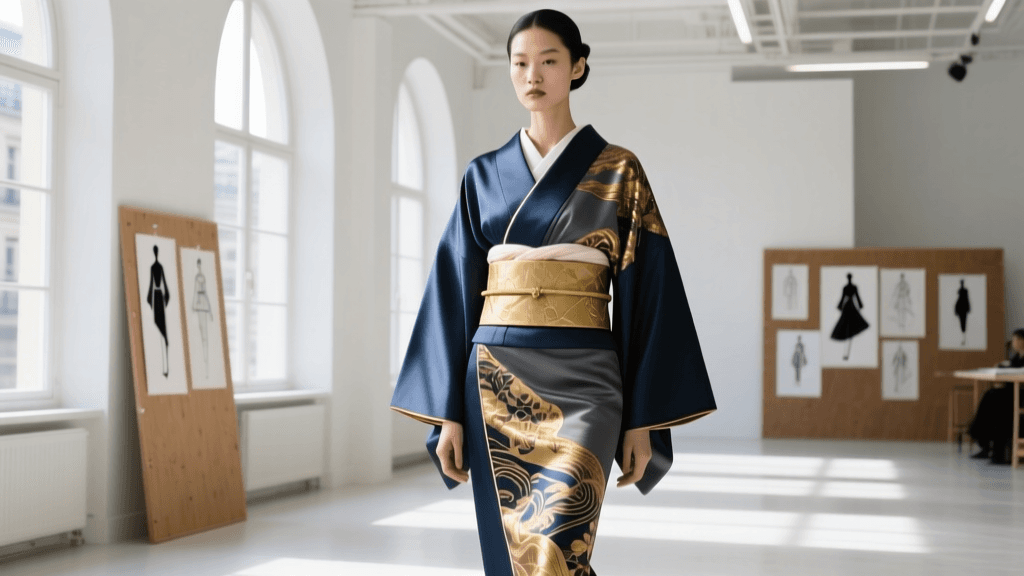
As the global fashion industry navigates the Spring/Summer and Fall/Winter 2026 collections, a distinct and powerful narrative has emerged on the runways of Paris and Milan: the profound integration of traditional Japanese garment structures into modern haute couture. No longer confined to thematic costume or superficial motif printing, the kimono's foundational architecture—its T-shaped silhouette, straight seam construction, and fluid draping—has become a cornerstone of 2026's most celebrated luxury collections. Designers are moving away from the hyper-tailored, restrictive waistlines of the previous decade, embracing the 'quiet luxury' movement's demand for comfort, artisanal craftsmanship, and structural elegance.
The influence of the kimono on Western fashion is not a new phenomenon, but the 2026 approach is marked by a deep respect for the garment's original engineering. According to the Victoria and Albert Museum's analysis of the kimono in Western fashion, the garment has historically served as a catalyst for sartorial liberation, freeing the body from rigid corsetry. Today, contemporary couture houses are revisiting this liberation, utilizing the kimono's drop-shoulder and wide-sleeve (furisode-inspired) proportions to create outerwear and evening gowns that prioritize movement and spatial volume.
Nishijin-ori and Yuzen: Textile Innovations for 2026
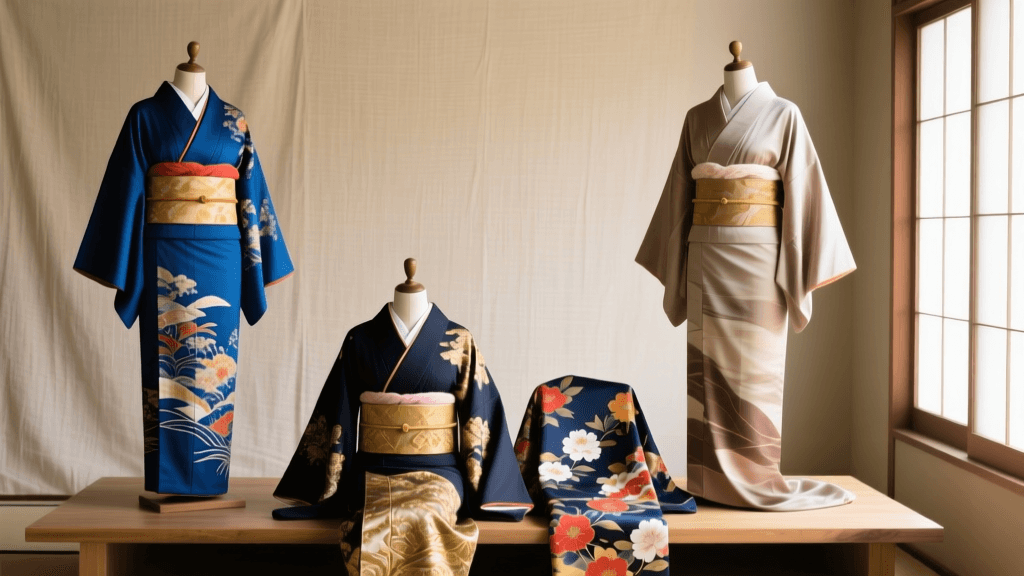
Beyond the silhouette, the true luxury of the 2026 collections lies in the textiles. European heritage houses have established direct partnerships with multi-generational weaving cooperatives in Kyoto and Kanazawa. The focus this year is heavily on Nishijin-ori (brocade weaving) and Yuzen (resist dyeing), adapting these painstakingly slow, traditional techniques for modern, wearable luxury.
Nishijin-ori, traditionally reserved for formal obi sashes and theatrical costumes, is being reimagined in 2026 as a structural element in tailored blazers and corsetry. By blending metallic threads with sustainable, lab-grown silk alternatives, designers are achieving the opulent weight and texture of historical brocades while meeting modern sustainability mandates. Meanwhile, Yuzen dyeing, known for its painterly, nature-inspired motifs, is being applied to flowing, bias-cut maxi dresses, merging Edo-period artistry with 21st-century fluid draping.
Traditional Kimono Textiles vs. 2026 Runway Adaptations
| Traditional Textile | Historical Garment Use | 2026 Haute Couture Adaptation |
|---|---|---|
| Nishijin-ori (Brocade) | Formal Obi & Uchikake | Structured Blazer Lapels, Corsetry, & Evening Bodices |
| Yuzen Silk (Resist Dye) | Furisode & Homongi | Flowing Bias-Cut Maxi Dresses & Silk Scarf Layering |
| Tsumugi (Pongee) | Everyday & Casual Kimono | Oversized, Raw-Edge Trench Coats & Wide-Leg Trousers |
| Shibori (Tie-Dye) | Yukata & Informal Wear | Asymmetric Knitwear & Textured, Pleated Evening Gowns |
Deconstructing the Obi: Structural Draping and Waist Cinching
Perhaps the most striking translation of traditional Japanese clothing on the 2026 runways is the deconstruction of the obi. Historically, the obi is a wide, intricate sash that secures the kimono while serving as the garment's primary decorative focal point. In contemporary Parisian couture, the obi's concept of 'structured cinching' has replaced the traditional corset.
Designers are utilizing wide, rigid bands of Nishijin-ori and stiffened Tsumugi silk to create architectural waistpieces that wrap and tie in authentic obi knots (such as the taiko musubi or bunko musubi), but engineered with hidden magnetic closures and internal boning for modern wearability. This approach honors the Metropolitan Museum of Art's historical documentation of kimono construction, which emphasizes that the beauty of the garment lies in the tension between the fluid, unstructured silk of the body and the rigid, sculptural geometry of the sash.
'The 2026 collections prove that the obi is not merely an accessory, but a masterclass in structural tension. By wrapping and folding rather than cutting and sewing, designers are creating zero-waste couture that sculpts the body through pressure and drape rather than restriction.'
How to Incorporate Runway Kimono Trends into Everyday Wear
While the haute couture interpretations seen in Paris are breathtaking, the core tenets of the 2026 kimono trend are highly adaptable for everyday luxury wardrobes. Transitioning these runway concepts into wearable, practical outfits requires an understanding of proportion, fabric weight, and traditional styling cues. Here is a practical guide to adopting these trends this year.
1. The Haori Jacket Layer
The haori, a traditional hip- or thigh-length kimono-style jacket, is the most accessible entry point into this trend. For 2026, look for vintage or modern haori crafted from heavier crepe silk (chirimen) or wool blends.
- Measurements to Seek: Aim for a back width (yuki) of approximately 24 to 26 inches and a body length of 30 to 34 inches. This ensures the jacket drapes elegantly over modern trousers without overwhelming your frame.
- Styling Advice: Wear open over a simple, high-quality ribbed turtleneck and wide-leg, hakama-inspired pleated trousers. The contrast between the fluid haori sleeves and the structured pleats mimics runway layering techniques.
- Market Cost: Authentic, high-quality vintage silk haori in the 2026 resale market typically range from $180 to $450, depending on the condition and the presence of hand-painted Yuzen motifs.
2. Obi-Inspired Belt Styling
You do not need a $10,000 couture gown to utilize the obi silhouette. Investing in a wide, structured leather or brocade belt can instantly elevate a minimalist outfit.
- Measurements to Seek: Look for belts that are 4 to 6 inches in width at the center back, tapering slightly at the sides. Length should be sufficient to wrap around your natural waist twice before tying.
- Styling Advice: Cinch an oversized, flowing midi-dress or a long, unstructured blazer. Tie the belt in a simple, flat square knot at the back or side, allowing the ends to hang cleanly, echoing the minimalist aesthetic of modern Japanese design.
3. Hakama-Inspired Pleated Trousers
The hakama's deep, structured pleats offer a sophisticated alternative to standard wide-leg pants. In 2026, look for trousers that feature a high waistband (mimicking the koshiita, or back board, of a traditional hakama) and deep, knife-sharp pleats that only open when walking.
- Fabric Choice: Opt for heavy matte crepe, wool gabardine, or sustainable Tencel blends that hold a crease well and provide the necessary weight for dramatic movement.
- Cost Expectation: Designer or premium contemporary hakama-style trousers generally retail between $350 and $800 in 2026 boutique markets.
The Cultural Dialogue: Appreciation vs. Appropriation
As the kimono silhouette becomes a staple of global runways, the fashion industry in 2026 is also engaging in a much more mature dialogue regarding cultural appreciation versus appropriation. The most celebrated collections this year are those that have moved beyond mere aesthetic borrowing and have instead established equitable, transparent collaborations with Japanese artisans.
Leading European houses are now crediting specific Kyoto weaving guilds and dyeing masters in their show notes and garment labels, treating these artisans as co-creators rather than anonymous suppliers. Furthermore, a portion of the proceeds from these capsule collections is increasingly being directed toward foundations dedicated to preserving endangered textile techniques, such as the cultivation of traditional indigo (sukumo) and the maintenance of historic Nishijin looms. This shift ensures that the global appetite for Japanese aesthetics directly supports the survival of the very traditions that inspire it.
Conclusion
The presence of kimono silhouettes, Nishijin-ori textiles, and obi-inspired structures on the 2026 global runways represents a profound maturation in cross-cultural fashion design. It is no longer about exoticism; it is about recognizing the kimono as one of the most sophisticated, sustainable, and architecturally brilliant garments in human history. By understanding the mechanics of the T-shape silhouette, the rich heritage of Japanese textiles, and the ethical imperative of artisan collaboration, fashion enthusiasts and designers alike can participate in a global style narrative that honors the past while boldly dressing the future.