Kanjeevaram vs Banarasi Silk Sarees: 2026 Bridal Textile Guide
Introduction to India's Premier Bridal Silks in 2026
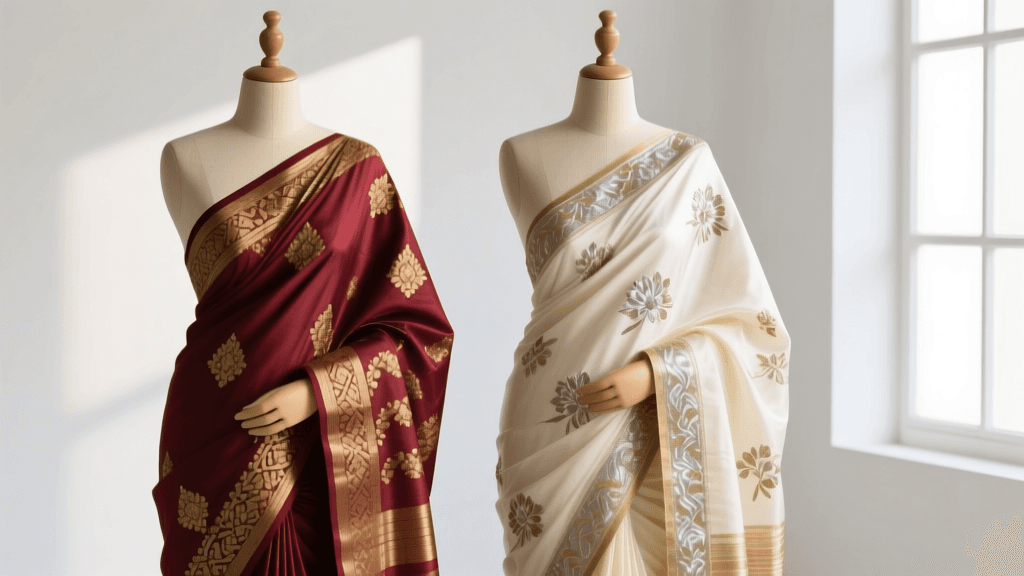
When selecting the quintessential South Asian bridal garment, the debate almost always narrows down to two legendary textiles: the Kanjeevaram and the Banarasi silk saree. Both garments represent centuries of artisanal mastery, yet they offer vastly different tactile experiences, draping mechanics, and visual aesthetics. As we navigate the bridal fashion landscape in 2026, modern brides are increasingly prioritizing textile authenticity, sustainable weaving practices, and heritage preservation over fast-fashion alternatives.
Understanding the structural and material differences between these two iconic weaves is essential for making an informed investment. According to the Victoria and Albert Museum's comprehensive guide to Indian textiles, the regional variations in silk weaving across the Indian subcontinent are defined by local sericulture, loom technology, and historical patronage. In 2026, with the rise of conscious luxury, knowing exactly what you are paying for—from the ply of the silk thread to the metallic composition of the zari—is more critical than ever.
The Anatomy of Kanjeevaram Silk
Originating from the town of Kanchipuram in Tamil Nadu, the Kanjeevaram saree is renowned for its structural integrity and vibrant color blocking. The textile is woven from pure mulberry silk, which is known for its exceptional tensile strength and natural luster. A traditional Kanjeevaram is characterized by its heavy weight, typically ranging between 600 to 900 grams, owing to the use of three-ply silk threads.
The defining construction technique of the Kanjeevaram is the korvai. Unlike sarees woven as a single continuous piece, the body, border, and pallu (the decorative end piece) of a Kanjeevaram are woven separately and then interlocked together by hand. This intricate joint is so strong that even if the saree tears, the border will not detach. In 2026, master weavers are also experimenting with lighter, two-ply mulberry silks to cater to brides who desire the traditional Kanjeevaram aesthetic without the physical burden of a 900-gram garment.
Visually, Kanjeevarams are celebrated for their bold, contrasting borders and motifs inspired by South Indian temple architecture, such as the gopuram (temple tower), peacocks, and mangoes (paisley). The 2026 bridal market has seen a massive surge in demand for "pastel Korvais," where weavers use soft blush pinks, mint greens, and icy blues for the body, contrasted with deep maroon or emerald borders.
The Elegance of Banarasi Silk
Hailing from the ancient city of Varanasi in Uttar Pradesh, the Banarasi silk saree is a masterpiece of brocade weaving. Historically patronized by Mughal royalty, the Banarasi textile is defined by its opulent, intricate motifs and fluid drape. As noted by The Metropolitan Museum of Art's Heilbrunn Timeline of Art History, the integration of Persian motifs with indigenous Indian floral patterns created a unique textile vocabulary that continues to dominate North Indian bridal trousseaus today.
Banarasi sarees are woven on jacquard looms, allowing for complex, repeating patterns that cover the entire surface of the fabric. The silk used is generally finer and softer than the robust mulberry of the south, resulting in a garment that is lighter (usually 400 to 600 grams) and possesses a fluid, liquid-like drape. Popular weaving styles in 2026 include the Jangla (wild, sprawling floral vines), Tanchoi (intricate patterns woven with no floats on the reverse side), and the Shikargah (hunting scenes featuring animals).
While traditional Banarasi palettes relied heavily on crimson, gold, and royal blue, contemporary 2026 collections feature sophisticated organza-silk blends (Kora silk) and matte-finish Banarasis in muted metallics, appealing to brides seeking a more understated, regal elegance.
Head-to-Head Textile Comparison
To help you visualize the differences, here is a structured comparison of the two textiles based on 2026 market standards and weaving specifications.
| Feature | Kanjeevaram Silk | Banarasi Silk |
|---|---|---|
| Origin | Kanchipuram, Tamil Nadu | Varanasi, Uttar Pradesh |
| Silk Type | Heavy Mulberry Silk (3-ply) | Finer Mulberry or Kora (Organza) Silk |
| Standard Length | 6.3 meters (9 yards) | 5.5 meters (6 yards) |
| Average Weight | 600g - 900g | 400g - 600g |
| Weaving Technique | Korvai (Interlocking joints) | Jacquard Brocade / Tanchoi |
| Drape Quality | Stiff, holds heavy pleats perfectly | Fluid, clings to the body, soft pleats |
| 2026 Price Range | $500 - $4,500+ | $300 - $2,800+ |
Zari Purity and the Shift to Sustainable Metals
Zari—the metallic thread woven into the silk—is the soul of both the Kanjeevaram and the Banarasi. Historically, zari was made from pure silver wire flattened and wrapped around a silk core, then electroplated in pure gold. Today, the economics of precious metals have shifted the 2026 market significantly.
When shopping for these garments, you will encounter three main types of zari:
- Pure Zari: The traditional gold-wrapped silver thread. It is incredibly expensive, adds significant weight to the saree, and is usually reserved for heirloom pieces costing upwards of $3,000.
- Tested Zari (Premium Imitation): The standard for high-end bridal wear in 2026. It uses a copper or silver-alloy core electroplated with gold. It offers 90% of the visual brilliance of pure zari at a fraction of the cost and weight.
- Plastic / Polyester Zari: A synthetic, metallic-painted thread used in budget-friendly sarees. It lacks the luster and longevity of metal zari and is not recommended for bridal heirlooms.
In 2026, there is also a growing movement toward "Ahimsa Silk" (peace silk) blended with recycled metallic yarns, catering to eco-conscious brides who refuse to compromise on luxury but demand ethical production standards.
Styling and Drape Considerations for the Modern Bride
The physical properties of these textiles dictate how they should be styled. The Kanjeevaram, with its stiff hand-feel and heavy weight, is a masterclass in architectural draping. The thick silk holds sharp, crisp pleats that fan out beautifully, making it ideal for the traditional Nivi drape. Because the border is heavy, it anchors the pallu securely over the shoulder. However, brides must be prepared for the physical weight; wearing a 900-gram Kanjeevaram for an eight-hour ceremony requires stamina and meticulous pinning.
Conversely, the Banarasi silk is a dream for fluid, modern draping styles. Its lighter weight and softer weave allow it to cascade over the body, making it perfect for pre-wedding events, cocktail saree-gowns, or contemporary dhoti-style drapes. In 2026, styling a Banarasi saree with a structured, corset-style blouse or a sheer organza cape is a dominant trend, bridging the gap between ancient textile arts and modern haute couture.
How to Verify Authenticity in 2026
With the proliferation of power-loom replicas flooding the market, verifying the authenticity of your silk is paramount. According to Encyclopedia Britannica's entry on Indian textile arts, the geographical and cultural significance of these weaves has necessitated strict legal protections.
Always look for the Silk Mark, a certification issued by the Silk Mark Organisation of India (SMOI), which guarantees that the base fabric is 100% pure silk. Additionally, both Kanjeevaram and Banarasi sarees hold Geographical Indication (GI) tags. A genuine GI tag on the reverse of the saree's pallu ensures that the textile was handwoven in its specific region of origin using traditional methods. When purchasing from high-end boutiques in 2026, always request the QR-coded authenticity certificate that traces the garment back to the specific weaving cooperative or master artisan.
Conclusion
Choosing between a Kanjeevaram and a Banarasi silk saree is not merely a decision about color or pattern; it is a choice between two distinct textile philosophies. The Kanjeevaram offers structural grandeur, vibrant contrasts, and an indestructible weave meant to be passed down through generations. The Banarasi offers Mughal-inspired opulence, a buttery drape, and intricate, all-over brocade work that catches the light with every movement. By understanding the silk ply, the zari composition, and the weaving techniques detailed above, you can confidently invest in a 2026 bridal textile that honors Asian traditions while perfectly suiting your personal style.