Hanfu on Global Runways: 2026 Fashion Week Trends & Styling
The 2026 Runway Breakthrough: Hanfu Enters Haute Couture
The global fashion landscape has undergone a seismic shift as we navigate the 2026 runway season. Once confined primarily to historical reenactments, cultural festivals, and niche streetwear, traditional Chinese Hanfu has firmly established itself as a formidable, transformative force on the international haute couture stage. From the grand Palais in Paris to the industrial chic venues of Milan Fashion Week, top-tier designers are no longer merely borrowing superficial Orientalist motifs. Instead, they are deconstructing, studying, and elevating authentic Hanfu silhouettes. This evolution marks a pivotal moment in Asian traditions, where ancient garment engineering meets futuristic sustainability, modular design, and modern tailoring.
In 2026, the integration of Hanfu into global fashion weeks is defined by a deep respect for structural integrity. Designers are looking past the surface-level embroidery and focusing on the genius of traditional Chinese pattern-making, which relies on geometric cutting, zero-waste principles, and dynamic draping rather than rigid Western corsetry. This article explores how traditional garments are being reimagined for the contemporary runway, offering actionable insights for designers, stylists, and fashion historians.
Deconstructing the Classics: Mamianqun and Ruqun on the Catwalk
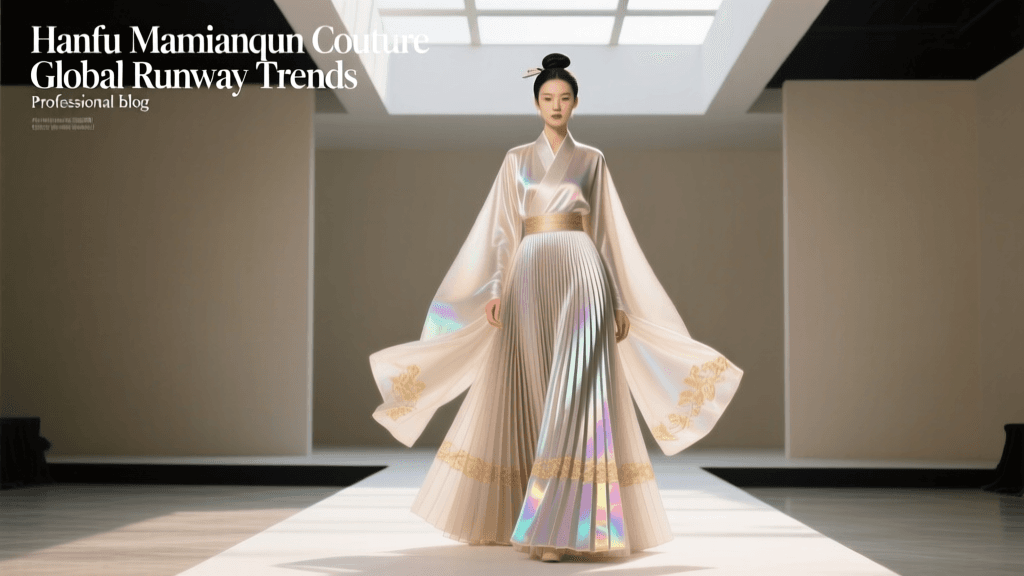
The undisputed star of the 2026 international runway season is the Mamianqun, historically known as the horse-face skirt. Originating in the Song and Ming dynasties, the Mamianqun features a flat front and back panel with intricately pleated sides. In 2026, avant-garde designers have transcended its traditional boundaries. We are seeing asymmetric pleating, heat-molded organza, and the integration of bio-fabricated smart-textiles that shift in opacity under runway lighting. The structural integrity of the skirt's flat panels provides a pristine canvas for digital printing and laser-cut lace, while the pleated sides offer kinetic, dramatic movement that captivates the front row.
Simultaneously, the Ruqun (a traditional blouse-and-skirt ensemble) has been radically reimagined for modular evening wear. The iconic cross-collar is being utilized to create striking, geometric necklines that frame the décolletage elegantly. By separating the Ruqun into interchangeable components, luxury houses are appealing to the 2026 consumer's demand for versatility and sustainable, multi-wear capsule wardrobes. The high-waisted silhouette of the traditional Ruqun is being paired with modern, architectural blazers, creating a striking juxtaposition of ancient femininity and contemporary power dressing.
Key Hanfu Elements Dominating International Fashion Weeks
Beyond specific garments, the foundational DNA of Hanfu is influencing the broader vocabulary of global fashion. The following elements are ubiquitous across the 2026 Spring/Summer and Fall/Winter collections:
- Jiaoling Youren (Cross-Collar Right Lapel): The foundational rule of Hanfu wrapping, where the left side crosses over the right. In 2026, this is being adapted into wrap-around trench coats, modular evening gowns, and structured outerwear. It symbolizes the harmony of yin and yang while providing a deeply flattering, asymmetrical neckline.
- Daxiushan (Large, Flowing Sleeves): Floor-grazing, voluminous sleeves are replacing the traditional Western tailored sleeve in high-end evening wear. Designers are using lightweight silk georgette and cupro to create dramatic, ethereal silhouettes that trail behind the model, emphasizing grace and fluidity.
- Pibo (Silk Shawl/Stole): Traditionally draped elegantly over the arms and shoulders, the Pibo is being utilized in 2026 collections as a detachable, sculptural accessory. It adds a layer of movement to minimalist slip dresses and serves as a bridge between the garment and the wearer's skin.
- Yaolan (Waistbands and Sashes): Elaborate knotting techniques, woven silk cords, and jade-adorned sashes are replacing standard leather belts. These elements emphasize the natural waist and introduce artisanal, handcrafted hardware to otherwise modern, minimalist looks.
Sourcing Authentic Textiles for 2026 Collections
For designers and fashion houses aiming to integrate authentic Hanfu textiles into their 2026 collections, navigating the sourcing landscape requires precision, patience, and capital. The market for heritage textiles has matured significantly, with a strong emphasis on eco-friendly dyeing and traditional loom techniques.
Xiangyunsha (Gambiered Canton Gauze): Known as 'soft gold,' this luxurious silk is dyed using the juice of the薯莨 (Dioscorea cirrhosa) plant and coated with iron-rich mud from the Pearl River Delta. In 2026, export-grade Xiangyunsha suitable for runway pieces averages between $140 and $180 per yard. Due to the strict sun-and-mud drying process, which can only occur during specific humid months, lead times are typically 12 to 16 weeks.
Song Brocade (Songjin): Historically reserved for royal garments and prestigious scrolls, modern iterations of Song Brocade woven with metallic threads and sustainable bio-silks are dominating the luxury market. Expect to pay upwards of $250 per yard for custom loom setups. According to industry analyses tracked by The Business of Fashion, luxury houses that bypass middlemen and invest directly in artisan cooperatives in Suzhou and Hangzhou see a significantly higher margin and greater authenticity in their heritage-inspired capsule collections.
Cultural Appreciation vs. Appropriation on the Runway
As Hanfu's global footprint expands, the critical discourse surrounding cultural appreciation versus appropriation remains at the forefront of fashion journalism. The 2026 fashion consensus demands rigorous historical research and profound respect for the garment's origins. Misusing the left-over-right lapel (which is traditionally reserved for mourning or specific historical contexts) or confusing the structural differences between dynasties can spark immediate, justified backlash from the highly informed global Hanfu community.
Collaborating with Chinese heritage consultants, textile historians, and master weavers is no longer optional; it is a standard, necessary practice for major fashion houses. As documented by cultural reporters at Sixth Tone, the most successful and celebrated international collaborations in 2026 are those that credit specific regional weaving techniques, share profits equitably with local artisan guilds, and educate the consumer on the garment's lineage. Furthermore, understanding the historical context—such as the cosmopolitan flamboyance of the Tang Dynasty versus the restrained, intellectual minimalism of the Song Dynasty—allows designers to tell authentic, respectful stories on the runway. For designers seeking to verify historical silhouettes and textile patterns before finalizing their tech packs, the Metropolitan Museum of Art's Asian Art department continues to serve as an invaluable, authoritative resource.
2026 Hanfu Runway Integration Guide
For stylists and designers looking to incorporate these elements into upcoming shows or editorial shoots, the following table provides a structured overview of applications and current market realities.
| Hanfu Element | Modern Runway Application | 2026 Styling Tip | Est. Sourcing Cost (USD) |
|---|---|---|---|
| Mamianqun (Pleated Skirt) | Avant-garde evening wear, modular separates | Pair with a structured, cropped blazer to balance the volume of the pleats. | $80 - $120 per yard |
| Xiangyunsha Silk | Fluid drapery, luxury outerwear, bias-cut gowns | Utilize the fabric's natural stiffness to create sculptural, architectural collars. | $140 - $180 per yard |
| Jiaoling Youren (Cross-Collar) | Wrap coats, asymmetrical bodices, knitwear | Ensure the left side always crosses over the right to maintain cultural accuracy. | N/A (Pattern technique) |
| Song Brocade (Songjin) | Corsetry overlays, structured handbags, footwear | Use sparingly as an accent fabric to prevent the garment from looking like a costume. | $250+ per yard |
| Pibo (Silk Stole) | Detachable sleeve extensions, ethereal capes | Secure with hidden magnetic clasps rather than traditional pins for modern functionality. | $40 - $70 per piece |
The Future of Hanfu in Global Fashion
The integration of Hanfu into global runways in 2026 is not a fleeting, seasonal trend; it is a permanent, vital expansion of the international fashion vocabulary. By moving beyond pastiche and embracing the sophisticated engineering, sustainable principles, and profound cultural narratives inherent in traditional Chinese clothing, the global fashion industry is entering a new era of cross-cultural dialogue. As we look toward the upcoming seasons in New York, London, and Tokyo, the presence of Hanfu on the world stage will only continue to grow, challenging Western-centric paradigms and celebrating the enduring legacy of Asian sartorial traditions.