Top Hanbok Making Workshops In Seoul 2026: 5 Best Picks
The Renaissance of Hanbok Construction in 2026
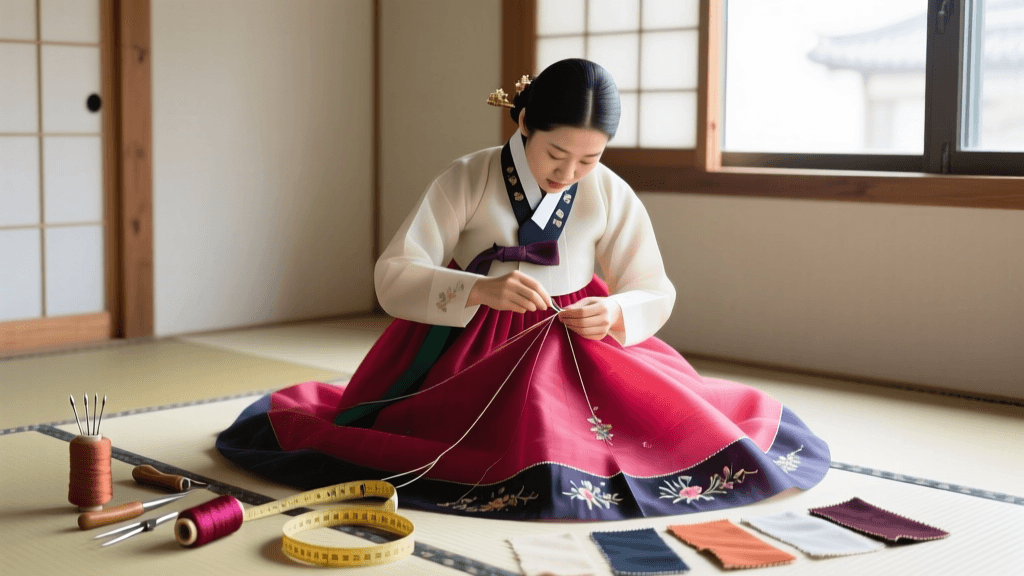
The global fascination with Korean culture has reached new heights in 2026, moving beyond passive consumption into active, hands-on creation. For textile enthusiasts, fashion students, and cultural historians, learning the intricate art of Hanbok construction in Seoul has become a premier pilgrimage. Unlike Western tailoring, which relies heavily on darts and complex curved seams to mold fabric to the body, traditional Korean garment making is rooted in flat-pattern cutting, geometric precision, and a profound respect for the natural drape of the fabric.
In 2026, Seoul offers an unprecedented array of workshops catering to international and domestic students alike. Driven by initiatives from the Korea Craft & Design Foundation and a renewed focus on sustainable, slow fashion, these seminars teach everything from the mathematical geometry of the Baerae (the signature curved sleeve) to the meticulous application of the Dongjeong (the crisp white collar). Whether you are a beginner looking to sew your first Chima (skirt) or an advanced tailor aiming to reconstruct 18th-century Joseon dynasty garments, Seoul’s master artisans have opened their studio doors.
Top 5 Hanbok Tailoring Workshops in Seoul (2026 Edition)
1. Hanbok Advancement Center (HAC) Master Tailor Seminar
The Hanbok Advancement Center remains the gold standard for traditional garment education in Korea. In 2026, their flagship 'Master Tailor Seminar' is a rigorous, three-week intensive program designed for intermediate to advanced sewists. The curriculum focuses heavily on historical accuracy, teaching students how to draft patterns based on extant garments from the late Joseon period. Students learn the delicate art of Goreum (breast tie) knotting and the precise steam-pleating techniques required for the Chima. The 2026 cohort also includes a new module on sourcing ethically produced domestic silk, aligning historical practices with modern sustainability standards.
2. KCDF Bukchon Traditional Sewing Seminar
Located in the historic Bukchon Hanok Village, this seminar supported by the Korea Craft & Design Foundation offers a deeply immersive cultural experience. The 2026 syllabus emphasizes the intersection of natural dyeing and garment construction. Before cutting a single piece of fabric, students spend two days learning Gal-ot (persimmon dyeing) and traditional indigo vats. The sewing portion focuses on the Jeogori (jacket), with master artisans guiding students through the invisible hand-stitching techniques that give high-end Hanbok its seamless, floating appearance. It is an ideal retreat for those who view garment making as a holistic, meditative practice.
3. Seoul National University (SNU) Continuing Ed: Advanced Draping
For those who prefer an academic and highly technical approach, SNU’s continuing education department offers a semester-long evening course in Advanced Hanbok Drafting. As of 2026, the university has integrated 3D body scanning technology alongside traditional flat-pattern drafting. Students learn how the human body's movement dictates the generous ease built into traditional Baji (trousers) and how to calculate the exact ratio of the Baerae sleeve curve based on arm length and shoulder slope. This course is heavily recommended for contemporary fashion designers looking to integrate authentic Hanbok structural elements into modern womenswear and menswear.
4. The Global Hanbok Project (Virtual Hybrid Masterclass)
Not everyone can relocate to Seoul for a month. The Global Hanbok Project, launched in late 2025 and fully expanded for 2026, offers a hybrid model. International students receive a comprehensive physical kit via DHL, containing pre-measured Myeongju (raw silk), traditional bamboo interfacing, a Gakja (L-ruler), and specialized silk thread. Weekly live-streamed seminars from a master tailor in Jongno-gu guide students through the construction of a complete everyday Hanbok set. The 2026 iteration features real-time translation AI, breaking down the language barrier and allowing seamless Q&A sessions between English-speaking students and Korean masters.
5. Ikseon-dong Artisan Weekend Intensive
For travelers on a tight schedule, the Ikseon-dong Artisan Studio offers a high-impact, two-day weekend intensive. This workshop is highly specialized, focusing exclusively on the finishing techniques that separate amateur Hanbok from professional couture. Students spend 16 hours mastering the application of the Dongjeong (the removable white paper/fabric collar) and the complex, multi-layered stitching required for the side seams (Git). The studio provides all materials, and students leave with a finished, master-grade Jeogori and a certificate of completion recognized by local artisan guilds.
2026 Workshop Comparison Chart
| Workshop Name | Skill Level | Duration | 2026 Price (KRW / USD) | Format |
|---|---|---|---|---|
| HAC Master Tailor Seminar | Advanced | 3 Weeks | ₩2,400,000 / $1,750 | In-Person |
| KCDF Bukchon Seminar | Intermediate | 10 Days | ₩1,500,000 / $1,100 | In-Person |
| SNU Advanced Draping | Advanced | 12 Weeks | ₩850,000 / $620 | In-Person (Evening) |
| Global Hanbok Project | Beginner/Intermediate | 8 Weeks | ₩950,000 / $690 | Virtual Hybrid |
| Ikseon-dong Weekend | Intermediate | 2 Days | ₩450,000 / $330 | In-Person |
Essential Toolkit for the Modern Hanbok Student
While most in-person workshops in Seoul provide the necessary tools, serious students building their own ateliers in 2026 should invest in the following specialized equipment:
- The Gakja (각자): A traditional L-shaped wooden ruler. Unlike Western set squares, the Gakja is specifically weighted and marked to help draft the sweeping, curved hemlines of the Jeogori and the deep pleats of the Chima.
- Chima Pleating Boards: Traditional wooden frames used to clamp and set the deep knife pleats of the skirt. In 2026, modern studios use steam-injected wooden boards that reduce setting time from three days to just four hours.
- Specialty Silk Weights: While traditional Myeongju (raw silk) is still used for historical replicas, the 2026 trend for everyday and modern Hanbok leans heavily toward 19mm silk crepe de chine, which offers a superior drape and requires specialized micro-serrated shears to cut without fraying.
- Bamboo-based Interfacings: The Dongjeong collar requires a stiffener to maintain its crisp, white line against the neck. Moving away from synthetic plastics, top artisans now use biodegradable bamboo-fiber interfacings that provide structural integrity while remaining breathable.
Practical Tips for International Attendees in 2026
Traveling to Seoul for a textile seminar requires some logistical foresight. According to the Korea Tourism Organization, cultural tourism has surged, meaning studio spaces in popular areas like Bukchon and Ikseon-dong book up months in advance. It is highly recommended to secure your spot and pay your deposit at least four months prior to your intended travel date.
For fabric sourcing, no trip is complete without visiting the textile alleys of Gwangjang Market and the Dongdaemun Comprehensive Market. In 2026, many vendors in these markets accept international credit cards directly, though setting up a local Naver Pay or KakaoPay account via your passport will grant you access to smaller, independent silk merchants who sell the highest grades of domestic Myeongju at wholesale prices.
'The beauty of Hanbok lies not in how tightly it clings to the body, but in the space it creates between the fabric and the skin. Learning to draft that space is a lesson in architecture as much as it is in fashion.' — Master Tailor Kim, HAC Instructor.
Finally, ensure your travel documentation is in order. Check the latest K-ETA (Korea Electronic Travel Authorization) requirements on the official Cultural Heritage Administration or immigration portals, as visa-exemption policies for cultural exchange programs have seen minor updates entering the 2026 fiscal year.
Conclusion
Mastering the construction of traditional Asian garments is a profound way to connect with history, geometry, and artisan craftsmanship. The Hanbok making workshops available in Seoul in 2026 offer unparalleled access to master tailors who are actively preserving and evolving this magnificent textile heritage. Whether you choose a rigorous academic course at SNU or a meditative natural-dyeing retreat in Bukchon, the skills you acquire will forever change the way you view, wear, and create traditional garments.