Celestial Silks: Recreating Mythological Chinese Garments
The Divine Wardrobe: Decoding Mythological Chinese Garments
Chinese mythology is a vast, intricate tapestry of deities, immortals (xian), and mythical beasts whose garments defy mortal constraints. From the ethereal feathered cloaks of celestial maidens to the formidable dragon-scale armor of warrior gods, these legendary garments have profoundly influenced traditional Chinese clothing. Today, the intersection of mythology and fashion offers a unique avenue for enthusiasts to explore historical textiles through a fantastical lens.
Recreating these mythological garments requires more than just buying a standard costume; it demands an understanding of historical Hanfu silhouettes, traditional textile techniques, and creative adaptation. Whether you are designing for a cultural convention, a theatrical performance, or an immersive photoshoot, this guide provides actionable advice on bringing the divine wardrobes of Chinese legends into the modern world.
The Yuyi: Crafting the Celestial Feathered Cloak
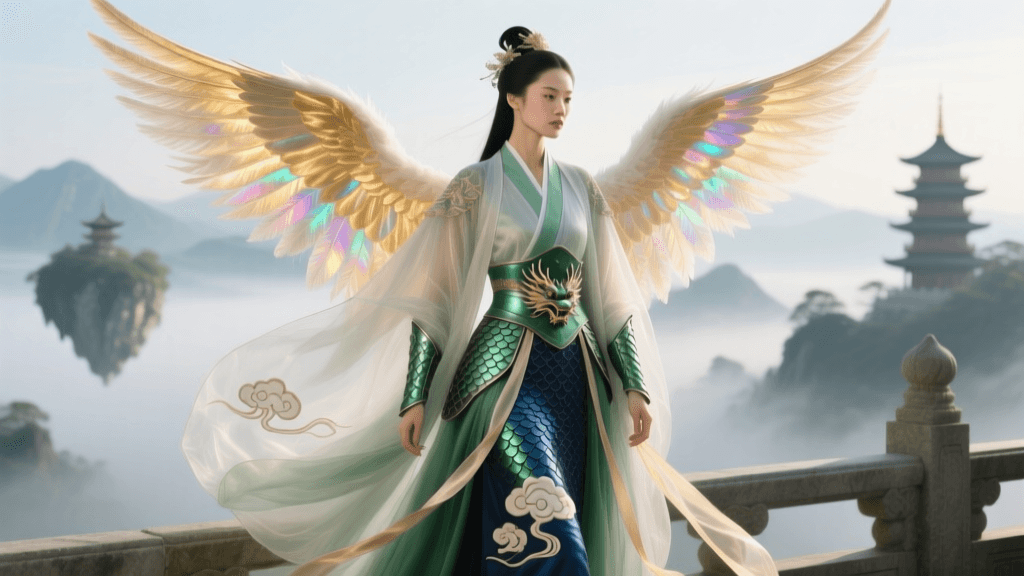
In Chinese folklore, the yuyi (feathered garment) is famously associated with the Swan Maiden legend and celestial fairies who rely on these cloaks to traverse the heavens. Historically, literal feathered cloaks were rare and reserved for high-ranking Daoist priests or imperial ceremonies, but in mythology, they represent weightlessness and divine origin.
Practical Construction and Sourcing
To recreate a yuyi for modern wear, avoid heavy, literal bird feathers which can overheat the wearer and shed excessively. Instead, opt for a base of sheer silk organza or synthetic chiffon paired with marabou trim or ethically sourced molted goose feathers.
- Base Garment: Start with a chest-high ruqun (skirt) in pearlescent white or pale celadon. Ensure the skirt has a 3-meter hem circumference for maximum flow.
- The Cloak Cut: Cut a semi-circle of silk organza with a 150cm radius. This provides a dramatic wingspan without dragging on the floor.
- Feather Application: Purchase marabou boa trim (approx. 10 yards, costing around $25-$40). Hand-stitch the trim along the outer hem and the collar using a blind catch stitch. This technique takes approximately 12-15 hours but ensures the feathers move fluidly with the fabric.
- Hardware: Use a pair of carved jade or resin zijin (sub-purple) clasps at the collar to mimic historical fastenings, avoiding modern metal toggles that break the illusion.
Longpao and Scale Armor: Dressing the Dragon Kings
The Dragon Kings of the Four Seas and the Jade Emperor are frequently depicted in longpao (dragon robes) or intricate scale armor (linjia). The dragon motif, representing imperial power and cosmic water control, is one of the most recognizable elements in Chinese textile history. As noted by the Metropolitan Museum of Art's Heilbrunn Timeline of Art History, the evolution of silk weaving in China allowed for increasingly complex brocades that could render the undulating scales and fiery pearls of mythological dragons with breathtaking realism.
Modern Interpretation of Dragon Scale Armor
Forging actual metal scale armor is impractical for most garment enthusiasts. Instead, utilize modern textile innovations to mimic the mythological aesthetic.
- The Foundation: Use a Ming Dynasty-style yuanlingpao (round-collar robe) made of heavy silk satin or matte brocade. A deep azure or imperial yellow provides the best canvas.
- Scale Embroidery vs. Appliqué: Traditional Shu embroidery for a full dragon robe can cost upwards of $2,000 and take months. For a budget-friendly alternative ($150-$300), source 3mm iridescent sequined scale fabric. Cut the scale fabric into overlapping cloud-collar (yunjian) shapes and appliqué them onto the shoulders and chest of the robe.
- Cuff Detailing: Mythological water deities often feature crashing wave motifs (lishui) at the hem. You can achieve this by hand-painting the bottom 30cm of the robe with silk gutta resist and acid dyes in gradients of teal and silver.
Mythological Garment Elements vs. Modern Hanfu Equivalents
Translating mythical concepts into wearable traditional clothing requires mapping fantasy elements to historical silhouettes. Below is a structured guide to help you plan your mythological Hanfu build.
| Mythological Element | Legendary Source | Modern Hanfu Equivalent | Estimated Material Cost | Difficulty Level |
|---|---|---|---|---|
| Feathered Cloak | Swan Maiden / Fairies | Banbi (half-sleeve) + Marabou Trim | $60 - $120 | Intermediate |
| Dragon Scale Armor | Dragon Kings / Warrior Gods | Yuanlingpao + Sequined Organza Appliqué | $150 - $300 | Advanced |
| Lotus Silk Skirt | Nezha / Water Deities | Mamianqun (Horse-face skirt) + Pleated Chiffon | $80 - $150 | Beginner |
| Peach Blossom Ribbons | Flower Goddesses | Pibo (shawl) + Ombre Silk Dyeing | $40 - $90 | Intermediate |
Water Deities and the Ripple Effect: Pleating Techniques
Figures like Nezha, who was reborn from lotus roots, and the various river deities of Chinese mythology, are intrinsically linked to water. Their garments are often described as flowing like liquid or mimicking the ripples of a pond. The mamianqun (horse-face skirt) or the Tang Dynasty poqun (multi-panel skirt) are perfect historical bases for this look.
Achieving the 'Liquid Silk' Ripple
To create a skirt that moves like water, the secret lies in the pleating technique and fabric choice.
- Fabric Selection: Choose a high-twist synthetic chiffon or a lightweight crepe de chine. These fabrics hold heat-set pleats exceptionally well and catch the light like water.
- Knife Pleating: For a 100cm long skirt, calculate 3cm wide knife pleats. You will need approximately 9 meters of fabric for a full, mythological sweep.
- Heat Setting: Instead of standard pressing, use a steam-ironing technique combined with a vinegar-water spray (1 part white vinegar to 4 parts water). The mild acidity helps lock the synthetic fibers into the pleat structure, ensuring the 'ripples' survive humidity and movement during conventions.
Sourcing, Budgeting, and the Modern Hanfu Revival
The modern Hanfu movement has seen an explosion of interest, with millions of young people embracing traditional clothing as a form of cultural expression and identity. As highlighted by Smithsonian Magazine, this revival is heavily driven by social media, historical dramas, and a desire to reconnect with ancestral aesthetics, making mythological and fantasy Hanfu (often termed 'Xianxia' style) incredibly popular.
Where to Source Mythological Hanfu
- Taobao and Alibaba: For authentic, ready-made 'Xianxia' (immortal hero) Hanfu, Taobao remains the premier source. Shops like Shi San Yu or Hua Tang Ji offer ethereal, mythology-inspired sets ranging from $50 to $150. Use proxy shopping agents like Superbuy or Pandabuy if you are outside China.
- Custom Commissioning: For specific mythological accuracy (e.g., a specific deity's color palette from a Ming Dynasty temple mural), commissioning a tailor on Etsy or specialized Hanfu Discord communities is ideal. Expect to pay $200-$400 and allow 4-6 weeks for production.
- Thrift and Upcycle: Budget-conscious creators can buy plain, block-colored Hanfu separates and use fabric markers, iron-on gold leaf foil, and appliqué to add mythological beasts and cloud motifs. A bolt of gold leaf foil costs under $15 and can instantly elevate a basic robe to divine status.
Preserving the Magic: Care for Silk and Faux Feathers
Garments inspired by mythology often utilize delicate materials that require meticulous care. The legacy of Chinese silk is profound; in fact, UNESCO recognizes Chinese sericulture and silk craftsmanship as an Intangible Cultural Heritage of Humanity, underscoring the historical and material value of the fabrics we use today.
Pro-Tip for Feathered Garments: Never machine wash a yuyi cloak. The agitation will destroy the marabou feathers and cause the organza to fray. Instead, spot clean with a damp microfiber cloth and a mild silk detergent, then air dry flat. To restore fluffiness to the feathers, gently steam them from a distance of 10 inches using a garment steamer.
For heavily embroidered dragon robes or scale-appliquéd garments, store them flat in acid-free tissue paper. Hanging heavy, mythological garments for long periods can distort the shoulder seams and stretch the delicate scale fabrics, ruining the structural integrity of your divine wardrobe.
Conclusion
Recreating traditional clothing from Chinese mythology is a deeply rewarding endeavor that bridges the gap between ancient storytelling and modern sartorial art. By understanding the historical silhouettes of Hanfu—such as the ruqun, yuanlingpao, and mamianqun—and applying creative textile techniques, you can manifest the magic of the celestial realms. Whether you are donning a feathered cloak to channel a sky maiden or pleating chiffon to mimic the rivers of the Dragon King, you are participating in a living, breathing tradition that continues to evolve and inspire.