Top Hanbok Tailoring & Dyeing Workshops Seoul 2026
The 2026 Renaissance of Handcrafted Hanbok
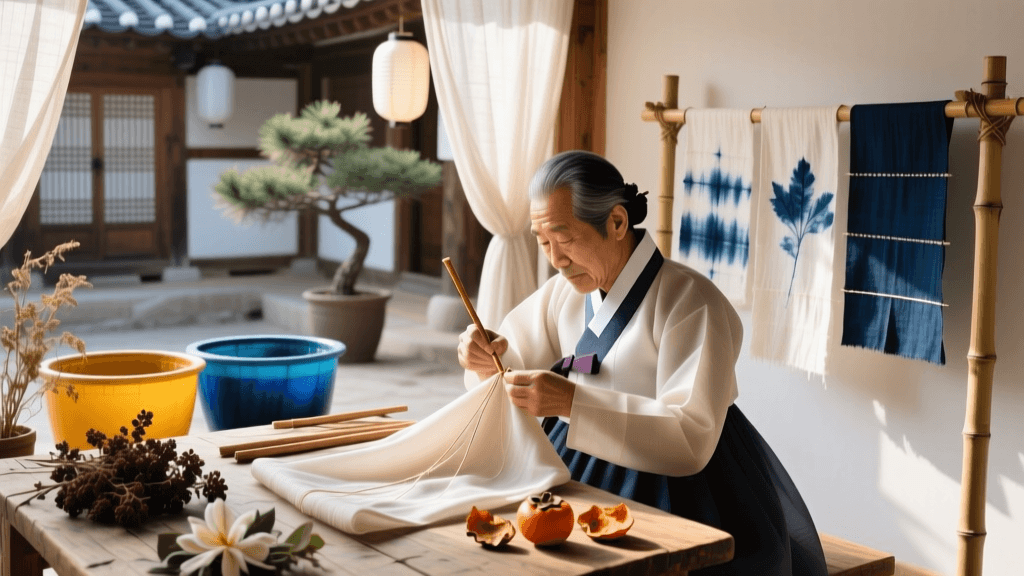
As we navigate the global fashion landscape of 2026, the slow fashion movement has brought unprecedented attention to traditional Asian garments. Among these, the Korean hanbok has experienced a profound renaissance. Moving away from the mass-produced, synthetic rental costumes that dominated tourist districts in the previous decade, today’s enthusiasts and designers are seeking authenticity. They are turning to master artisans to learn the meticulous, centuries-old techniques of traditional hanbok construction and natural dyeing. Seoul, the beating heart of South Korea’s cultural heritage, offers some of the most immersive and rigorous workshops in the world for those willing to study the art of the needle and the dye vat.
Why Study Hanbok Construction in Seoul in 2026?
The year 2026 marks a significant milestone for traditional crafts in South Korea. Driven by recent initiatives from the Cultural Heritage Administration of Korea, there has been a massive influx of funding and resources dedicated to preserving intangible cultural assets. This has resulted in the opening of new satellite studios, the modernization of traditional looms, and the establishment of English-friendly masterclasses designed for international students. Studying in Seoul this year provides unparalleled access to living national treasures—master tailors and dyers who have spent decades perfecting the geometry of the hanbok and the chemistry of natural pigments.
Top 3 Hanbok Making & Dyeing Seminars in Seoul
1. The Korea Craft & Design Foundation (KCDF) Masterclass
Located in the vibrant Insadong district, the Korea Craft & Design Foundation offers a premier 12-week intensive program for 2026. This seminar focuses heavily on the jeogori (the traditional upper jacket). Students learn the precise flat-pattern cutting method known as pyeonjae, which relies on straight lines and strategic folding rather than the curved, body-hugging darts of Western tailoring. The 2026 curriculum introduces a new module on sustainable silk sourcing, teaching students how to select and prepare eco-friendly peace silk for the delicate outer layers of the garment.
2. Bukchon Hansan Mosi & Indigo Dyeing Intensive
Tucked away in the historic alleys of Bukchon Hanok Village, this boutique workshop specializes in the intersection of weaving and dyeing. Recognized for its alignment with the standards of UNESCO Intangible Cultural Heritage preservation, the seminar teaches the cultivation and reduction of jjok (Korean indigo). In 2026, the studio has upgraded to climate-controlled fermentation vats, allowing students to master the delicate alkaline balance required to achieve deep, colorfast blues year-round. Participants weave their own mosi (ramie) fabric on traditional looms before dyeing and constructing a lightweight summer chima (skirt).
3. Seoul Intangible Cultural Heritage Center: Advanced Pleating
For those who have mastered the basics, the Seoul Intangible Cultural Heritage Center offers an advanced seminar focusing on the chima and the intricate art of saekdong (color-blocked stripes). The 2026 advanced track places a heavy emphasis on the mathematics of traditional pleating. Students learn how to calculate and press the hundreds of micro-pleats required for a formal court hanbok, ensuring the skirt flares perfectly when the wearer sits or dances. The seminar also covers the creation of the goreum (the long, flowing chest ties), teaching the specific knotting techniques that signify different historical eras and social statuses.
2026 Workshop Comparison Chart
| Workshop Name | Primary Focus Area | Duration | 2026 Cost (KRW / USD) | Skill Level |
|---|---|---|---|---|
| KCDF Masterclass | Jeogori Construction & Peace Silk | 12 Weeks | ₩4,500,000 / $3,350 | Intermediate |
| Bukchon Mosi & Indigo | Ramie Weaving & Jjok Dyeing | 4 Weeks | ₩1,800,000 / $1,340 | Beginner to Intermediate |
| Heritage Center Advanced | Chima Pleating & Saekdong | 6 Weeks | ₩2,500,000 / $1,860 | Advanced |
| Dongdaemun Weekend Dye Lab | Natural Pigment Extraction | 2 Days | ₩350,000 / $260 | Beginner |
Core Techniques You Will Master
The Geometry of the Baerae
One of the most challenging and beautiful aspects of hanbok tailoring is the baerae—the curved underarm line of the sleeve. Unlike Western sleeves that are set into an armhole, the hanbok sleeve is an extension of the bodice. The 2026 workshops dedicate entire weeks to mastering the subtle, sweeping curve of the baerae, which allows the fabric to drape elegantly over the hands while providing complete freedom of movement. Students learn to manipulate the grainline of the silk to ensure the curve holds its shape without puckering.
The Art of the Dongjeong
The dongjeong is the crisp, white paper-thin collar that frames the face and contrasts with the vibrant colors of the jeogori. Applying the dongjeong requires absolute precision. In the Seoul seminars, artisans teach the traditional method of using rice paste to adhere the collar, ensuring it remains stiff and immaculate. You will learn how to measure the exact width—typically between 2.5 and 3 centimeters—and how to fold the edges so that no raw seams are visible, creating a flawless frame for the wearer’s face.
Dariumjil: Traditional Ironing
Before the invention of modern electric irons, Korean tailors used a technique called dariumjil. This involves using a dariumdol (a heavy, smooth, heated stone) and a dariummal (a wooden rolling pin). While modern studios in 2026 are equipped with industrial steam irons, the masterclasses still teach dariumjil for delicate, hand-dyed silks that might scorch under direct metal heat. Learning to wrap the fabric around the wooden pin and roll the heated stone over it imparts a unique, enduring luster to the silk that modern tools simply cannot replicate.
Essential Tools for the 2026 Artisan
To fully engage with these workshops, students are expected to assemble a traditional toolkit. While the studios provide heavy machinery, you will need your own hand tools:
- Gawi (Traditional Shears): Heavy, carbon-steel scissors with a slightly curved blade, designed to cut through multiple layers of stiff ramie and silk without fraying the edges.
- Chim (Needles): Hand-forged needles of varying thicknesses. The 2026 artisan kits include ultra-fine needles specifically for attaching delicate silk embroidery and heavy, triangular needles for piercing thick quilted winter layers.
- Sonjip (Thimble): Unlike Western thimbles that cap the fingertip, the Korean sonjip is a small, padded cloth ring worn around the middle joint of the middle finger, providing leverage for pushing the needle through dense fabrics.
- Jacheok (Traditional Ruler): A wooden ruler marked in traditional Korean measurements (cheok and chon), which are still used by master tailors to calculate the proportional geometry of the garment.
Preparation and Booking Guide for 2026
Securing a spot in these prestigious 2026 seminars requires advance planning. Applications for the KCDF and Heritage Center masterclasses typically open in November of the preceding year and fill up within days. International students should apply for the South Korean Cultural Training Visa (D-4G), which was streamlined in late 2025 to accommodate the growing influx of traditional craft students.
Language can be a barrier, but the 2026 cohorts feature dedicated English-speaking teaching assistants who bridge the gap between the master artisans and international students. Before your first day of class, it is highly recommended to spend a day at the Dongdaemun Comprehensive Market. Specifically, the fifth and sixth floors of the Dongdaemun Textile Market are where you will source your supplementary linings, traditional silk threads, and vintage najeonchilgi (mother-of-pearl) buttons to customize your final projects.
Conclusion
Learning to make a hanbok is not merely about assembling pieces of fabric; it is an exercise in understanding Korean philosophy, aesthetics, and history. The straight lines represent the earth, the curved sleeves represent the heavens, and the wearer stands as the harmonious center of the universe. By enrolling in a 2026 Seoul tailoring and dyeing workshop, you are doing more than acquiring a sewing skill—you are becoming a vital link in the chain of cultural preservation, ensuring that the profound beauty of the hanbok continues to inspire the world for generations to come.