Best Hanbok Making Workshops 2026: Seoul & Online Classes
The Global Revival of Traditional Hanbok Tailoring in 2026
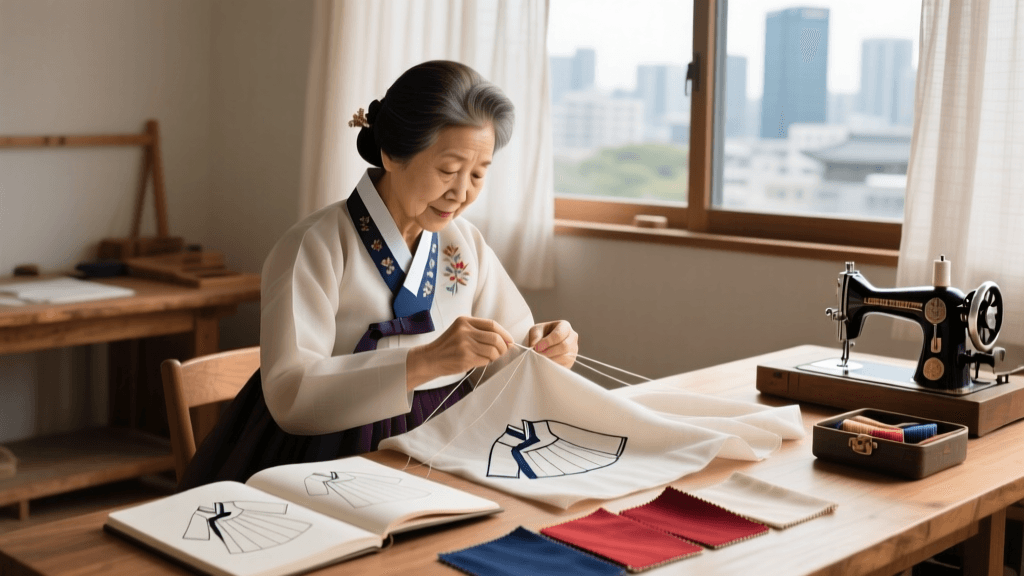
In 2026, the global appreciation for traditional Asian garments has evolved beyond mere consumption into a deep, hands-on respect for the craftsmanship that defines them. Among the most sought-after skills in the textile arts community is the construction of the Korean Hanbok. Once reserved exclusively for master artisans known as Hanbok-jang, the intricate art of Hanbok tailoring is now accessible to dedicated students through a variety of specialized workshops and seminars. Whether you are a fashion design student, a sustainable fashion advocate, or a cultural heritage enthusiast, learning to draft, cut, and sew a traditional Hanbok offers a profound connection to Korean history.
The surge in demand for authentic, handmade traditional clothing has led to a renaissance in educational programs across Seoul, as well as a robust expansion of virtual seminars catering to an international audience. According to a recent cultural preservation feature in the Korea JoongAng Daily, the demand for certified Hanbok-jang apprenticeships and civilian tailoring seminars has surged by over 40% heading into 2026, driven by a global movement toward slow fashion and cultural preservation.
Understanding the Architecture of the Hanbok
Before enrolling in a workshop, it is crucial to understand the unique structural philosophy of the Hanbok. Unlike Western tailoring, which relies heavily on darts, seams, and complex cutting to follow the body's contours, traditional Hanbok construction is based on flat, geometric pattern making. The garments are designed to drape elegantly and create a voluminous, flowing silhouette that allows for freedom of movement and concealment of the body's natural lines.
The Core Components You Will Learn to Construct
- Jeogori (저고리): The fundamental upper garment worn by both men and women. Workshops focus heavily on the Baerae (the elegant, curved underarm sleeve) and the Git (the collar framework).
- Chima (치마): The women's full, wrap-around skirt. Seminars teach the mathematics of traditional pleating and the application of the wide waistband.
- Baji (바지): The men's roomy trousers, requiring specialized techniques for the waistband ties and ankle bindings (Daenim).
- Goreum (고름): The long, decorative ribbon tie that fastens the Jeogori. Tying and constructing the Goreum is a masterclass in tension and fabric manipulation.
The National Folk Museum of Korea notes that the structural integrity of the Hanbok relies not just on the sewing, but on the natural materials used, such as Mube (a traditional flour-based paste used to stiffen collars and cuffs), a technique still taught in premium 2026 seminars.
Top In-Person Workshops in Seoul (2026 Schedule)
For those traveling to South Korea, Seoul offers an unparalleled ecosystem of heritage centers and master studios. Booking in advance is essential, as the 2026 cohorts are highly competitive.
1. Bukchon Hanbok Heritage Seminars
Located in the historic Bukchon Hanok Village, this premier institution offers a 6-week intensive seminar focused entirely on the women's Jeogori and Chima. The 2026 spring and autumn cohorts are taught by certified intangible cultural heritage practitioners. Students learn to measure using traditional units (cheok and chon), draft patterns on specialized Hanji (Korean paper), and execute the Samschim (reinforcement stitching) technique that ensures the garment's longevity.
2. Dongdaemun Textile Innovation Hub: Modern Meets Traditional
For fashion designers looking to integrate Hanbok elements into contemporary 2026 collections, the Dongdaemun Hub offers a weekend masterclass. This seminar bridges the gap between traditional flat-patterning and modern 3D digital rendering. Students spend Saturday in the physical studio cutting organic peace silks, and Sunday learning how to translate these traditional patterns into CLO3D software for digital sampling.
3. Jongmyo Heritage Tailoring Studio: The Art of the Goreum
This boutique studio offers specialized one-day micro-seminars focusing solely on the Goreum (the traditional tie) and Godeul (decorative knotting). Because the Goreum dictates the visual balance of the entire Jeogori, mastering its precise length, width, and tying mechanics is a vital skill for any Hanbok maker.
Premier Virtual Seminars for Global Learners
If traveling to Seoul is not feasible, 2026 has seen a massive improvement in the quality and interactivity of virtual Hanbok tailoring seminars. These programs ship physical material kits directly to your door, accompanied by live, multi-camera Zoom instruction.
Global Hanbok Tailoring Academy (Online)
This academy offers a comprehensive 12-week virtual certification program. The 2026 curriculum includes a shipped kit containing pre-dyed Ramie fabric (Mosi), specialized hand-sewing needles, traditional shears, and natural starches. Live seminars are held bi-weekly, allowing international students to receive real-time feedback on their stitch tension and collar alignment from master tailors in Seoul.
Digital Pattern Making for Hanbok (Self-Paced + Live Q&A)
Aimed at the tech-forward fashion student, this seminar focuses on the geometry of the Hanbok. Students learn the mathematical ratios required to draft a Baerae sleeve that maintains its iconic curved drape when translated into digital or modern woven fabrics. The Cultural Heritage Administration of Korea actively supports such digital preservation initiatives, recognizing that 3D archiving is vital for the survival of traditional garment making in the digital age.
Comparison Chart: In-Person vs. Virtual Seminars (2026)
| Feature | In-Person (Seoul) | Virtual (Global Online) |
|---|---|---|
| Duration | 1 Day to 6 Weeks | 4 Weeks to 12 Weeks |
| Material Sourcing | Field trips to Dongdaemun & Namdaemun markets | Curated physical kits shipped internationally |
| Primary Focus | Tactile skills, natural dyeing, paste application | Drafting, digital translation, hand-stitching basics |
| Language | Korean (with English translation headsets) | English, Japanese, and Mandarin options available |
| Estimated Cost (2026) | ₩350,000 - ₩1,200,000 ($260 - $900 USD) | $450 - $800 USD (including shipping of kits) |
Essential Tools for the Modern Hanbok Maker
Whether you are attending a seminar in person or learning online, you will need to familiarize yourself with the traditional tools of the trade. While modern sewing machines are sometimes used for the inner linings of contemporary Hanbok, traditional seminars strictly require hand-sewing to understand the fabric's behavior.
- Gawi (Traditional Shears): Heavy, carbon-steel shears designed to cut through multiple layers of stiff silk and ramie without fraying the edges. (2026 Market Price: ~$85 USD)
- Chim (Hand-Sewing Needles): Exceptionally fine, short needles forged for high-density silk weaving. They allow for the microscopic, nearly invisible stitches required on the Git (collar). (2026 Market Price: ~$15 USD per set)
- Jachak (Traditional Ruler): A wooden or bamboo ruler marked in traditional Korean measurements, essential for authentic pattern drafting. (2026 Market Price: ~$25 USD)
- Mube (Natural Paste): A specialized wheat flour paste used to stiffen the Dongjeong (the white, detachable paper collar). Learning to make and apply Mube without staining the silk is a core seminar module. (Usually provided in kits)
Curriculum Breakdown: What to Expect in Your First Workshop
A standard beginner's Jeogori construction seminar will typically follow this rigorous progression:
- Measurement and Ratio Calculation: Learning how to measure the wearer and translate those metrics into traditional flat-pattern geometry.
- Pattern Drafting on Hanji: Drawing the Gil (front and back panels) and the complex Baerae sleeve curve using traditional brushes and ink.
- Fabric Layout and Cutting: Understanding the grainline of silk organza and ramie to ensure the garment drapes correctly.
- The Hidden Stitch (Sonschim): Mastering the blind hemming and internal seaming techniques that ensure no thread is visible on the exterior of the garment.
- Collar Stiffening and Assembly: Applying the Mube paste, setting the Git, and attaching the pristine white Dongjeong.
- Goreum Attachment and Finishing: Sewing the long ties and learning the precise, asymmetrical knotting technique that signifies the garment's completion.
Costs, Certification, and Career Paths
Investing in a Hanbok tailoring seminar in 2026 is an investment in a niche, highly respected skill set. Basic one-day introductory workshops in Seoul typically range from ₩80,000 to ₩150,000 ($60 to $115 USD), providing a foundational understanding of the Chima skirt. Comprehensive, multi-week Jeogori masterclasses range from ₩800,000 to ₩1,500,000 ($600 to $1,150 USD), depending on the pedigree of the master artisan and the quality of the silk provided.
For those pursuing professional certification, completing an accredited seminar series can count toward the apprenticeship hours required by the Korean government to eventually test for the title of Hanbok-jang. Furthermore, modern fashion houses in 2026 are actively seeking designers who possess authentic knowledge of traditional Asian pattern making, making these seminars a valuable addition to any fashion portfolio.
Conclusion
The art of Hanbok construction is a masterclass in geometry, patience, and respect for natural materials. Whether you choose to immerse yourself in the historic studios of Bukchon or join a global virtual cohort from your home studio, the 2026 workshop landscape offers unprecedented access to this beautiful tradition. By learning to draft the sweeping curves of the Baerae and the precise lines of the Git, you are not just making a garment; you are actively participating in the living preservation of Korean cultural heritage.