2026 Seoul Hanbok Workshops: Jeogori Drafting & Sewing
The 2026 Resurgence of Authentic Hanbok Making
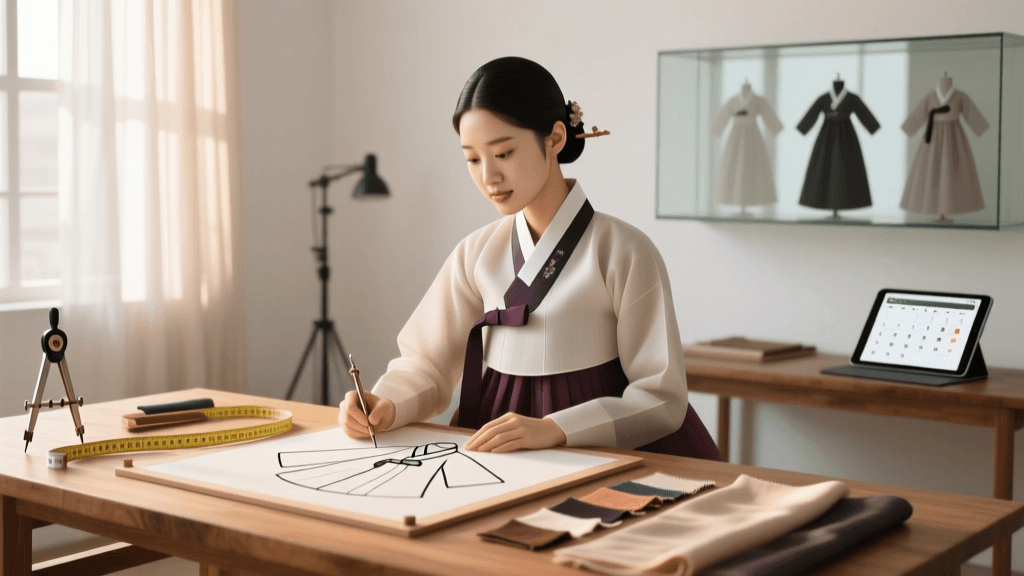
As we navigate through 2026, the global appreciation for traditional Asian garments has evolved from passive admiration to active, hands-on creation. Nowhere is this more evident than in Seoul, South Korea, where the art of Hanbok making has experienced a massive renaissance. International textile enthusiasts, fashion students, and heritage preservationists are flocking to the South Korean capital to participate in specialized workshops and seminars dedicated to traditional garment construction. At the heart of this movement is the mastery of the Jeogori, the iconic upper garment of the Hanbok ensemble.
Unlike Western tailoring, which relies heavily on complex darts and three-dimensional draping, traditional Hanbok construction utilizes pyeongmyeon—a flat-pattern cutting technique that treats the fabric as a two-dimensional canvas. This approach respects the integrity of the woven silk, minimizing waste and allowing the natural drape of the textile to dictate the garment's flow. For international students in 2026, learning to draft and sew a Jeogori is not merely a sewing class; it is an immersion into Korean geometry, philosophy, and aesthetic restraint. According to the Cultural Heritage Administration, state-sponsored initiatives in 2026 have heavily subsidized these educational programs to ensure intangible cultural heritage skills are passed on to a new, global generation of makers.
Top Seoul Workshops for Jeogori Construction
Selecting the right seminar is crucial for mastering the intricate techniques of Hanbok tailoring. Below are the premier institutions offering comprehensive Jeogori drafting and sewing masterclasses in 2026.
1. Hanbok Advancement Center: The Fundamentals
Located in the heart of Seoul, the Hanbok Advancement Center remains the gold standard for structured, academic approaches to traditional dress. Their 2026 'Essential Jeogori' cohort is a four-week intensive seminar designed specifically for international attendees with intermediate sewing skills. The curriculum covers the history of the garment's silhouette, fabric selection, and the precise mathematics of flat-pattern drafting. Students spend the first week mastering the traditional ruler (jakji) and drafting the base pattern on hanji (traditional paper) before moving to muslin toiles. The final two weeks are dedicated to cutting and sewing authentic Myeongju (silk gauze), culminating in the meticulous attachment of the Dongjeong (the crisp, white, detachable collar).
2. Bukchon Hanok Village Masterclasses: Advanced Silk
For those seeking a more intimate, atelier-style experience, the private masterclasses held within the historic Bukchon Hanok Village offer unparalleled access to Intangible Cultural Heritage artisans. These 2026 seminars focus on advanced silk manipulation, specifically the creation of Saekdong (colorful striped sleeves) and the complex easing required for the Baerae (the curved underarm and sleeve seam). Classes are limited to four students per master, ensuring personalized guidance. The environment is deeply traditional, with lessons often accompanied by Korean tea ceremonies and discussions on the color theory (Obangsaek) that dictates the striking contrasts of ceremonial Hanbok.
3. KTCC Insadong: Modern Ergonomic Hanbok
The Korean Traditional Craft Center (KTCC) in Insadong bridges the gap between historical accuracy and modern wearability. Their 2026 'Contemporary Jeogori' workshop teaches students how to draft traditional patterns while introducing subtle, modern ergonomic adjustments. This includes modifying the armhole depth for greater mobility and adjusting the Goreum (the long, decorative bow ties) to sit flatter against the chest for modern office environments. This seminar is highly recommended for fashion design students looking to integrate traditional Asian construction methods into contemporary 2026 ready-to-wear collections.
2026 Workshop Comparison Chart
To help you choose the right educational path, we have compiled a comparison of the top three Seoul-based Hanbok seminars available this year.
| Institution | Duration | 2026 Tuition (USD) | Skill Level | Primary Focus |
|---|---|---|---|---|
| Hanbok Advancement Center | 4 Weeks (48 Hours) | $450 | Intermediate | Fundamentals, Flat Drafting, Silk Gauze |
| Bukchon Private Ateliers | 2 Weeks (30 Hours) | $850 | Advanced | Saekdong Sleeves, Heritage Silk Easing |
| KTCC Insadong | 3 Weeks (36 Hours) | $520 | Intermediate | Modern Ergonomics, Contemporary Styling |
Essential Tools and Materials for 2026 Seminars
While most Seoul workshops provide the core textiles and heavy equipment, international students in 2026 are expected to bring a personalized toolkit to ensure precision. The transition from Western sewing to traditional Korean tailoring requires specific instruments.
- The Jakji (Traditional Ruler): Unlike standard metric rulers, the jakji is often marked in traditional Korean units (chi and chon). While 2026 workshops provide dual-marked rulers, bringing your own custom-calibrated jakji ensures consistency.
- Heavy Silk Shears (Gawi): Cutting tightly woven silk like Gapsa or Myeongju requires exceptionally sharp, heavy-handled shears to prevent the fabric from shifting. Japanese or Korean forged steel shears are highly recommended.
- Basting Thread (Shil): Traditional Hanbok relies heavily on basting before final stitching. Bring multiple spools of soft, easily breakable cotton basting thread that will not leave marks when removed from delicate silks.
- Silk Pins and Weights: Because traditional Hanbok patterns are drafted directly onto the fabric without paper templates, heavy brass pattern weights and ultra-fine silk pins are essential to secure the fabric to the cutting mat without causing snags.
Step-by-Step: Drafting the Traditional Jeogori
Understanding the foundational steps of Jeogori drafting will prepare you for the rigorous pace of a Seoul masterclass. The process is a masterclass in spatial reasoning and geometric precision.
1. Precision Measurements
Unlike Western tailoring, which requires dozens of body measurements, traditional Hanbok drafting relies on a few key proportional metrics. The primary measurements include the Gil (the total length of the jacket from the nape of the neck to the waist), the Hwajang (the span from wrist to wrist with arms outstretched), and the Baerae depth (the curve of the underarm). In 2026 seminars, masters teach students how to calculate the remaining proportions based on the wearer's height and shoulder width, adhering to the traditional philosophy that the garment should adapt to the body's energy rather than constricting it.
2. The Pyeongmyeon (Flat Pattern) Draft
The Jeogori is drafted as a single, continuous piece for the back and front panels, folded at the shoulder line. Students learn to plot the center back line, extend the Hwajang to form the sleeves, and drop the underarm seams. The most critical skill taught in this phase is the calculation of the Git (the collar band). The Git must be drafted at a precise angle to ensure that when the garment is wrapped across the chest, the white Dongjeong sits perfectly parallel to the floor, framing the wearer's face without gaping.
3. Sewing the Baerae (Curved Sleeve)
The Baerae is the defining characteristic of the Jeogori, providing the garment with its elegant, sweeping silhouette. Sewing this deep, parabolic curve requires advanced easing techniques. Students in 2026 workshops spend hours practicing the 'invisible baste' method, where the inner curve is slightly gathered to match the outer curve of the side seam. The seam is then pressed open using a traditional wooden clapper, ensuring the silk lies perfectly flat without the need for modern synthetic interfacings.
Practical Logistics for International Students
Attending a Hanbok seminar in Seoul requires careful planning. According to the Korea Tourism Organization, the influx of cultural tourism in 2026 means that premier workshops book out up to six months in advance. International students must secure their K-ETA (Korean Electronic Travel Authorization) well ahead of time, ensuring their visa category permits participation in short-term educational seminars.
Language can be a barrier, as the nuanced terminology of traditional tailoring does not always translate directly into English. While institutions like the Hanbok Advancement Center provide bilingual assistants in 2026, private Bukchon ateliers may require you to hire a specialized textile translator. It is highly advisable to familiarize yourself with basic Korean sewing terminology—such as shim (seam allowance), guro (basting), and darimjil (ironing)—before arriving. Finally, factor in the cost of sourcing your own graduation fabrics; many students spend their weekends exploring the sprawling Dongdaemun Fabric Market to select the perfect silks and linens for their final, self-directed Hanbok projects.