Best Seoul Hanbok Sewing Workshops 2026: Top 3 Picks
The Renaissance of Traditional Hanbok Tailoring in 2026
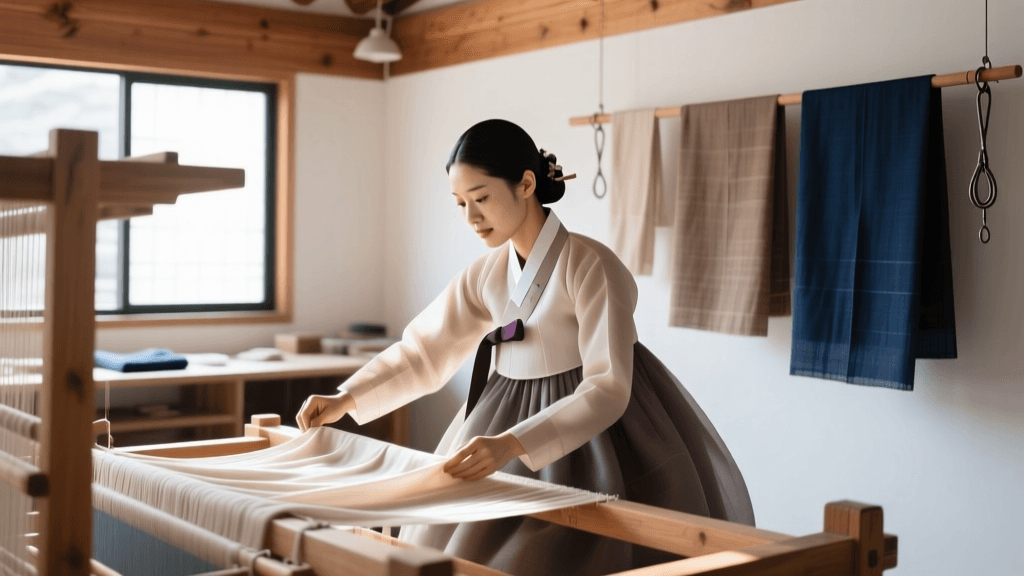
The global fascination with traditional Korean garments has evolved far beyond passive appreciation. In 2026, experiential cultural tourism has surged, with travelers and fashion students alike seeking hands-on mastery of the hanbok. According to recent cultural reports highlighted by Korea.net Culture Focus, there has been a massive increase in international enrollment for traditional craftsmanship seminars. The hanbok is not merely a historical artifact; it is a masterclass in structural geometry, zero-waste pattern cutting, and fluid draping that relies entirely on the natural fall of the fabric rather than rigid tailoring.
Learning to construct a hanbok requires understanding its unique anatomy. Unlike Western garments that are cut to hug the body's curves, the hanbok is built around straight lines and gentle curves that create a three-dimensional silhouette only when worn. The jeogori (upper garment) features the iconic baerae (curved underarm seam) and the git (collar), while the chima (skirt) relies on precise pleating and gathering techniques to achieve its bell-like volume. For those looking to immerse themselves in this ancient art form, Seoul offers a variety of world-class workshops tailored to international visitors and serious sartorial students.
Top 3 Seoul Hanbok Sewing Masterclasses for 2026
Whether you are a beginner looking to stitch your first goreum (traditional tie) or an advanced tailor aiming to master silk manipulation, Seoul’s atelier scene in 2026 has a curriculum for you. Below, we review the top three immersive sewing seminars available this year.
1. The Global Hanbok Center: 5-Day Intensive Jeogori & Chima
Located near the historic Bukchon Hanok Village, the Global Hanbok Center offers the most comprehensive introductory program for international students. The 2026 curriculum has been updated to include English-language instruction and pre-translated measurement charts. Over five intensive days, students learn to draft patterns from scratch using traditional flat-laying techniques.
- Day 1-2: Taking precise body measurements and drafting the chima skirt pattern. Students learn the mathematical ratios required to achieve the perfect gathering ratio at the waistband.
- Day 3: Cutting myeongju (traditional Korean silk) and constructing the jeogori bodice. Special attention is paid to the baerae sleeve curve, which requires meticulous hand-basting before machine stitching.
- Day 4: Attaching the git (collar) and the dongjeong (the removable white paper collar strip). This day also covers the creation of the goreum, focusing on the precise tension required to make the bow sit symmetrically on the chest.
- Day 5: Final fittings, hemming, and a professional photoshoot in the Bukchon alleys.
Cost: 850,000 KRW (approx. $630 USD), which includes all materials, silk fabrics, and a traditional sewing kit to take home.
2. Insadong Traditional Crafts Hub: Advanced Silk & Natural Dyeing
For intermediate to advanced sewists, the Insadong Traditional Crafts Hub offers a specialized seminar focusing on the intersection of natural dyeing (jang-in techniques) and advanced silk handling. This 2026 seminar is heavily focused on sustainable fashion practices, teaching students how to dye raw silk using indigo, persimmon tannin, and gardenia before constructing a lightweight summer hanbok using moshi (ramie fabric).
The highlight of this workshop is learning the invisible hand-stitching techniques used in royal court garments. Students spend hours mastering the gamchil-jil (blind stitch), ensuring that no thread is visible on the exterior of the garment. The seminar also covers the historical significance of color theory in the Joseon Dynasty, allowing students to select dye palettes that reflect traditional symbolism.
Cost: 1,400,000 KRW (approx. $1,040 USD). This premium price reflects the cost of high-grade ramie and the labor-intensive natural dye vats.
3. Seoul Virtual Atelier: Live-Streamed Draping with Master Artisans
For those unable to travel to South Korea in 2026, the Seoul Virtual Atelier has pioneered a hybrid learning model. Upon registration, a comprehensive physical kit—including pre-cut myeongju silk, specialized Korean tailor's chalk, beeswax, and a traditional brass thimble—is shipped globally. Students then join live, multi-camera streamed sessions from a master tailor's studio in Seoul.
The virtual format is surprisingly effective for learning the goreum tying and collar attachment, as the overhead cameras provide a bird's-eye view of the artisan's hand movements. The 2026 iteration of this course includes a dedicated digital portal where students can upload photos of their stitching tension for personalized, asynchronous feedback from the master tailor.
Cost: 450,000 KRW (approx. $335 USD), plus international shipping for the material kit.
Comparative Analysis: Which Workshop Fits Your Skill Level?
Choosing the right seminar depends on your current tailoring proficiency, your travel itinerary, and your specific learning goals. The table below summarizes the core differences between the top 2026 offerings.
| Workshop Name | Duration | Skill Level | Cost (KRW) | Primary Output |
|---|---|---|---|---|
| Global Hanbok Center | 5 Days (In-Person) | Beginner / Intermediate | 850,000 | Full Jeogori & Chima Set |
| Insadong Crafts Hub | 7 Days (In-Person) | Advanced | 1,400,000 | Naturally Dyed Ramie Hanbok |
| Seoul Virtual Atelier | 4 Weeks (Online) | All Levels | 450,000 + Ship | Practice Jeogori & Goreum |
Essential Tools and Fabric Sourcing in Dongdaemun
While most in-person workshops provide the necessary fabrics, serious students often wish to source their own materials to create a second garment. The Visit Seoul tourism board frequently highlights the Dongdaemun Fashion Town as a global hub for textiles, but finding traditional hanbok fabrics requires knowing exactly where to go.
Head to the Dongdaemun Comprehensive Market (specifically the annex buildings dedicated to traditional textiles). Here, you can purchase authentic myeongju (a tightly woven, lustrous silk), gap-sa (a lightweight, sheer silk used for layering), and sa (a gauze-like silk with visible mesh patterns perfect for summer garments). When shopping, bring the following essential tools to test fabric quality:
- 11-Inch Tailor Shears: Essential for cutting slippery silks without fraying the edges.
- Silk Microtex Needles (Size 60/8): Standard universal needles will snag and ruin traditional Korean silk.
- Beeswax Thread Conditioner: Traditional hanbok sewing relies heavily on silk thread, which must be run through beeswax to prevent tangling and snapping during the hand-basting process.
- Brass Awl: Used to gently ease the thick layers of the collar and tie intersections under the presser foot without piercing the delicate silk fibers.
Understanding the Anatomy of the Jeogori
To truly appreciate the workshops, one must understand the structural philosophy of the jeogori. Unlike Western bodices that use darts to contour the bust and waist, the jeogori is fundamentally two-dimensional. The volume and shape are created through the baerae—the dramatic curve of the underarm and sleeve seam. When laid flat, the sleeve looks almost like a crescent moon. When worn, this curve allows for incredible freedom of movement while maintaining a soft, rounded silhouette that hides the body's natural angles.
Furthermore, the git (collar) and dongjeong (white collar strip) serve to frame the face and neck. In 2026, modern tailors are experimenting with the stiffness of the dongjeong, traditionally made from oiled paper, by introducing sustainable, biodegradable cellulose alternatives that maintain the crisp, white line against the colorful silk of the git.
Practical Travel and Booking Tips for 2026
Planning a textile-focused trip to Seoul requires logistical foresight. The National Museum of Korea and surrounding cultural institutions often host concurrent exhibitions on Joseon-era textiles, which are highly recommended supplements to your practical workshop training.
- Visa and Entry: Check the latest K-ETA (Korea Electronic Travel Authorization) requirements for your nationality. In 2026, processing times are generally under 72 hours, but applying at least a month in advance is advised.
- Booking Windows: The most reputable ateliers cap their class sizes at 6 to 8 students to ensure personalized instruction. These slots, particularly for the spring (April-May) and autumn (September-October) seasons, sell out up to six months in advance.
- Language Barriers: While the Global Hanbok Center provides fluent English instruction, smaller neighborhood ateliers may require you to bring a translation app or hire a local fashion student as a part-time interpreter. Papago is the most accurate translation app for Korean textile terminology.
- Shipping Your Creations: If you purchase heavy bolts of silk in Dongdaemun, utilize the EMS (Express Mail Service) counters located within the market to ship your fabrics directly to your home country, bypassing airline luggage weight restrictions.
Conclusion
Engaging in a hanbok sewing workshop in Seoul is more than a crafting vacation; it is an immersion into a philosophy of dress that prioritizes harmony, flow, and respect for natural materials. Whether you are meticulously hand-stitching the goreum in a sunlit Bukchon hanok or dyeing ramie in an Insadong courtyard, the skills you acquire in 2026 will fundamentally change how you view garment construction, sustainability, and the enduring legacy of Asian textile traditions.