Kimono Extreme Weather Guide 2026: Rain, Snow & Heat Tips
Navigating Climate Extremes in Traditional Japanese Dress
The traditional Japanese kimono is a masterpiece of seasonal awareness, governed by the centuries-old concept of koromogae (the changing of clothes). However, as global climate patterns shift, the year 2026 has brought unprecedented weather extremes to Japan and the broader Asian continent. According to the Japan Meteorological Agency, summer heatwaves now frequently push temperatures in Kyoto and Tokyo past 36°C (96.8°F), while sudden, localized 'guerrilla' rainstorms and heavier winter snowfalls challenge the delicate silk and hemp fabrics historically used in these garments.
For modern practitioners, collectors, and cultural enthusiasts, preserving the elegance of the kimono while ensuring personal comfort requires a blend of traditional wisdom and 2026 textile innovations. This comprehensive guide explores how to adapt, protect, and comfortably wear traditional Japanese garments across the most extreme weather conditions: scorching heat, torrential rain, and freezing snow.
Beating the Heat: Summer Kimono and Yukata Adaptations
Summer in Japan is notoriously hot and humid. In 2026, the urban heat island effect has made wearing multiple layers of silk nearly unbearable during July and August. To survive the heat while maintaining cultural authenticity, wearers must rely on specialized weaves, strategic layering, and modern cooling undergarments.
The Trinity of Summer Fabrics: Ro, Sha, and Koma
The foundation of summer kimono wear lies in the fabric. As documented by the Metropolitan Museum of Art, the historical evolution of summer textiles was driven entirely by the need for ventilation. Today, three main weaves dominate the summer wardrobe:
- Ro (Leno Weave): Characterized by its alternating rows of solid and sheer fabric, ro provides structure while allowing air to circulate. It is the standard for formal summer events from late June through August.
- Sha (Gauze): Lighter and more translucent than ro, sha is woven with a highly twisted yarn that creates a crisp, cooling texture against the skin. It is highly prized for its breezy drape.
- Koma (Crepe): Often made from hemp or ramie (known as miyako-jofu), these fabrics are washed repeatedly to achieve a soft, breathable finish that wicks moisture away from the body.
Modern 2026 Cooling Undergarments
The nagajuban (under-kimono) is essential for protecting the outer kimono from sweat, but traditional silk or cotton versions can trap heat. In 2026, the market is dominated by 'Cool-Juban' technologies. These undergarments utilize xylitol-infused contact-cooling threads and ultra-fine mesh weaves that drop the skin's surface temperature by up to 2°C upon contact. Pairing a mesh hadajuban (innermost shirt) with a bamboo-blend koshihimo (tying sash) prevents the tight bindings from causing heat rash and restricts less airflow around the torso.
Footwear for the Heat
Leather or heavy brocade zori are swapped out for bare wood or woven rush (igusa) sandals. The igusa material, famously used in tatami mats, naturally absorbs foot perspiration and releases a calming, grassy scent that defines the Japanese summer experience.
Braving the Rain: Waterproofing and Rain Gear
Silk and water are natural enemies. A sudden downpour can cause silk dyes to bleed, fabrics to warp, and delicate metallic threads to tarnish. With the increased frequency of unpredictable rainstorms in 2026, preparing your kimono for wet weather is no longer optional—it is essential.
Shigure-Gappa and Michiyuki Coats
The traditional raincoat, known as a shigure-gappa or amagappa, is designed to be worn over the kimono. Modern 2026 iterations have evolved significantly from the heavy, rubberized coats of the past. Today's raincoats are crafted from ultra-lightweight, breathable micro-nylon with sealed seams, often featuring a discreet slit in the back to accommodate the obi (sash) knot. For slightly less severe weather, a michiyuki (travel coat) made from water-resistant chirimen (silk crepe) treated with a modern hydrophobic finish offers both elegance and protection.
Nano-Coating Sprays for Silk
One of the most significant advancements for kimono wearers in 2026 is the availability of fluorine-free, breathable nano-waterproofing sprays specifically formulated for delicate protein fibers like silk and wool. Unlike older aerosol sprays that left a stiff, chalky residue and trapped moisture inside the garment, these modern treatments create an invisible microscopic barrier. Water beads up and rolls off the silk without altering the fabric's natural drape or sheen. It is recommended to apply this treatment to the hem and sleeves—the areas most vulnerable to splashing—at least once per rainy season.
Ama-Geta and Waterproof Tabi
Puddles are the greatest threat to the pristine white tabi (split-toe socks). To elevate the wearer above the wet pavement, ama-geta (rain clogs) are utilized. These wooden clogs feature high platforms and are often fitted with modern rubberized grips on the bottom to prevent slipping on wet asphalt. In 2026, manufacturers also produce 'rain tabi'—waterproof, polyurethane-coated split-toe socks that look identical to traditional cotton but can be easily wiped dry with a towel upon arriving indoors.
Navigating Snow and Freezing Cold: Winter Layering
Winter in regions like Hokkaido, Niigata, and the mountainous areas of Honshu brings deep snow and biting winds. The kimono, essentially a series of wrapped rectangles, is surprisingly adept at trapping heat when layered correctly, but it requires specific structural adaptations to combat freezing temperatures.
The Art of Winter Layering
Winter warmth relies on the awase (lined) kimono. Unlike the unlined hitoe of summer, an awase kimono features an inner lining of smooth silk or modern cupro, which creates a dead-air space for insulation. Beneath this, a padded nagajuban or a hanten (short winter jacket) worn indoors provides core warmth. In 2026, thermal merino wool and silk-blend under-layers have become the gold standard, offering the warmth of heavy padding without the bulk that disrupts the kimono's elegant, cylindrical silhouette.
Haori and Fur Accents
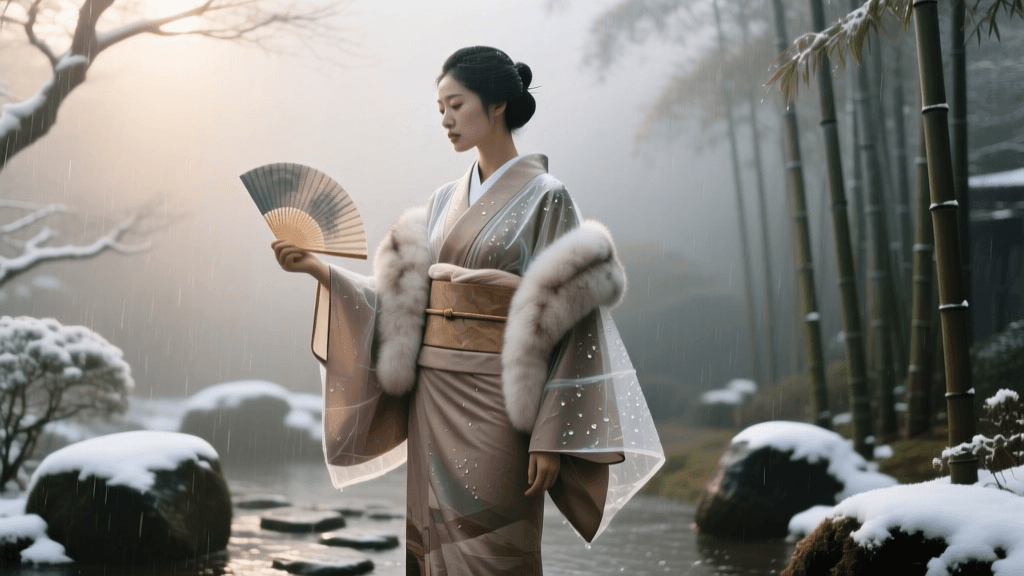
The haori is a hip- or thigh-length jacket worn over the kimono. For extreme cold, winter haori are often lined with plush materials, and the collar (eri) may be trimmed with ethically sourced faux fur or vintage recycled fox and rabbit fur, a practice that honors the resourcefulness of the Edo period while aligning with modern 2026 sustainability standards. The haori is left open at the front, allowing the beautiful obi to remain visible while providing a crucial extra layer of wind protection for the torso.
Protecting the Hem in the Snow
Walking through snow requires lifting the hem slightly to prevent soaking. Historically, women would use a specialized tying technique called karakasa-musubi to temporarily hitch up the back of the kimono. Today, snow-specific michiyuki coats often feature longer lengths, extending down to the calves, and are paired with dark-colored, heavy tsumugi (pongee silk) kimono that are less prone to showing mud or slush stains.
2026 Weather-Specific Kimono Accessories Chart
To help you quickly identify the right gear for your local climate, refer to the structured comparison below detailing traditional items alongside their modern 2026 adaptations.
| Weather Condition | Traditional Garment / Accessory | 2026 Modern Adaptation | Primary Material |
|---|---|---|---|
| Extreme Heat (35°C+) | Ro / Sha Kimono | Xylitol-infused Cool-Juban undergarments | Leno-weave silk, Bamboo mesh |
| Sudden Rainstorms | Shigure-Gappa (Raincoat) | Breathable micro-nylon with sealed seams | Hydrophobic microfiber |
| Puddles / Wet Streets | Ama-Geta (Rain Clogs) | High-platform clogs with anti-slip rubber | Paulownia wood, Vulcanized rubber |
| Freezing Snow | Awase (Lined) Kimono | Merino-silk thermal base layers | Heavy crepe silk, Merino wool |
| Biting Winter Wind | Haori (Jacket) | Windproof outer-shell Haori with faux fur | Tsumugi silk, Recycled faux fur |
Maintenance After Extreme Weather Exposure
Surviving the weather is only half the battle; proper post-exposure care is what ensures a kimono's longevity. The Victoria and Albert Museum emphasizes that improper drying and storage of historic textiles leads to irreversible mold and fiber degradation.
Drying Wet Silk
If your kimono gets caught in the rain or snow, never apply direct heat. Radiators, hair dryers, and direct sunlight will cause wet silk to shrink, warp, and lose its luster. Instead, gently blot excess moisture with a clean, dry microfiber towel. Hang the garment on a specialized, wide-shouldered kimono hanger (emono-kake) in a well-ventilated, climate-controlled room away from direct light. Allow it to air dry completely, which may take up to 48 hours in humid conditions.
Airing Out Summer Sweat
Even if you do not feel sweaty, the high humidity of summer means moisture is trapped between the nagajuban and the outer kimono. After every summer outing, hang the kimono and undergarments separately in a shaded, breezy area for at least four hours before folding them back into their tatoushi (storage paper). In 2026, many collectors use silica gel desiccant sheets infused with natural hinoki (cypress) oil inside the storage drawers to regulate humidity and deter pests without the use of harsh chemical mothballs.
Conclusion
The kimono is not a fragile relic confined to climate-controlled museums; it is a living, breathing garment that has survived centuries of environmental shifts. By respecting the traditional rules of seasonal wear while embracing the textile innovations and protective gear available in 2026, you can confidently wear your kimono through the harshest summer heat, the heaviest monsoon rains, and the deepest winter snows. Proper adaptation ensures that both the wearer and the garment remain comfortable, protected, and deeply connected to the natural world.