2026 Hanbok Sewing Workshops: Top Seoul Seminars for Garment Makers
The Global Renaissance of Hanbok Construction
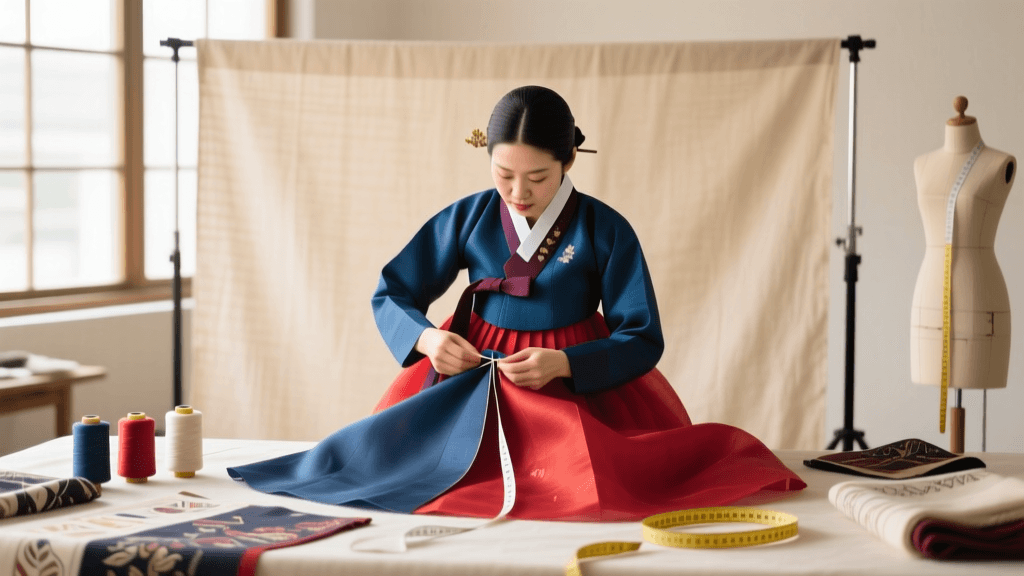
In 2026, the global slow fashion movement has firmly embraced traditional Asian garment making, with the Korean Hanbok emerging as a pinnacle of structural elegance and cultural heritage. Following its celebrated inscription on the UNESCO Intangible Cultural Heritage list, the demand for authentic Hanbok construction seminars has skyrocketed. Today, makers from around the world travel to Seoul not just to wear the garment, but to understand the intricate geometry, hidden seams, and philosophical underpinnings of its creation.
Unlike Western tailoring, which relies heavily on darts and complex curved seams to map the human body, traditional Hanbok construction is based on flat-pattern cutting and the strategic use of gathering, pleating, and ties. Learning to sew a Hanbok in 2026 means engaging with centuries-old techniques while utilizing modern maker spaces that cater to international students. Whether you are looking to craft a historical reproduction or a modernized saenghwal hanbok (daily-life hanbok) using sustainable textiles, Seoul offers unparalleled educational opportunities.
Core Techniques: Beyond the Basic Seam
Before enrolling in a seminar, it is crucial to understand the specific architectural elements you will be mastering. The Korea Craft & Design Foundation frequently highlights the unique structural components that separate amateur attempts from master-level craftsmanship.
- The Baerae (Curved Sleeve): Unlike standard set-in sleeves, the jeogori (jacket) sleeve features a gentle, sweeping curve along the bottom edge, requiring precise bias manipulation and invisible slip-stitching.
- The Dongjeong (White Collar): This removable, stark white collar frames the face and demands absolute symmetry. Students learn the traditional paste-and-fold technique to ensure the collar remains rigid and pristine without modern interfacing.
- The Goreum (Ties): Far more than simple ribbons, the goreum are engineered to bear the garment's tension. Mastering the 2026 standard for goreum involves learning the exact 4.5cm width and the specific knotting geometry that allows the jacket to drape perfectly across the chest.
- The Chima (Skirt) Pleating: A traditional chima utilizes over 10 meters of fabric, gathered into a structured waistband. Seminars teach the mathematical distribution of micro-pleats to ensure the skirt floats outward rather than clinging to the body.
Top 3 Seoul Hanbok Making Seminars for 2026
1. The Korean Traditional Craft Center (KTCC) Intensive
Located in the heart of the Jongno district, the KTCC offers a rigorous, four-week masterclass designed for serious garment makers. The 2026 curriculum focuses heavily on historical accuracy, utilizing traditional narrow-loom silk (myeongju) and natural dyes. Students spend the first week mastering the jeogori, paying special attention to the baerae curve and the invisible gamchim-jil (blind stitch). The final three weeks are dedicated to the chima and the intricate embroidery of the geum-bak (gold leaf printing). This seminar is conducted in Korean, but the 2026 cohort includes dedicated bilingual teaching assistants for international attendees.
2. Bukchon Heritage Atelier: Weekend Modernist Series
For makers who cannot commit to a month-long residency, the Bukchon Heritage Atelier offers a serialized weekend program focusing on saenghwal hanbok. This 2026 series bridges the gap between historical silhouettes and contemporary wardrobes. You will learn how to adapt traditional flat patterns for machine-washable linens and ethical silk blends. The atelier provides pre-cut fabric kits, allowing students to focus entirely on the complex assembly of the collar, the hidden inner ties (an-goreum), and the finishing hems. It is an ideal entry point for hobbyists transitioning into traditional Asian garment construction.
3. Jongno Textile Guild: Natural Dyeing and Construction Retreat
Held in a converted hanok just outside the bustling city center, this bi-annual retreat combines textile creation with garment construction. The 2026 spring retreat focuses on gal-ot (persimmon dyeing) and the subsequent sewing of a lightweight summer Hanbok made from mosi (ramie). Ramie is notoriously difficult to sew due to its crisp, slippery nature, and this seminar provides specialized techniques for pressing, pinning, and stitching this ancient fiber. Students leave with a fully customized, naturally dyed summer garment and a deep understanding of Korea's agricultural textile history.
2026 Seoul Workshop Comparison Chart
| Workshop / Atelier | Duration | Primary Focus | 2026 Tuition (KRW / USD) | Language Support |
|---|---|---|---|---|
| KTCC Intensive Masterclass | 4 Weeks (160 Hours) | Historical Silk Reproduction | ₩3,200,000 / $2,450 | Korean (Bilingual TA) |
| Bukchon Heritage Atelier | 6 Weekends (48 Hours) | Modern Saenghwal Hanbok | ₩850,000 / $650 | English & Korean |
| Jongno Textile Guild Retreat | 10 Days (80 Hours) | Ramie & Natural Dyeing | ₩1,900,000 / $1,450 | English Primary |
Sourcing Materials in 2026: Dongdaemun and Beyond
A critical component of any Hanbok seminar is learning where and how to source materials. While workshops provide basic kits, advanced students are encouraged to explore the Dongdaemun Comprehensive Market. In 2026, the market has seen a surge in specialized eco-textile vendors offering cruelty-free peace silk and organic cotton blends that mimic the drape of traditional myeongju.
When shopping for Hanbok fabrics, remember that traditional Korean looms produced narrower widths than modern Western textiles. While standard modern fabric is 115cm to 150cm wide, authentic Hanbok construction often requires you to mentally map your pattern across narrower panels to maintain the correct grainline and drape. Seminar instructors will guide you through the math of panel joining (git and seop calculations) to ensure your garment behaves correctly when in motion.
Essential Tools for the Modern Hanbok Maker
To succeed in a 2026 Hanbok construction seminar, you must familiarize yourself with traditional Korean sewing tools. While modern ateliers provide equipment, bringing your own specialized tools can enhance your precision.
- Baneul (Traditional Needles): Unlike standard Western sharps, traditional Korean needles are incredibly fine and short, designed for the microscopic slip stitches required on silk.
- Golmu (Thimble): The Korean thimble is a small, cylindrical band worn on the middle finger, rather than a cap worn on the fingertip. It is essential for pushing needles through densely layered ramie or silk.
- Ja (Measuring Ruler): While modern seminars use metric tape measures, understanding the traditional ja (ruler) and the Korean proportional measuring system is vital for historical drafting. The human body is measured in head-lengths and finger-widths rather than strict centimeters.
- Darim-soe (Sewing Iron): A heavy, traditional-style iron is used not just to press seams, but to permanently set the pleats of the chima and flatten the thick, multi-layered collar seams without scorching delicate silks.
'The Hanbok does not force the body into a shape; it creates a space for the body to inhabit. When you sew the baerae, you are not just sewing a sleeve; you are engineering a pocket of air that moves with the wearer's breath.' — Master Artisan Lee, Bukchon Heritage Atelier, 2026.
Practical Advice for International Students
Enrolling in a Seoul-based Hanbok seminar requires logistical foresight. For the intensive 2026 courses, applications typically open six months in advance and require a portfolio or a detailed statement of your sewing experience. Because traditional hand-sewing is a core component of the curriculum, you must possess intermediate hand-stitching skills before arriving; these are not beginner sewing classes, but rather specialized garment construction seminars.
Additionally, consider the logistics of transporting your finished garments home. A fully constructed silk chima and jeogori set is lightweight but highly susceptible to crushing. Seminars often provide specialized, acid-free archival boxes for transport. Finally, while Seoul is a highly accessible city, spending long hours hunched over a sewing frame can be physically taxing. Incorporate daily stretching and take advantage of the city's world-class public transit to explore the vibrant fashion districts of Gangnam and Hongdae, drawing inspiration from how contemporary Korean designers are reinterpreting the very traditions you are learning to preserve.
Conclusion
The year 2026 marks an exciting era for traditional Asian garment making, with the Hanbok standing at the intersection of historical preservation and global maker culture. By investing time in a dedicated Seoul seminar, you do more than learn to sew a skirt and jacket; you absorb a philosophy of flat-pattern geometry, sustainable material use, and mindful construction. Whether you choose the rigorous historical replication of the KTCC or the modern adaptations of Bukchon, mastering the chima and jeogori will permanently elevate your understanding of global textile heritage.