Seasonal Hanfu Guide: Fabrics and Styles for China's Climates
The Intersection of Geography and Traditional Chinese Garments
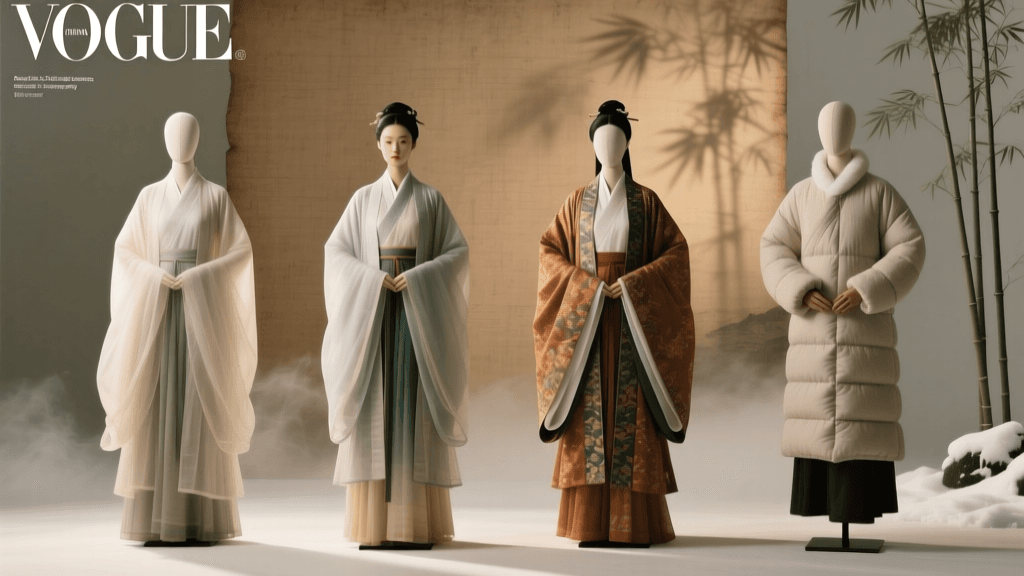
China’s vast geographical expanse encompasses everything from the subarctic chill of Harbin in the north to the tropical humidity of Hainan in the south. Historically, this dramatic climatic diversity necessitated a highly adaptable approach to clothing. Hanfu, the traditional dress of the Han Chinese, is not a monolithic uniform but a dynamic sartorial system. Over millennia, artisans and tailors developed specific weaving techniques, fabric treatments, and garment structures to ensure comfort, modesty, and elegance across all four seasons. According to The Metropolitan Museum of Art, the evolution of Chinese silk and textile production was deeply intertwined with regional environmental needs, driving innovations that remain relevant for modern Hanfu enthusiasts today.
For contemporary wearers, understanding seasonal Hanfu is crucial for both historical accuracy and practical comfort. This guide explores the foundational fabrics, structural layering, and specific garment styles suited for China’s varied seasonal climates, offering actionable advice for building a versatile, year-round traditional wardrobe.
Spring: Transitional Layering and Breathable Blends
Spring in China is characterized by fluctuating temperatures—crisp, chilly mornings that give way to warm, breezy afternoons. The key to spring Hanfu is modular layering, allowing the wearer to adjust to the shifting mercury without sacrificing the elegant drape of the garments.
Recommended Styles and Silhouettes
The Jiaoling Ruqun (cross-collared upper garment and skirt) is the quintessential spring silhouette. A typical spring ensemble consists of a lightweight inner layer (zhongyi), a cross-collared outer shirt (ru), and a flowing pleated skirt (qun). For slightly cooler early-spring days, a Banbi (half-sleeve jacket) can be layered over the upper garment, providing warmth to the core while keeping the forearms cool.
Ideal Spring Fabrics
- Cotton-Linen Blends: Offering the breathability of linen with the softness and wrinkle-resistance of cotton, these blends are perfect for late spring. They provide a slightly structured drape that holds pleats well.
- Lightweight Jacquard: Woven with subtle, tone-on-tone patterns, light jacquard fabrics offer a touch of formality and durability, making them ideal for outdoor spring festivals like Qingming or Hanfu parades.
- Ramie: A traditional bast fiber that is highly breathable and naturally antibacterial, ideal for the humid transition into early summer.
Practical Tip: Look for skirt lengths that fall just above the ankle (approx. 95-100cm for an average height). This prevents the hem from dragging in spring mud while maintaining traditional modesty proportions.
Summer: Cooling Silks and Airy Silhouettes
Summers in central and southern China are notoriously hot and humid, with temperatures frequently exceeding 35°C (95°F). Historical summer Hanfu prioritized airflow, moisture-wicking properties, and UV protection through ingenious textile engineering.
Recommended Styles and Silhouettes
The Tanling Ruqun (U-shaped or round-collared upper garment) exposes more of the neck and collarbone, promoting heat dissipation. Another popular summer staple is the Beizi (a long, open-front coat), which acts as a lightweight sun-shield when worn over a sleeveless inner top (mohe or dudou). The wide, flowing sleeves of a summer Daxiushan (large-sleeve shirt) act as natural bellows, circulating air around the body as the wearer moves.
Ideal Summer Fabrics
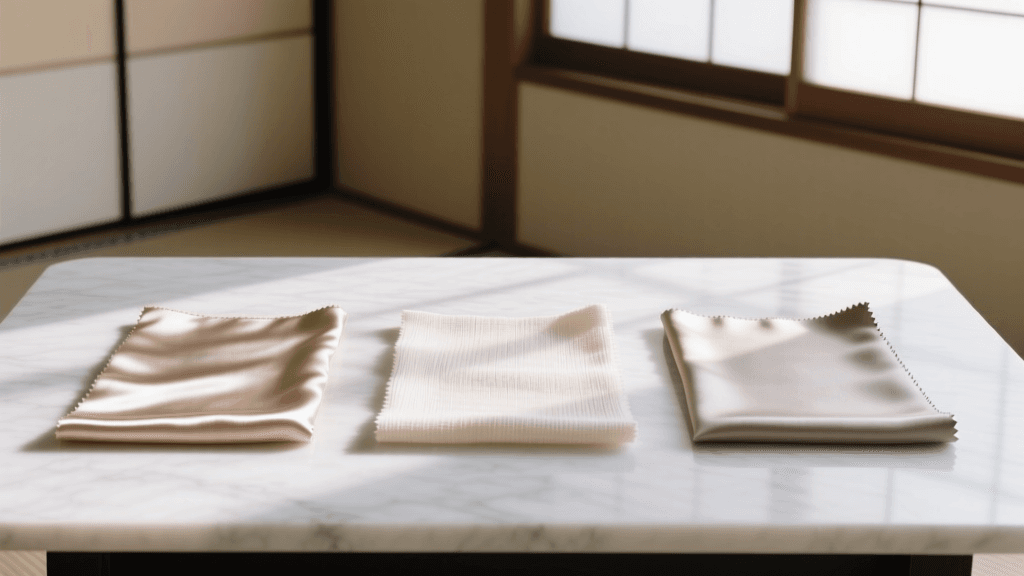
The undisputed king of summer Hanfu fabrics is Xiangyunsha (Gambiered Guangdong Silk). Recognized by UNESCO as an Intangible Cultural Heritage, this fabric is created by dyeing silk with the juice of the gambier plant and coating it with iron-rich river mud, then drying it in the sun. The result is a crisp, rustling, water-resistant textile that feels cool to the touch and repels insects. Other excellent choices include raw silk (shantung), silk gauze (luo), and modern high-tech cooling rayons that mimic the drape of historical silks at a fraction of the cost.
Cost & Care: Authentic Xiangyunsha is expensive, often costing upwards of $150 to $300 USD per meter. It must be hand-washed gently in cool water and dried in the shade, as direct sunlight degrades the mud-dye coating.
Autumn: Woven Warmth and Structured Elegance
Autumn brings crisp, dry air and vibrant foliage. The wardrobe shifts from the sheer, flowing layers of summer to heavier, more structured garments that trap body heat and provide a rich, textured aesthetic matching the season's visual warmth.
Recommended Styles and Silhouettes
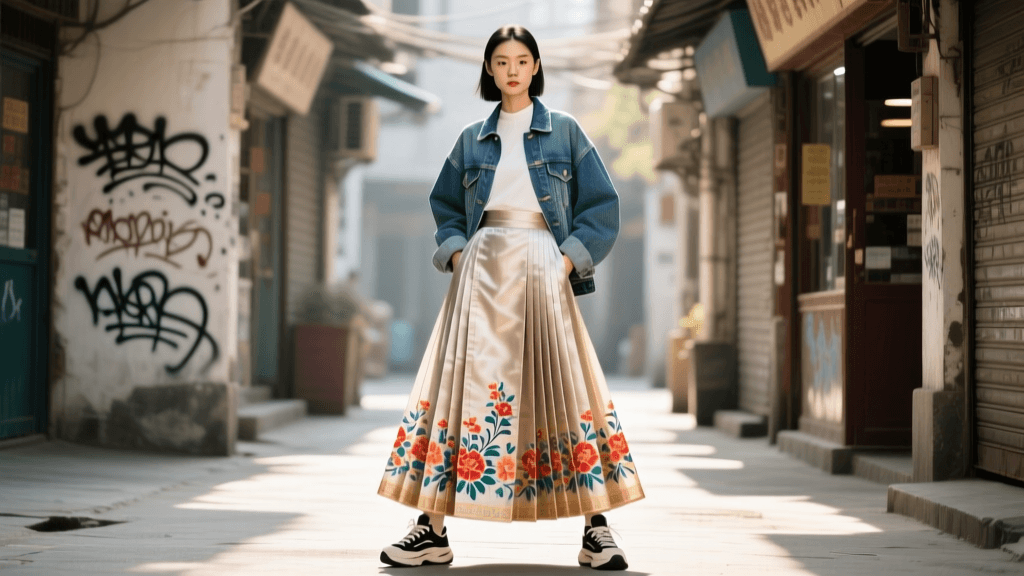
The Aoqun (lined or padded jacket and skirt) becomes the standard. The Chang Ao (long jacket) with its standing collar (liling) and overlapping front panels provides excellent wind protection for the neck and chest. This is often paired with the iconic Mamianqun (horse-face skirt). The flat, unpleated front and back panels of the Mamianqun, flanked by deep side pleats, offer a heavy, swinging momentum that is visually striking and physically warming.
Ideal Autumn Fabrics
- Woven Brocade (Zhijin): Featuring intricate, raised patterns woven with metallic or contrasting threads, brocade provides substantial weight and wind resistance.
- Heavy Crepe and Twill Silks: These fabrics offer a beautiful, fluid drape with enough density to block autumn breezes.
- Velvet and Corduroy: While historically less common in ancient times, modern Hanfu makers frequently utilize these textiles for autumn Mamianqun due to their excellent heat retention and rich, light-absorbing colors.
Winter: Insulated Outerwear and Windproof Layers
In northern China, winters are biting and dry, with temperatures plunging well below freezing. Winter Hanfu relies on the principles of trapped air and windproof outer shells, mirroring the insulation strategies of traditional Chinese architecture.
Recommended Styles and Silhouettes
The Doupeng (a sweeping, sleeveless cloak with a high collar and tie-front) is the ultimate winter statement piece. Worn over a padded Mian Ao (cotton-stuffed jacket) and thick underlayers, the Doupeng blocks wind from all angles. Another essential is the Pifeng (a long, open-front cape), which can be lined with faux fur or heavy fleece for extreme cold. For the lower body, wearing thermal base layers beneath a heavily lined Mamianqun or a thick, pleated wool skirt is standard practice for modern Hanfu wearers in cities like Beijing or Xi'an.
Ideal Winter Fabrics
Wool blends, heavy velvet, and quilted cotton are foundational. Historically, animal pelts and furs were used for trim and lining. Today, high-quality faux fur collars and cuffs provide the same luxurious aesthetic and wind-blocking utility without ethical concerns. Encyclopedia Britannica notes that while silk was highly prized, its use in winter was often as a dense, windproof outer shell over thick cotton or wool batting, a technique still utilized in modern winter Hanfu jackets.
Regional Climate Guide: Adapting Hanfu Across China
Because China's climate zones vary so drastically, a winter Hanfu in Guangzhou (South) looks vastly different from a winter Hanfu in Harbin (North). Below is a comparative guide to regional adaptations.
| Region | Climate Profile | Recommended Hanfu Style | Ideal Fabric Choices |
|---|---|---|---|
| North China (e.g., Beijing, Harbin) | Cold, dry winters; warm, brief summers. High wind chill. | Padded Ao, Doupeng cloaks, high standing collars, heavy layering. | Wool blends, quilted cotton, heavy brocade, faux fur linings. |
| South China (e.g., Guangzhou, Shenzhen) | Subtropical; hot, highly humid summers; mild, damp winters. | Banbi, sheer Beizi, short-sleeve Ruqun, breathable unlined garments. | Xiangyunsha, raw silk, linen, lightweight cotton, ramie. |
| Southwest (e.g., Chengdu, Kunming) | Basin/Plateau; overcast, high humidity, moderate temperatures year-round. | Layered Ruqun, versatile Chang Ao, medium-weight skirts. | Cotton-linen blends, medium-weight jacquard, crepe. |
| East Coast (e.g., Shanghai, Hangzhou) | Four distinct seasons; humid summers, chilly and damp winters. | Transitional layering, Beizi over Aoqun, adaptable hemlines. | Heavy silks for autumn, lined cottons for winter, gauze for summer. |
Practical Sizing, Cost, and Care for the Modern Wardrobe
Building a seasonal Hanfu wardrobe requires an understanding of modern e-commerce sizing and textile maintenance. Unlike Western tailoring, Hanfu relies on flat-cutting and wrap-ties rather than darts and zippers, making it inherently more forgiving. However, precise measurements are still required for the zhongyi (inner garments) and skirt lengths.
Sizing and Measurements
- Chest and Shoulders: Measure your bust and shoulder width. For cross-collared garments, ensure the lapels overlap comfortably without gaping. A general rule is to add 4-6 cm to your actual bust measurement for the garment's flat chest width.
- Skirt Length: Measure from your natural waist (or where you intend to tie the skirt) down to your desired hemline. For traditional floor-sweeping elegance, subtract 2 cm from your total floor measurement to account for shoes.
- Sleeve Length: Hanfu sleeves range from narrow (zhixiu) to extremely wide (guangxiu). Measure from the center back of your neck, over the shoulder, and down to your wrist or fingertips, depending on the historical style you are replicating.
Budgeting for Seasonal Hanfu
Entry-level, machine-washable polyester and cotton-linen sets typically cost between $40 and $80 USD, making them excellent choices for spring and autumn experimentation. High-end, authentic silk garments, particularly those utilizing heritage techniques like Xiangyunsha or intricate Suzhou embroidery, can range from $200 to over $600 USD. Winter cloaks with premium faux fur and quilted linings generally fall in the $100 to $250 USD range.
Textile Care
Natural fibers like silk and linen require meticulous care. Always hand-wash silk in cold water with a pH-neutral detergent. Never wring or twist the fabric; instead, roll it in a clean towel to press out excess water. Store heavy winter brocades and wool blends folded with acid-free tissue paper to prevent permanent creasing, and use cedar blocks rather than chemical mothballs to protect your investment.
Conclusion
The beauty of Hanfu lies not just in its visual splendor, but in its profound connection to the natural world. By selecting the appropriate fabrics and silhouettes for the season and region, wearers do more than simply dress historically—they participate in a centuries-old dialogue between human craftsmanship and the rhythms of the earth. Whether you are donning a breezy linen Ruqun for a spring picnic or wrapping yourself in a heavy brocade Doupeng against the winter wind, understanding these seasonal adaptations ensures your traditional wardrobe is as functional as it is breathtaking.