Douyin Street Fashion: Styling The Mamianqun Skirt
The Douyin Effect: Redefining the Mamianqun
If you have spent any time scrolling through Chinese social media, you have likely encountered the mesmerizing slow-motion street style videos originating from Douyin (the Chinese counterpart to TikTok). In these viral clips, influencers stroll through the neon-lit streets of Chengdu's Taikoo Li or the historic alleyways of Shanghai, wearing garments that seamlessly bridge centuries of history with cutting-edge modern streetwear. At the absolute center of this sartorial revolution is the Mamianqun, or 'horse-face skirt.'
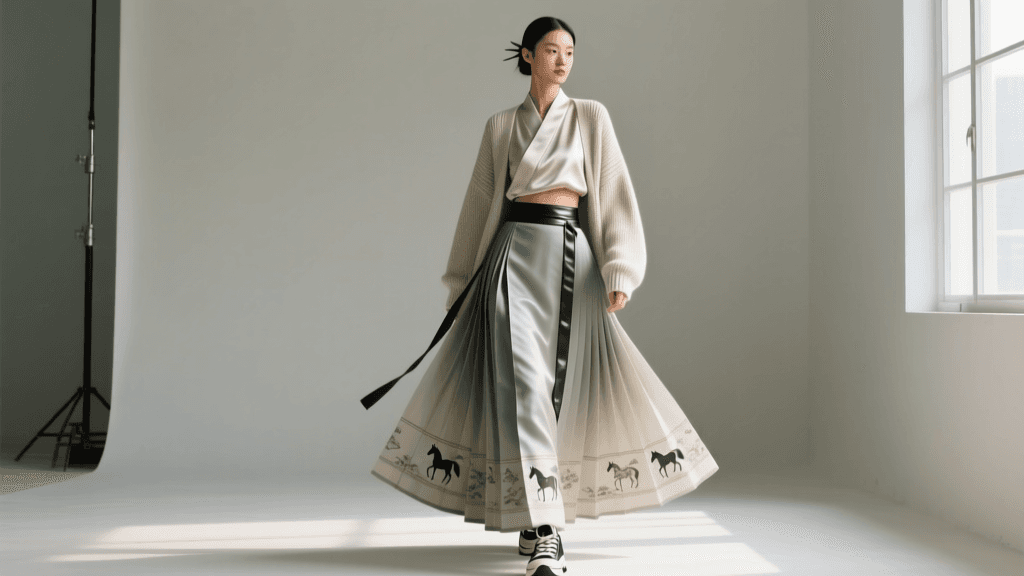
The Mamianqun has transcended its status as a niche historical reenactment garment to become a staple of the 'Xin Zhongshi' (New Chinese Style) movement. Driven by Gen Z's desire to reclaim cultural heritage and blend it with global fashion trends, the Mamianqun is no longer reserved for festivals or tea ceremonies. Today, it is worn to the office, to underground clubs, and on the runways of international fashion weeks. This article breaks down the anatomy of the Mamianqun, explores the viral Douyin styling formulas, and provides a comprehensive guide on how to source, measure, and care for your own skirt.
Historical Roots Meets Modern Streetwear
To understand the Mamianqun's current dominance in street fashion, one must look at its historical pedigree. The skirt originated in the Song Dynasty but reached its zenith during the Ming Dynasty (1368–1644). It is characterized by a unique structural design: two overlapping flat front and back panels (the 'horse faces') flanked by intricate, deep knife pleats on the sides. This design was originally created for ease of movement, particularly for horseback riding, which is how it earned its name.
According to historical textile analyses by The Metropolitan Museum of Art, the Ming Dynasty saw incredible advancements in silk weaving, brocade, and pleating techniques, allowing garments like the Mamianqun to feature elaborate motifs of dragons, phoenixes, and flora. Today, modern manufacturers use advanced jacquard looms and durable synthetic blends to replicate these opulent patterns, making the skirt accessible, durable, and perfectly suited for the rigors of modern urban life.
Influencer Styling Formulas: Blending Tradition and Streetwear
The genius of the Douyin street fashion movement lies in its mastery of juxtaposition. Influencers deliberately clash the ancient elegance of the Mamianqun with gritty, contemporary streetwear staples. Here are the three dominant styling formulas currently dominating the algorithm.
Formula 1: Techwear & Cyberpunk
This aesthetic is a favorite in cities like Chongqing, where the multi-level, neon-drenched architecture provides the perfect backdrop. The key here is to choose a Mamianqun in a dark, monochromatic palette—black, deep charcoal, or metallic silver—with subtle jacquard patterns. The Pairing: Combine the skirt with a cropped, multi-pocket tactical vest or a tight, long-sleeved mesh top. Footwear is crucial: opt for chunky, platform combat boots or avant-garde sneakers like the Balenciaga Trooper. Finish the look with a matte black crossbody chest rig and silver hardware accessories. The heavy, structured pleats of the skirt mirror the utilitarian lines of techwear, creating a cohesive, futuristic silhouette.
Formula 2: Dark Academia & The 'Office Siren'
For a more subdued, intellectual aesthetic that transitions perfectly from the office to a vintage bookstore, Douyin creators lean into the 'New Chinese Dark Academia' look. The Pairing: Select a Mamianqun in rich, muted tones like burgundy, forest green, or navy blue, featuring subtle floral or geometric woven motifs. Pair it with a fitted, ribbed turtleneck and layer an oversized, structured vintage blazer over the shoulders. Footwear should be classic leather loafers worn with crisp white ankle socks. This look plays with proportions, balancing the voluminous, flowing nature of the skirt with the sharp, tailored lines of the blazer.
Formula 3: Y2K High-Femme Streetwear
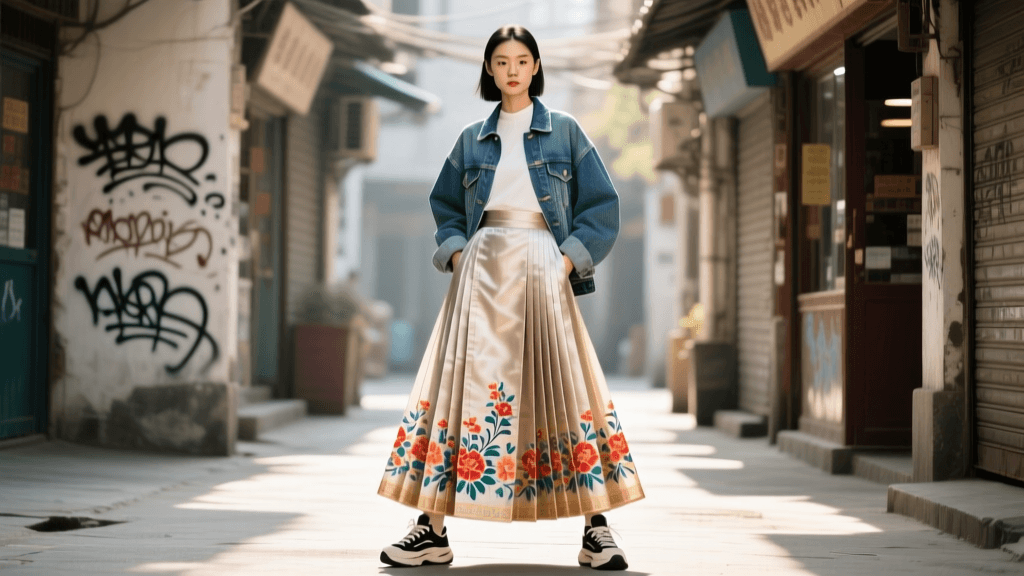
This formula embraces color, nostalgia, and playful proportions. The Pairing: Choose a pastel or vibrantly colored Mamianqun, perhaps featuring woven butterflies or peonies. On top, wear a tight, cropped 'baby tee' with a retro graphic, layered under a cropped puffer jacket or a distressed denim jacket. For shoes, retro skate sneakers like Nike Dunk Lows or Adidas Sambas are the undisputed favorites on Douyin. This look is all about youthful energy, blending the hyper-femininity of traditional Chinese textiles with the casual, rebellious spirit of early 2000s streetwear.
Sourcing Guide: Brands, Fabrics, and Costs
When shopping for a Mamianqun, the market is vast, ranging from mass-produced fast fashion to museum-grade replicas. Understanding the fabric composition is vital for achieving the right drape and pleat retention.
| Brand Tier | Popular Brands | Price Range (USD) | Best For | Typical Fabric |
|---|---|---|---|---|
| Budget / Entry | Shisan Yu, Hanfu Hantian | $25 - $50 | Daily streetwear, travel, beginners | Polyester blends, cotton |
| Mid-Tier / Daily | Zhong Ling, Chuan Dai | $60 - $120 | Office wear, events, durability | High-grade jacquard, viscose |
| Premium / Couture | Ming Hua Tang, Ting Yue Feng | $200 - $800+ | Collectors, formal galas, photography | Mulberry silk, real gold thread |
For streetwear styling, mid-tier polyester-jacquard blends are highly recommended. While purists may prefer silk, silk is delicate, difficult to clean, and loses its pleats easily when exposed to rain or street grime. Modern synthetic blends hold the sharp knife pleats beautifully, resist wrinkling, and can withstand the friction of sitting on public transit or walking through crowded city streets.
The Crucial Measurement Guide
Unlike modern skirts with elastic waistbands, the traditional Mamianqun relies on a wrap-and-tie system. Getting the measurements right is non-negotiable for a polished streetwear look.
- Waist Measurement: Measure exactly where you intend the skirt to sit (usually the natural waist or slightly above the navel). The skirt panels must overlap perfectly in the center; if it is too small, the front panels will gap open when you walk; if too large, the fabric will bunch awkwardly under your top.
- Skirt Length: This is the most critical metric for streetwear. Douyin influencers almost universally adhere to the 'ankle-grazing' rule. Measure from your waist down to about 2 to 3 centimeters above your ankle bone. This specific length ensures the skirt does not drag on dirty city sidewalks while still providing enough coverage to create a dramatic, sweeping motion when you walk. It also perfectly frames chunky sneakers or boots.
- Pleat Width: Standard pleats are usually 2cm to 3cm wide. Wider pleats offer a more structured, architectural look suited for techwear, while narrower pleats provide a softer, more fluid drape for high-femme styling.
Garment Care: Preserving the Knife Pleats
The defining feature of the Mamianqun is its crisp, sharp pleats. Improper care will ruin the structural integrity of the garment. Follow these actionable care steps to maintain your skirt:
- Washing: Never machine wash a Mamianqun. Hand wash in cold water with a mild detergent. Do not wring or twist the fabric, as this will permanently distort the pleats.
- Drying: Gently press out excess water with a clean towel. Hang the skirt using a skirt hanger with multiple clips. Clip the waistband and gently align the pleats before letting it air dry. The weight of the wet fabric will help pull the pleats straight.
- Ironing: If the pleats lose their edge, use a steam iron on a low-to-medium setting. Place a cotton pressing cloth over the skirt to protect the jacquard weave. Iron strictly in a vertical, up-and-down motion along the pleat lines; never glide the iron horizontally, as this will stretch the fabric and blur the pleat lines.
The Global Impact of the Guochao Movement
The Mamianqun's journey from historical artifact to streetwear staple is a prime example of the 'Guochao' (national trend) movement. As noted by industry analysts at The Business of Fashion, young Chinese consumers are increasingly turning away from Western luxury logos in favor of domestic brands that celebrate cultural heritage with modern design sensibilities. This domestic boom has created a highly sophisticated supply chain for traditional garments, driving down costs and increasing quality.
Furthermore, international institutions are taking note of this revival. The integration of historical Asian textiles into modern wardrobes reflects a broader global appreciation for regional craftsmanship, a shift documented in the extensive textile archives of the Victoria and Albert Museum. As Douyin trends inevitably bleed into global platforms like TikTok and Instagram, the Mamianqun is poised to become a recognized silhouette in the global streetwear lexicon, much like the Japanese kimono jacket or the Korean hanbok top.
Conclusion
The Mamianqun is more than just a skirt; it is a canvas for cultural expression and a testament to the creativity of China's youth. By understanding the historical context, mastering the modern styling formulas, and paying close attention to fit and fabric care, you can seamlessly integrate this iconic garment into your own streetwear rotation. Whether you are pairing it with a tactical vest in a cyberpunk aesthetic or a vintage blazer for a day in the city, the Mamianqun offers a unique, dynamic silhouette that guarantees you will turn heads on any street in the world.