Miao Folk Dress: Guizhou Pleated Skirts and Silver Craft
The Wearable History of Guizhou Province
The Miao people, primarily concentrated in the mountainous terrains of China's southwestern Guizhou province, possess one of the most visually striking and culturally significant regional folk dress traditions in Asia. Because the Miao historically lacked a widely used written language, their garments serve as a wearable archive. Every stitch, pleat, and silver ornament tells a story of migration, mythology, and clan identity. According to historical overviews provided by Encyclopædia Britannica, the Miao are not a monolith but a diverse group of subgroups, each distinguished by highly specific provincial dress codes, skirt lengths, and embroidery motifs. For textile collectors, cultural historians, and fashion enthusiasts, understanding the nuances of Miao regional dress offers a profound glimpse into China's rich ethnic tapestry.
The Anatomy of the Baizhe Qun (Hundred-Pleat Skirt)
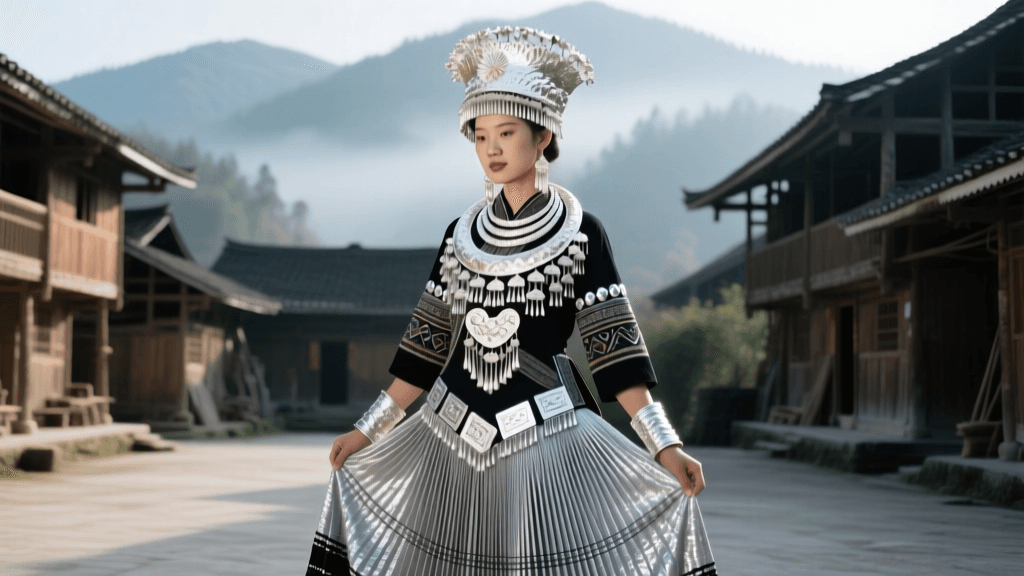
The centerpiece of many Miao women's provincial dress is the baizhe qun, or hundred-pleat skirt. Creating a single authentic skirt is a masterclass in textile manipulation and requires immense patience. The process begins with hand-woven cotton that is dyed using traditional indigo fermentation.
Actionable Advice: Indigo Dyeing and Pleating
- Indigo Fermentation Timing: Authentic Miao indigo dye requires a fermentation period of 2 to 3 weeks. The cotton must be dipped and oxidized up to 20 times to achieve the deep, lustrous navy-black hue characteristic of the 'Black Miao' subgroups.
- Fabric Measurements: A single full-length pleated skirt requires between 15 to 20 meters of hand-woven cotton. The fabric is cut into panels before pleating.
- The Pleating Process: Artisans use a bamboo needle and silk thread to secure the pleats. The skirt is then sprayed with water, tightly bound with hemp string, and steamed for over two hours. This heat-setting process ensures the pleats remain razor-sharp even after years of wear.
When purchasing a vintage or newly commissioned baizhe qun, always check the hem. Authentic hand-pleated skirts will show slight, organic variations in pleat width, whereas mass-produced tourist garments feature uniform, machine-pressed synthetic pleats.
The Weight of Heritage: Miao Silver Craftsmanship
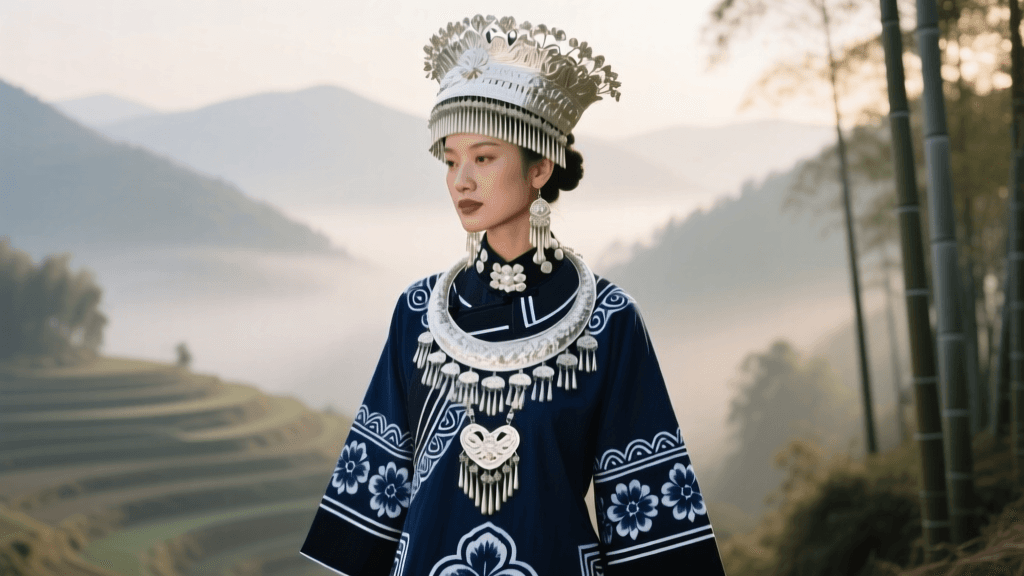
No Miao festival ensemble is complete without elaborate silver jewelry. The silverwork of Guizhou is recognized for its staggering complexity, often featuring intricate filigree, repoussé, and granulation techniques. The most iconic piece is the silver horn headdress, which can span over a meter in width and weigh several kilograms. Recognizing the cultural value of these practices, organizations like UNESCO Intangible Cultural Heritage have increasingly highlighted the importance of preserving such traditional ethnic craftsmanship in the face of modernization.
Sourcing and Pricing Miao Silver
If you are looking to source authentic Miao silver for a collection or personal wear, you must navigate a market flooded with alloy imitations. Here is what you need to know about costs and verification:
- Tourist-Grade Silver (Alloy/Plated): Typically found in Xijiang Miao Village souvenir shops. Costs range from $30 to $80 USD. These are lightweight and will tarnish or flake over time.
- Artisanal Pure Silver: Sourced directly from master silversmiths in towns like Kaili or Shidong. Expect to pay $800 to $2,500+ USD for a full festival set (headdress, neck rings, and chest plates). Prices are often calculated by the gram (currently around $1.50 - $2.50 USD per gram for raw silver, plus a high craftsmanship premium).
- Weight Considerations: A genuine, full-bridal silver set can weigh between 5 to 10 kilograms. When commissioning a piece for modern wear, request a 'half-set' or scaled-down motifs to reduce the weight to a manageable 1-2 kilograms.
Embroidery Motifs: Decoding the Threads
Miao embroidery is famously dense, often covering every available inch of the jacket lapels, sleeves, and skirt hems. The motifs are not merely decorative; they are mythological maps. The most revered motif is the 'Butterfly Mother' (Mais Bangx), who, according to Miao creation myths, laid the eggs that hatched the first humans, dragons, and beasts. You will also frequently see the water buffalo dragon, a benevolent agrarian deity, and stylized birds representing ancestral spirits. Institutions such as The Metropolitan Museum of Art frequently feature Asian textile collections that highlight the narrative power of these indigenous embroidery techniques, noting their importance in global textile history.
Regional Variations: A Comparison of Miao Subgroups
Guizhou is home to numerous Miao subgroups, historically categorized by outsiders based on their most prominent sartorial features. Below is a comparison chart of the primary regional variations you will encounter:
| Subgroup Name | Primary Region | Skirt Style & Length | Dominant Colors & Silver Usage |
|---|---|---|---|
| Black Miao (Hei Miao) | Southeast Guizhou | Mid-calf length, heavily pleated indigo cotton. | Deep navy/black base with vibrant red and green embroidery. Heavy silver horn headdresses. |
| Long Skirt Miao (Changqun Miao) | Leishan / Danzhai | Ankle-length, flowing pleated skirts worn with multiple layered aprons. | Indigo base with elaborate silk thread work. Silver is worn primarily as neck rings and hairpins. |
| Short Skirt Miao (Duanqun Miao) | Rongjiang / Jianhe | Extremely short (10-15 cm) pleated skirts, resembling tutus, worn over embroidered leggings. | Bright pinks, reds, and yellows. Silver is integrated directly into the garment via sewn-on silver plates. |
| White Miao (Bai Miao) | Western Guizhou | Long, unpleated or lightly gathered skirts made of hemp or white cotton. | White and natural hemp tones with cross-stitch geometric patterns in black and red. Minimal silver. |
Practical Guide: Garment Care and Maintenance
Owning a piece of authentic Miao provincial dress requires specialized care to preserve both the organic dyes and the metallic elements.
Caring for Indigo-Dyed Textiles
- Washing: Never use hot water or alkaline detergents, as these will strip the natural indigo and damage the silk embroidery. Hand wash in cold water with a pH-neutral soap (like baby shampoo or specialized textile wash).
- Drying: Do not wring the pleats. Gently press out excess water with a towel and dry flat in the shade. Direct sunlight will cause the indigo to fade and the silk threads to become brittle.
- Storage: Store pleated skirts rolled rather than folded to prevent permanent creasing of the cotton fibers. Wrap in unbleached muslin cloth to allow the fabric to breathe.
Maintaining Miao Silver
- Tarnish Prevention: Miao silver is often an alloy of silver and copper to increase durability, making it prone to oxidation. Store pieces in airtight anti-tarnish bags with silica gel packets.
- Cleaning: Avoid commercial silver dips, which can ruin the intentional darkened patina in the filigree grooves that artisans use to highlight the relief work. Instead, gently polish the raised surfaces with a dry, microfiber jeweler's cloth.
Conclusion
The regional folk dress of the Miao people in Guizhou is a triumph of human ingenuity and artistic expression. From the painstakingly steamed hundred-pleat skirts to the mythological silver headdresses, these garments are far more than mere clothing; they are the living, breathing identity of a resilient culture. Whether you are a collector seeking museum-quality textiles or a traveler hoping to understand the deeper meanings behind the vibrant markets of Kaili, approaching Miao dress with an understanding of its craftsmanship, measurements, and regional variations will profoundly enrich your appreciation of Asian traditions.