Miao Traditional Clothing: Indigo Batik & Silver Guide
The Living History of Miao Textiles
The Miao people, widely known outside of China as the Hmong, possess one of the most visually striking and culturally profound clothing traditions in Asia. Concentrated primarily in the mountainous provinces of Guizhou, Hunan, and Yunnan, the Miao have historically lacked a formal written language. Instead, they have recorded their mythology, migration history, and spiritual beliefs directly into the fabric of their garments. According to Britannica's overview of Hmong/Miao culture, the intricate embroidery, indigo dyeing, and silverwork of the Miao are not merely decorative; they are wearable archives of a resilient civilization.
For collectors, cultural enthusiasts, and travelers, understanding Miao traditional clothing requires looking beyond the vibrant colors to appreciate the staggering amount of labor, specific regional variations, and deep symbolism embedded in every stitch and silver ornament. This guide explores the core elements of Miao attire—specifically indigo batik and silver jewelry—and provides actionable advice on how to ethically source, evaluate, and collect these extraordinary pieces.
The Art of Indigo Batik (Laba)
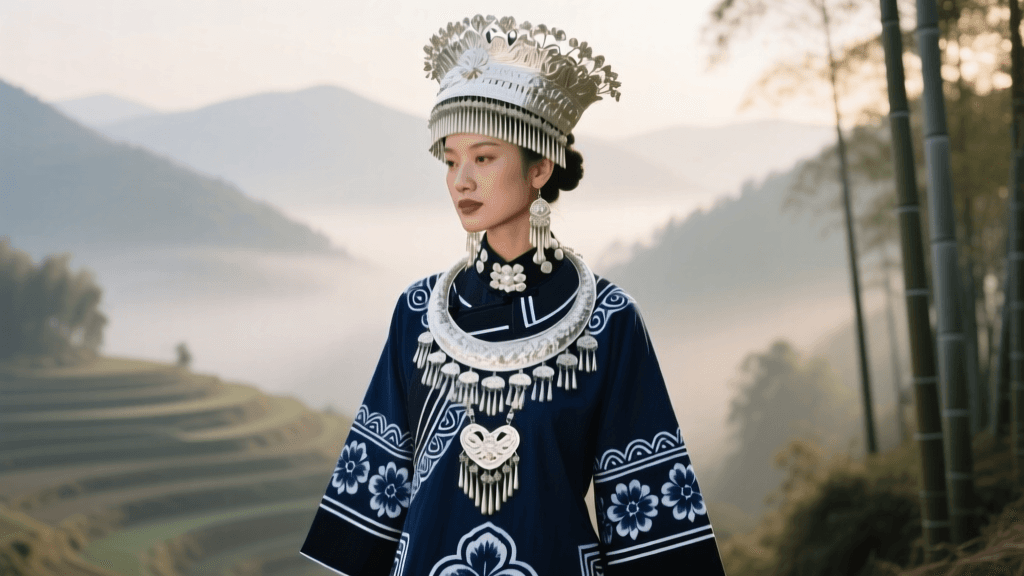
Miao batik, known locally as Laba, is a meticulous resist-dyeing technique that has been practiced for centuries. Artisans use a brass-tipped wax pen (called a ladao) to draw intricate geometric and floral patterns onto white cotton or hemp fabric using melted beeswax. The fabric is then submerged repeatedly in vats of fermented natural indigo dye. Once the desired deep blue-black hue is achieved, the cloth is boiled to melt away the wax, revealing striking white patterns against a rich indigo background.
The hallmark of authentic Miao batik is the 'ice vein' or crackle effect. As the wax cools and hardens on the fabric, it naturally fractures. When submerged in the dye, indigo seeps into these micro-cracks, creating delicate, vein-like lines that cannot be perfectly replicated by modern machine printing. This organic imperfection is the primary indicator of genuine, handcrafted batik.
Actionable Advice: Evaluating and Buying Batik
- Authenticity Check: Examine the white lines closely. Hand-drawn batik will have slight variations in line thickness and the characteristic blue 'crackle' bleeding into the white spaces. Machine-printed fabric will have uniform, sterile lines with no crackle.
- Scent Test: Authentic indigo-dyed fabric retains a faint, earthy, plant-like scent, whereas synthetic dyes smell sharply of chemicals.
- Pricing Guide: A standard hand-drawn batik scarf (approx. 180cm x 50cm) typically costs between 150 and 350 RMB ($20 to $50 USD), depending on the complexity of the motif. Antique or heavily embroidered batik panels can range from 1,500 to 5,000 RMB.
- Care Instructions: Natural indigo is prone to fading and bleeding. Always hand-wash batik items separately in cold water with a pH-neutral detergent. Avoid direct sunlight when drying to preserve the deep blue hue.
The Weight of Heritage: Miao Silver Jewelry
No Miao festival ensemble is complete without the dazzling, resonant clinking of silver jewelry. For the Miao, silver represents light, purity, and protection against evil spirits. It is also a traditional store of family wealth, passed down from mother to daughter. A full festival set for a Miao woman can include a massive horned headdress, multiple layered necklaces, chest plates, hairpins, and bracelets, weighing anywhere from 5 to 10 kilograms in total.
The motifs used in Miao silverwork are deeply tied to their animist beliefs and creation myths. The buffalo horn is a ubiquitous symbol of strength and agricultural prosperity, while the butterfly represents the 'Butterfly Mother' (Mai Bang), a central deity in Miao mythology who birthed the first humans. As highlighted by Sixth Tone's extensive reporting on ethnic minority heritage, the silversmiths of villages like Shidong in Guizhou spend hundreds of hours hammering, braiding, and carving silver to create these masterpieces, keeping a heavy but beautiful tradition alive.
Actionable Advice: Purchasing Miao Silver
- Purity and Weight: Traditional Miao silver is typically 990 or 999 purity. However, vintage pieces or tourist-market items may be mixed with copper or white brass. Always ask for a purity test or buy from reputable, established silversmiths in Kaili or Xijiang.
- Cost Breakdown: Silver jewelry is usually priced by weight plus a craftsmanship fee. Expect to pay the daily market rate for silver (roughly 5-7 RMB per gram) plus an artisan fee of 15 to 30 RMB per gram. A standard 50-gram bracelet will cost approximately 1,000 to 1,800 RMB.
- Measurements: Headdresses are often custom-fitted or adjustable, with widths spanning 40cm to 60cm. Neck rings are rigid and come in varying diameters (typically 15cm to 20cm inner diameter). Ensure you try them on for comfort, as the weight can cause strain during long wear.
Textile Techniques Comparison Chart
To better understand the diversity of Miao garment construction, refer to the comparison table below detailing the primary techniques used in their traditional clothing.
| Technique | Local Name | Primary Materials | Time Required | Key Characteristics |
|---|---|---|---|---|
| Indigo Batik | Laba | Cotton, Beeswax, Indigo | 2-4 weeks (including dye fermentation) | White geometric/floral patterns on deep blue; crackle effect. |
| Pleated Skirts | Baizhequn | Cotton, Indigo, Egg White | 1-3 months | Up to 500-600 micro-pleats; stiffened with egg white or animal hide glue. |
| Flat Embroidery | Pingxiu | Silk thread, Cotton base | 3-6 months per panel | Vibrant, smooth satin stitches depicting mythological beasts and flora. |
| Brocade Weaving | Zhijin | Cotton, Silk, Hemp | Continuous (loom setup takes days) | Geometric patterns woven directly into the fabric structure. |
A Traveler and Collector Guide to Miao Regions
If you are planning to witness these traditions firsthand or source authentic garments, timing and location are critical. The Miao calendar is punctuated by vibrant festivals where the most elaborate, heirloom-quality clothing is worn.
Key Festivals and Timing
- The Sister's Meal Festival (Mid-April): Held primarily in Taijiang and Kaili, this is a courtship festival where young women wear their most elaborate silver headdresses and heavily embroidered jackets. It is an ideal time for photographers and textile enthusiasts.
- The Lusheng Festival (October/November): Celebrated after the autumn harvest, this festival features traditional reed pipe (lusheng) music, bullfighting, and communal dancing. The pleated indigo skirts are prominently featured here, swaying dynamically with the dancers' movements.
Where to Source Authentic Pieces
While major tourist hubs like Xijiang Miao Village offer convenience, the garments sold there are often mass-produced for the tourist trade. For authentic, artisan-made textiles and silver, venture to specialized markets and lesser-known villages:
- Danzhai County: Renowned as the epicenter of traditional Miao batik. Visiting local cooperatives here allows you to buy directly from the women who draw and dye the fabric, ensuring fair compensation.
- Shidong Town (Taijiang County): Famous for its master silversmiths. Here, you can commission custom pieces and watch the intricate filigree and hammering processes in small, family-run workshops.
- Kaili Weekend Market: The Sunday markets in Kaili are excellent for finding vintage textiles, antique embroidery panels, and second-hand silver. Bring a magnifying glass to inspect embroidery stitch density and a magnet to test for base metals in silver items.
Preserving the Threads of Tomorrow
The rapid modernization of rural China poses a significant threat to traditional Miao clothing practices. Younger generations are increasingly moving to urban centers for work, leaving fewer hands to tend the indigo vats or wield the embroidery needle. However, there is a growing movement to preserve these skills. Organizations and cultural initiatives listed on the UNESCO Intangible Cultural Heritage frameworks are working alongside local cooperatives to elevate Miao textiles into the global ethical fashion market.
As a collector or admirer of Asian traditions, your engagement matters. By understanding the profound labor behind a single pleated skirt, recognizing the organic beauty of indigo crackle, and investing directly in artisan cooperatives, you help ensure that the Miao people's wearable history continues to thrive for generations to come. Whether you are acquiring a delicate silver butterfly hairpin or a heavy indigo-dyed tapestry, you are not just buying a garment; you are safeguarding a vital chapter of human cultural expression.