Seasonal Hanfu Guide: Fabrics and Styles for China's Climates
Adapting Hanfu to China's Vast Climates
China's geographical expanse is staggering, encompassing everything from the subarctic, freezing winters of Heilongjiang in the north to the tropical, sweltering humidity of Hainan in the south. Historically, the evolution of Hanfu (traditional Han Chinese clothing) was deeply dictated by these regional and seasonal climate shifts. Today, as the Hanfu revival movement gains global momentum, modern enthusiasts face the same practical challenges as their ancestors: how to dress authentically while remaining comfortable across drastically changing seasons. Understanding the interplay between textile weights, weaving techniques, and structural layering is essential for building a functional, year-round Hanfu wardrobe.
Spring: Transitioning with Silk and Light Layers
Spring in China, particularly in the Yangtze River basin, is characterized by fluctuating temperatures and frequent, light rain showers. The key to spring Hanfu is versatile layering and breathable, mid-weight fabrics that drape elegantly without trapping excess heat.
Recommended Fabrics
For spring, silk crepe de chine and lightweight jacquard weaves are ideal. Look for silk weights between 16 and 19 momme (a unit of measurement for silk density). This weight provides enough opacity to avoid the need for heavy under-layers while maintaining a fluid, graceful drape that catches the spring breeze. According to the Metropolitan Museum of Art, the historical mastery of Chinese silk weaving allowed for the creation of specialized seasonal weaves, a tradition that continues in modern textile manufacturing.
Key Styles and Layering
The Beizi (a long, open-front jacket with side slits) is the quintessential spring garment. It can be worn over a lightweight Ruqun (top and skirt combination). If the morning is chilly, the Beizi provides warmth; by mid-afternoon, it can be easily removed. Pair this with a pleated Baizhequn (hundred-pleat skirt) made from a cotton-silk blend (around 120 GSM) to add structure without excessive weight.
Summer: Beating the Humidity with Ramie and Gauze
Summers in southern and central China are notoriously hot and humid. Historically, wearing heavy silks in these conditions was unbearable, leading to the widespread use of specialized summer textiles that prioritized airflow and moisture-wicking properties.
Recommended Fabrics
While silk is famous, Luo (silk gauze) and Ramie are the true heroes of summer Hanfu. Ramie, a bast fiber native to East Asia, is highly breathable, dries quickly, and possesses a natural crispness that keeps the fabric away from the skin, promoting air circulation. Modern ramie-cotton blends (150-180 GSM) offer the historical aesthetic with improved softness. For luxury summer wear, authentic Luo gauze features an open, leno-weave structure that is practically translucent and exceptionally cooling. The cultivation and processing of these natural fibers are deeply rooted in Chinese heritage, much like the sericulture and silk craftsmanship recognized by UNESCO as Intangible Cultural Heritage.
Key Styles and Layering
Minimize layers to the absolute essentials. The Qixiong Ruqun (chest-high skirt) worn with a lightweight, short-sleeved or sleeveless Shan (upper garment) is highly popular for Tang Dynasty summer aesthetics. For Song Dynasty styles, a sheer, short-sleeved Beizi worn over a Moxiong (tube top) and a light linen skirt provides excellent ventilation while maintaining modesty and historical accuracy.
Autumn: Embracing the Chill with Brocade and Layering
Autumn brings crisp, dry air and a rapid drop in temperature, especially in northern regions. This season is celebrated in Chinese poetry and art, and the clothing reflects a shift toward richer textures, deeper colors, and more substantial fabrics.
Recommended Fabrics
Transition to heavier silks (22 to 30 momme), cotton-linen blends (200-250 GSM), and light brocades. Brocade, with its raised, jacquard-woven patterns, not only looks visually sumptuous but also provides a slightly denser barrier against the autumn wind. Wool-blend fabrics are also increasingly popular in modern Hanfu circles for autumn skirts, offering excellent warmth and structural drape.
Key Styles and Layering
The Mamianqun (horse-face skirt) is an autumn staple. Its flat front and back panels with deep side pleats allow for ease of movement while the overlapping fabric layers provide surprising wind resistance at the legs. Pair the skirt with an Ao (a lined, long-sleeved jacket with a high or round collar) and add a Pifeng (a wide, scarf-like cape draped over the shoulders) for an elegant Ming Dynasty silhouette that traps body heat effectively.
Winter: Surviving the North with Fur-Lined and Padded Hanfu
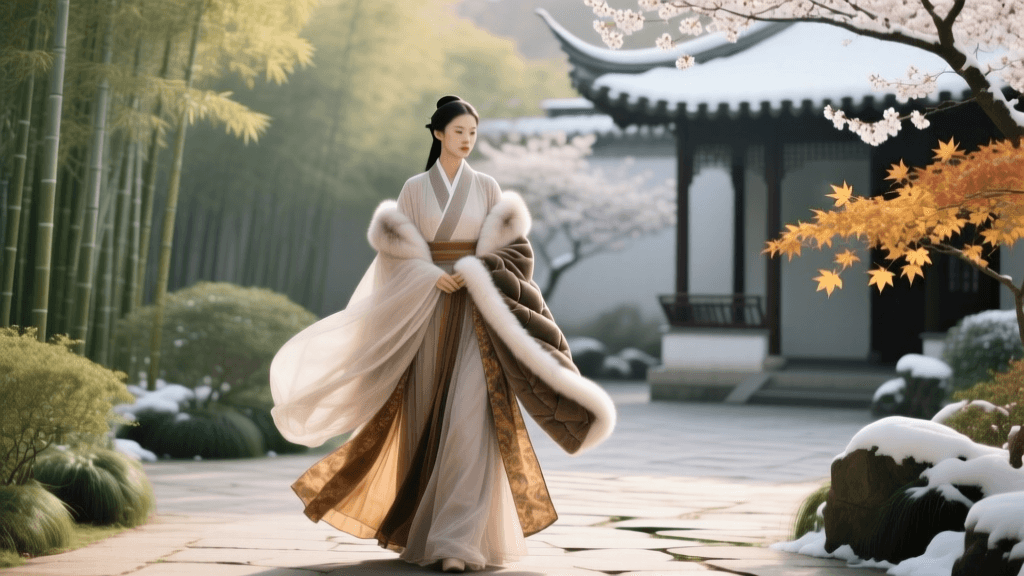
Winter in northern China is unforgiving, with temperatures frequently dropping well below freezing. Historical winter Hanfu relied heavily on structural layering, padded linings, and animal furs to survive the harsh climate.
Recommended Fabrics
For the outer shell, heavy brocade, velvet, and thick wool blends (300+ GSM) are necessary to block the wind. However, the true insulation lies in the lining. Modern practitioners often use thick cotton batting, fleece, or high-quality faux-fur linings. Velvet is particularly favored for its wind-blocking properties and its ability to retain heat.
Key Styles and Layering
The Doupeng (a hooded, cloak-like garment that drapes over the entire body) is the ultimate winter Hanfu piece. It functions similarly to a heavy winter coat, wrapping the wearer in a cocoon of warmth. Underneath, wear a padded Bijia (a sleeveless vest) over a thick, fleece-lined Aoqun (jacket and skirt set). The high collar of the Ming-style Ao protects the neck from biting winds, eliminating the need for modern scarves while keeping the historical silhouette intact.
Comprehensive Seasonal Hanfu Fabric and Style Chart
| Season | Climate Zone | Primary Fabric | Fabric Weight / Spec | Core Garment |
|---|---|---|---|---|
| Spring | Temperate / Mild | Silk Crepe de Chine | 16 - 19 Momme | Beizi (Open Jacket) |
| Summer | Tropical / Humid | Ramie / Silk Gauze (Luo) | 150 - 180 GSM / Leno Weave | Qixiong Ruqun / Shan |
| Autumn | Cool / Dry | Light Brocade / Cotton-Linen | 22 - 30 Momme / 200 GSM | Mamianqun / Pifeng |
| Winter | Subarctic / Freezing | Velvet / Wool / Faux-Fur Lined | 300+ GSM / Heavy Batting | Doupeng (Cloak) / Aoqun |
Practical Sourcing and Textile Care
Investing in seasonal Hanfu requires an understanding of textile care to ensure longevity. Natural fibers like silk and ramie are delicate and require specific maintenance. The Victoria and Albert Museum provides extensive guidelines on the preservation of historical Chinese textiles, emphasizing the dangers of prolonged exposure to direct sunlight, which degrades protein-based fibers like silk, and the importance of storing garments flat or on wide, padded hangers to prevent structural distortion.
- Washing: Hand-wash silk and ramie in cold water using a pH-neutral detergent. Never wring or twist the fabric; instead, roll it in a clean towel to absorb excess moisture.
- Ironing: Use a low-heat setting with a pressing cloth between the iron and the garment. Steam is highly effective for removing wrinkles from pleated skirts like the Mamianqun without crushing the delicate folds.
- Storage: Store heavy winter garments in breathable cotton garment bags. Avoid plastic covers, which can trap moisture and lead to mildew, especially in humid southern climates.
Conclusion
Dressing in Hanfu is not merely about putting on a historical costume; it is about engaging with a living, breathing tradition that adapted intelligently to the natural world. By selecting the appropriate fabrics—from the crisp, cooling ramie of summer to the heavy, wind-blocking velvets of winter—and utilizing traditional layering techniques, modern wearers can experience the elegance of Hanfu comfortably, no matter the season or climate. Whether you are attending a spring festival in Hangzhou or navigating a crisp autumn evening in Beijing, understanding the seasonal mechanics of these garments ensures you remain both historically grounded and practically comfortable.